What makes a hamidashi tanto different from a standard tanto?
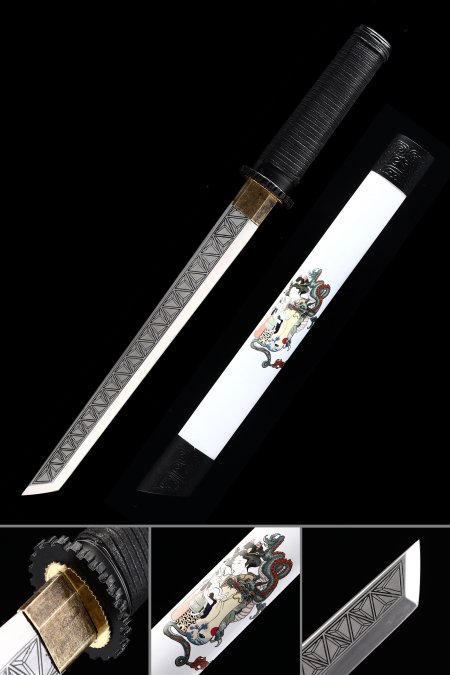
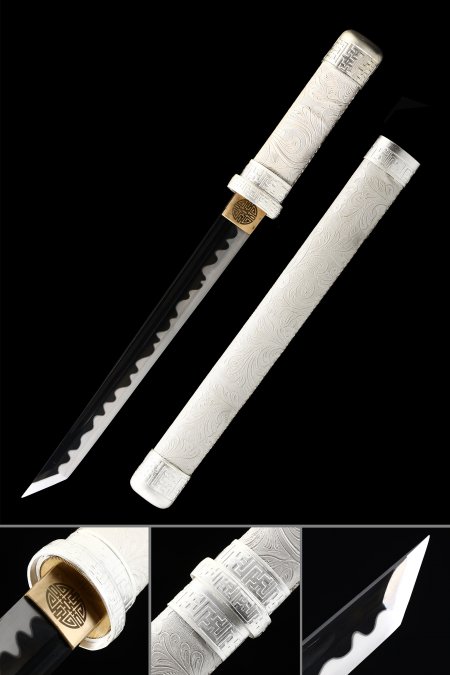
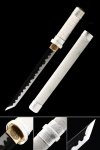
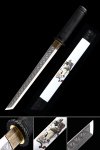
The defining feature of a hamidashi tanto is its ko-tsuba - a small guard that sits flush with or just barely extends beyond the handle, unlike the more prominent tsuba found on standard tanto configurations. This creates a cleaner, more continuous silhouette from handle to blade, which was historically associated with formal and ceremonial carry styles. For collectors, the hamidashi profile reads as more refined and understated, making it a popular choice for minimalist or high-contrast display arrangements where the saya and blade engraving are meant to be the visual focal points rather than the guard itself.
What is white lacquer saya and why do collectors value it?
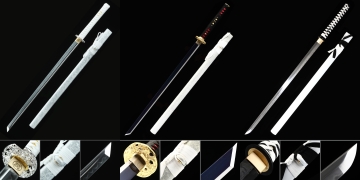
A white lacquer saya is a blade scabbard crafted from hardwood and finished with multiple coats of white lacquer - a technique rooted in Japanese shironuri traditions historically applied to ceremonial objects and formal koshirae. The high-gloss white surface reflects light cleanly and creates strong visual contrast against darkened blades or engraved steel, making it a standout choice for display-focused collectors. Unlike raw wood or matte finishes, lacquered sayas also offer better resistance to humidity and minor handling wear, which matters for pieces rotated in and out of display cases regularly.
How should I store and maintain a lacquered saya tanto?
For white lacquered sayas, avoid direct sunlight exposure over long periods - UV light can yellow or dull the finish over time. Store the tanto horizontally or at a slight angle on a padded stand to prevent warping of the saya. For the blade, apply a thin coat of blade oil (choji oil or food-grade mineral oil) every few months, especially in humid or dry climates, using a soft cloth or rice paper. Never store the blade inside the saya long-term in high-humidity environments; the wood can swell and trap moisture against the steel. When handling, use cotton gloves to keep fingerprints off both the lacquered saya and the steel.
Is manganese steel a good choice for a display tanto?
Manganese steel is well-suited for display-grade tantos for several practical reasons. It is notably hard and resistant to surface scratching, which means engraved detailing and blackened finishes hold up well over time without requiring frequent touch-ups. It also accepts decorative treatments - acid etching, geometric engraving, and darkening patinas - more cleanly than softer mild steels. For collectors who want a piece that maintains its visual sharpness under display lighting and through regular handling sessions, manganese steel offers a reliable balance of surface quality and structural solidity.
Do white saya tantos work well as gifts for collectors?
White saya hamidashi tantos make particularly thoughtful gifts for collectors who appreciate Japanese blade aesthetics but favor display-oriented pieces over utilitarian designs. The visual contrast of the white lacquered saya against an engraved or darkened blade reads as intentional and curated - it signals craft knowledge rather than a generic purchase. For gifting, look for pieces with a distinct decorative motif (dragon, skull, or geometric engraving) that aligns with the recipient's existing collection theme. Pairing a tanto with a matching display stand or a tanto-specific wall mount elevates the presentation and gives the recipient an immediately displayable piece.