What steel types are used in Yellow Tanto blades?
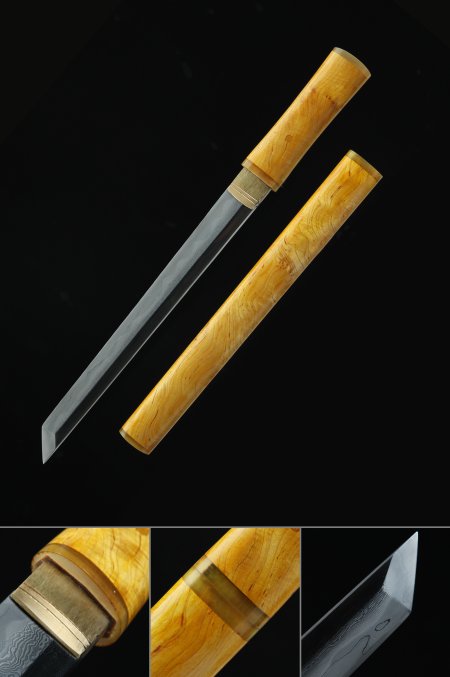
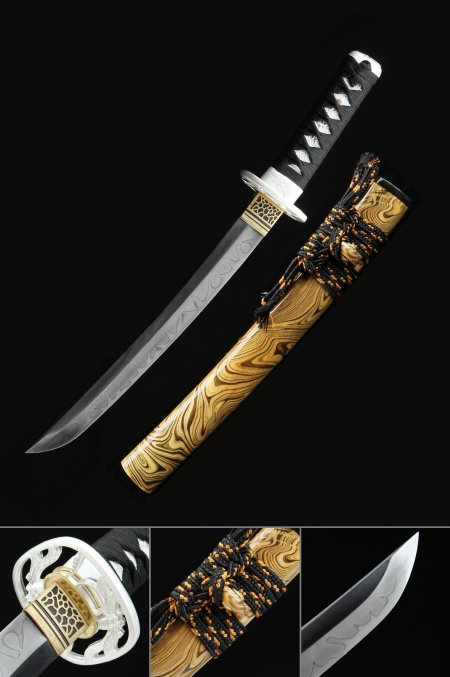
The Yellow Tanto collection spans three distinct steel types, each with its own character. Manganese steel offers excellent surface toughness and resistance to chipping, making it a reliable choice for display pieces that will be handled regularly. T10 high-carbon tool steel is capable of producing a genuine hamon — the wavy temper line formed during differential clay hardening — which is one of the most visually striking features on any traditionally styled tanto. Folded Melaleuca steel, sometimes called Damascus-style layered steel, displays a visible grain pattern across the blade surface created by repeated folding and forge-welding of the billet. This pattern is unique to each blade, giving folded tanto a collectible individuality that uniform steel cannot replicate.
How is a tanto different from a katana or wakizashi?
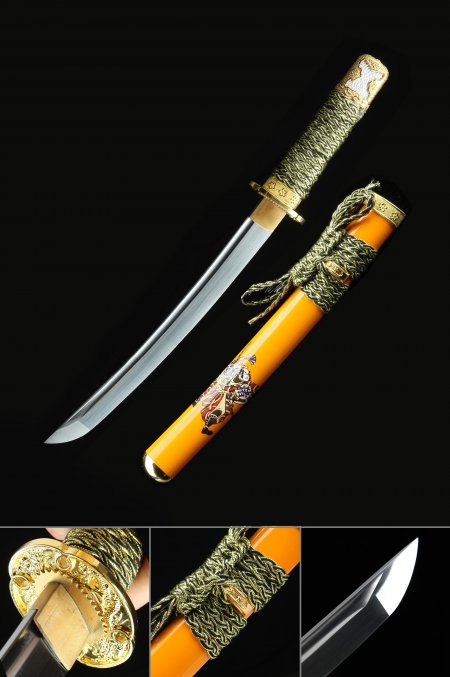
The tanto is the shortest of the three primary Japanese blade forms. A katana typically measures over 24 inches in blade length, a wakizashi falls between 12 and 24 inches, and a tanto is generally under 12 inches. This compact size was historically associated with close-quarters use and ceremonial significance, and it demanded a different approach from the craftsman — with less blade surface to work with, every detail of the geometry, hamon, and tip (kissaki) profile received intense focus. In a display context, the tanto's smaller scale makes it ideal for desk presentation cases, shadow boxes, and smaller wall displays where a full-length katana would overwhelm the space. The yellow saya and dragon tsuba fittings in this collection give these compact pieces a visual presence that punches well above their size.
What does full-tang construction mean for a display tanto?
Full-tang means the steel of the blade extends continuously through the entire interior of the handle, rather than ending partway and being pinned or glued. For collectors, this is a meaningful indicator of build quality — it reflects the same structural principle used in traditionally constructed Japanese blades, where the nakago (tang) was a critical part of the overall assembly. In a display tanto, full-tang construction ensures the handle and blade remain firmly integrated over time, with no loosening or wobbling that can develop in partial-tang or rat-tail constructions. It also adds authentic heft and balance to the piece, which many collectors find important when holding and presenting the tanto during exhibitions or photography.
How should I store and maintain a yellow lacquered saya?
Yellow lacquered saya are relatively low-maintenance but benefit from a few consistent care habits. Store the tanto horizontally in a low-humidity environment — humidity fluctuations can cause the natural wood beneath the lacquer to expand and contract, eventually leading to surface cracking. Avoid direct sunlight for extended periods, as UV exposure can fade and dull the lacquer finish over time. Wipe the exterior with a soft, dry cloth to remove fingerprints and dust. For the blade inside, apply a light coat of camellia oil (choji oil) every few months to prevent surface oxidation, using a soft cloth or traditional uchiko powder ball. When inserting or removing the blade, do so gently and straight — lateral pressure can stress the mouth of the saya and mar the lacquer edge.
Are yellow tanto a good gift for Japanese sword collectors?
Yellow tanto make a distinctive gift precisely because the color choice is uncommon in mainstream sword collections. Most collectors already own pieces in black, red, or natural wood — a yellow-fitted tanto immediately stands out as a deliberate and considered addition. The dragon tsuba and coordinated cord wrapping on these pieces signal that attention was paid to the complete aesthetic, not just the blade, which experienced collectors recognize and appreciate. For someone new to Japanese blade collecting, the shorter tanto format is an approachable entry point: easier to display in a compact space and typically more accessible in terms of presentation hardware. Pairing a yellow tanto with a dedicated display stand or wall mount creates a complete, ready-to-gift set that requires no additional sourcing from the recipient.