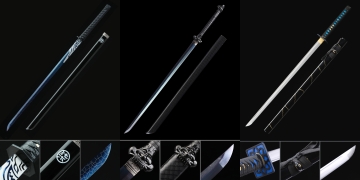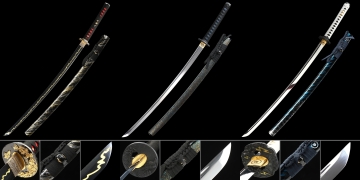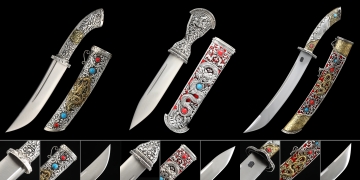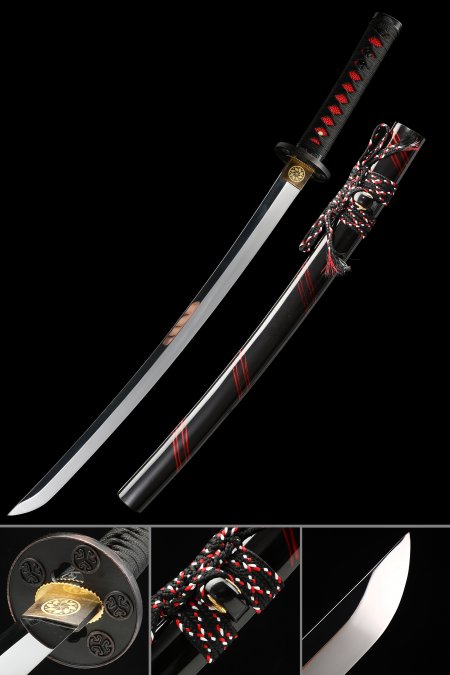
1095 Carbon Steel Wakizashi

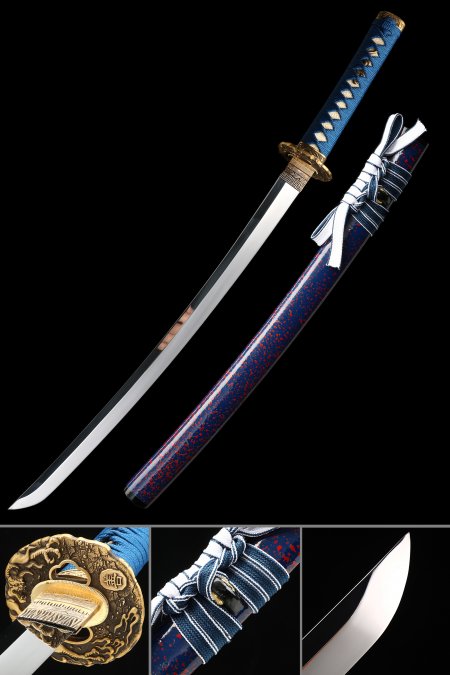
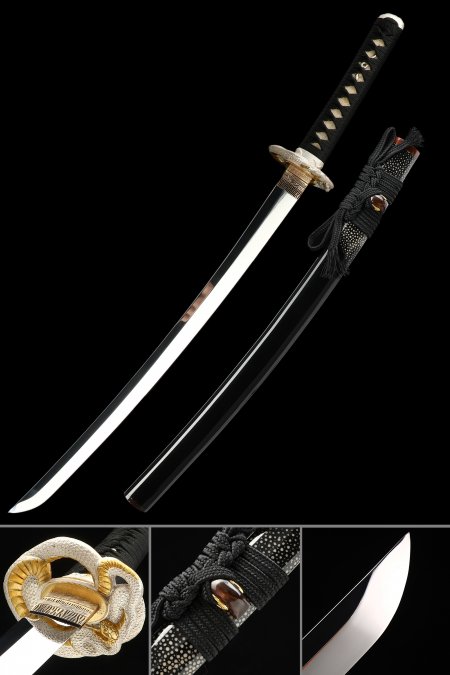
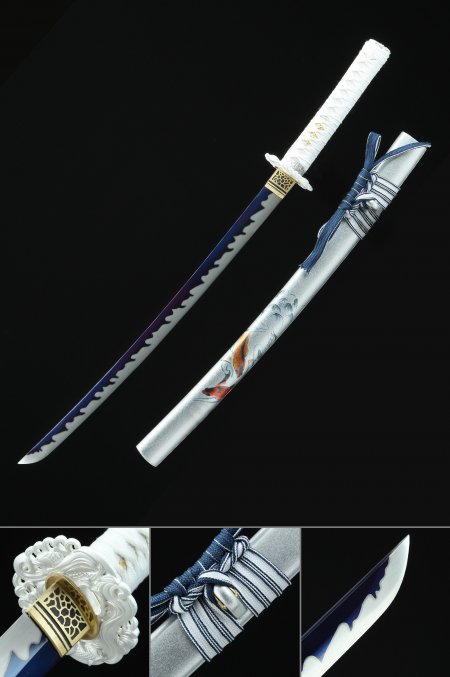
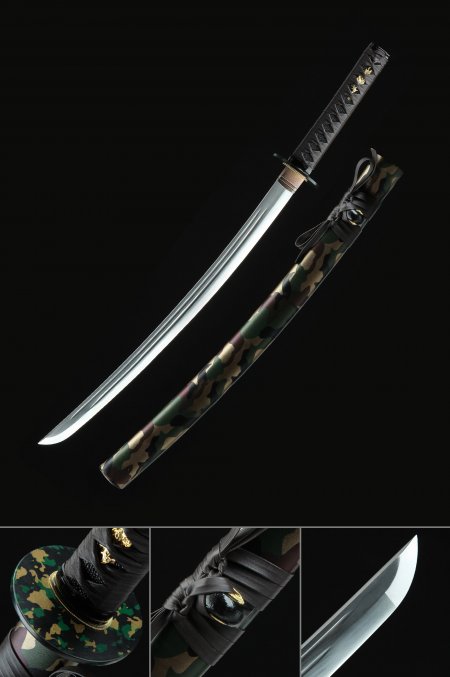
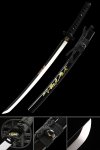
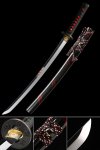
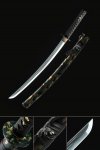
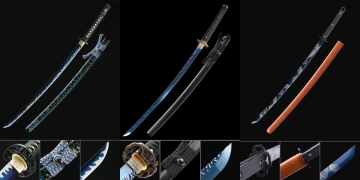
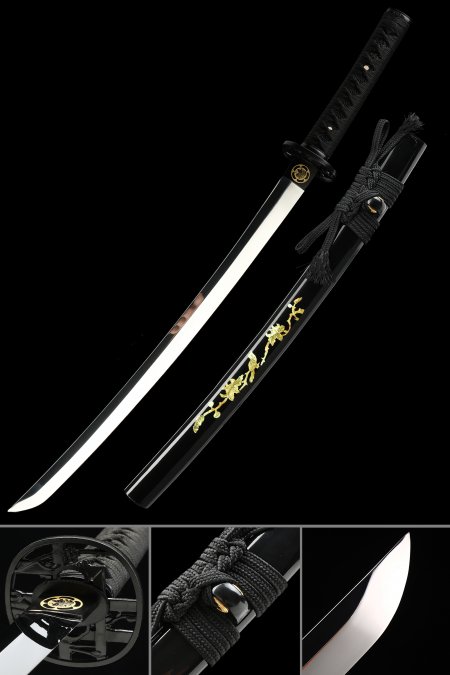
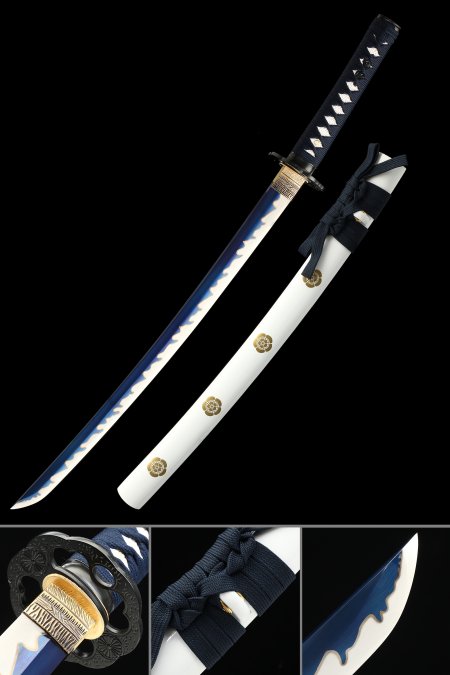
Each wakizashi in this collection is hand-forged from 1095 high-carbon steel, a traditional choice prized by collectors for its rich hamon activity and deep, characterful patina over time. From koi-motif saya and gold crane tsuba to lacquered scabbards with lightning accents, every piece is finished with the ornamental detail that makes it a genuine display centerpiece. Explore a range of fittings, blade finishes, and handle wraps curated for the discerning Japanese sword enthusiast - with free shipping and free returns on every order.
Showing 7 Products

Related Collections

Frequently Asked Questions

What makes 1095 carbon steel a good choice for a wakizashi?
1095 carbon steel contains roughly 0.95% carbon by weight, placing it at the upper end of the simple high-carbon range. That carbon level supports genuine clay-temper hardening, which produces the visible hamon - the misty boundary line between the hardened edge and softer spine - that collectors prize most. The differential hardness is structural, not cosmetic: the edge zone achieves a harder martensitic grain structure while the spine retains a tougher pearlitic structure. On a wakizashi's shorter blade, this hamon activity is exceptionally easy to appreciate up close, making 1095 an ideal alloy for a collector-focused display piece.
How is a wakizashi different from a tanto or a katana?
Blade length is the clearest distinction. A tanto typically measures under 12 inches of blade; a katana exceeds 24 inches; a wakizashi falls between the two, generally 18 to 24 inches. Beyond length, the wakizashi was historically worn indoors - even in settings where the katana had to be surrendered - giving it a more intimate role in samurai culture. Its shorter geometry also allows finer curvature control in the forge, and its fittings are often more elaborately detailed because the blade sits at eye level in a standard display. For collectors, wakizashi frequently offer the most decorative tsuba and saya work per dollar of any Japanese sword format.
How should I maintain a 1095 carbon steel wakizashi for long-term display?
1095 is an unalloyed high-carbon steel, meaning it lacks the chromium content that makes stainless steel corrosion-resistant. For display preservation, apply a thin layer of choji oil or pharmaceutical-grade mineral oil to the blade every two to three months using a soft, lint-free cloth. Remove fingerprints promptly, as skin oils accelerate surface oxidation. Store the wakizashi on a horizontal sword stand with the edge facing upward, away from direct sunlight (which fades lacquer saya) and away from high-humidity environments (which promote rust). A moisture-absorbing silica packet placed near the display adds an extra layer of protection.
What do the tsuba motifs on these wakizashi symbolize?
Japanese sword fittings have always carried symbolic meaning drawn from Shinto, Buddhist, and court traditions. The crane (tsuru) represents longevity and good fortune - making it a traditional gift motif. The chrysanthemum (kiku) is the sixteen-petaled emblem of the Japanese imperial household, associated with refinement and enduring beauty. Snake or serpent imagery on sword fittings historically signified protection, cyclical renewal, and guardianship of the home. Collectors who understand these iconographic layers find that fittings add narrative depth to a display, not merely decorative variety. Choosing a tsuba motif that resonates personally transforms a display piece into something genuinely meaningful.
Can a wakizashi be displayed as part of a daisho pair?
Yes - and historically, displaying wakizashi and katana as a matched daisho pair is the most prestigious format in Japanese sword collecting. The key is visual consistency: matching lacquer color on the saya, coordinating ito (handle wrap) colors, and tsuba from the same stylistic family create a unified koshirae that reads as intentional rather than assembled from mismatched parts. If you already own a 1095 carbon steel katana, compare the saya finish and handle wrap color before selecting a wakizashi, or shop both together. A properly assembled daisho display communicates an understanding of Japanese sword culture that single-blade displays simply cannot replicate.

Customer Reviews