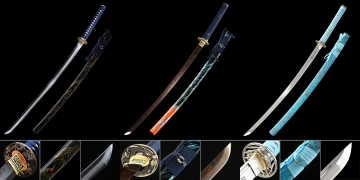
What makes Damascus steel tanto visually distinct from other blade types?
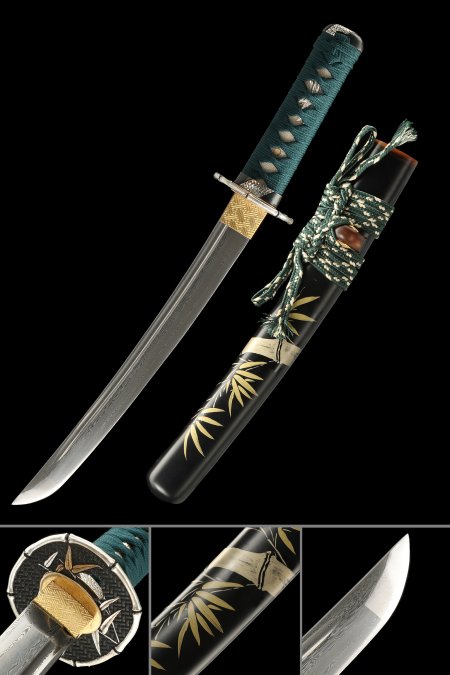
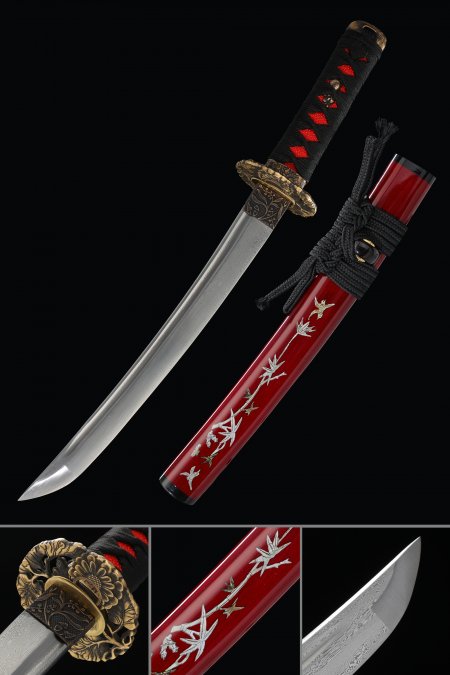
Damascus steel is produced by folding and welding together multiple layers of steel with differing carbon content. When the blade is etched during finishing, the two materials react differently to acid, revealing a flowing, wave-like surface pattern - often called a Damascus pattern or banding. Because the folding process is done by hand and varies with each forging session, no two Damascus blades share an identical grain. This makes each tanto a one-of-a-kind display piece, valued by collectors precisely because the surface markings function almost like a fingerprint. On shorter tanto-length blades, the pattern is compressed into a smaller canvas, which often makes the visual contrast between layers appear even more concentrated and dramatic than on longer blades.
Why is bamboo used for tanto scabbards instead of wood?
Bamboo is technically a grass, but its culm wall is exceptionally dense and hard - harder than many temperate hardwoods by weight. In Japanese craft tradition, bamboo has long been used in applications where a combination of lightness, durability, and natural beauty is required. For a tanto saya, bamboo offers a tight, smooth inner surface that cradles the blade securely, while the exterior takes lacquer finishes particularly well, producing a deep, almost glassy surface when polished. Each bamboo saya also retains the natural node rings of the plant, giving it a subtle structural marker that distinguishes it from any machined or synthetic scabbard. Over time, a well-maintained lacquered bamboo saya deepens in color, adding to its character as a display object.
How should I maintain a lacquered bamboo saya for long-term display?
Lacquered bamboo scabbards are relatively low-maintenance but benefit from a few consistent habits. Keep the saya away from direct sunlight and heating vents, both of which can cause the lacquer to fade or the bamboo substrate to contract and develop fine cracks over time. A light wipe with a dry microfiber cloth removes dust without introducing moisture. Avoid using furniture polish or silicone-based sprays, as these can cloud the lacquer surface. If the saya is stored for extended periods, placing it in a cloth bag inside a low-humidity environment helps prevent moisture absorption. For the copper tsuba fittings, a soft dry cloth is sufficient - avoid metal polishes, which can strip the intentional patina or finish applied during manufacture.
How does a tanto differ from a wakizashi as a collectible display piece?
Both tanto and wakizashi are short-format Japanese blades, but they differ in length, geometry, and historical role. A tanto typically measures under 30 cm (roughly 12 inches) in blade length and carries a relatively straight or very slightly curved profile with a pronounced point geometry. A wakizashi is longer - generally 30 to 60 cm - and more closely resembles a shortened katana in its curvature and proportions. As display pieces, tanto are particularly well-suited to desk or tabletop presentation because of their compact footprint. Their shorter length also means the decorative fittings - tsuba, handle wrap, and saya - occupy a higher proportion of the total visual field, making the craftsmanship details more immediately apparent to a viewer.
Do the cord wrapping colors carry any traditional significance?
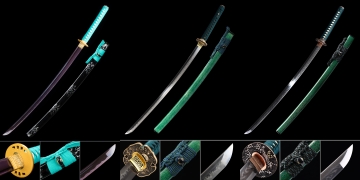
In classical Japanese sword craft, the color of the tsukamaki - the cord wrapping on the handle - was often chosen to reflect the status of the owner, the occasion for which the blade was made, or the aesthetic preferences of the school that produced it. Deep red, known as hi-iro, was associated with vitality and ceremony, and appeared on tanto carried by high-ranking samurai during formal occasions. Teal and blue-green tones were less common historically but appear in regional craft traditions and became more widely used in the Edo period as decorative arts flourished. For modern collectors, the pairing of cord color with lacquer saya finish is primarily an aesthetic consideration - a teal-wrapped handle against a bamboo saya offers a cooler, nature-inspired palette, while black and red creates a more dramatic, high-contrast display presentation.