What makes a black and green saya finish collectible-grade?
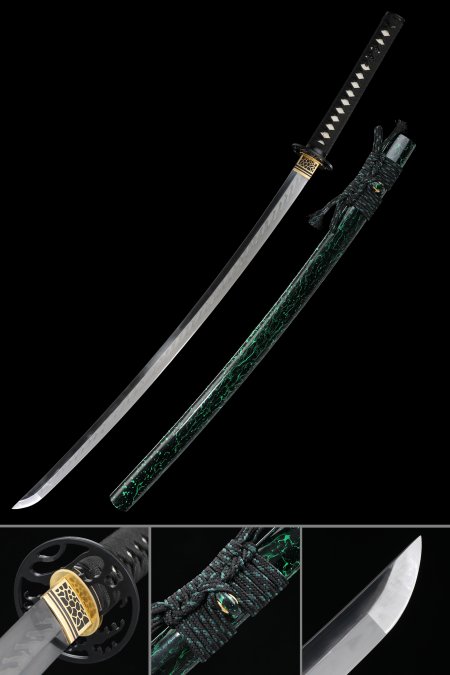
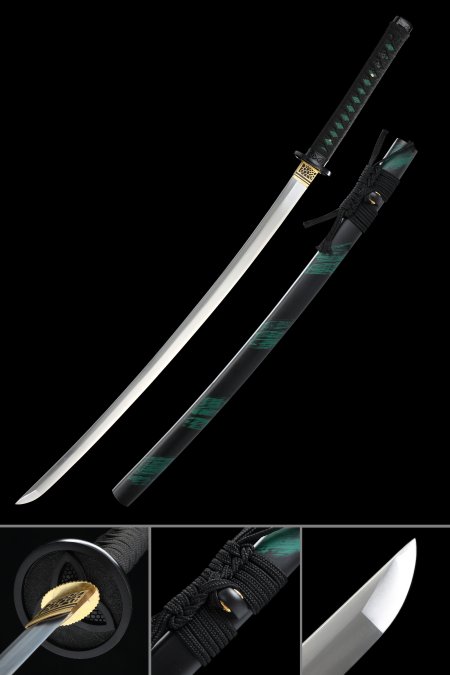
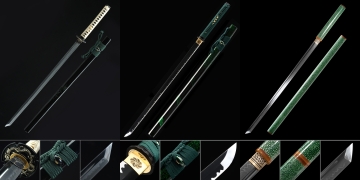
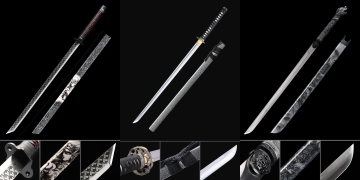
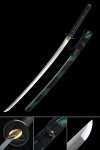
Collectible-grade lacquer work on a saya involves multiple layered coats of urushi-style lacquer applied and cured between each stage - not a single painted finish. The black base coat is typically built up to create depth and a subtle sheen, while the green is layered on top and blended at transitions to prevent cracking as humidity fluctuates. On display-quality pieces like those in this collection, the saya surface should feel uniform and slightly warm to the touch, with no visible brush streaks or pooling at the koiguchi (scabbard mouth). The pattern work - whether geometric waves or dragon relief - is applied as a final decorative stage, often hand-detailed. A properly finished lacquer saya will not chip easily from normal handling and resists light surface moisture far better than painted alternatives.
How does spring steel differ from T10 in display katana?
Spring steel and T10 carbon steel are both favored in hand-forged katana production but serve slightly different collector preferences. Spring steel (typically 9260 or similar silicon-manganese alloys) has a more uniform grain structure and produces a consistent, even hamon line when differentially tempered. T10 tool steel, by contrast, contains trace tungsten and responds to clay tempering with a more organic, naturalistic hamon - the temper line flows unpredictably along the blade's edge zone, making each piece visually unique. For collectors who prioritize hamon character and surface grain variation as display features, T10 is often the more compelling choice. Those who prefer a cleaner, more geometric blade aesthetic often find spring steel's consistency satisfying. Both steels hold their appearance well in indoor display conditions when lightly oiled on a regular basis.
How should I care for a lacquered saya at home?
Lacquered sayas require minimal but consistent care to maintain their finish over the long term. The primary risks to lacquer are prolonged UV exposure, harsh chemical contact, and impact. For routine maintenance, wipe the exterior surface monthly with a soft, lint-free dry cloth to remove dust and skin oils from handling. Never use furniture polish, alcohol-based cleaners, or silicone sprays on a lacquered saya - these degrade the finish over time. If the piece is displayed near a window, use UV-filtering glass or reposition it out of direct sunlight, as green lacquer pigments are particularly susceptible to fading. Store or display the katana horizontally where possible, and if placing it on a stand with contact points, ensure those contact areas are padded with soft felt to prevent pressure marks on the lacquer surface.
Is a gold geometric tsuba a traditional or decorative choice?
Gold-finished and geometrically patterned tsuba occupy an interesting middle ground in Japanese sword aesthetics. Historically, highly ornate tsuba with gold inlay (nunome-zogan technique) were associated with ceremonial and presentation swords rather than utilitarian ones - a fact that makes them especially appropriate for display collectibles today. Geometric motifs on tsuba often draw from family crest (mon) design traditions or Buddhist symbolic geometry. On the black and green saya piece in this collection, the gold tsuba serves a deliberate visual function: it breaks the cool dark palette of the saya and ito with warm metallic contrast, drawing the eye to the transition point between blade and handle. From a collector display perspective, this creates a natural focal point when the piece is mounted on a stand and viewed from across a room.
Do these katana work well as gifts for sword enthusiasts?
Black and green saya katana make strong gifts for collectors who appreciate Japanese aesthetics and decorative craft traditions. The color combination is visually dramatic without being garish, which means these pieces integrate well into study, office, or dedicated display room settings. For first-time recipients entering the hobby, the full-tang construction and named steel type (spring steel or T10) give them concrete talking points and a genuine introduction to how display-grade katana are categorized. For more experienced collectors, the specific tsuba design, lacquer pattern style, and handle cord color are the details worth highlighting - these signal that the gift was chosen thoughtfully rather than generically. Pairing the katana with a quality tachi-kake display stand completes the presentation and ensures the piece can be shown properly from day one.