What makes blue-black ito wrapping distinctive on a katana?
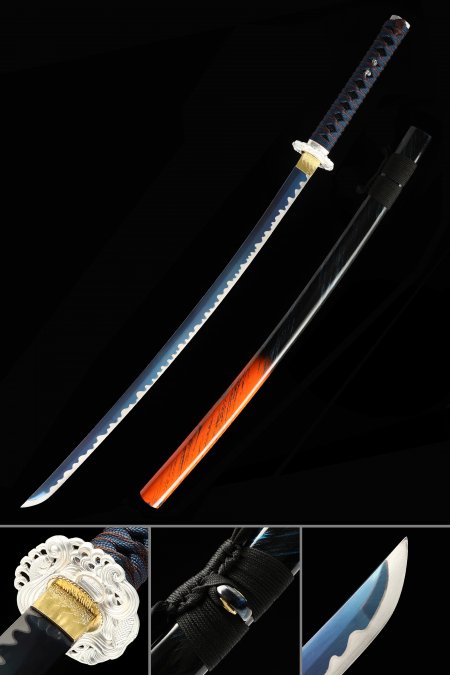
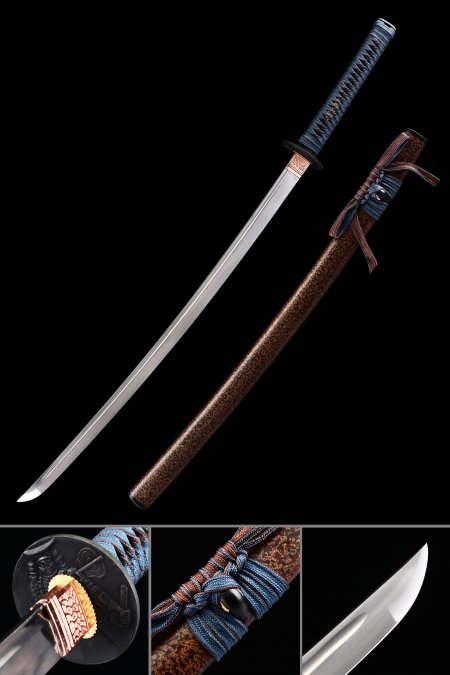
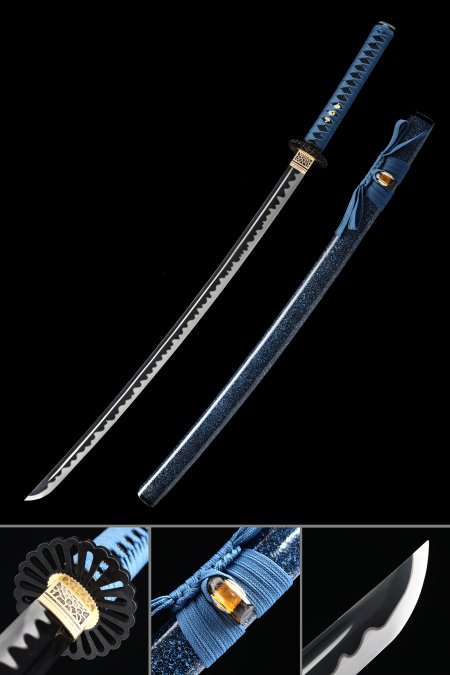
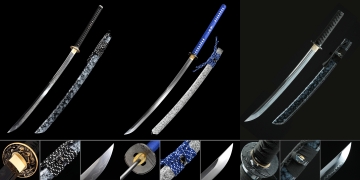
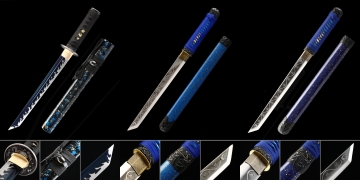
Blue-black ito is a two-tone handle wrapping style that combines deep indigo and near-black silk or synthetic cord in a tight, alternating diamond pattern over rayskin (same). What makes it visually distinctive is the chromatic tension between the cool blue and the anchoring black — the result is a grip that reads as dark and unified from a distance but reveals layered color detail up close. In classical Japanese sword culture, ito color was a deliberate aesthetic choice, not an afterthought. Collectors prize blue-black combinations because they pair well with a wide range of saya lacquer finishes, from matte black to high-gloss piano lacquer, without overpowering the overall koshirae.
How does T10 carbon steel compare to manganese steel in these katana?
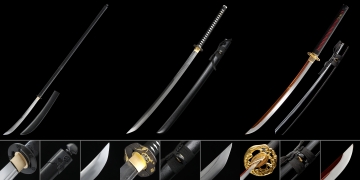
T10 carbon steel and high manganese steel represent two different engineering philosophies. T10 is a high-carbon tool steel with approximately 1% carbon content and trace tungsten, valued by collectors for its fine grain structure, capacity for a well-defined hamon (temper line), and the clean, mirror-polished finish it accepts. Manganese steel, by contrast, prioritizes resilience and visual character — it tends to have a slightly more dramatic appearance and handles display conditions well. For collectors focused on traditional aesthetics and visible craftsmanship markers like a distinct hamon, T10 is the more prestigious choice. For those prioritizing a bold visual profile, manganese steel pieces in this collection offer striking blade coloration, including raging fire and blue-tinted finishes.
Are these katana suitable as display pieces for wall mounting?
Yes — every piece in this collection is designed with display presentation in mind. Full-tang construction ensures the blade and handle form a single, stable unit, which matters for safe horizontal or angled wall mounting. The lacquered saya finishes — including piano lacquer and raging fire patterns — are crafted to hold their appearance under ambient lighting conditions without fading or crazing when kept indoors away from direct sunlight. For wall display, use a properly rated katana stand or mount that supports the saya rather than hanging the sword by its tsuka (handle), which distributes weight more evenly and protects the wrap over time. A display case with UV-filtering glass is ideal for long-term preservation.
How should I maintain the blade finish between display periods?
Maintenance for display-grade katana is straightforward but should be done consistently. Every two to three months — or immediately after handling — apply a very light coat of choji oil or pharmaceutical-grade mineral oil to the blade using a clean, lint-free cloth. Work from the base (habaki area) toward the tip in smooth, overlapping strokes. Avoid silicone-based products, which can leave a residue that interferes with the steel's surface over time. Store the sword horizontally in its saya in an environment with relative humidity between 40–60%. Excess moisture accelerates surface oxidation, while very dry conditions can cause the wooden saya and tsuka core to contract and loosen fittings. Keep the blade away from skin contact during handling — use cotton gloves.
What tsuba designs are available in the blue-black handle collection?
This collection features two primary tsuba design directions that complement the blue-black handle aesthetic. The demon tsuba (oni motif) uses bold, sculptural relief to create a fierce facial expression in the guard, typically finished in dark iron or antiqued metal tones that anchor the overall color palette. The dragon tsuba takes a more intricate approach — fine line work depicts a coiling dragon, a symbol of strength and good fortune in Japanese iconography, often with subtle texture variation across the guard's surface. Both designs are chosen to coordinate with the lacquered saya finishes present in the collection. Collectors building a themed display will find that both motifs photograph well against the indigo and black tones of the handle wrap.