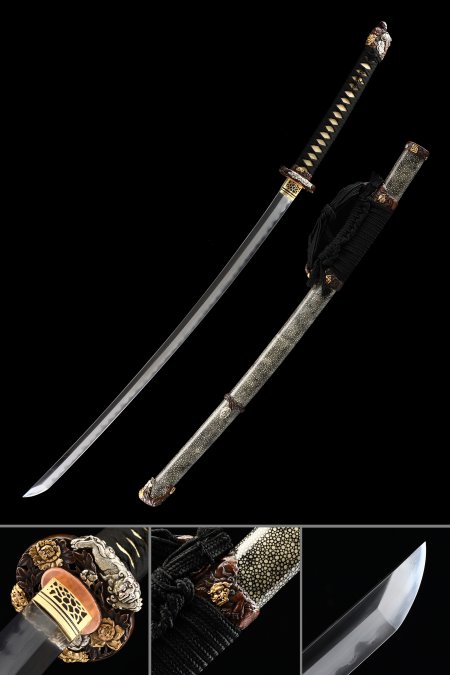
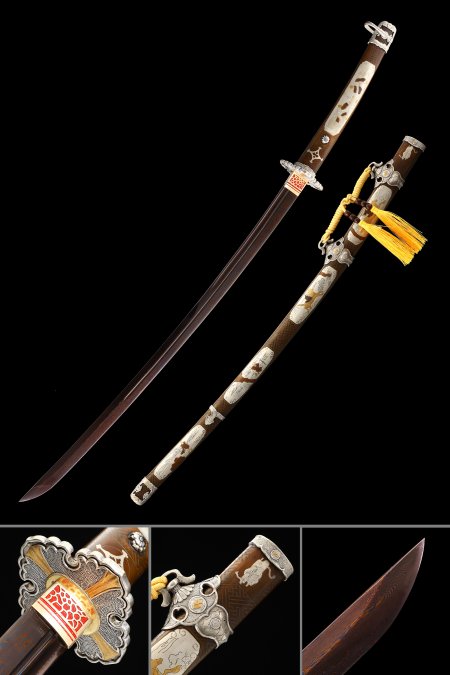
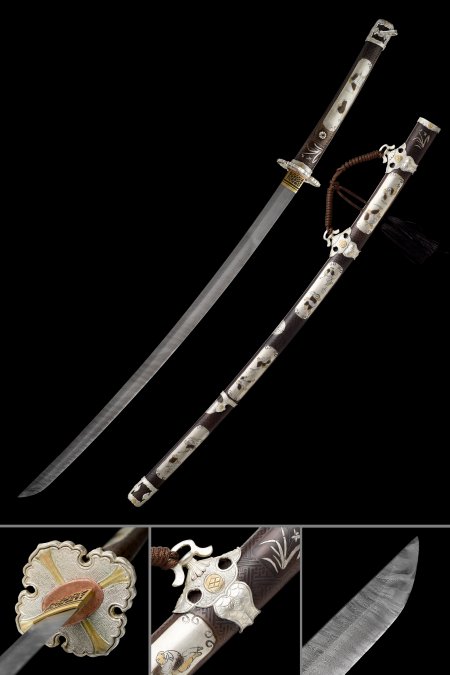
What makes a tachi different from a katana in mounting style?
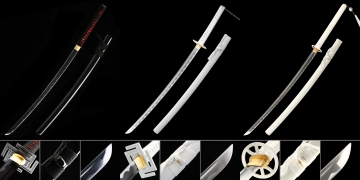
The most immediate distinction is how the sword is worn. A tachi is suspended from the belt with the cutting edge facing downward, held by two hangers on the scabbard. A katana, by contrast, is thrust through the sash edge-up. This difference in carry method influenced the overall design: tachi typically feature a deeper curvature concentrated closer to the hilt and more elaborate exterior fittings, since the saya was visible as the wearer moved. The tachi's signature also appears on the opposite side of the tang compared to a katana, which helps historians identify original mounting intent even when fittings have been changed over the centuries.
Why are the fittings on these tachi described as bronze?
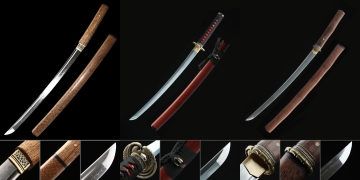
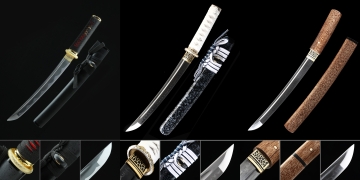
The fittings — tsuba, fuchi-kashira, menuki, and other accent hardware — are cast from copper-based alloys that produce a warm, golden-brown finish reminiscent of historical bronze sword furniture. Copper alloy is favored for decorative koshirae because it accepts fine casting detail, allowing intricate motifs like chrysanthemums and peonies to retain crisp lines. Over time the surface develops a natural patina that deepens the visual warmth, which many collectors find desirable. Unlike plated finishes, solid copper-alloy fittings maintain their character even with decades of display.
How does clay tempering create a visible hamon on these blades?
During clay tempering, a refractory clay mixture is applied unevenly along the blade — thicker on the spine and thinner toward the edge. When the blade is heated and quenched, the thinly coated edge cools rapidly to form hard martensite, while the thicker-coated spine cools slowly and remains relatively tough pearlite. The boundary between these two crystalline structures becomes the hamon, a wavy line visible after polishing. Because the clay is applied by hand, no two hamon patterns are identical, making each T10 clay-tempered tachi in this collection a one-of-a-kind collectible.
What is the best way to store a bronze tachi for long-term display?
Place the sword horizontally on a wooden kake stand with the edge facing upward and the tsuka to the left, following traditional Japanese display convention. Keep the room between 40–55% relative humidity; excessive moisture accelerates oxidation on both the steel blade and the copper-alloy fittings. Apply a thin layer of choji oil to the blade every few months, wiping away the old coat before reapplying. For the bronze fittings, a dry microfiber cloth removes dust without disturbing the patina. Avoid silicone-based products near the fittings, as they can leave a film that traps moisture underneath.
Are these bronze tachi swords full-tang construction?
Yes. Every tachi in this collection uses a full-tang design, meaning the steel extends from the tip of the blade through the entire length of the handle. The tang is drilled for mekugi — bamboo retaining pins — that lock it securely inside the tsuka. Rayskin samegawa is wrapped around the handle core before the braided tsuka-ito is layered on top, creating a tight, layered assembly. This construction method mirrors traditional Japanese swordmaking practices and ensures the blade and handle function as a single, solid unit suitable for confident handling during display or collection inspection.