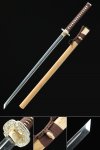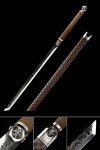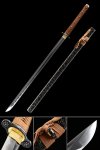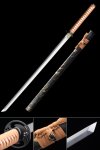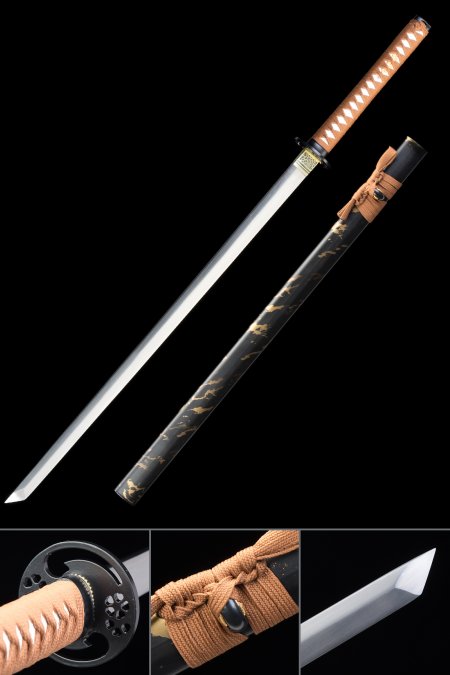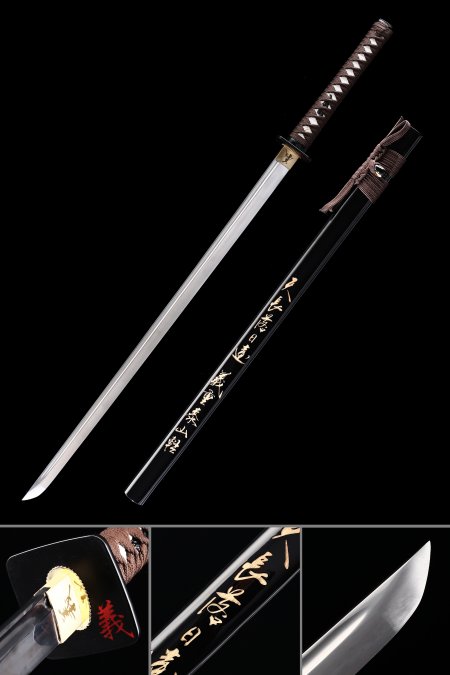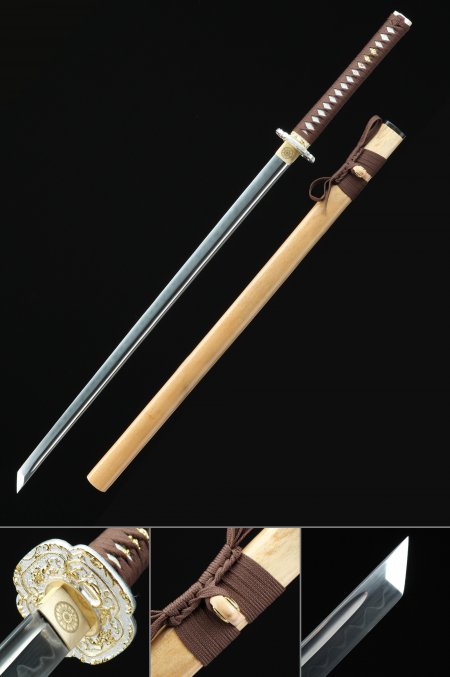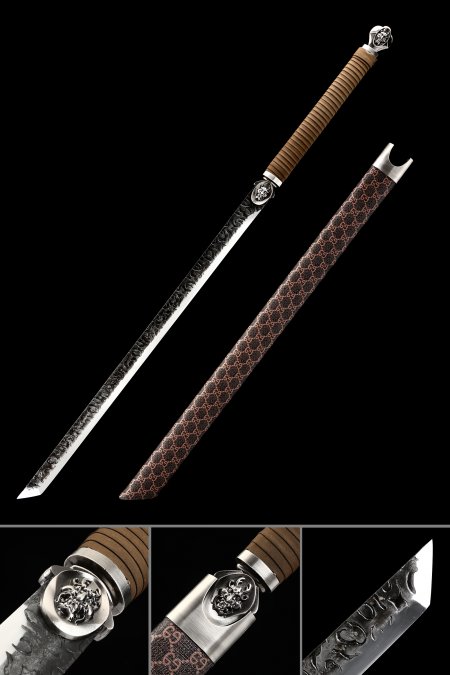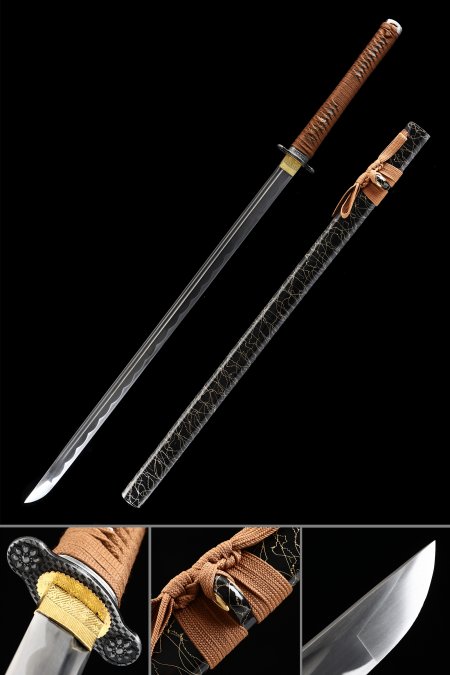
Brown Handle Ninjato

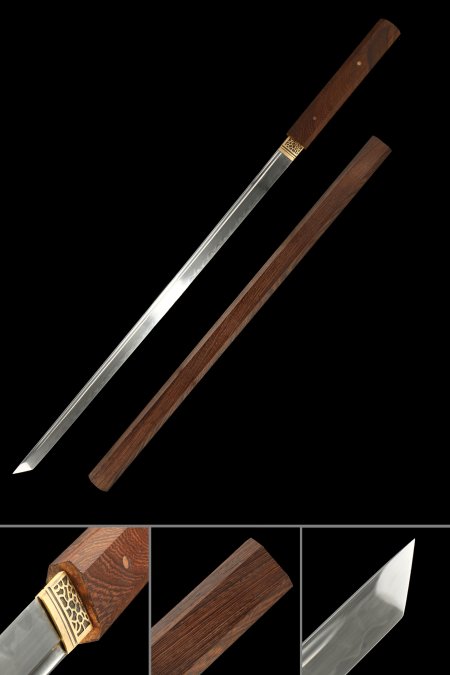
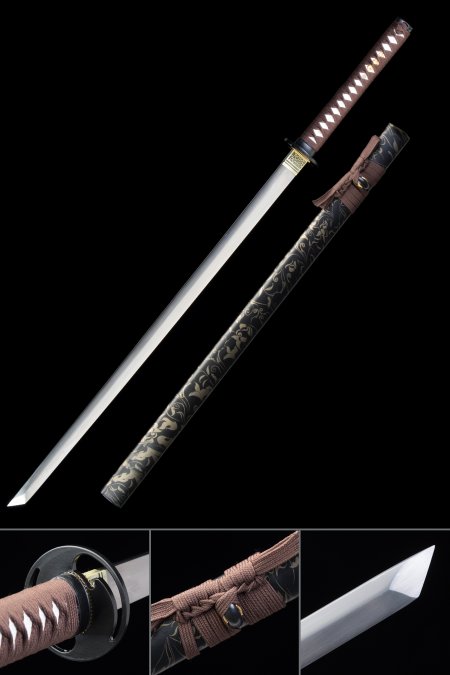
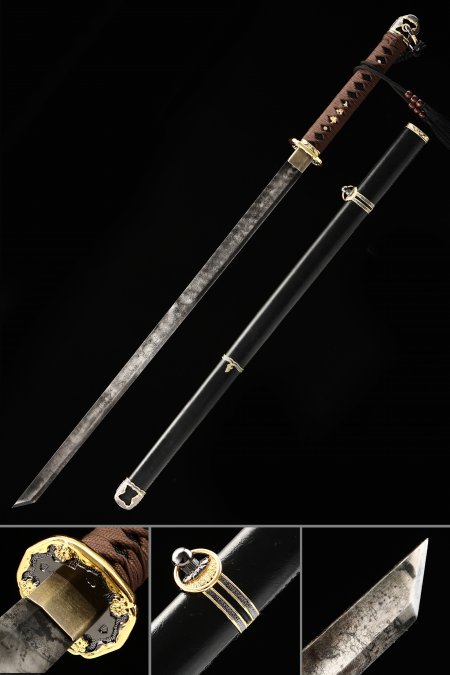
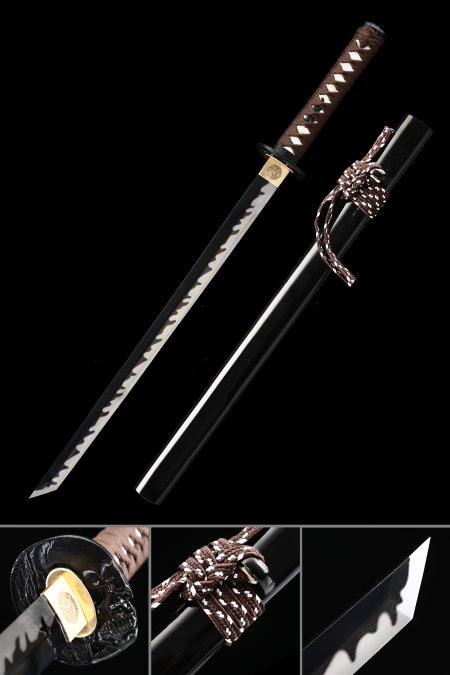
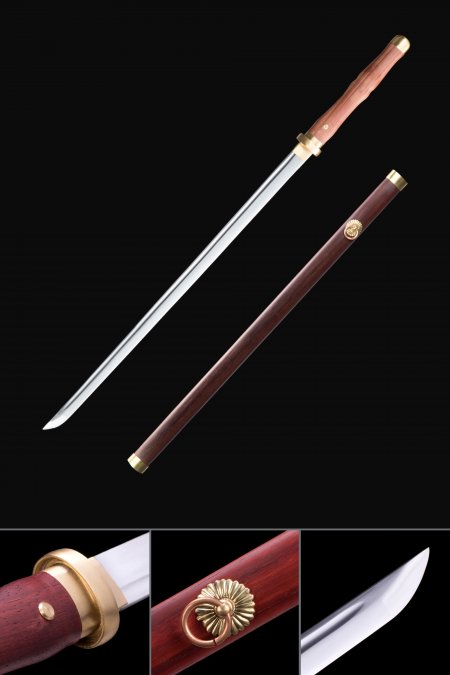
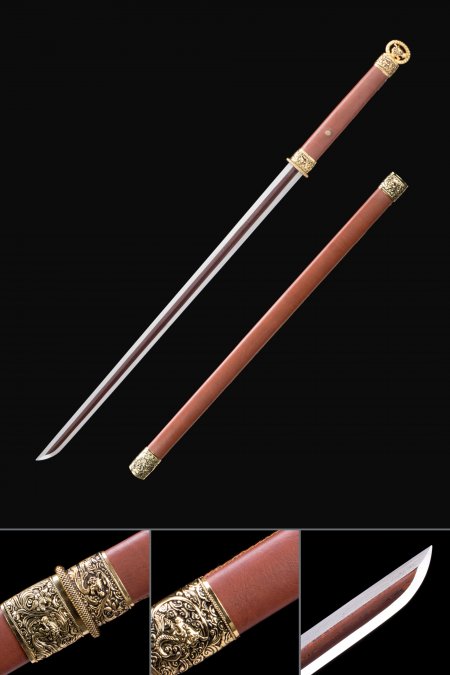
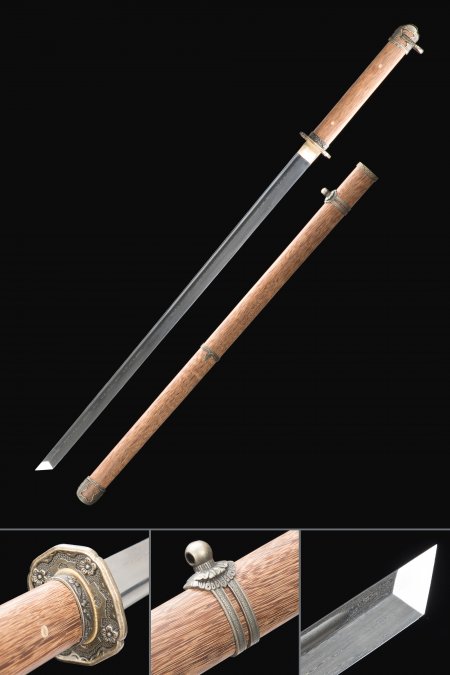
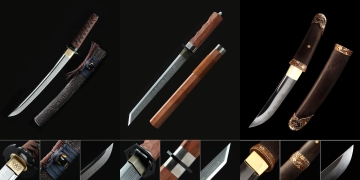
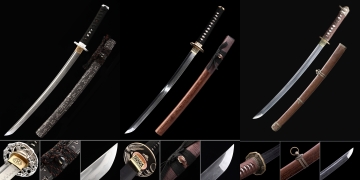
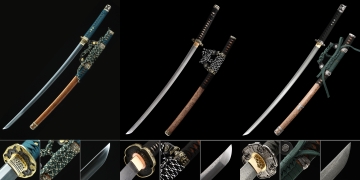
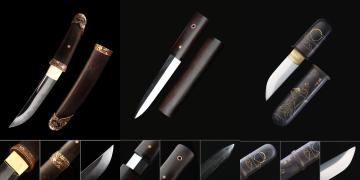
Brown handle ninjato swords bring together the sleek straight-blade silhouette of traditional chokuto-style designs and the warm, tactile elegance of earth-toned ito or cord wrapping. Each piece in this collection is crafted with full-tang construction and hand-selected materials - from 1045 carbon steel to folded Damascus - ensuring lasting structural integrity worthy of serious display. Enjoy free standard shipping on your order, plus hassle-free returns so every acquisition meets your expectations.
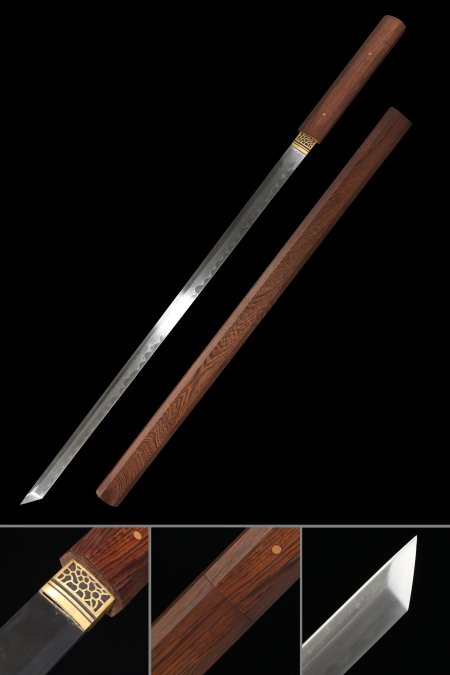
Showing 13 Products

Frequently Asked Questions

What makes a ninjato different from a katana?
The most immediate distinction is blade geometry. A katana features a pronounced curved profile - the result of differential clay tempering that causes the spine and edge to cool at different rates, inducing curvature. A ninjato, by contrast, follows the older chokuto straight-blade tradition, maintaining a nearly flat profile from tang to tip. This straight geometry gives the ninjato a distinctly modern, architectural look that many collectors find appealing as a display piece. The tsuka (handle) on ninjato tends to be shorter as well, and the saya is typically square or rectangular in cross-section rather than the rounded profile associated with katana mountings. These differences make the ninjato a visually distinct collectible that complements rather than duplicates a standard katana in any display arrangement.
Is T10 steel better than 1045 for a display ninjato?
For pure display purposes, both perform well - but T10 carbon steel offers one significant visual advantage: it responds to differential heat treatment well enough to produce a visible hamon, the undulating temper line along the blade edge. On a 1045 steel blade, heat treatment is more uniform and a distinct hamon is rarely present. T10 also contains trace amounts of tungsten, which contributes to a finer grain structure and a slightly more polished surface finish. If the aesthetics of the blade surface matter to you as a collector - and for display pieces, they often do - T10 pieces with real hamon activity provide more visual depth and a stronger connection to traditional Japanese forging methods. For collectors on a tighter budget who prioritize the handle and fittings over blade metallurgy, a well-appointed 1045 ninjato remains an excellent choice.
How should I maintain a brown cord-wrapped handle?
Brown ito and cotton cord wraps require modest but consistent care to stay looking their best. The primary concern is moisture: natural fiber wraps can absorb humidity and develop mildew or discoloration if stored in damp conditions. Store your ninjato in a temperature-stable room away from basements or exterior walls. If the wrap feels slightly stiff or dried out after years of display, a very light application of leather conditioner (for leather-wrapped tsuka) or a gentle brush-down with a dry soft bristle brush (for cotton or silk ito) will restore suppleness. Avoid chemical cleaners entirely - they can bleach or weaken natural fibers. For the blade itself, a thin coat of choji oil applied every three to four months with a soft cloth prevents oxidation. Always handle the blade with cotton gloves to keep finger oils off the steel and away from the wrap.
What display setup works best for a straight-blade ninjato?
Because of its straight profile, a ninjato sits particularly well on a horizontal two-tier sword stand, with the blade facing upward in the traditional Japanese display orientation (ha-muki-ue). This positioning allows the full length of the blade and the contrast between saya and tsuka to be appreciated at a glance. For wall mounting, a horizontal single-sword bracket keeps the straight geometry clean against the wall without the visual tension a curved blade might create. Collectors who display multiple pieces often position a ninjato beside a curved katana to create intentional geometric contrast - the interplay of straight and curved lines reads as visually sophisticated rather than repetitive. Keep the display area away from windows to prevent UV fading on the saya lacquer and handle wrap over time.
Are Damascus steel ninjato suitable as long-term collectibles?
Damascus steel - produced by forge-welding multiple steel billets and folding them repeatedly to create layered grain patterns - is primarily valued in collectible swords for its striking visual texture rather than any single metallurgical property. The layered surface, often revealed through acid etching, gives each Damascus blade a unique appearance that no two pieces share exactly. For long-term collecting, Damascus ninjato are well-suited provided they receive proper care. The etched surface can lose contrast over time if exposed to high humidity without protection, so regular light oiling is more important for Damascus than for plain high-carbon steel. Avoid aggressive polishing, which can remove the etched layer and flatten the visual pattern. Stored correctly, a Damascus ninjato will retain its surface character indefinitely and typically appreciates in perceived value as a display centerpiece within a collection.

Customer Reviews