What makes brown and white tsuka wrapping distinctive?
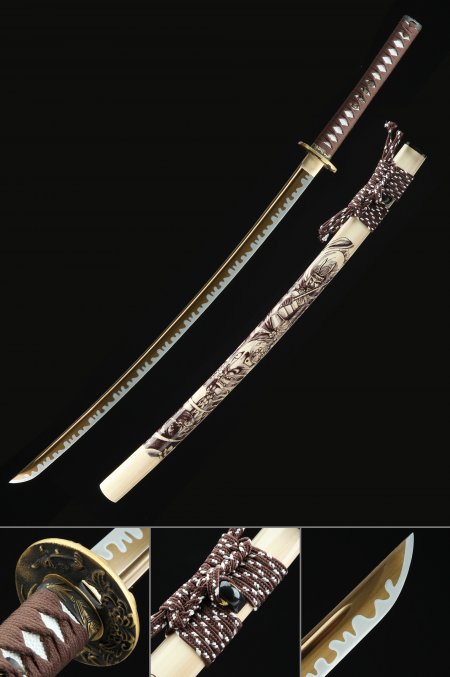
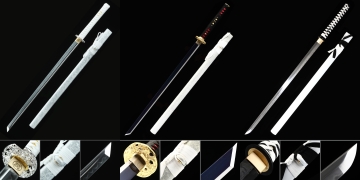
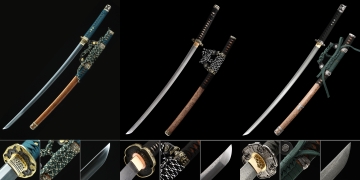
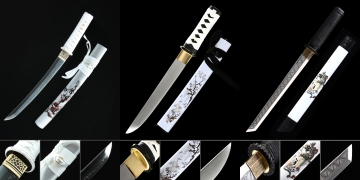
The brown and white tsuka wrapping stands out because of how the two tones interact across the surface of the handle. The base layer is pale ray skin (same), whose naturally pebbly texture shows through the gaps left by the ito wrapping cord. When brown ito is applied in a traditional diamond pattern over this light surface, the result is a layered, two-tone effect that reads differently depending on the lighting and viewing angle. Historically, this kind of restrained color pairing was associated with samurai who valued craftsmanship over flash — the subtlety itself was a marker of taste. For display collectors today, this colorway works especially well in natural or warm-toned interior settings where more vivid colors might feel out of place.
What is manganese steel and how does it affect the blade's appearance?
Manganese steel is a steel alloy with an elevated manganese content, typically in the range of 1% to 1.8%, which improves the metal's toughness and gives the finished blade a smoother, slightly warmer surface character compared to plain high-carbon steel. For decorative and display-grade katana, this material polishes cleanly and accepts surface treatments well — which is why you'll often see manganese steel blades paired with gold-tone finishes or deep lacquer work on the fittings. It is distinct from tamahagane (traditional Japanese smelted iron) or folded steel, but for a collectible piece focused on visual presentation, manganese steel delivers a consistent, attractive finish that holds up well over time when properly maintained.
How should I store a katana with a lacquered saya?
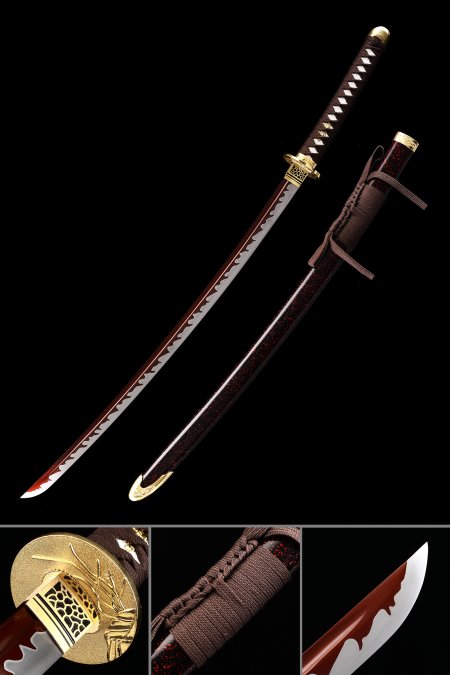
Lacquered sayas require a bit more attention than plain wood scabbards because the lacquer surface can crack or craze if exposed to significant humidity swings or prolonged direct sunlight. Store your katana horizontally on a dedicated katana stand in a room with stable humidity — ideally between 40% and 60% relative humidity. Avoid displaying it directly in front of windows where UV exposure can dull the lacquer finish over time. The blade itself should be lightly coated with a neutral mineral oil (such as choji oil) before being seated in the saya for extended storage. Check the oil coating every few months and reapply as needed to prevent surface oxidation on the blade.
Is a full-tang katana better for display than a partial-tang one?
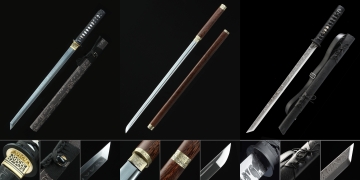
For display and collectible purposes, full-tang construction is generally considered the higher-quality standard. In a full-tang katana, the blade's steel extends the entire length of the handle, with the tsuka fittings wrapped around it — this means the handle and blade are one continuous piece of metal, which gives the overall piece a sense of authentic heft and structural integrity that collectors notice immediately when handling it. Partial-tang katana use a shorter steel extension secured within the handle, which can feel lighter or less substantial. When displaying a katana and occasionally removing it from its saya for viewing, a full-tang piece simply presents and handles more convincingly as a serious collectible.
Can a brown white handle katana work as a gift for collectors?
A brown and white handle katana makes a particularly thoughtful gift precisely because its color palette is neutral and versatile — it doesn't demand a specific display context the way a deeply themed or brightly colored piece might. The earthy tones appeal to collectors who appreciate classical Japanese aesthetics without leaning heavily into dramatic presentation. For gifting, look for pieces that include a coordinated saya (scabbard) with a complementary lacquer finish, a decorative tsuba, and a full-tang blade, as these details signal a well-composed, cohesive piece rather than a generic item. Presentation-wise, most pieces in this category arrive in a gift-ready box, making them suitable for milestone occasions, milestone anniversaries, or introductory gifts for someone newly interested in Japanese sword collecting.