What makes clay tempering different from standard quenching on a naginata?
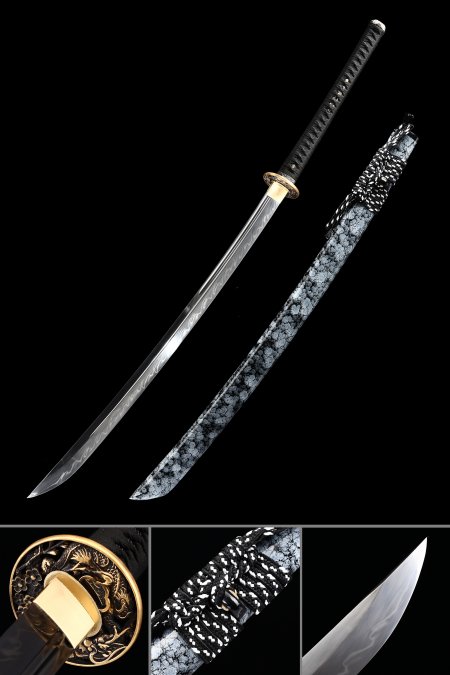
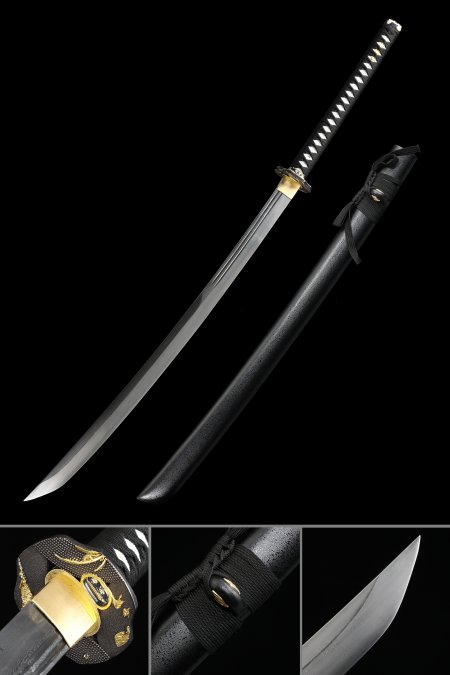
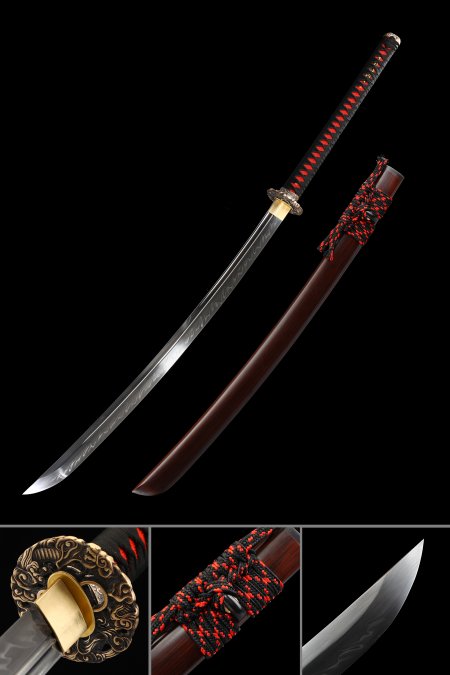
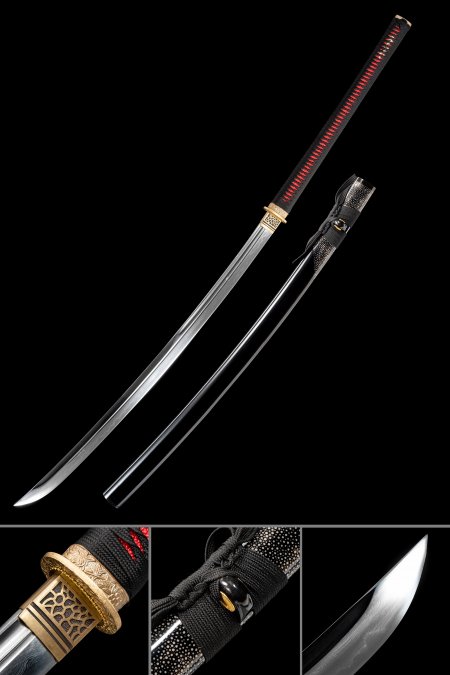
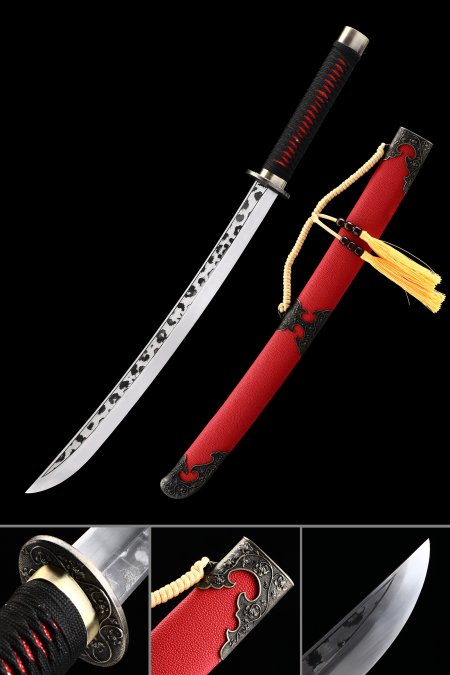
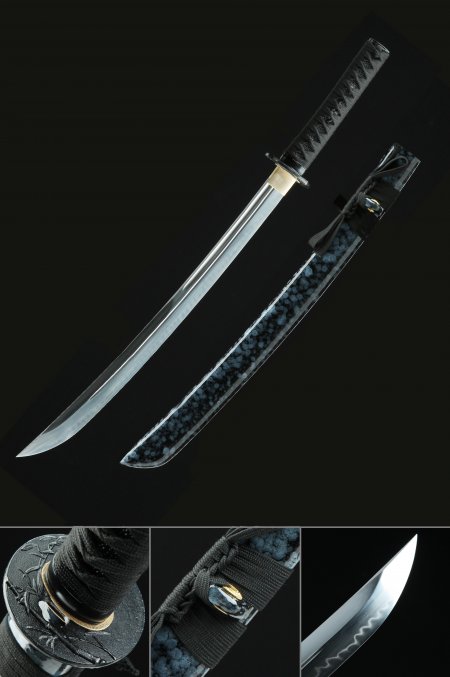
Standard quenching submerges the entire blade in water or oil at a uniform rate, producing consistent hardness throughout. Clay tempering adds an extra step: a mixture of charcoal powder,iteite clay, and sometimes ash is applied in varying thicknesses along the blade before the quench. The thicker coating on the spine insulates the steel so it cools slowly, remaining tough and flexible, while the thinly coated edge cools rapidly to achieve greater hardness. This differential creates the visible hamon line — essentially a crystalline boundary between the two hardness zones. On a naginata, whose long curved blade endures significant lateral stress during handling or display vibrations, that softer spine acts as a built-in shock absorber, reducing the chance of cracking. The hamon also makes every piece unique; no two clay applications produce an identical pattern, giving collectors a genuine one-of-a-kind feature.
Why are T10 and Damascus steel popular choices for collectible naginata?
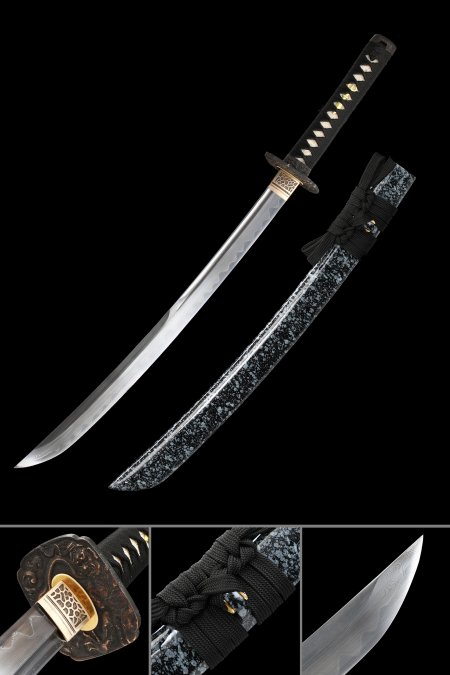
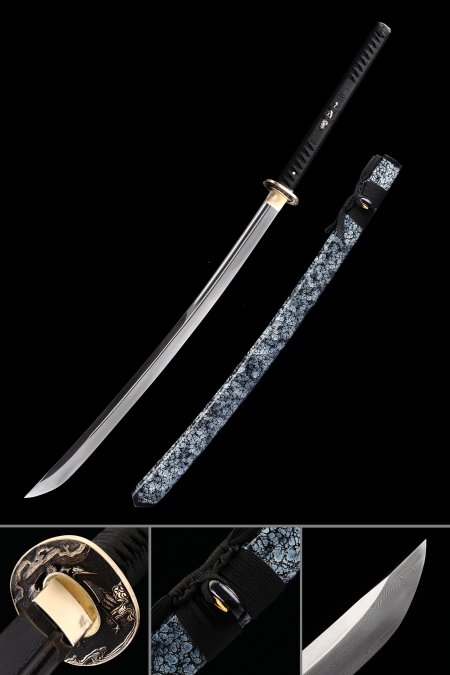
T10 is a high-carbon tungsten-alloy steel prized for its ability to hold a well-defined hamon after clay tempering. The tungsten content improves wear resistance and allows the edge to reach around 60 HRC while the spine stays closer to 40 HRC — a wide differential that makes the hamon vivid and the overall structure durable. Damascus, or pattern-welded steel, involves folding and forge-welding multiple layers of different carbon-content steels together. The result is an organic, watered-silk grain pattern visible on the polished surface. Collectors choose T10 when they want a bold, singular hamon line as the visual centerpiece, and Damascus when they prefer layered texture across the entire blade. Both steels accept a high polish and respond well to traditional Japanese finishing, making them excellent candidates for display-grade naginata.
How should I display and maintain a clay tempered naginata?
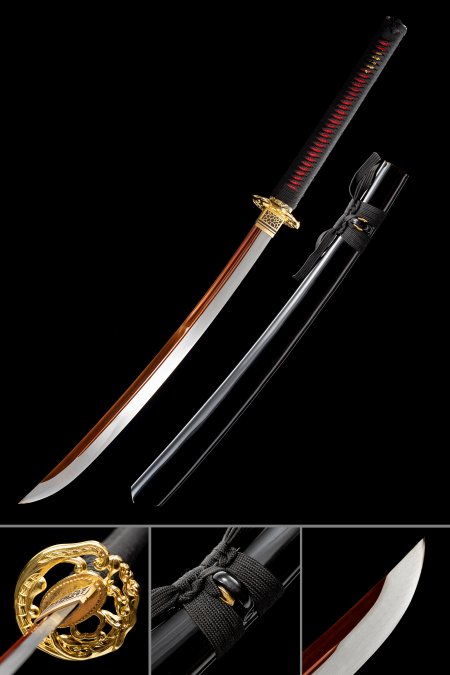
Wall-mounted horizontal racks or vertical floor stands designed for polearms work best, keeping the blade away from foot traffic and direct sunlight. UV exposure can fade lacquer finishes on the saya over time. For steel care, apply a thin coat of choji oil — or any refined mineral oil — to the blade every four to six weeks, using a soft cotton cloth in long, even strokes from spine to edge direction. In humid climates, shorten the interval to every two to three weeks, and consider a small silica-gel packet near the display to regulate moisture. Avoid touching the blade surface with bare fingers; skin oils contain salts that initiate surface oxidation within hours. If fingerprints do appear, remove them promptly with a cloth lightly dampened with oil. The lacquered saya needs only occasional dusting with a microfiber cloth.
Is a naginata a good first piece for someone new to Japanese blade collecting?
A naginata can be an outstanding entry point, particularly because its dramatic length and distinctive silhouette create immediate visual impact in any display setting. Clay tempered naginata also serve as excellent educational pieces: the visible hamon teaches newcomers about differential hardening, and the full-tang construction lets you study how blade, habaki, and tsuba fit together. That said, collectors should account for space requirements — a 118 cm piece needs a suitable wall or stand. Many enthusiasts begin with a naginata alongside a shorter blade like a wakizashi or shirasaya, which offers a point of comparison in terms of curvature, steel type, and fittings, building a well-rounded understanding of the craft from the start.
What details distinguish a high-quality clay tempered naginata replica?
Look first at the hamon: a genuine clay tempered hamon will have an irregular, organic boundary with subtle variations in width and intensity, unlike an acid-etched cosmetic hamon that appears uniform and almost printed. Next, inspect the tang. High-quality pieces feature a full tang that runs the entire length of the handle, usually secured with one or two mekugi pegs. Check the fit between the habaki (blade collar) and the tsuba — there should be minimal lateral play. On the saya, quality lacquer feels smooth and even without drips or bare spots, and the blade should seat snugly with a slight click. Finally, the overall geometry of the blade should show a consistent curve with no visible warping, and the ridge line (shinogi) should run evenly from base to tip. These indicators together separate display-worthy collectibles from mass-produced souvenirs.