What does the crane symbolize on a tanto tsuba?
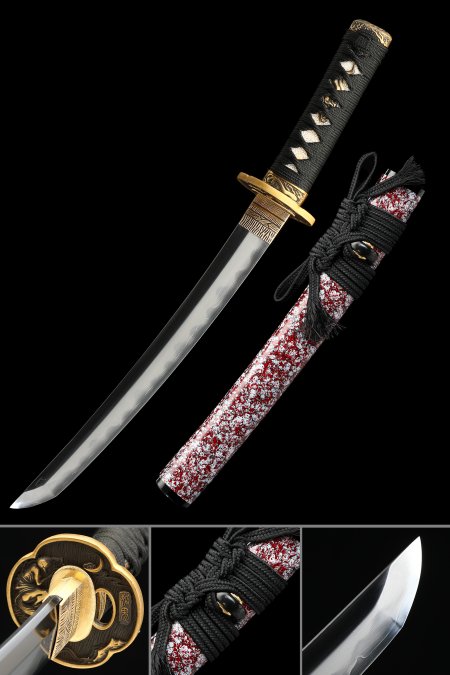
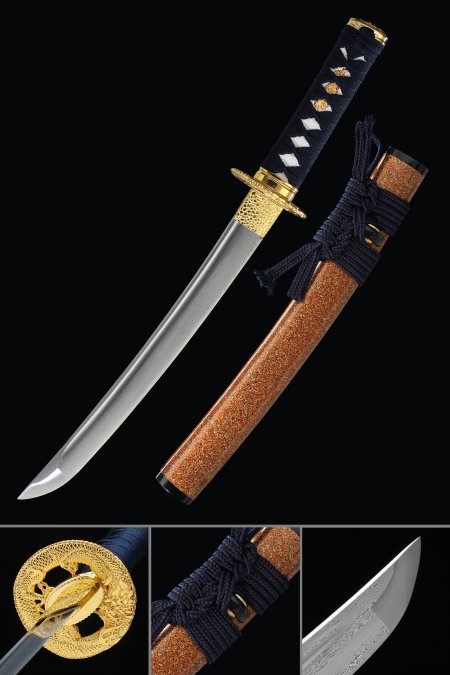
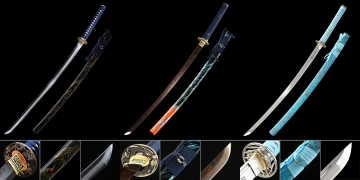
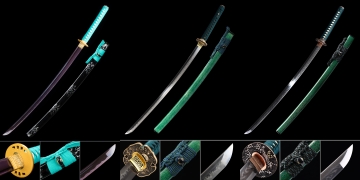
In Japanese culture, the crane - tsuru - is one of the most enduring symbols of longevity, good fortune, and noble character. On a tsuba, the crane motif elevates the guard from a purely functional fitting to a piece of decorative metalwork with genuine cultural resonance. Historically, crane imagery appeared on armor fittings, lacquerware, and court textiles worn by members of the aristocracy and samurai class. When rendered in gold-toned relief on a tanto tsuba, the crane also creates a deliberate visual focal point - drawing the eye to the transition between blade and handle and reinforcing the sense that the entire tanto has been composed as a unified aesthetic object rather than assembled from unrelated parts.
How does Damascus steel differ from T10 in a tanto blade?
Damascus steel tanto are made through a process of layering and folding multiple high-carbon steel billets, which produces the distinctive flowing grain pattern visible on the blade's surface. This process creates micro-variations in hardness throughout the steel and gives each blade a visually unique pattern that cannot be exactly replicated. T10 carbon steel, by contrast, is a single-composition tool steel prized for its fine grain structure and its ability to take a very clean, consistent edge geometry. T10 tanto are also well suited to clay tempering, which can produce a visible hamon - the temper line along the blade's edge - adding another layer of visual distinction. For collectors, Damascus offers dramatic visual texture while T10 offers metallurgical refinement and the classic aesthetic of a hamon line.
How should I store and maintain a tanto for long-term display?
For long-term display, the most important factor is humidity control. High moisture accelerates oxidation on carbon steel blades, so storing or displaying your tanto in a climate-controlled room - ideally at 40-55% relative humidity - is strongly recommended. Apply a thin coat of blade oil (choji oil is traditional; mineral oil is an acceptable modern substitute) every few months, using a soft cloth or dedicated oil paper. Avoid touching the blade surface directly, as skin oils accelerate surface patina. For wall or stand display, ensure the tanto is not exposed to direct sunlight, which can fade ito wrapping and degrade lacquer finishes over time. Store in the saya when not on active display to protect both the blade and the scabbard's interior lacquer.
Is the rayskin on the saya authentic samegawa?
Authentic samegawa - ray skin or sharkskin - has been used in Japanese blade fittings for centuries, valued for its naturally pebbly texture, which provides grip on handles and a distinctive tactile surface on scabbards. In higher-grade tanto, genuine rayskin is used on the tsuka under the ito wrapping, and occasionally as a decorative surface element on the saya. When rayskin is featured as a saya finish, as in the orange rayskin saya variant in this collection, the natural nodule pattern is visible and provides a surface that is both visually striking and resistant to minor abrasion. Collectors should note that samegawa will darken slightly over time with handling, developing a natural patina that many regard as an enhancement to the piece's character.
Can a tanto from this collection be given as a gift?
A Crane Tsuba Tanto makes a genuinely distinctive gift for collectors of Japanese art, edged antiques, or decorative metalwork. The crane motif carries universally positive symbolism - longevity, good fortune, and refinement - making it appropriate for milestone occasions. The coordinated finishing across blade, tsuba, ito, and saya gives these pieces a presentation quality that reads immediately as a considered, high-craft gift rather than a generic novelty. For gift presentation, a display stand or paulownia wood box (kiri-bako) can be added to complete the aesthetic. If you are selecting between pieces, the saya color and ito tone are worth considering relative to the recipient's existing collection palette or interior style.