What steel types are used in dark blue handle ninjato?
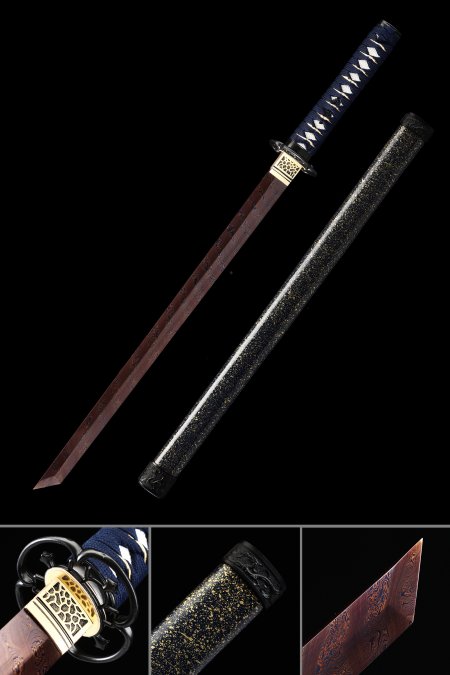
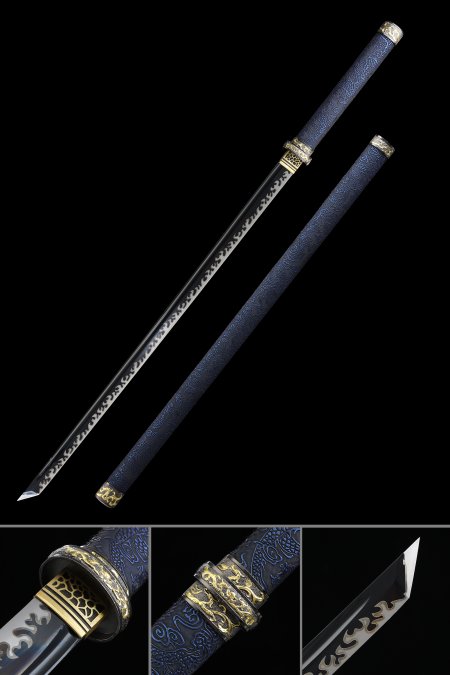
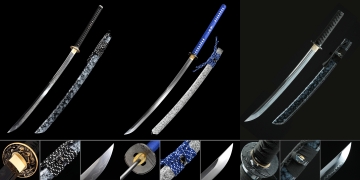
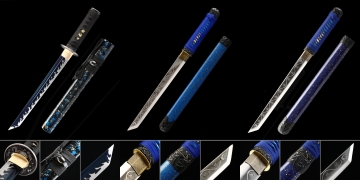
The ninjato in this collection use three primary steel types: manganese steel, 1060 high-carbon steel, and 1095 high-carbon steel, plus Damascus folded steel in select pieces. Manganese steel produces a consistent, tight grain that polishes to a clean mirror or holds a deep black finish evenly. 1060 carbon steel is slightly tougher with a more open grain, making it well suited for etched flame patterns and shirasaya-style presentation. 1095 carbon steel has the highest carbon content of the three, enabling a visible hamon - the wavy temper line along the blade edge - when the blade is differentially hardened. Damascus folded steel layers multiple alloys into flowing banded patterns, making each blade visually unique. Each steel type ages differently in display conditions, so your choice should reflect both the visual character and the maintenance level you prefer.
How is dark blue ito wrap different from standard black ito?
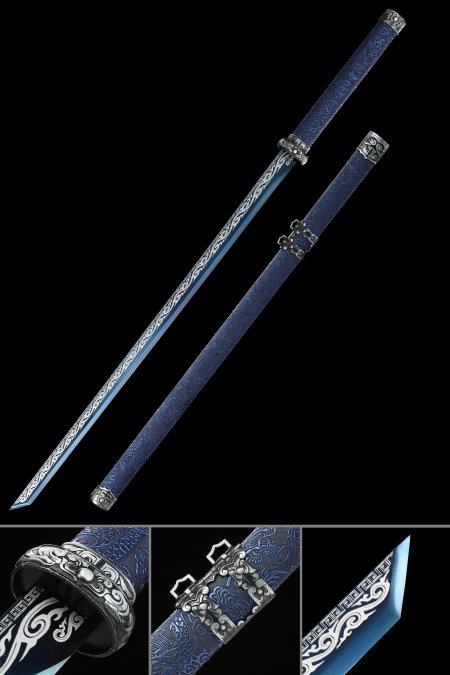
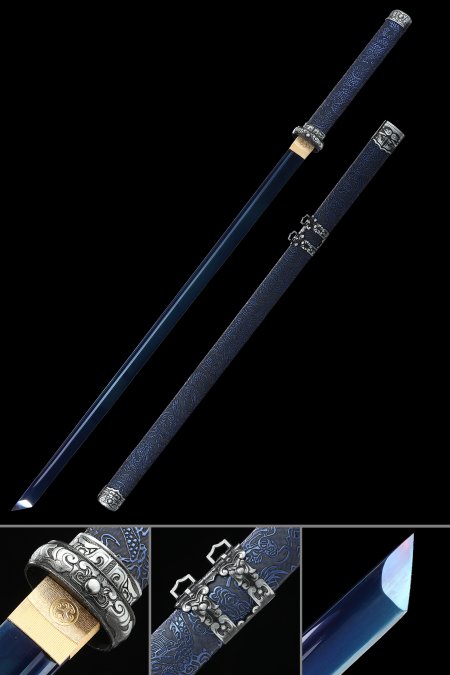
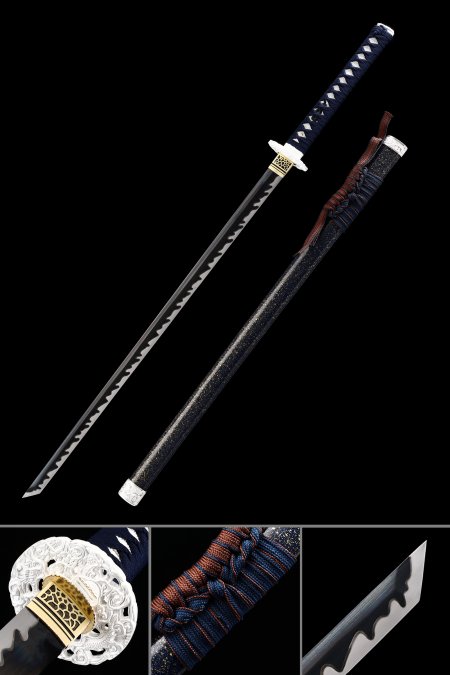
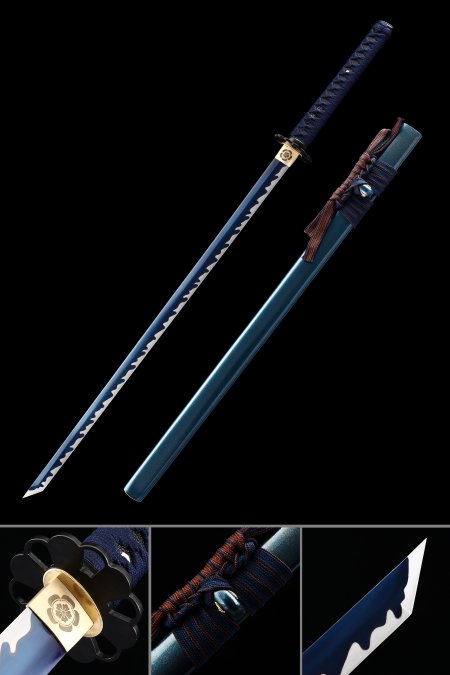
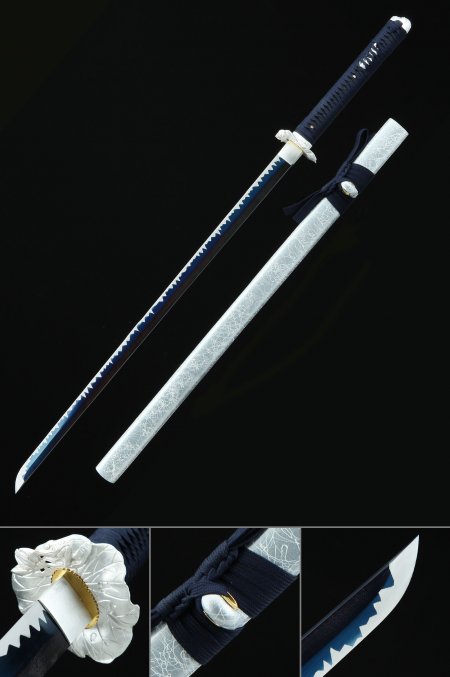
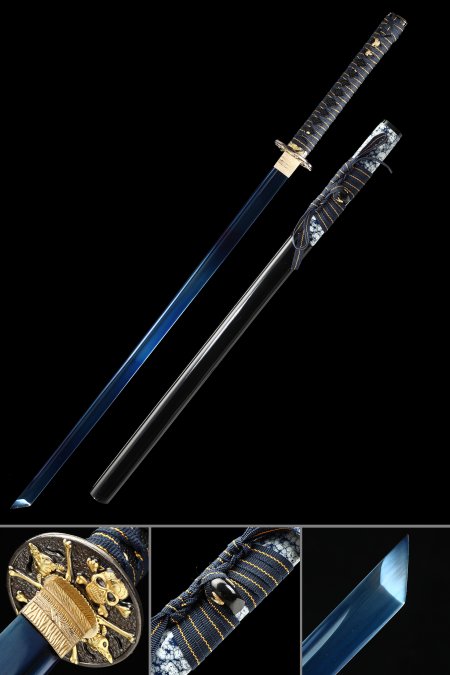
Ito is the flat silk or synthetic cord braided in a diamond pattern over the same (ray skin) on the tsuka, or handle core. Dark blue ito distinguishes a piece through color contrast: against the pale grain of white same, the deep indigo creates a sharp geometric pattern that reads clearly from a distance, making it ideal for display cases where visual impact matters. Black ito blends more subtly with dark same and fittings, giving a uniform, understated look favored in traditionally styled pieces. Beyond aesthetics, the quality of the wrap itself - tension consistency, corner sharpness, and whether the same is genuine or synthetic - determines how well the handle holds its shape and appearance over years of display. Well-executed dark blue ito on genuine ray skin is one of the defining visual signatures of this ninjato collection.
What makes ninjato saya different from katana saya?
A katana saya is shaped with a gentle curve matching the blade's geometry, while a ninjato saya is straight or very slightly tapered, following the blade's linear profile. This structural difference affects how the saya is lacquered and reinforced - straight saya have no flex allowance built into the wood form, so the lacquer application and internal fitting must be precise to prevent blade rattle. The ninjato saya in this collection use lacquer finishes ranging from solid matte black to galaxy-effect and black-and-gold two-tone, and some feature dragon-embossed leather wrapping over the wood core for additional texture. The kurikata (cord knob) and kojiri (end cap) positioning also differs on a straight saya, contributing to both the display silhouette and the overall balance of the sheathed piece on a stand.
Are these ninjato suitable as display gifts for collectors?
Yes - a ninjato with a dark blue handle and a distinctive tsuba motif makes a visually striking collectible gift precisely because the design choices are specific enough to feel intentional rather than generic. Dragon tsuba, skull motifs, plum blossom cutouts, and silver scroll engravings each appeal to different collector aesthetics, so there is a meaningful selection decision to be made rather than just picking any sword-shaped object. For gifting, pieces with a named steel type (1095 or Damascus), a full-tang construction note, and a lacquered saya tend to photograph and display most impressively. Including a display stand in the order completes the presentation. These are catalogued and sold strictly as collectibles and display pieces, which also makes them straightforward to ship and receive as gifts without any special licensing considerations in most jurisdictions.
How should I care for the lacquer saya on a displayed ninjato?
Lacquer saya are more durable than they appear but are sensitive to two specific conditions: prolonged direct UV exposure, which yellows or fades the finish over time, and rapid humidity changes, which can cause the wood core to expand or contract and crack the lacquer surface. For display, position the ninjato away from south-facing windows or use UV-filtering glass in your display case. Wipe the saya exterior with a dry soft cloth monthly to remove dust; never use solvent-based cleaners on lacquer. For the blade inside, apply a thin coat of choji oil or mineral oil to the surface every three to four months to prevent oxidation - insert and remove the blade gently to avoid scratching the interior of the saya. Storing the sheathed ninjato horizontally on a stand distributes weight evenly and reduces stress on the koiguchi (saya mouth) over the long term.