What makes a wakizashi different from a katana for collectors?
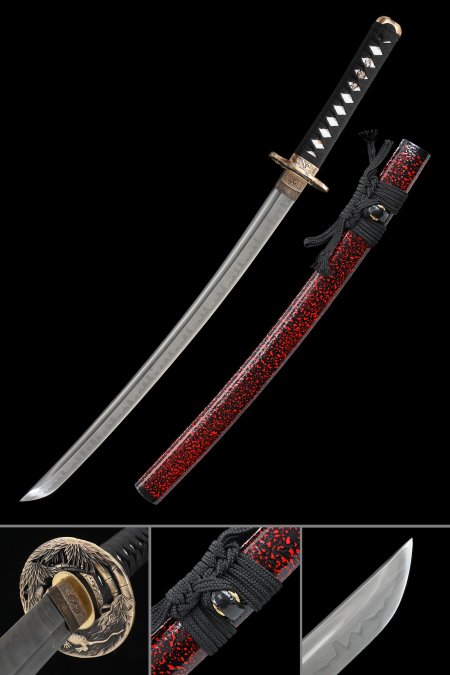
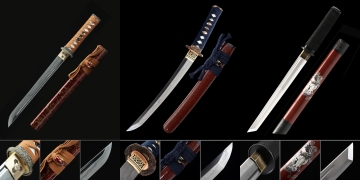
The wakizashi is defined by its blade length - traditionally between 12 and 24 inches - which places it in a distinct category from the longer katana. For collectors, this size difference has practical implications: wakizashi are easier to display in compact spaces, fit naturally into shadow box frames, and pair elegantly with a katana in a daisho arrangement. Historically, the wakizashi was worn alongside the katana as a matched set, so many serious collectors seek both to complete a thematically unified display. The shorter format also means that decorative elements like the tsuba, ito wrap, and saya lacquer are viewed at closer range, making fine craftsmanship details more immediately visible and impactful.
How does T10 carbon steel differ from manganese steel in display swords?
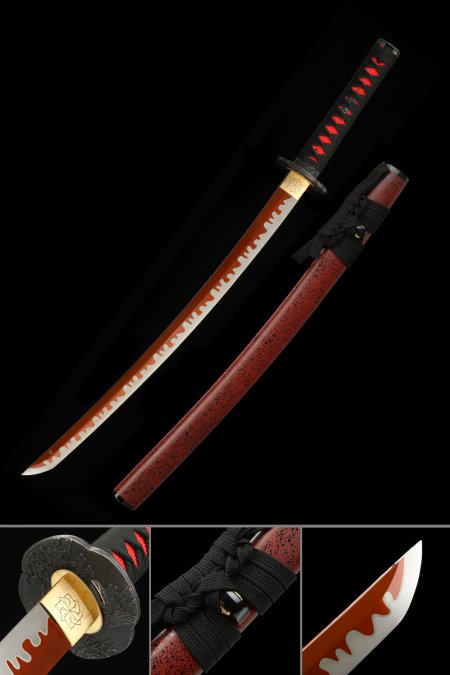
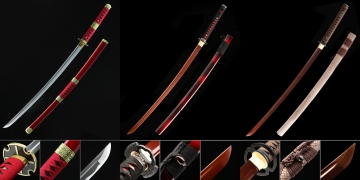
T10 carbon steel is a high-carbon tool steel known for its ability to hold a fine edge geometry and its compatibility with differential hardening techniques like clay tempering. Visually, T10 blades often display a distinct hamon - the undulating temper line along the edge - which is a prized aesthetic feature among collectors who appreciate authentic craftsmanship signals. Manganese steel, by contrast, incorporates manganese as an alloying element that increases toughness and resistance to surface deformation. It tends to produce a cleaner, more uniform blade appearance. For display collectors, the choice often comes down to visual preference: T10 offers natural surface character and hamon depth, while manganese steel delivers a bold, consistent finish - particularly striking when paired with a red blade treatment as seen in this collection.
What does 'koshirae' mean and why does it matter for collectors?
Koshirae refers to the complete set of fittings and mountings on a Japanese sword - encompassing the tsuba (handguard), fuchi and kashira (collar and pommel), menuki (ornamental grip accents), ito wrap, and saya (scabbard). For collectors, koshirae is often as important as the blade itself because it tells a story: the motifs chosen, the materials used, and the quality of execution all reflect the artistic tradition and craftsmanship level of the piece. In the Darkred Wakizashi collection, the chrysanthemum and Phoenix themes in the koshirae are not decorative afterthoughts - they are intentional design programs that unify each sword's visual identity from tip to saya. A well-composed koshirae dramatically increases a display sword's visual presence and collectible depth.
How should I store and maintain a lacquered saya at home?
Lacquered saya require stable environmental conditions to preserve their finish over time. Avoid placing them in areas with direct sunlight, which can fade pigmentation and dry out the lacquer layer. Humidity fluctuations are the primary enemy of lacquerwork - ideally store your wakizashi in a space maintained between 40-60% relative humidity. Never apply oil directly to the saya surface; instead, use a soft, dry microfiber cloth for dust removal. If the sword will be stored inside the saya for extended periods, lightly oil the blade itself with choji oil to prevent moisture transfer to the interior. For display, a horizontal stand that supports the saya evenly along its length will prevent warping and protect the lacquer finish at contact points.
Is a darkred wakizashi a good gift for a Japanese sword enthusiast?
A darkred wakizashi makes a distinctive and genuinely thoughtful gift for anyone who collects or displays Japanese swords. The bold crimson aesthetic gives it immediate visual impact - it stands apart from more conventional silver-and-black presentations - while the underlying craftsmanship details (hand-forged blade, traditional fittings, themed koshirae) give the recipient something meaningful to study and appreciate over time. For gift-giving, consider whether the recipient already owns a katana in a compatible color scheme, as a matching wakizashi can complete a daisho display pair. The wakizashi format is also practical as a first display sword for newer collectors, since its compact size makes it easy to showcase without requiring a large dedicated display area.