
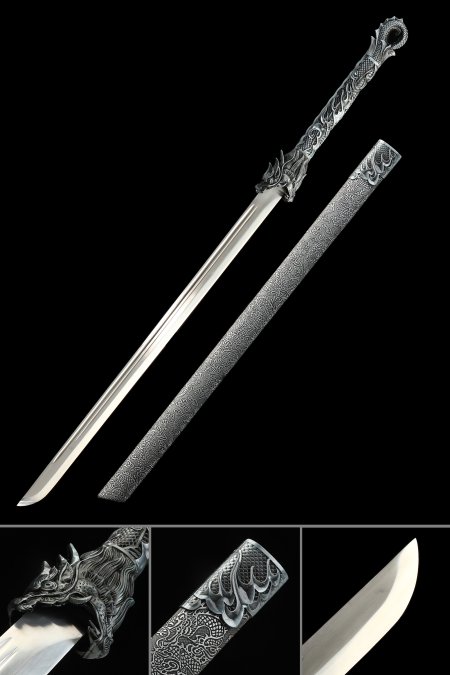
Dragon Ninjato
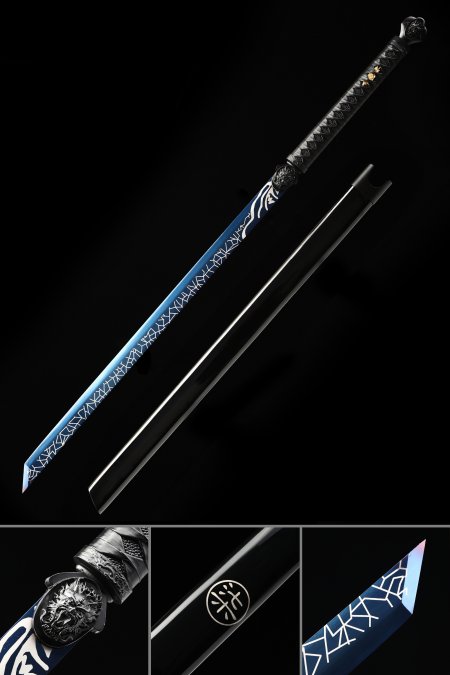
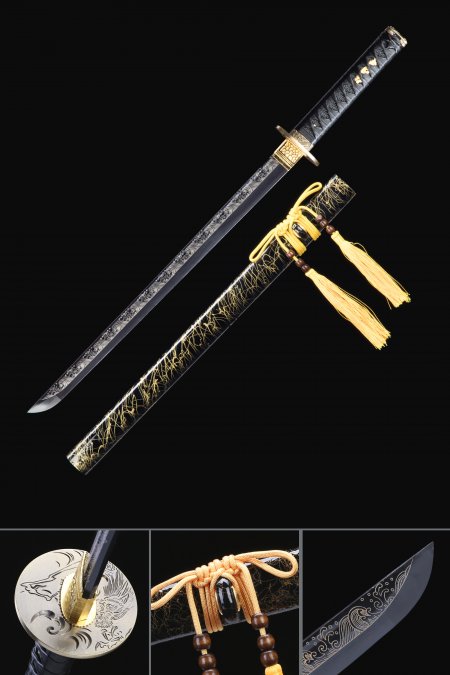
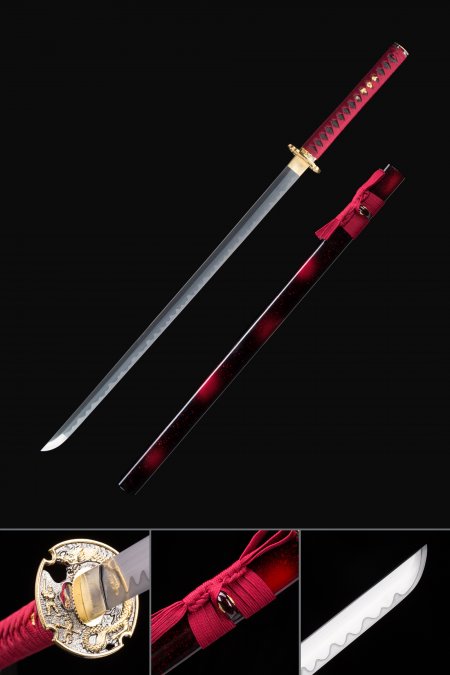
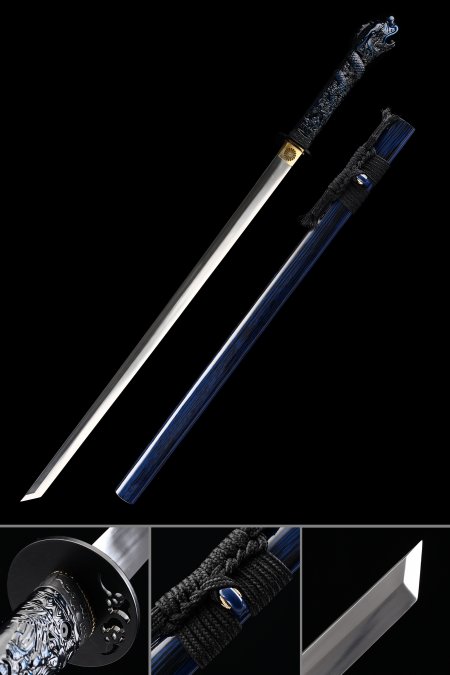
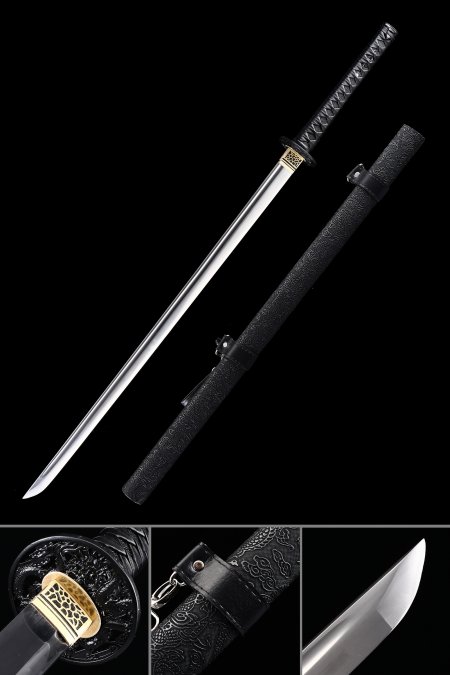
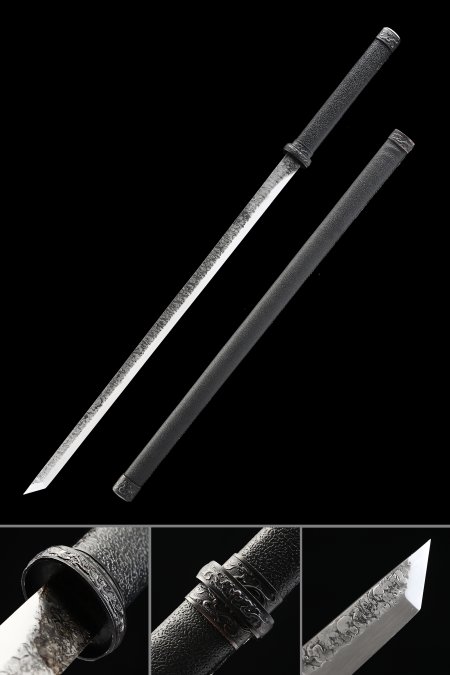
Browse our Dragon Ninjato collection, where East Asian dragon mythology meets the straight ninja blade format in a distinctively unusual combination. Dragon imagery — symbolizing power, wisdom, and divine guardianship — most commonly appears on curved katana, making its application to straight ninjato an unexpected pairing that creates some of the most visually striking and conversation-worthy pieces in our catalog. The mythological grandeur of dragon fittings against the utilitarian geometry of straight ninja blades produces a compelling aesthetic tension. Free U.S. shipping and 30-day return guarantee.
FAST SHIP
Free Shipping
159.00 USD
ON SALE! 15% OFF
Was: 189.00 USD
Free Shipping
159.00 USD
ON SALE! 15% OFF
Was: 189.00 USD
FAST SHIP
Free Shipping
169.00 USD
ON SALE! 20% OFF
Was: 209.00 USD
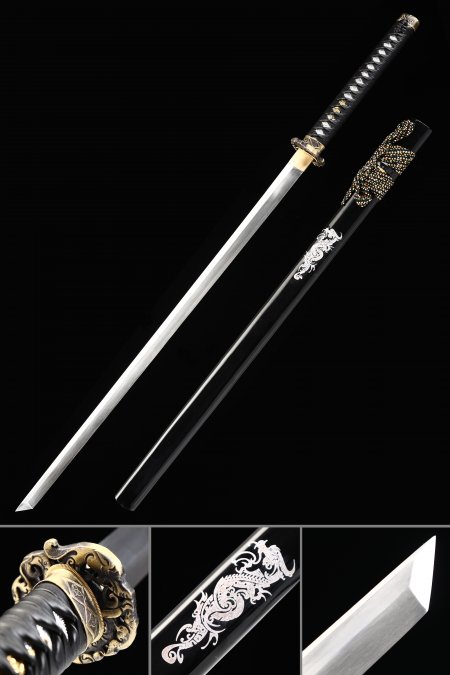
Free Shipping
199.00 USD
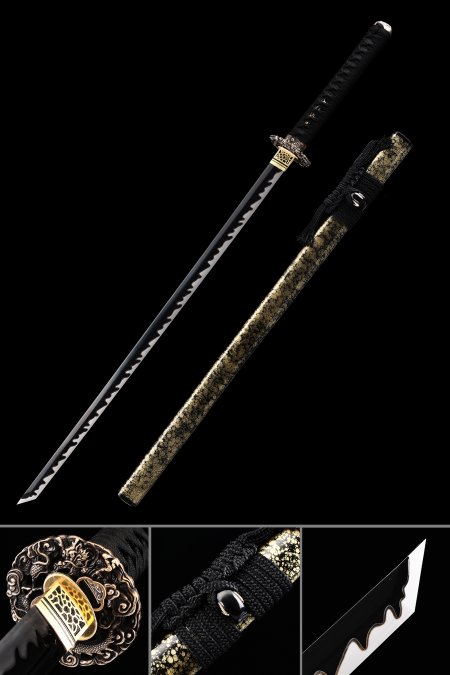
Free Shipping
249.00 USD
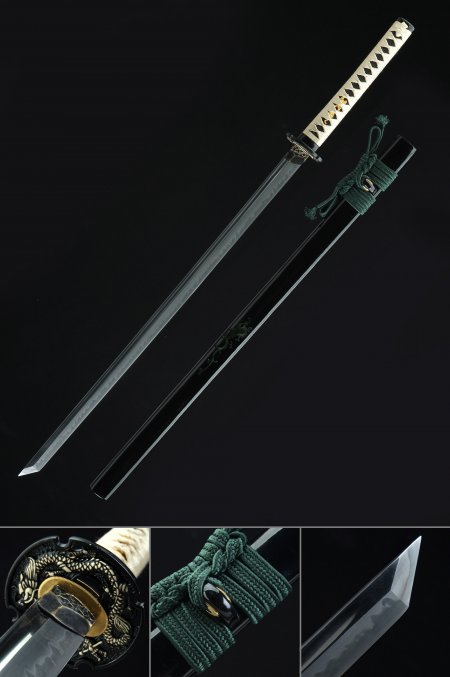
Free Shipping
279.00 USD
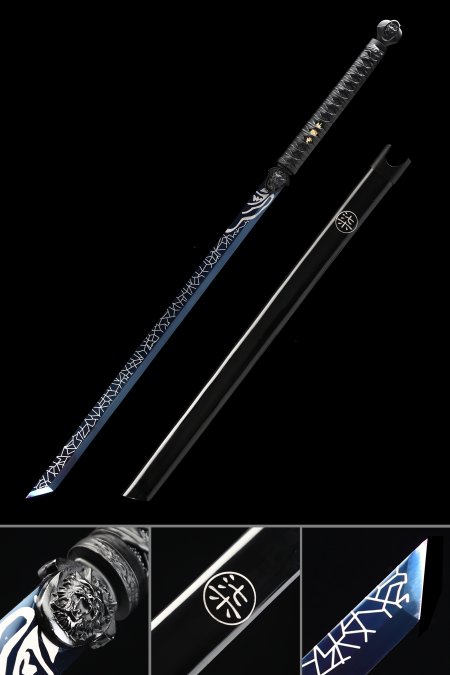
Free Shipping
169.00 USD
ON SALE! 15% OFF
Was: 199.00 USD
Free Shipping
229.00 USD
Free Shipping
219.00 USD
Free Shipping
229.00 USD
Free Shipping
209.00 USD
Free Shipping
209.00 USD
Free Shipping
199.00 USD
Free Shipping
339.00 USD
Free Shipping
209.00 USD
Free Shipping
129.00 USD
ON SALE! 30% OFF
Was: 189.00 USD
Related Collections
Japanese Katana Sword76 items
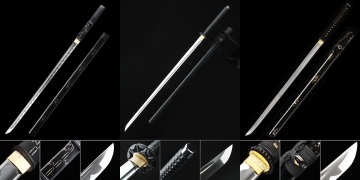
Straight Sword22 items
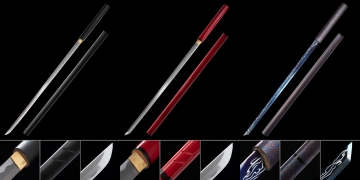
1060 Ninja Sword16 items
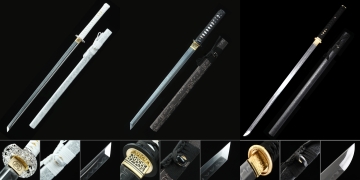
T10 Steel Ninjato20 items
Frequently Asked Questions
What specific dragon design elements appear on ninjato fittings, and how are they crafted at this sm
Dragon elements on ninjato fittings appear across several components, each adapted to the ninjato’s typically smaller and simpler fitting format. The most prominent dragon element is usually the tsuba guard, where sculptors create dragon forms in relief — ranging from sinuous full-body dragons coiling around the guard’s surface to focused dragon head designs that capture the creature’s fierce expression in concentrated form. Because ninjato tsuba tend to be smaller and simpler in outline than katana tsuba, the dragon designs are often more compact and dynamic, with the dragon’s form adapted to fill the available space with maximum visual impact. Menuki ornaments — the small sculptural elements placed beneath the handle wrapping — typically feature dragon forms in miniature, where the sculptor’s skill in capturing the creature’s character at tiny scale demonstrates remarkable craftsmanship. Some pieces also incorporate dragon imagery on the fuchi and kashira end caps and the habaki blade collar. The metalwork on these fittings uses casting, carving, and finishing techniques that have been practiced for centuries, with each fitting individually finished to bring out the sculptural detail of the dragon forms.
What does the dragon symbolize in East Asian and Japanese culture, and why is it significant on swor
The dragon in East Asian culture is a fundamentally different creature from the Western dragon tradition. While Western dragons are typically portrayed as dangerous adversaries to be slain by heroes, East Asian dragons are revered as benevolent cosmic beings embodying supreme power tempered by wisdom and guardianship. In Japanese tradition specifically, the dragon — ryū — is associated with water, rainfall, and the forces of nature, serving as a protector and a symbol of the highest form of disciplined power. Dragons appear throughout Japanese cultural life: in Buddhist temple architecture where they guard sacred spaces, in imperial symbolism where they represent sovereign authority, and in martial arts philosophy where the dragon represents the pinnacle of refined power and technical mastery. On sword fittings, dragon imagery carries these accumulated layers of meaning. A dragon tsuba or dragon menuki is not merely decorative — it invokes the dragon’s protective qualities for the sword’s owner and signals that the blade is imbued with the highest symbolic significance the Japanese artistic vocabulary can express.
Why is the combination of dragon imagery and ninjato format considered unusual, and what makes it co
The combination is unusual because dragon imagery and ninjato design come from opposing aesthetic traditions within Japanese blade culture. Dragon fittings belong to the ornamental, status-signifying tradition of samurai sword decoration — elaborate, symbolically rich, and intended to communicate the owner’s power, refined taste, and cultural sophistication. Ninjato design belongs to the utilitarian, concealment-oriented tradition of covert operatives — simple, functional, and deliberately understated to avoid drawing attention. Placing dragon grandeur on ninja pragmatism creates an aesthetic tension that is inherently interesting: the mythological richness of the fittings seems at odds with the blade’s utilitarian character, yet the combination somehow works because both traditions share a commitment to genuine quality beneath their different surface philosophies. For collectors, this tension is exactly what makes dragon ninjato compelling — they are visually surprising in a way that most sword combinations are not, generating conversation and curiosity that more expected pairings like dragon katana cannot match. Owning a piece that challenges expectations adds intellectual interest to the aesthetic pleasure of the sword itself.
How should dragon ninjato be displayed to maximize both the dragon fittings detail and the straight
Effective display of dragon ninjato requires balancing two visual elements that reward different viewing distances: the detailed dragon fittings demand close examination, while the straight blade profile creates its greatest impact from a distance where the full geometric line is visible. The ideal solution is horizontal display at slightly below eye level on a stand positioned near a seating or standing area where viewers can first appreciate the overall silhouette from a few feet away, then step closer to examine the dragon metalwork in detail. Lighting is critical for dragon-fitted swords because the sculptural fittings create shadows and highlights that reveal their three-dimensional detail — a directional light source positioned above and slightly to one side creates the most dramatic shadow play across the dragon relief on the tsuba. Avoid flat, diffuse lighting that eliminates shadows, as this flattens the sculptural detail that makes dragon fittings visually rich. If displaying alongside dragon katana in a mythological multi-format arrangement, position the ninjato at the same height as the katana to emphasize the geometric contrast between straight and curved blades while maintaining the visual unity of the shared dragon theme across both pieces.
Customer Reviews
Xerius Collins
Arizona, United States
I am not a swordsman so I can't comment on how good it is but as an amateur I'm very happy it looks sturdy and made with quality materials
 |
Blue Blade Manganese Steel Ninjato Sword Full Tang with Black Leather Handle and Dragon Pommel |
Mark Bell
California, United States
Arrived right on time.r
Blade, saya, hilt. All up to True Katana's standards.r
Of course I've already dinged the saya, because I can't have nice things. r
r
I believe this is my seventh purchase....r
r
No, I'm not addicted at all!r
Of course I am sane and rational. r
r
Seriously though. r
This blades name is Ryuketsu.
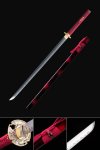 |
High Manganese Steel Katana with Dragon Tsuba - Red Cord Handle & Dark Red Lacquer Saya |
Fatih Abdul-rahim
Virginia, United States
I love this sword. It's my first one. I wanted a katana ever since I was a kid. I decided on ninjatu on my first order and plan to get few more in different designs and some actual katanas. I highly recommend TurKatana.com for good quality swords.
|
Blue Blade Manganese Steel Ninjato Sword Full Tang with Black Leather Handle and Dragon Pommel |
Serhii Nazarov
New York, United States
Got it well packed with oiled blade in 2 weeks after order, quality totally equal the price and attractive as on the photos.r
r
Features: very heavy and not so sharp, no I didn't plan to cut the heads with it, only for cosplay, but if I would find something attractive as this with T10 steel, I'd rather prefer it.
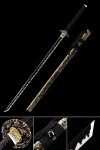 |
Manganese Steel Ninjato with Black Blade & Dragon Tsuba in Gold-Black Flower Saya |
Zoyah
California, United States
Amazing service the sword itself is beautiful and it was shipped relatively fast.
|
Blue Blade Manganese Steel Ninjato Sword Full Tang with Black Leather Handle and Dragon Pommel |
Thomas Allen Scott
Michigan, United States
Bought the blade for a friend, he and I are very happy with it, well made, great job to the person who made it 👍
|
Blue Blade Manganese Steel Ninjato Sword Full Tang with Black Leather Handle and Dragon Pommel |
Ross Nichols
Oregon, United States
Love these straight blade ninja swords, the hamon is awesome the blade is straight and beautiful . Black and gold look great and love the plastic on the handle and like the different habaki, the Saya was damaged during transport from overseas but very slight, this could be avoided by putting a box around the Styrofoam as they do for any (ready to ship)swords which I don't understand, and the suba moves slightly but don't care cause this thing is awesome and would like to chop stuff but don't want to mess it up so just going to show it off ,this site may be habit forming ...lol
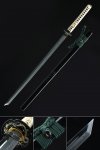 |
T10 Carbon Steel Chokuto Ninjato in Black Lacquer Saya with Dragon Tsuba & Green Sageo |
Miles Bryant
South Carolina, United States
Very fast delivery and looks so much better in person than online definitely will be buying another one soon.
|
High Manganese Steel Katana with Dragon Tsuba - Red Cord Handle & Dark Red Lacquer Saya |