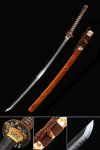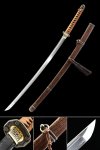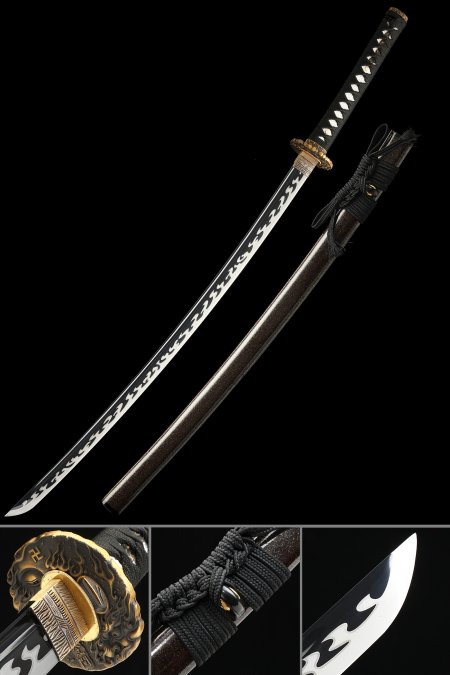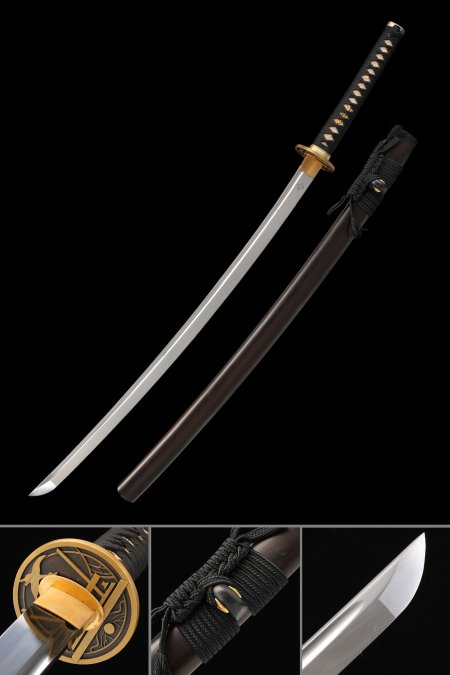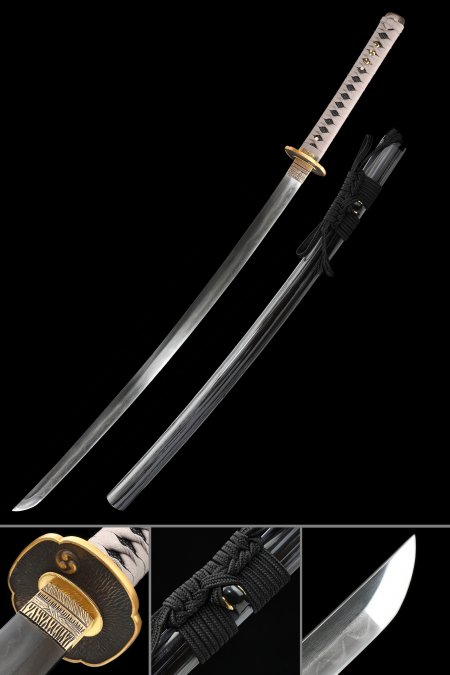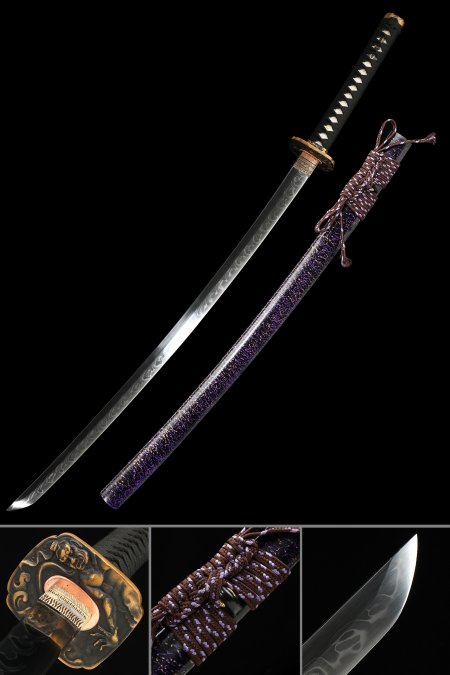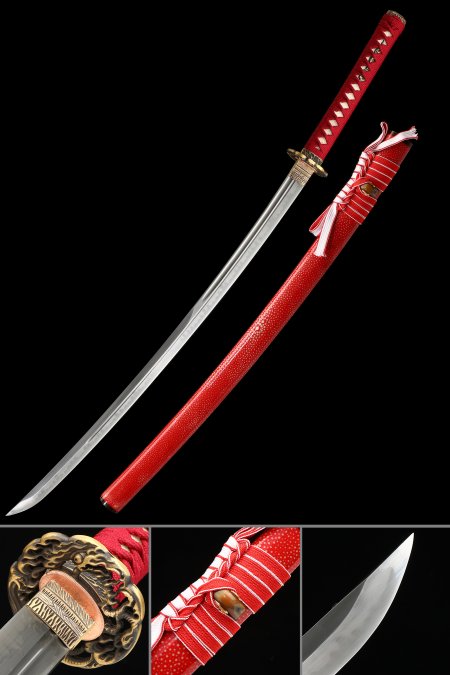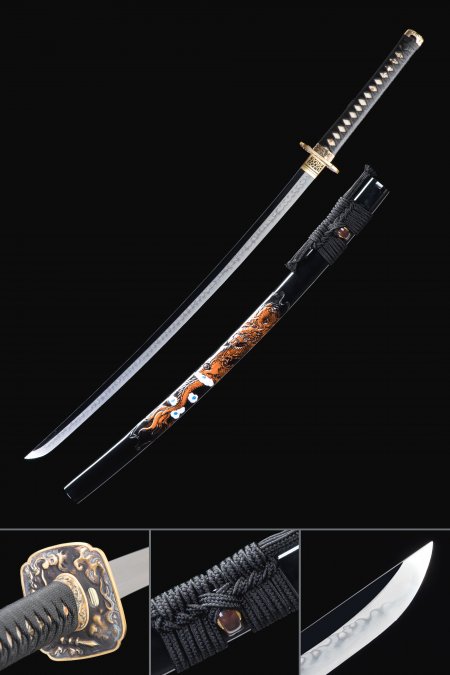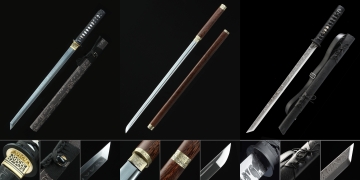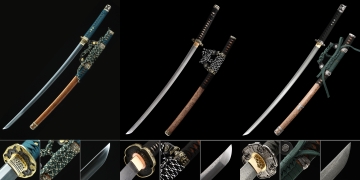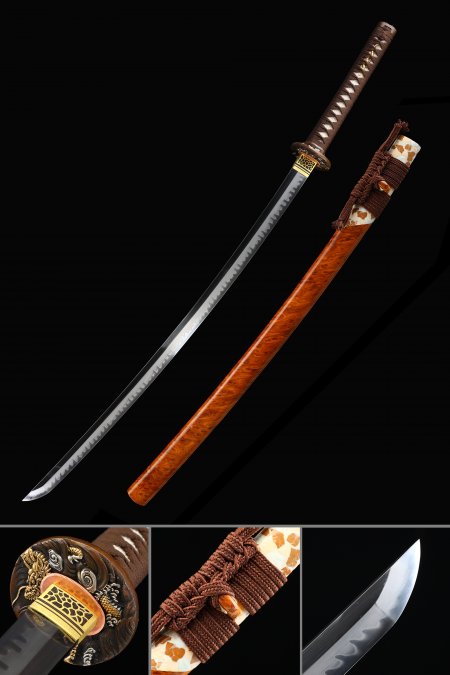
Gold Brown Tsuba Katana

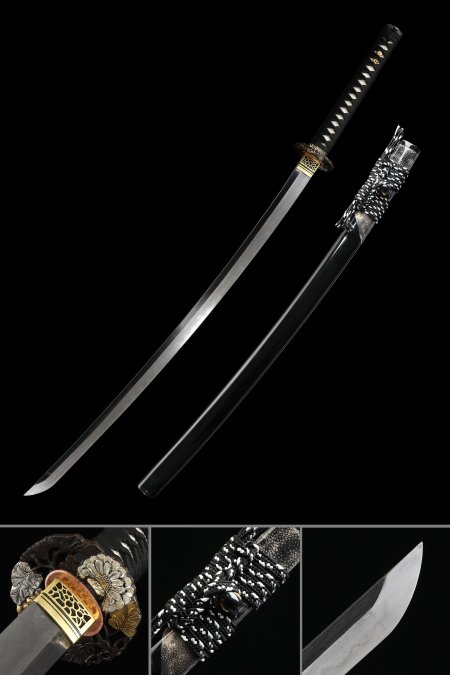
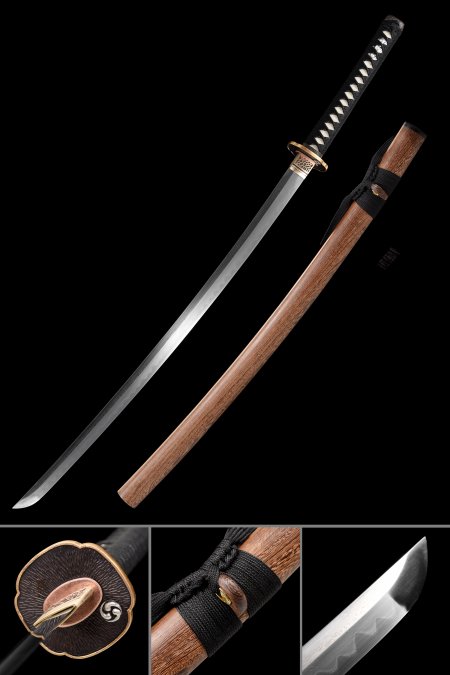
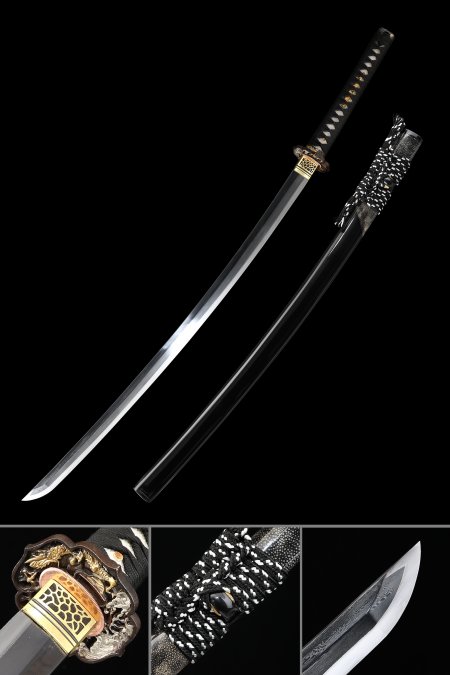
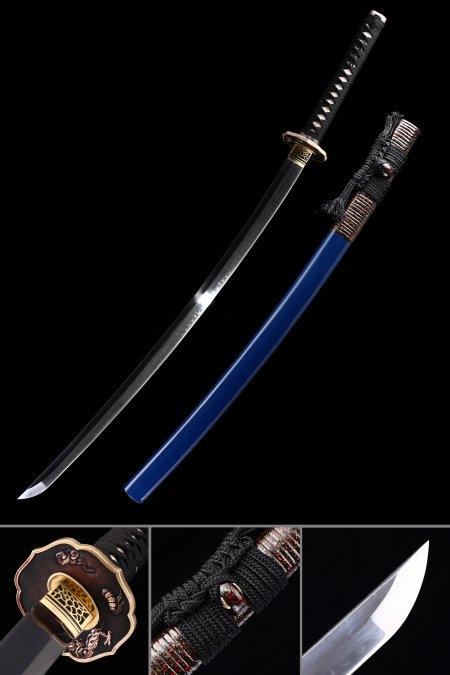
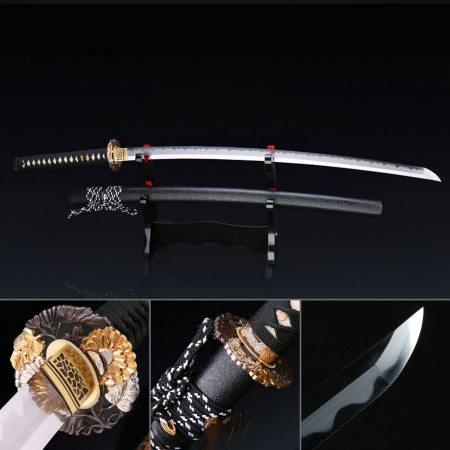
The Gold Brown Tsuba Katana collection brings together hand-forged blades distinguished by richly toned alloy guards - warm gold and earthy brown finishes that elevate each piece from mere display to fine craftsmanship. Every katana in this selection features clay-tempered T10 or Damascus steel with authentic hamon activity, paired with carefully matched saya and ito to create a cohesive aesthetic. Enjoy free standard shipping on every order, plus hassle-free returns for complete peace of mind.
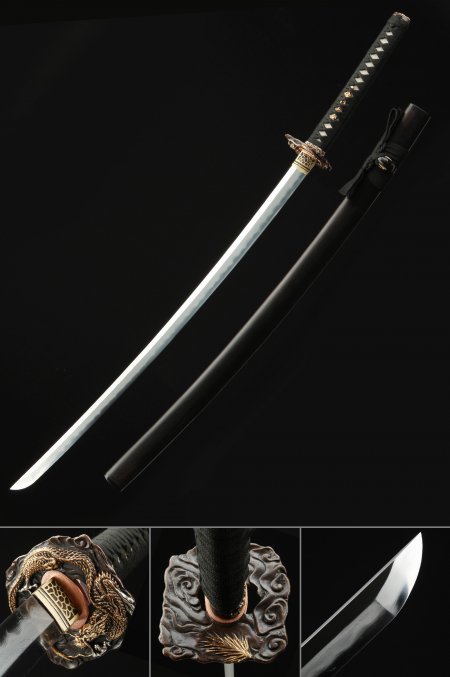
Showing 17 Products

Frequently Asked Questions

What does the gold-brown tsuba finish actually indicate?
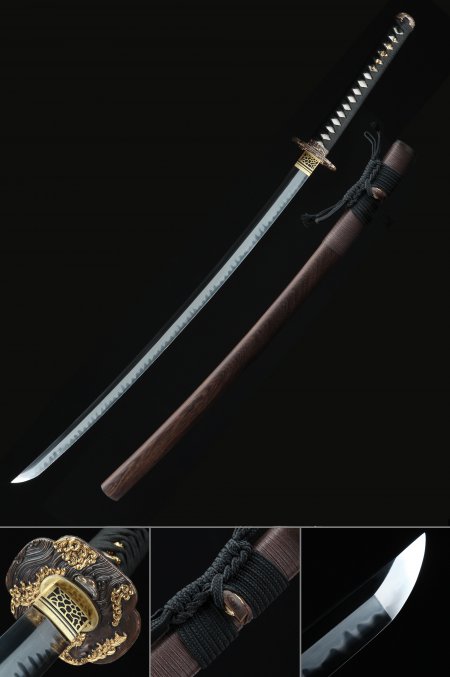
The warm gold and brown tones on these guards come from surface treatments applied to zinc alloy castings - typically a brass-toned electroplating or patinated lacquer finish over relief-engraved metalwork. This finish choice is rooted in Edo-period aesthetic traditions where tsuba were often crafted from softer alloys like shakudo or shibuichi and given warm oxidized tones. On modern collectible pieces, the same visual language signals a formal, traditional build rather than a utilitarian matte or raw-iron appearance. The color also serves a practical display purpose: gold-brown tones complement both dark lacquer saya and natural hardwood finishes, making the guard a visual anchor for the entire mounting composition.
How is clay tempering different from standard heat treatment?
Standard heat treatment hardens the entire blade uniformly by heating and quenching the steel. Clay tempering - known in Japanese as tsuchioki - involves coating the blade's spine and sides with a layer of heat-resistant clay paste before the quench. The clay insulates those areas, causing them to cool more slowly and remain relatively soft and flexible. The uncoated edge cools rapidly, forming a hard martensitic structure. This differential process creates the visible hamon - a misty, undulating line that separates the hard edge from the softer spine. On T10 carbon steel, this contrast is especially pronounced because T10's higher carbon content amplifies the hardness differential, producing a bright, clearly readable hamon that is the primary visual hallmark of authentic clay-tempered work.
T10 steel vs. Damascus steel - which is better for display?
They serve different display priorities. T10 clay-tempered blades showcase the hamon - the temper line is the centerpiece, and the steel's fine grain keeps the surface clean so that activity like nie and nioi (crystalline structures within the hamon) remain visible under light. Damascus billets, by contrast, display flowing layer patterns across the entire blade surface, created by forge-welding multiple steel types and etching to reveal contrast. If you want a blade where the metallurgical process is the visual story, T10 with a real hamon is the classic choice. If you prefer a blade with all-over surface patterning that reads dramatically from a distance, Damascus is more striking. Both are full-tang construction in this collection, so structural integrity is equal.
How should I store a collectible katana long-term?
Horizontal storage on a dedicated sword rack is ideal - position the blade with the edge facing upward, which is the traditional Japanese storage posture and helps maintain the blade's natural curvature (sori) over time. Apply a thin coat of choji oil (clove-oil-based mineral oil) to the polished surface every two to three months using a soft cloth or maintenance kit nugui paper, wiping off any excess to prevent pooling near the habaki. Avoid environments with high humidity or direct sunlight, both of which accelerate oxidation on carbon steel and can fade lacquered saya finishes. Never store the blade inside the saya for extended periods without occasional airing, as trapped moisture can cause spotting. Rayskin and cord handle components should be kept dry and away from direct heat sources.
Is the Type 98 Shin Gunto in this collection historically accurate?
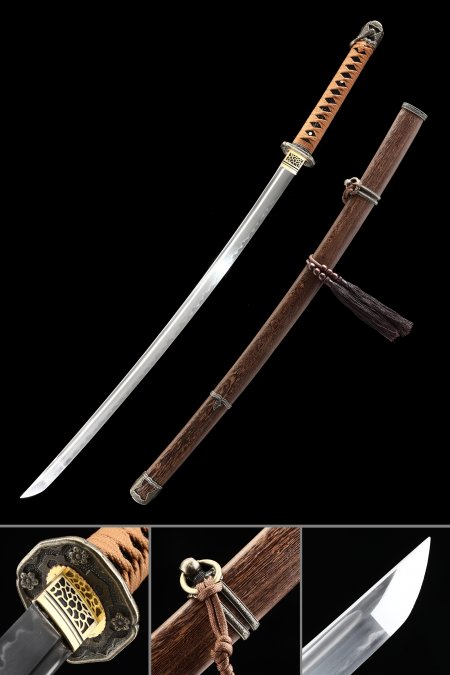
The Type 98 Shin Gunto (adopted in 1938) replaced the earlier Type 94 as the standard officer's katana of the Imperial Japanese Army and remained in service through 1945. Authentic period examples used both traditionally made blades and machine-produced military steel blades (known as showato), mounted in aluminum or steel military fittings with a distinctive brown leather-wrapped tsuka and brown lacquered saya. The collectible version in this collection references that design language - manganese steel blade, brown wenge saya, and an ornate floral tsuba - while being produced as a display and study piece. For collectors focused on twentieth-century Japanese military history, the Shin Gunto is one of the most document-rich and recognizable katana forms of the modern era.

Customer Reviews

Ross Nichols Oregon, United States

I wish I had a picture to show how beautiful this katana is. I spent more on this one and the quality difference was immediately apparent when I pulled it from the Saya. The hamon is beautifully crafted and the blade is mirror polished with minimal scratches.The curve of the blade is extreme and awesome. It feels incredible and nimble in my hands. It is so far my centerpiece of my collection and although I know it would cut beautifully ,I don't want to damage this artwork. Ok with that being said the Saya was a disappointment, all the components of the Saya are great however the seam of one side was obviously apparent and had very rough edges along the seam almost sharp and the fit of the Saya is very tight which I'm not sure is a bad thing as long as it holds together. I'm very happy with quality and craftsmanship of this katana so I'm ok with the flaws in the saya but a little surprised it wasn't caught before shipping.
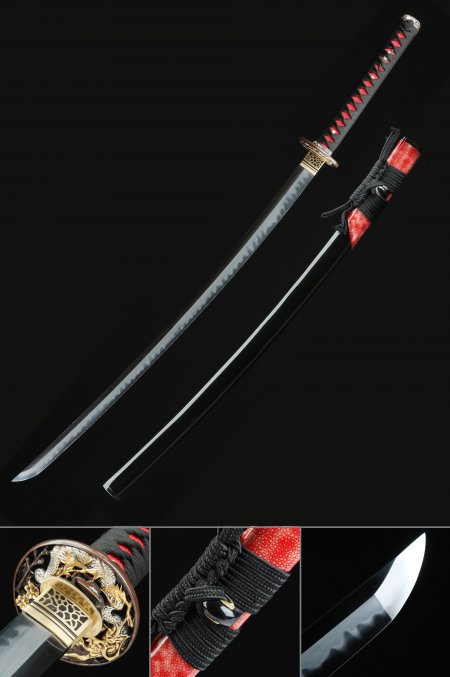
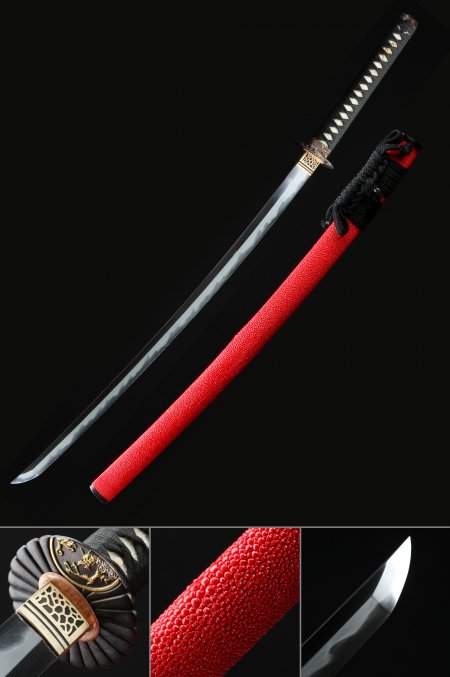
T10 Steel Clay Tempered Katana with Real Hamon - Red Rayskin Saya, Black Cord Handle T10 Steel Clay Tempered Katana with Real Hamon - Red Rayskin Saya, Black Cord Handle
Monty Burich Washington, United States

Wow, what can I say. I have had swords before, but this time I decided to take a chance with a slightly higher grade sword from a supplier (TrueKatana) I have not used before and without seeing it in person first. I will say that the risk paid off. This is one of the nicest swords I have held. The ad said genuine rayskin, it feels real and looks great, so I am impressed. While at this price point you should expect quality, sometimes it’s just nice to actually get the quality that you’re expecting. This is one beautiful sword you can see the blade tempering is very well done. I have not used it to cut mats yet, but so far this feels extremely durable and up to the task. This is my second sword order from TrueKatana (my Chinese sword just arrived as well) and so far, this relationship is a win! If you are unsure, try a sword at a lesser price point from them and see for yourself. Be sure you know what you are going to do with the sword before buying so you pick the correct metal and type and you can’t go wrong. So far they get a passing grade from me!

T10 Steel Clay Tempered Katana with Real Hamon - Red Rayskin Saya, Black Cord Handle T10 Steel Clay Tempered Katana with Real Hamon - Red Rayskin Saya, Black Cord Handle