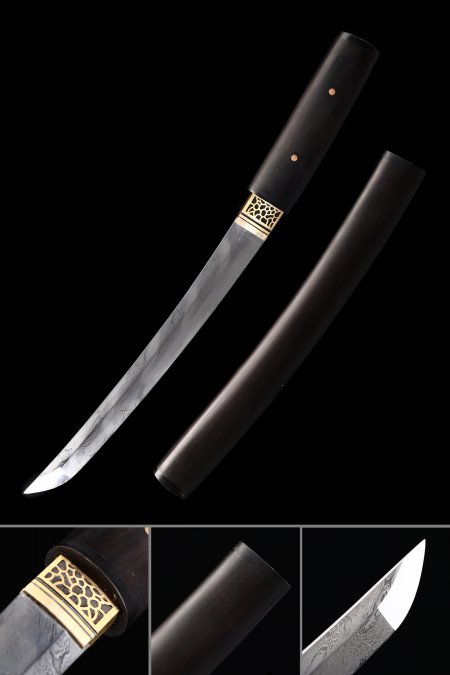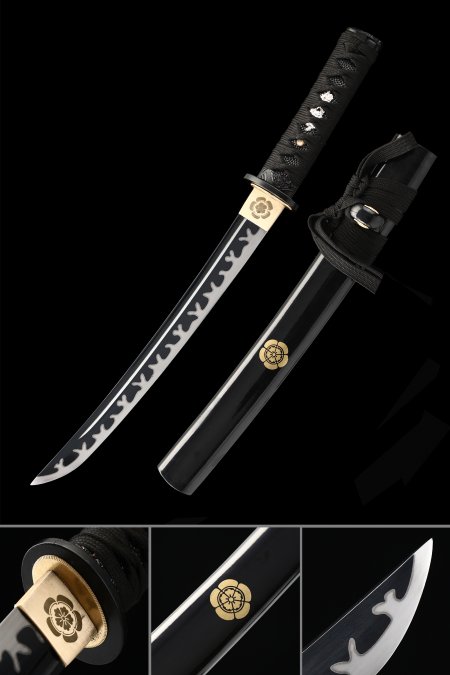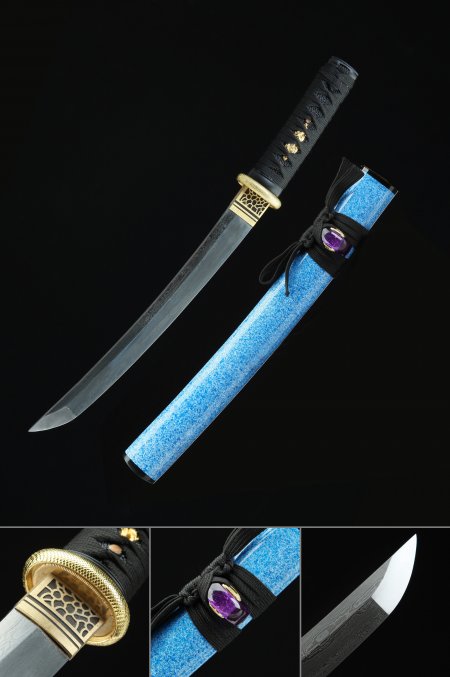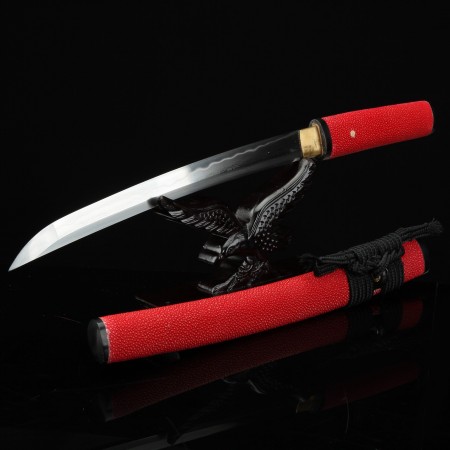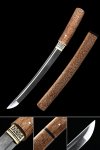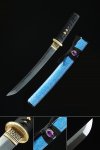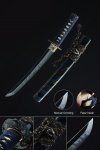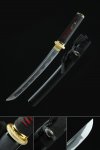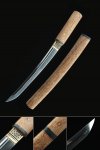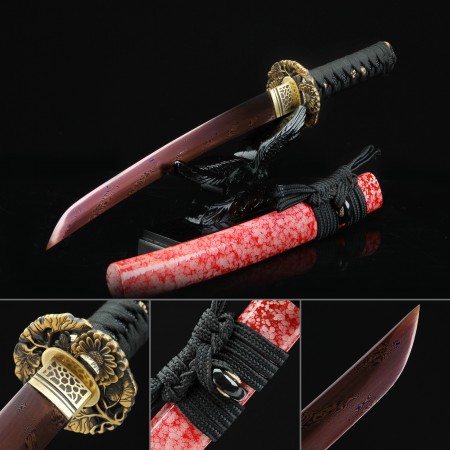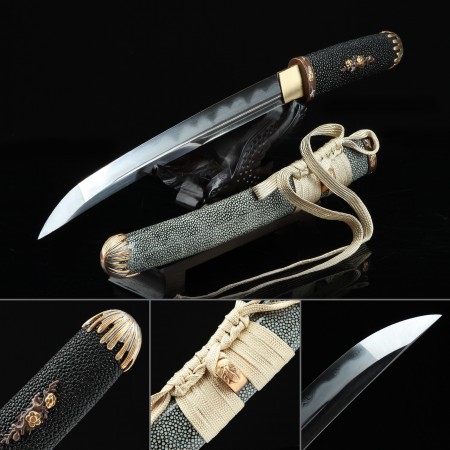
Gold Tsuba Tanto

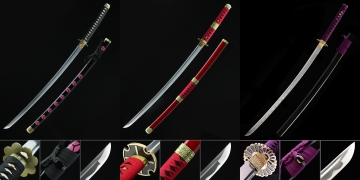
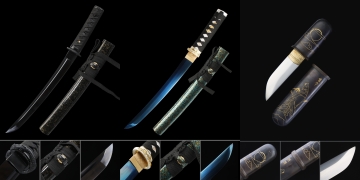
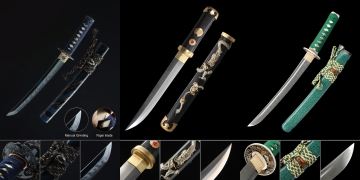
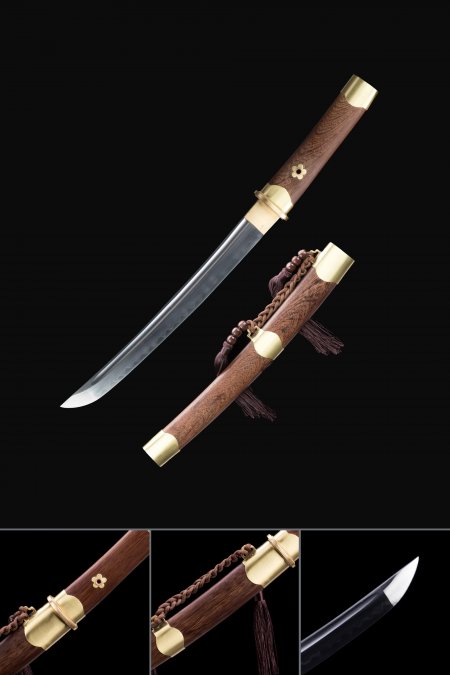
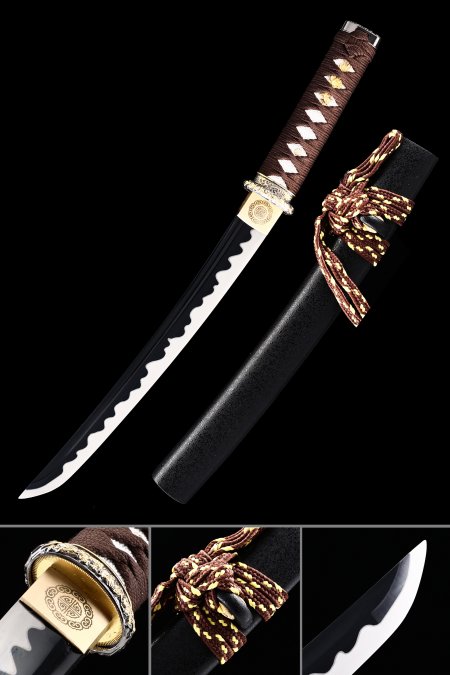
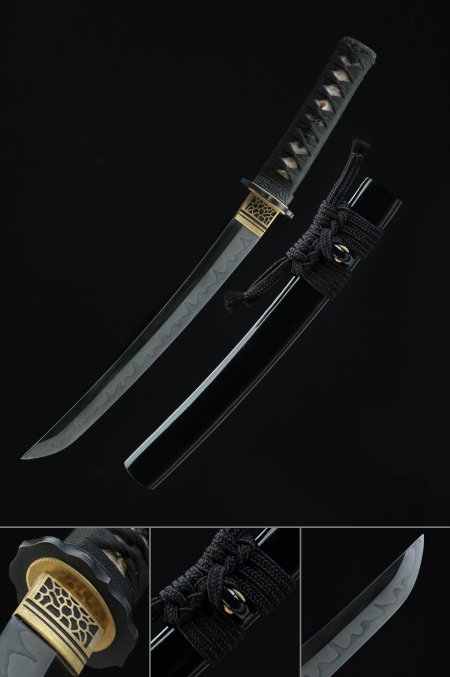
A gold tsuba tanto brings together the compact elegance of the Japanese short sword and the warm brilliance of gilded fittings - a pairing that has long signaled prestige in traditional Japanese blade culture. Each piece in this collection is hand-forged from high-carbon or Damascus steel, fitted with authentically styled gold alloy or genuine copper hardware, and finished with lacquered saya that complement the tsuba's luster. From clay-tempered T10 blades with real hamon to intricately patterned Damascus, every tanto here is a display-worthy collectible built to genuine craft standards. Enjoy free shipping on your order, with easy returns if it isn't exactly what you envisioned.
Showing 57 Products

Related Collections

Gold Dragon Katana2 items


Reviews

Gold Scabbard Tanto11 items


19 Reviews

Gold Sageo Tanto2 items


Reviews

Frequently Asked Questions

What steel types are used in gold tsuba tanto?
This collection spans three distinct steel choices, each producing a different blade character. 1045 and 1090 high-carbon steel offer reliable hardness, clean geometry, and a straightforward polish - good starting points for first-time tanto collectors. T10 tool steel is denser and higher in carbon, and when clay-tempered it produces a genuine hamon along the blade surface, making it the preferred choice for collectors focused on traditional aesthetics and visible metallurgical detail. Damascus steel, created by forge-welding multiple layers of iron and steel, displays flowing surface patterns that vary from piece to piece - no two Damascus tanto are visually identical. Gold alloy tsuba pair well with all three, but the warm contrast between gilded fittings and an active hamon line on T10 is particularly striking in display settings.
How does a gold tsuba differ from a copper or brass one?
Gold alloy tsuba are typically cast or machined from a zinc-based alloy with a gold-tone plating or finish, giving them a consistent warm luster that resists tarnishing more effectively than raw brass or copper. Copper tsuba, by contrast, develop a natural patina over time - shifting from bright orange-red toward brown or green - which many collectors prize as evidence of age and authenticity. Brass tsuba sit between the two: slower to patina than copper but less visually stable than gold alloy over decades. For display pieces where consistent, long-term visual impact matters, gold alloy fittings are practical. For collectors pursuing historical accuracy or wabi-sabi aesthetics, copper or shakudo fittings may be more appropriate. The choice is largely philosophical rather than structural, as all three materials perform similarly in a display or collectible context.
What makes a tanto a collectible rather than a replica?
The distinction lies in construction integrity. A collectible tanto features a full-tang blade - meaning the steel extends uninterrupted from tip through the entire handle - hand-forged from identifiable high-carbon or Damascus steel, with fittings that are individually fitted and finished rather than mass-cast and glued. Pieces in this collection include real hamon produced by actual clay tempering, hand-wrapped ito cord, and lacquered saya finished to display standards. A replica, in the looser sense, may use stainless steel, a rat-tail tang hidden in a resin handle, and vacuum-formed sheaths. The difference is immediately apparent to an informed collector and significantly affects both display quality and long-term durability.
How should I display a gold tsuba tanto at home?
Horizontal tanto stands - either single-tier or as part of a tachi-kake multi-piece display - are the most common and historically grounded presentation. Position the tanto with the edge facing upward and the tsuba visible at the center of the display. Avoid mounting near windows where UV exposure can bleach ito wrapping and cause lacquer to cloud or yellow over time. A shadow box with UV-filtering glass is an excellent option for wall-mounted display, as it protects the piece from dust and humidity fluctuations while allowing full visibility of the gold fittings and blade geometry. If displaying alongside a full-length katana or wakizashi, the tanto is traditionally placed on the lower tier, which also conveniently keeps the gold tsuba at eye level for close inspection.
Is a gold tsuba tanto a good gift for a Japanese sword enthusiast?
It is one of the more thoughtful gift options in the category, precisely because of scale and display versatility. Tanto are compact enough to display in an apartment or office without requiring dedicated wall space, and the gold tsuba gives even a modest piece an elevated, finished appearance that reads as intentional rather than incidental. For a first-time collector, a 1045 or T10 tanto with gold alloy fittings and a black lacquer saya offers an accessible entry point with genuine craft credentials. For an experienced collector, a Damascus tanto with gold geometric tsuba and full koshirae assembly provides the kind of detail-rich piece worth examining repeatedly. Pairing a tanto with a complementary piece from the Rose Gold Blade Tanto collection makes a visually cohesive gift set for collectors who appreciate tonal coordination across fittings.

Customer Reviews

Richard Dale Parsons Texas, United States

I’m no sword smith, but I am a satisfied customer. The Tanto is very nice and I did choose the T10 steel for its strength and edge retention capabilities. The hamon line is nice with nice graying. Shipping and delivery was fast. I waited for the Tanto to decide whether or not to order a Wakizashi and I did. If it’s appearance and quality is what I’m expecting I’ll be ordering a Katana.

Clay Tempered T10 Steel Tanto with Real Hamon in Dark Blue Dragon Saya - Gold Alloy Wave Tsuba Clay Tempered T10 Steel Tanto with Real Hamon in Dark Blue Dragon Saya - Gold Alloy Wave Tsuba