What makes a ninjato different from a katana?
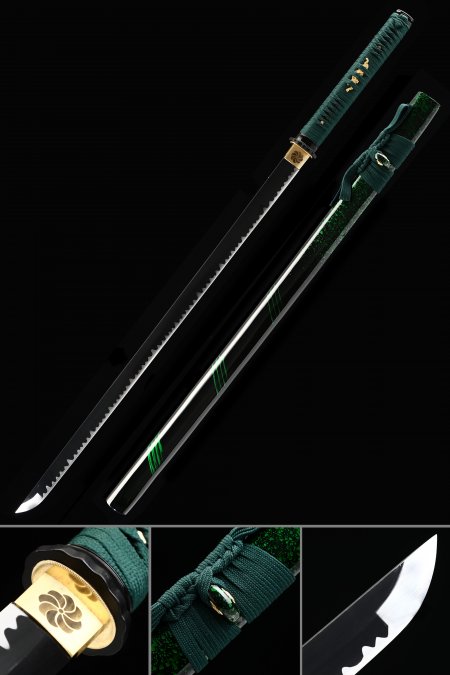
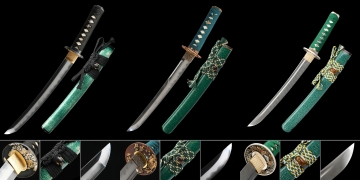
A ninjato is defined primarily by its straight or minimally curved blade, squared tip (kissaki), and shorter overall geometry compared to a traditional katana. Where a katana's curvature (sori) is engineered around a specific cutting arc, the ninjato's straight profile reflects a different aesthetic and functional philosophy. The tsuba on a ninjato is also typically square or geometric rather than the rounded forms common on katana. For collectors, this means the two sword types display very differently — the ninjato's angular lines read as more austere and graphic, making it a strong display piece in modern or minimalist settings. The straight blade also fits more naturally on flat wall racks without any rotation adjustment.
What is the difference between 1045 and T10 carbon steel in these swords?
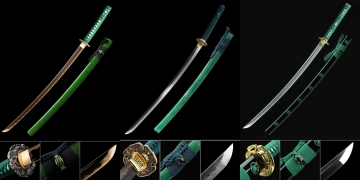
1045 carbon steel contains approximately 0.45% carbon, placing it in the medium-carbon range. It is durable, relatively straightforward to forge, and produces a clean, polishable blade surface. T10 carbon steel sits higher on the carbon scale at around 0.95–1.05%, and its tungsten content improves wear resistance and edge retention at the micro level. More significantly for collectors, T10 is the steel most commonly used in clay-tempered blades because it responds well to differential hardening — producing a visible hamon (temper line) along the blade. That hamon is not decorative paint or acid etching; it is the actual boundary between the harder edge steel and the softer spine, visible as a flowing mist-like pattern under angled light. Collectors who value authentic metallurgical detail typically prefer T10 for this reason.
What is rayskin (samegawa) on a sword saya, and why does it matter?
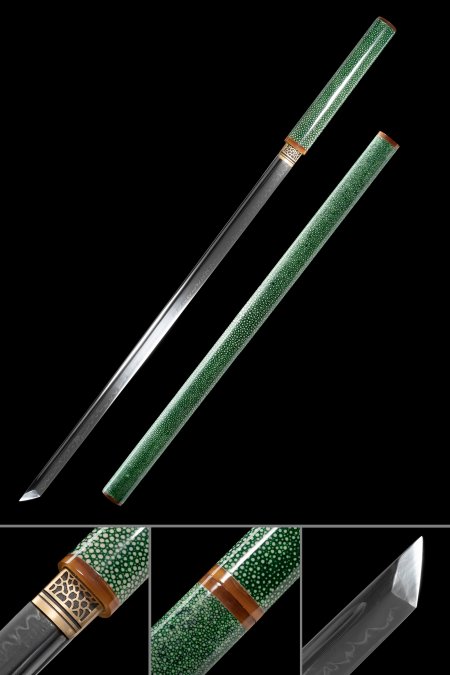
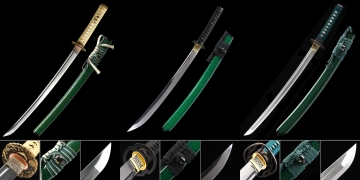
Samegawa is the ray skin (or shark skin) traditionally used to wrap sword handles and, in some styles, saya (scabbards). The material has a distinctive pebbly texture formed by small calcium nodules called denticles. On a saya, a rayskin wrap adds both grip and a tactile quality that lacquered wood or synthetic wraps cannot replicate. For collectors, it is a marker of higher construction intent — rayskin wrapping requires more labor to apply cleanly, and its natural variation means no two pieces are identical. On the T10 Zatoichi-style piece in this collection, the green rayskin saya creates a direct visual and textural contrast to the polished blade, adding depth to the overall display presentation.
How should I maintain a green cord-wrapped sword on display?
The green ito (cord wrapping) on these handles is typically made from cotton or synthetic fiber wound tightly over the same-skin and wood core. To keep it in good condition, avoid displaying the sword in direct sunlight, which fades pigmented cord over time. In humid environments, a dehumidifier or silica gel pack near the display area prevents moisture from working into the wrap and causing the underlying wood to expand. Do not apply oils directly to the cord — the blade gets a light mineral or choji oil wipe every few months, but the handle wrap should stay dry. If the wrap ever loosens at the ends, it can be re-tied; the diamond pattern (hishi gumi) is documented and can be followed with basic instruction.
Is a green handle ninjato a good gift for a sword collector?
It depends on the collector's existing display focus. For someone building a shinobi or feudal Japanese theme, a green handle ninjato is a distinctive addition because the color is less common than black or brown ito and stands out in a grouped display. The gold alloy tsuba hardware adds a formal quality that keeps it from reading as purely decorative. If the recipient already collects katana, a ninjato introduces a contrasting blade geometry that creates visual variety on a wall rack or display stand. For a collector who values metallurgical detail, the T10 clay-tempered version offers a genuine hamon to study — which is a more substantive gift than a purely aesthetic piece.