What makes green saya tanto pieces distinct as collectibles?
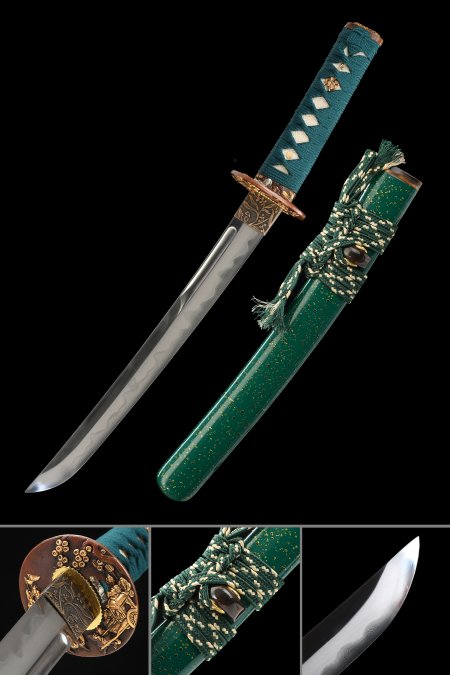
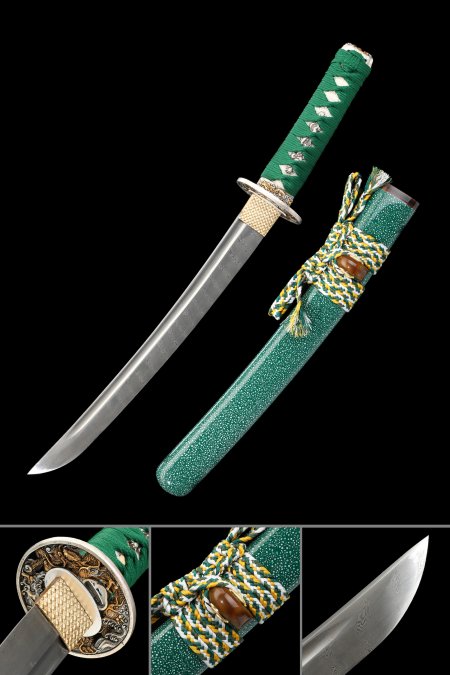
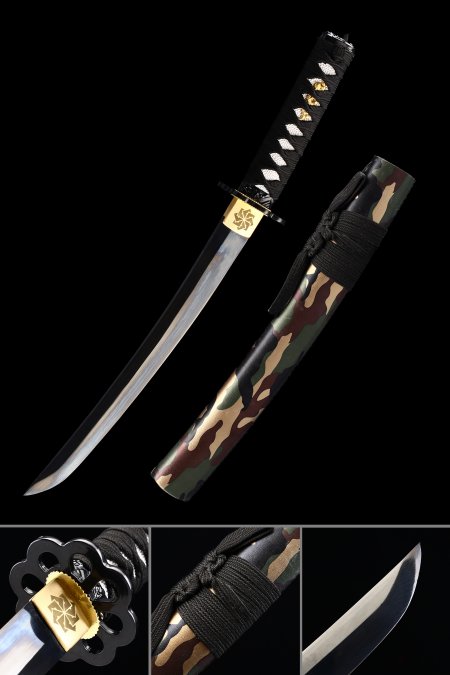
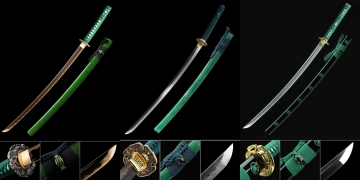
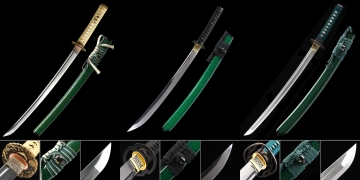
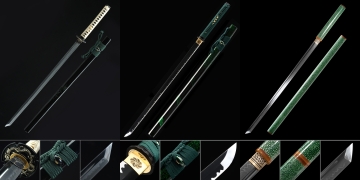
The saya finish plays a defining role in how a tanto reads as a display object. Green saya tanto pieces stand out because the color — whether applied as lacquer, expressed through camo hardwood grain, or achieved via dyed rayskin — creates a visual anchor that highlights the contrast of polished blade steel and detailed metal fittings. Unlike black or natural wood sheaths, green tones draw the eye to the interplay between organic and crafted surfaces, making these tantos particularly compelling in curated displays. The finish also signals intentionality in the assembly process, as applying even lacquer or selecting matched rayskin panels requires careful preparation beyond standard blade construction.
How does Damascus steel differ from manganese steel in tanto blades?
Damascus steel is produced by folding and forge-welding multiple steel layers together, resulting in a surface with flowing, organic patterns unique to each blade — no two Damascus tantos look identical. The visible hamon line, a by-product of the differential hardening process, adds further visual complexity. Manganese steel, by contrast, is an alloy prized for its surface hardness and resistance to scratching, delivering a cleaner, more uniform appearance. For collectors, the choice comes down to aesthetic preference: Damascus rewards close, detailed inspection and pairs well with ornate fittings, while manganese steel suits a bolder, more graphic display style. Both are fully appropriate for long-term decorative use when properly maintained.
Is full-tang construction important in a display tanto?
Yes — full-tang construction means the blade steel extends the full length of the handle, rather than terminating partway through. This single structural detail is one of the most reliable quality indicators in collectible blades. A full-tang tanto has better balance, more secure handle assembly, and greater long-term durability, all of which matter even for pieces that will never leave a display stand. Collectors who intend to handle, reposition, or pass down their pieces will find full-tang construction significantly more reliable over time. It also reflects higher manufacturing standards overall, meaning full-tang pieces tend to be assembled with greater attention to fitting and finish quality throughout.
How should I store and maintain a lacquered saya tanto?
Lacquered sayas require moderate care to preserve their finish over time. Store the tanto horizontally or at a slight angle on a padded display stand, away from direct sunlight, which can fade or crack lacquer finishes over years of exposure. Humidity fluctuations are the primary threat — aim for a stable indoor environment between 40–55% relative humidity. For the blade itself, apply a light coat of choji oil (traditional camellia oil) every few months using a soft cloth, wiping away any excess to prevent residue buildup. Avoid storing the blade sheathed for extended periods without inspection, as trapped moisture between blade and saya can affect both the steel and the interior lacquer lining.
Does a dragon tsuba add meaningful value to a tanto collection?
Among tsuba motifs, the dragon (ryu) carries deep symbolic weight in Japanese cultural tradition — representing strength, protection, and auspicious energy. For collectors, a well-executed dragon tsuba adds thematic depth beyond its decorative function. Cast or carved dragon tsubas with dimensional relief detail are significantly more labor-intensive to produce than flat geometric guards, and the quality of the casting finish is a useful indicator of overall piece quality. In a display setting, a dragon tsuba creates a natural focal point that elevates the presentation of the entire tanto. Collectors assembling a themed Japanese-style display often find that a single high-detail tsuba piece anchors the arrangement more effectively than multiple simpler guards.