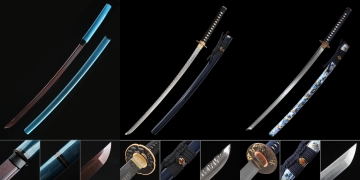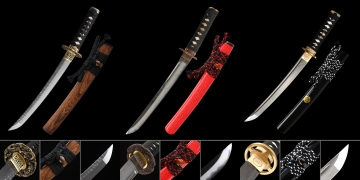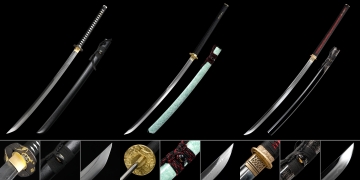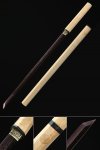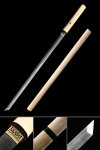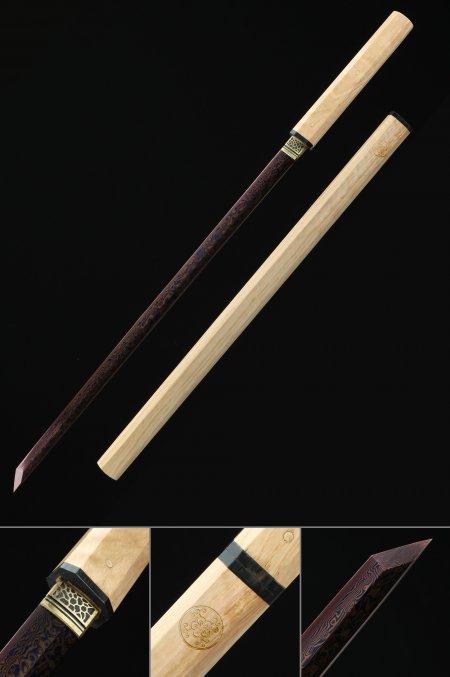
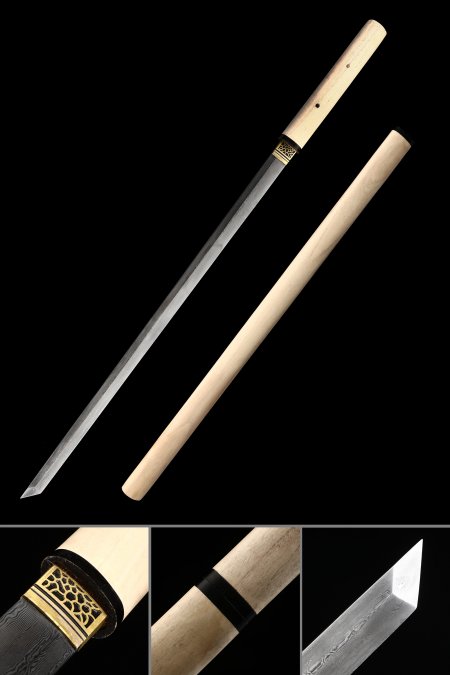
Natural-wood Damascus Steel Ninjato

The Natural-wood Damascus Steel Ninjato collection brings together hand-forged Damascus steel blades and unfinished natural wood sayas - a pairing that highlights raw grain beauty alongside intricate folded steel patterns. Each piece is crafted as a full-tang collectible, offering structural integrity and visual authenticity for display enthusiasts and serious collectors alike. Enjoy free shipping on your order, backed by our hassle-free return policy.
Showing 2 Products

Related Collections

Damascus Steel Wakizashi25 items


88 Reviews

Blue Damascus Katana19 items


30 Reviews

Damascus Steel Tanto30 items


21 Reviews

Damascus Naginata4 items


3 Reviews

Frequently Asked Questions

What makes Damascus steel visually distinct from standard steel blades?
Damascus steel gets its signature appearance from a forge-welding process in which two or more alloys - typically a high-carbon steel and a softer iron-rich steel - are repeatedly folded and welded together under heat. As the billet is worked, the layers multiply and begin to flow into one another. When the finished blade is ground, polished, and acid-etched, those layers become visible as flowing lines, concentric swirls, or tight geometric patterns across the surface. Because the pattern emerges from the internal structure of the steel rather than being applied on top, no two Damascus blades ever look identical. The exact design is a direct record of how the billet was manipulated during forging, making each blade a one-of-a-kind visual artifact.
How does a natural wood saya differ from a lacquered one?
A lacquered saya is coated with one or more layers of urushi or synthetic lacquer, which seals the wood, adds color, and creates a hard protective surface. A natural wood saya skips that finishing step entirely, leaving the raw grain exposed. This approach emphasizes the organic texture and color variation of the timber itself - no two natural sayas look alike, just as no two Damascus blades share the same pattern. The tradeoff is that unfinished wood is more sensitive to environmental changes: it can absorb moisture or dry out more readily than a sealed counterpart. Collectors who prefer natural wood sayas typically value visual authenticity and the pairing of two naturally variable materials - the wood and the Damascus steel - over the lower-maintenance durability of a lacquered finish.
What is a Shikomizue, and how does it differ from a Shirasaya?
Both styles use plain wood mountings without ornamental wrapping or decorative fittings, but their designs serve different visual concepts. A Shirasaya is a dedicated storage mount - a minimalist paired saya and handle with no tsuba - designed to let a blade rest safely while its clean silhouette draws attention to the blade itself. A Shikomizue follows the form of a walking cane or staff, with the blade fully concealed inside a longer wooden housing. The cane format gives the Shikomizue a distinctive narrative as a collectible: the blade is hidden, and its reveal is part of the piece's character. For collectors, the Shikomizue represents a more unusual display object, while the Shirasaya appeals to those who prefer the blade front and center.
How should I maintain a Damascus blade stored in a natural wood saya?
Consistent humidity control is the first priority. Natural wood expands and contracts with moisture changes, which can affect how tightly the saya fits the blade - too loose and the blade shifts; too tight and drawing it becomes difficult. Aim to keep your display environment between 40% and 60% relative humidity year-round. For the blade itself, apply a thin coat of choji oil or food-grade mineral oil every two to three months using a soft cloth, working along the length of the blade to prevent surface oxidation from dulling the Damascus pattern. Avoid touching the blade surface with bare hands, as skin oils promote rust. Store the piece horizontally on a proper display stand to distribute weight evenly, and inspect the wood periodically for any signs of cracking or warping near the habaki collar.
Is a full-tang construction important for a display collectible?
For a purely decorative wall piece, tang length matters less than aesthetics. But for collectors who value structural authenticity and long-term integrity, full-tang construction is a meaningful specification. A full-tang blade extends the steel the complete length of the handle, meaning the handle scales or wrapping are fitted around a continuous piece of steel rather than attached to a short stub. This construction eliminates the most common point of failure in assembled swords and ensures the handle remains secure under the stresses of handling, repositioning, and display rotation over many years. Collectors who treat their pieces as serious acquisitions - examined closely, handled periodically, and potentially passed on - consistently prefer full-tang pieces because the construction reflects a commitment to quality that is evident even before looking at the blade.

Customer Reviews

Cart 0 Items

Your cart is empty