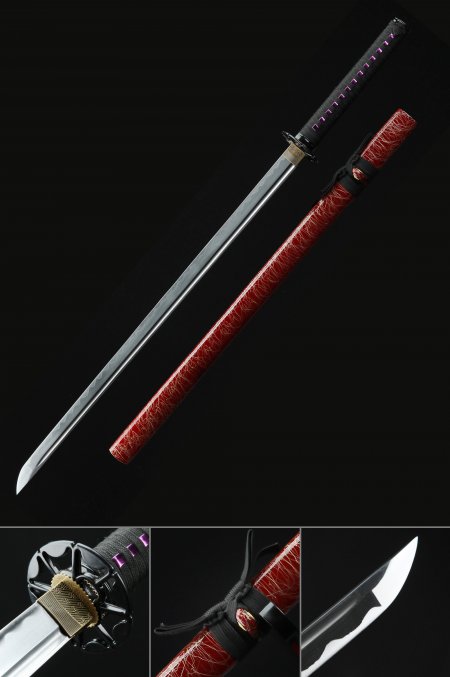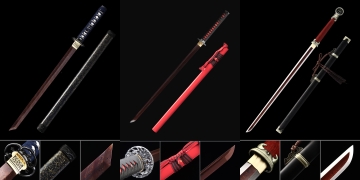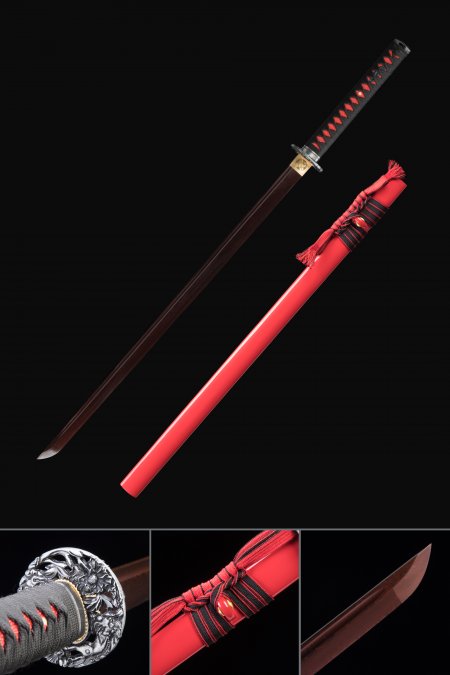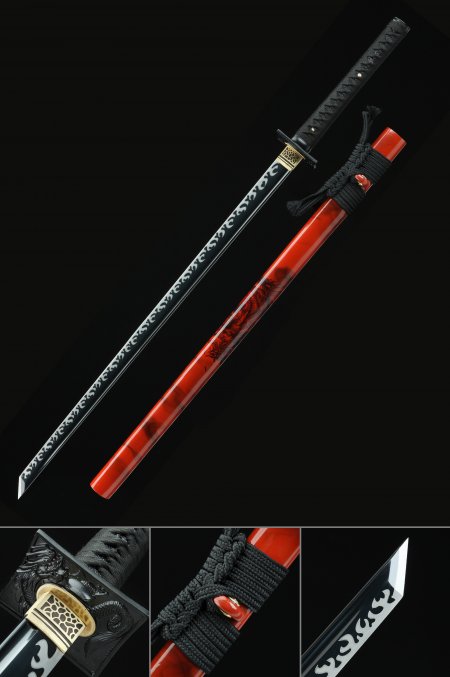
Red Saya Ninjato

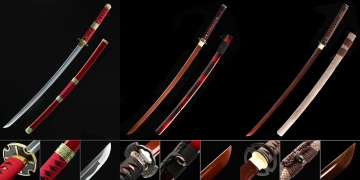
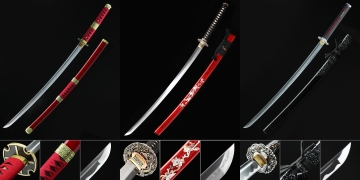
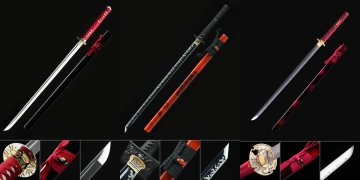
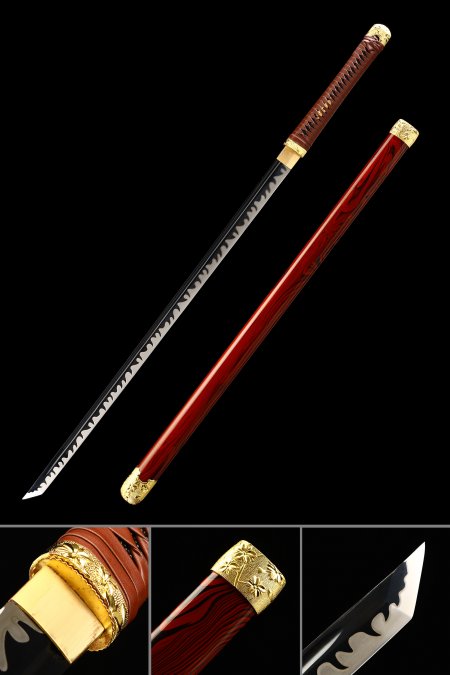
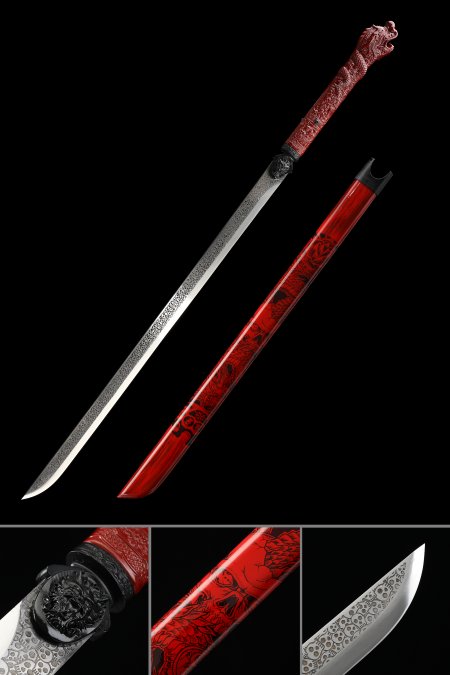
A red saya ninjato brings together the understated straight-blade silhouette of classical ninjato design and the bold visual presence of a lacquered crimson scabbard — making each piece as compelling on a display stand as it is meaningful in a collection. Every sword in this selection is hand-forged from quality carbon or Damascus steel, fitted with carefully matched furniture, and built as a fully realized collectible rather than a decorative afterthought. Free standard shipping is included on all orders, and we back every purchase with a hassle-free return policy so you can collect with complete confidence.
Showing 6 Products

Related Collections

Red Sword86 items


774 Reviews

Red Metal Sword125 items


1721 Reviews

Red Spring Steel Ninjato20 items


60 Reviews

Frequently Asked Questions

What makes a ninjato different from a katana?
The most defining difference is blade geometry. A katana features a pronounced curved blade optimized for drawing speed and cutting efficiency along an arc, while a ninjato has a straight or minimally curved blade profile that gives it a distinctly different visual presence and handling character. The ninjato also typically features a square or simple tsuba rather than the elaborately shaped guards often seen on katana, and its overall length tends to be shorter. For collectors, this means the ninjato occupies a visually distinct category — its straight lines create a stark, architectural quality on a display stand that contrasts nicely with the flowing curvature of katana in a mixed collection.
Is the red lacquer on the saya durable for long-term display?
A properly applied red lacquer finish on a hardwood or rosewood saya is quite durable under typical indoor display conditions. The key factors that affect longevity are UV exposure, humidity, and physical contact. Direct sunlight will gradually fade and cloud lacquer surfaces over time, so placing the display away from windows or using UV-filtering glass on a case is recommended. Humidity fluctuations can cause the wood beneath the lacquer to expand and contract, which may eventually produce micro-cracks in the finish. Maintaining a stable indoor humidity level between 40–55% is ideal. Avoid handling the saya with bare hands frequently, as skin oils can dull the gloss over time. A soft, dry cloth wipe-down every few months keeps the finish looking its best.
How does Damascus steel differ from carbon steel in this collection?
Carbon steel grades like 1045 and 1060 are homogeneous alloys — the steel composition is uniform throughout, and the blade's visual character comes primarily from its polish, hamon, or surface engraving. Damascus steel, by contrast, is created by forge-welding multiple layers of steel together and manipulating them through twisting, folding, and drawing out, which produces the characteristic flowing grain pattern visible on the blade surface. Every Damascus blade has a unique pattern, making it inherently one-of-a-kind as a collectible. From a display standpoint, Damascus steel adds significant visual complexity — the layered grain interacts with light differently depending on the viewing angle, which makes it especially compelling in a well-lit display case alongside a contrasting red lacquer saya.
What maintenance does a carbon steel ninjato need in storage?
Carbon steel blades require periodic attention to prevent surface oxidation, especially in humid environments. The standard practice is to apply a thin, even coat of choji oil — a traditional Japanese blade oil — every two to three months using a soft cloth or dedicated oil paper. Before re-oiling, wipe off the previous coat entirely to prevent buildup. When storing the sword in its saya for extended periods, ensure the blade is clean and lightly oiled before sheathing. Avoid storing the ninjato in leather-lined cases, as leather can trap moisture and accelerate oxidation. A wooden sword stand in a climate-controlled room with stable humidity is the preferred long-term display and storage solution.
Is a red saya ninjato a good gift for a Japanese sword enthusiast?
It is one of the more visually memorable gift choices in the Japanese collectible sword category. The red saya creates an immediate aesthetic impact that most enthusiasts do not already own in their collection, since black and natural wood finishes dominate the market. The straight ninjato blade form is also distinct enough from the typical katana that it adds genuine variety to an existing display. For gifting purposes, Damascus steel variants tend to be the most appreciated among experienced collectors due to their visual uniqueness, while 1045 or 1060 carbon steel options with detailed fittings — such as dragon head handles or chrysanthemum gold hardware — offer strong visual impact at a broader range of price points. A ninjato displayed on a proper two-tier sword stand makes for a complete and presentation-ready gift.

Customer Reviews

Lowell Bagley Utah, United States

This is review if Katana Cane,1060 blade,Shipped and arrived very quickly! Katana'sfinished nicely! Handle/ Tsaba was a bit slippery so I covered it in Elk hide,also added a rubber bump pad to bottom to actually use as Cane. You get what you pay for some say! All in all very Happy with it, doing a few more mods though..r
I Have many Edged weapons, and this is good deal for price.r
Will do a couple more reviews when N if I get another/ different steel and build..r
Thanks
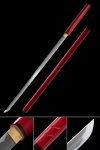
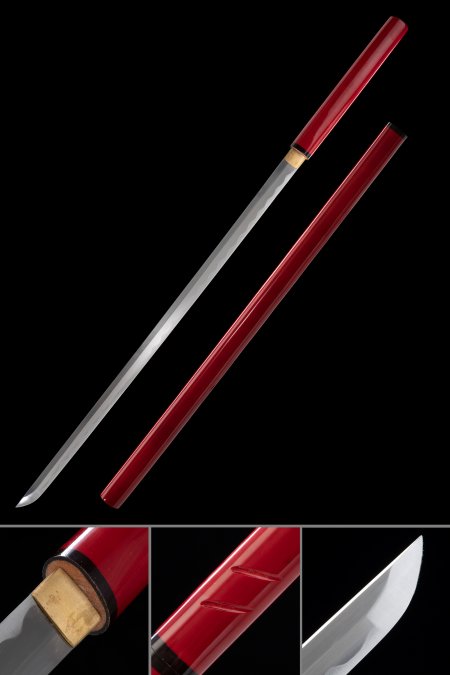
Zatoichi Stick Sword 1060 Carbon Steel Blade with Red Piano Lacquer Hardwood Saya - Shirasaya Style Zatoichi Stick Sword 1060 Carbon Steel Blade with Red Piano Lacquer Hardwood Saya - Shirasaya Style