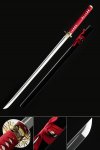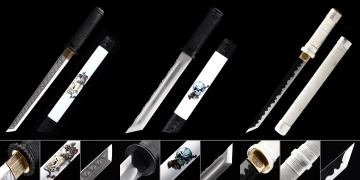
Red White Handle Ninjato

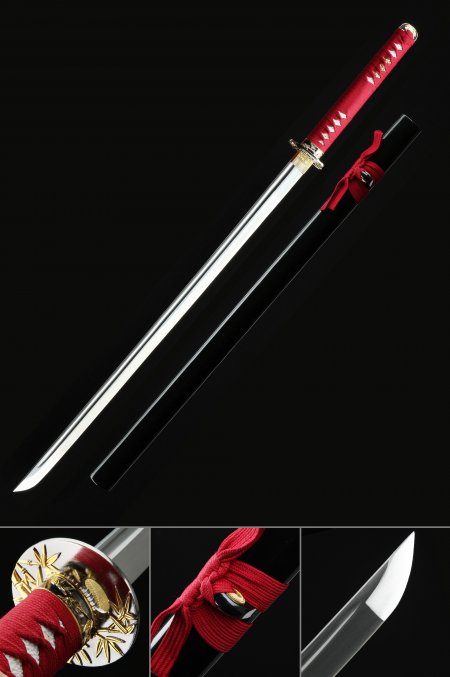
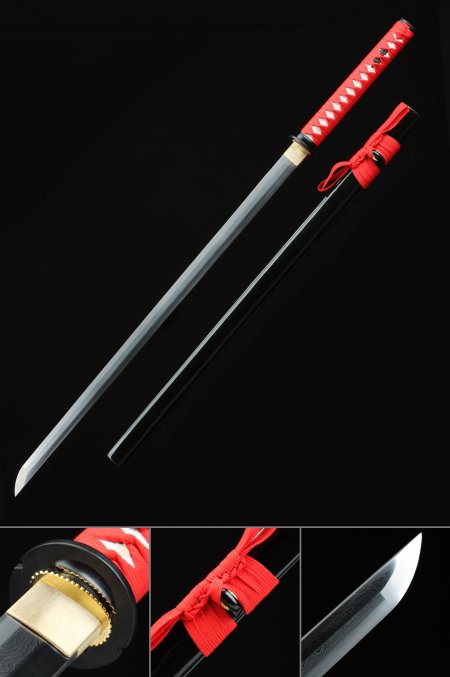
Red and white handle ninjato swords unite striking visual contrast with authentic Japanese-inspired craftsmanship. Each piece in this collection features hand-wrapped cord handles in bold red and white tones, paired with full-tang construction for structural integrity that serious collectors appreciate. These ninjato are crafted as display collectibles - showcasing the sleek, straight-bladed silhouette historically associated with the shinobi aesthetic. Enjoy free standard shipping on your order, plus hassle-free returns.
Showing 2 Products

Related Collections

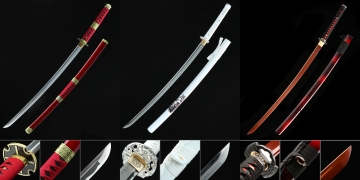
Red And White Katana83 items


815 Reviews

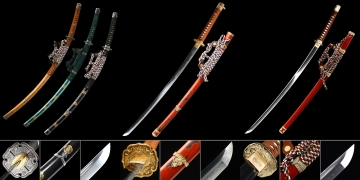
Red Odachi4 items


9 Reviews

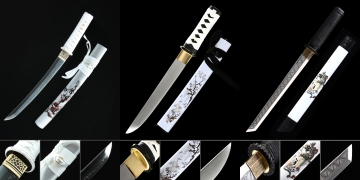
White Tanto6 items


34 Reviews

White Hamidashi3 items


4 Reviews

Frequently Asked Questions

What makes a ninjato different from a katana in terms of blade shape?
The most immediate distinction is blade geometry. A katana features a pronounced curvature - the sori - that results from differential hardening during the quenching process. A ninjato, by contrast, has a straight or near-straight blade profile, giving it a sleeker, more linear silhouette. This straight geometry is part of what makes the ninjato so visually striking as a display collectible: it reads cleanly against a wall mount or stand without the sweeping arc of a curved blade. Historically, the straight profile is associated with the shinobi aesthetic in popular culture and period fiction, though it remains a defining design choice that collectors specifically seek out when building a ninjato-focused display.
What do the red and white handle colors symbolize on these ninjato?
Color choice in Japanese sword aesthetics is rarely arbitrary. Red - known as aka in Japanese - carries associations with vitality, strength, and passionate determination across Japanese visual tradition, appearing in lacquerware, temple architecture, and ceremonial textiles. White - shiro - is linked to purity, spiritual clarity, and ceremonial significance, often appearing in ritual contexts. Together on a tsuka, red and white create a pairing that is both visually bold and symbolically layered. For collectors, this dual-tone handle makes a statement that goes beyond decoration - it connects the piece to a broader visual language rooted in Japanese culture. The contrast also provides a strong focal point when the ninjato is mounted for display, drawing the eye naturally from saya to handle.
How does 1045 carbon steel compare to Damascus steel for display collectibles?
Both steels serve display collectibles well, but they offer different appeals to the collector. 1045 high-carbon steel is a single-composition steel known for its consistent grain structure and reliable durability. It takes a clean, uniform finish and maintains its form excellently under display conditions with minimal maintenance. Damascus steel, by contrast, is produced by layering and folding multiple types of steel together, then etching the surface to reveal the flowing, wave-like grain patterns unique to each blade. No two Damascus pieces share the same surface pattern, which makes each one genuinely one-of-a-kind as a collectible object. If visual uniqueness and surface artistry are priorities, Damascus is the more compelling choice. If clean, uniform elegance is preferred, 1045 carbon steel delivers that with consistency.
How should I store and maintain a ninjato with a cord-wrapped handle?
Proper storage starts with controlling the environment. Keep your ninjato away from humidity above 60% - moisture is the primary threat to both the carbon steel blade and the cotton or silk ito cord wrapping. A display location away from exterior walls, direct sunlight, and air vents will minimize both rust risk and cord fading. For the blade, apply a light coat of choji oil or mineral oil every two to three months to protect the steel surface from oxidation. Use a soft, lint-free cloth and apply sparingly. For the handle wrapping, avoid handling the cord excessively with bare hands - skin oils can gradually discolor light-colored cord over time. When not on display, storing the ninjato horizontally in its saya with a silica gel packet nearby helps maintain stable moisture levels.
Is a red white handle ninjato a good choice as a collector's gift?
It stands out well in that role, particularly for recipients who already have an interest in Japanese culture, martial arts history, or sword collecting. The visual drama of red and white cord against a black lacquer saya makes an immediate impression when unboxed - it reads as a considered, substantive gift rather than a generic decorative piece. For first-time collectors, a full-tang ninjato with clear material specifications (steel type, handle construction) offers genuine educational value alongside aesthetic appeal. For experienced collectors, the specific color pairing and blade profile may fill a gap in a themed display. Presenting it with a basic care kit - a bottle of blade oil and a soft cleaning cloth - adds practical value and signals that the gift is intended as a serious collectible rather than a novelty item.

Customer Reviews

Deborah Shearin North Carolina, United States

My only complaint is that online you stated this was a battle ready sword. That statement is quite false. how is it battle ready when ordering. Yet when it arrives you change that statement completely to one that states for dcorative purpose only. Please be honest about what you are selling, is it a knick knack or a sword. My blade arrived very dull as a matter of fact. How do you recommend I sharpen it because it is not the battle ready sword i thought i was purchasing.


p

1045 Carbon Steel Ninjato Sword with Gold Bamboo Tsuba in Red and Black - Full Tang Ninja Sword 1045 Carbon Steel Ninjato Sword with Gold Bamboo Tsuba in Red and Black - Full Tang Ninja Sword
Cart 0 Items

Your cart is empty