What makes T10 steel a preferred choice for tanto collectors?
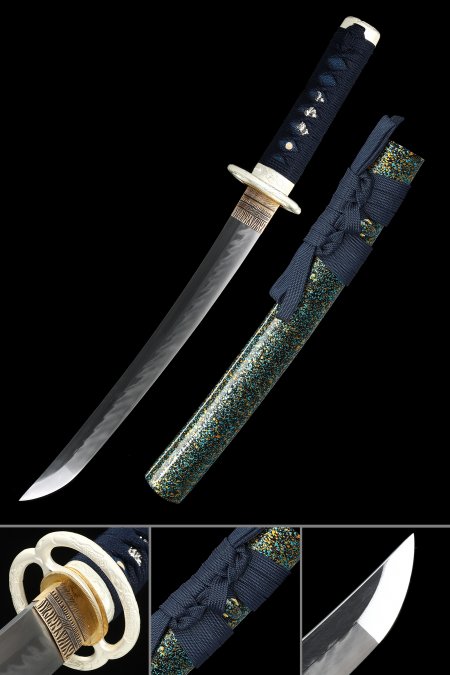
T10 is a high-carbon tool steel with a fine grain structure and roughly 1.0% carbon content, which makes it exceptionally well-suited to differential clay hardening. When the blade is coated in clay and quenched, the uncoated edge cools rapidly and hardens while the spine remains comparatively tough. The result is a visible hamon — a temper line formed by actual crystalline activity in the steel rather than etching or polishing. Collectors value T10 specifically because this process produces a natural, non-repeatable hamon pattern unique to each blade, giving every piece a one-of-a-kind character. Stainless steels cannot undergo this process meaningfully, which is why T10 remains the material benchmark for collectors who prioritize authentic Japanese blade metallurgy.
How is a teal lacquer saya different from a rayskin-wrapped saya?
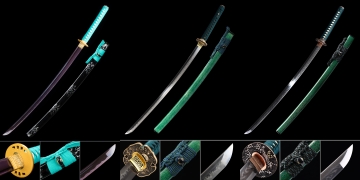
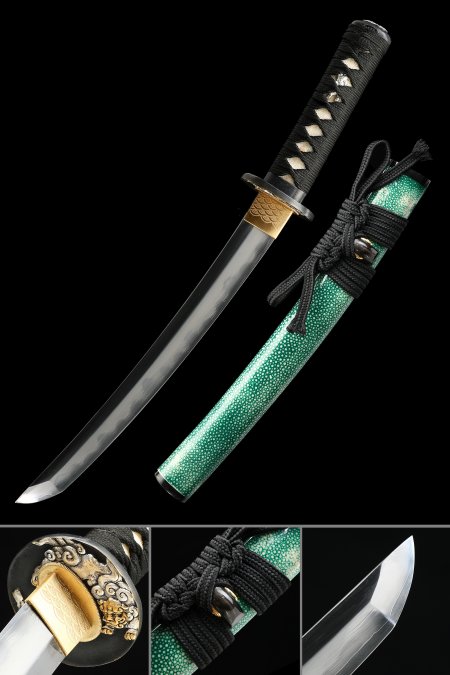
A teal lacquer saya is crafted from a wood core — typically honoki or a comparable lightweight wood — that is shaped, smoothed, and then coated with multiple layers of tinted lacquer to achieve a deep, uniform color. The finish is glossy and hard, offering good protection and a sleek, formal aesthetic. A teal pearl rayskin (same-gumi) saya, by contrast, wraps the wood core in genuine rayskin before finishing, introducing a natural pebbly texture across the surface. The individual nodules of rayskin catch light differently at various angles, giving the saya a dynamic, almost iridescent quality. Both treatments are period-authentic decorative methods in Japanese blade presentation, but rayskin adds tactile complexity that lacquer alone cannot replicate. Your choice between them largely comes down to whether you prefer refined uniformity or organic visual texture in your display.
How should I store a carbon steel tanto with a teal saya long-term?
Carbon steel requires consistent care to prevent oxidation, and the saya demands its own attention as well. Store the tanto horizontally on a fitted blade stand or in a dedicated display case, away from windows where UV exposure can fade the teal finish and humidity swings can cause the wood saya to warp or crack. Remove the blade from the saya periodically — every few months is a reasonable schedule — and apply a thin coat of choji oil or a food-grade mineral oil to the blade surface, wiping away any excess before resheathing. Avoid storing the blade inside the saya for extended periods without this maintenance, as moisture trapped between blade and wood can accelerate rust. If you live in a humid climate, a small silica gel packet placed near the display case provides an additional layer of protection.
Is a tanto with a lion tsuba a historically accurate design choice?
Lion (shishi) motifs have deep roots in Japanese decorative arts, appearing on lacquerware, screens, armor, and sword fittings from at least the Muromachi period onward. The shishi is a mythological guardian figure borrowed from Chinese iconography and adapted extensively into Japanese craft traditions, often symbolizing protection and auspiciousness. On a tsuba, the lion motif was used across different schools of metalwork and is particularly associated with elaborate Edo-period fittings made by Goto and Umetada-school craftsmen. A gold-accented lion tsuba on a tanto is therefore a culturally grounded decorative choice rather than a purely modern aesthetic decision, and it pairs especially well with high-contrast saya colors because the gold relief work remains visually distinct without competing with the blade itself.
How does a tanto differ from a katana beyond just blade length?
The tanto and katana differ in ways that go well beyond their respective lengths. A tanto typically measures under 12 inches in blade length and features a geometry optimized for a distinct profile — often with a more pronounced shinogi (ridge line) and a sharply defined kissaki (tip) that requires precise grinding to maintain correct proportions. Because the blade is short, there is far less room for the smith to correct minor inconsistencies through profile adjustment, making the geometry more technically demanding relative to its size. The koshirae (furniture) also differs: tanto mounts frequently omit the tsuba entirely in some traditional configurations, or use smaller, more delicate fittings scaled to the blade. Katana, by contrast, carry fittings sized for a longer grip and heavier draw. For collectors, tanto often represent a more accessible entry point into Japanese blade collecting while still showcasing the full range of a smith's technical skill.