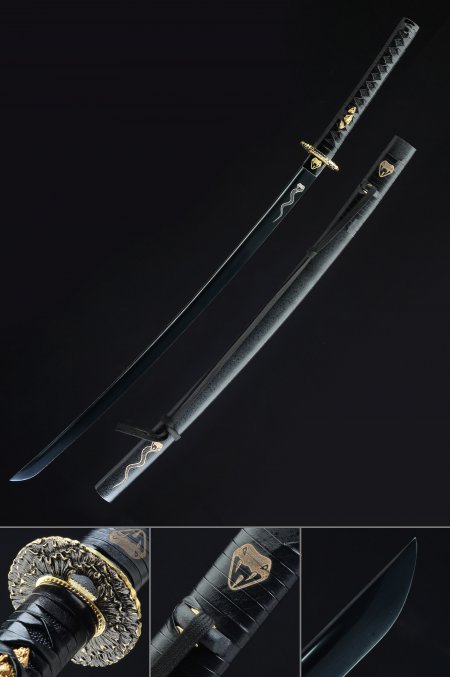
Wave Saya Katana

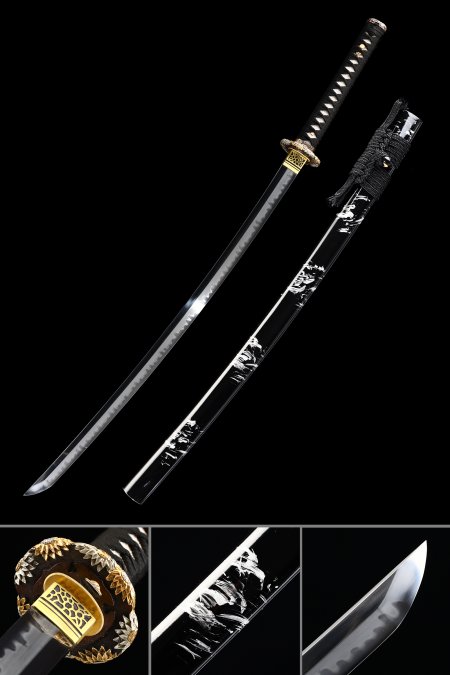
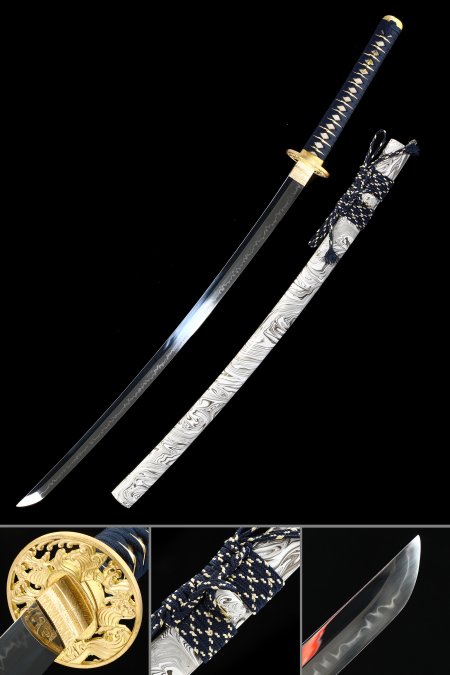
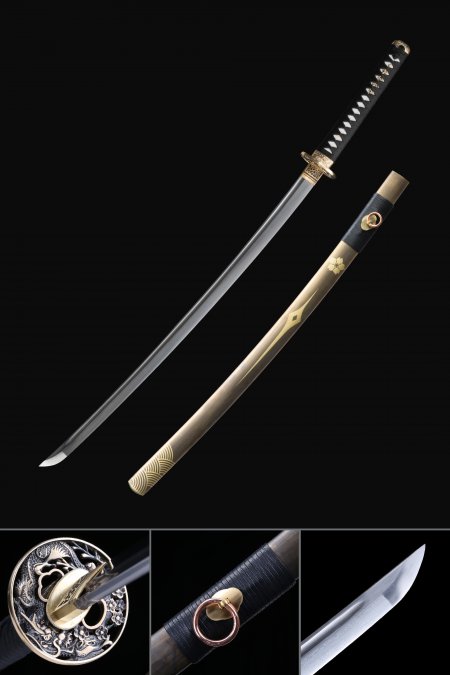
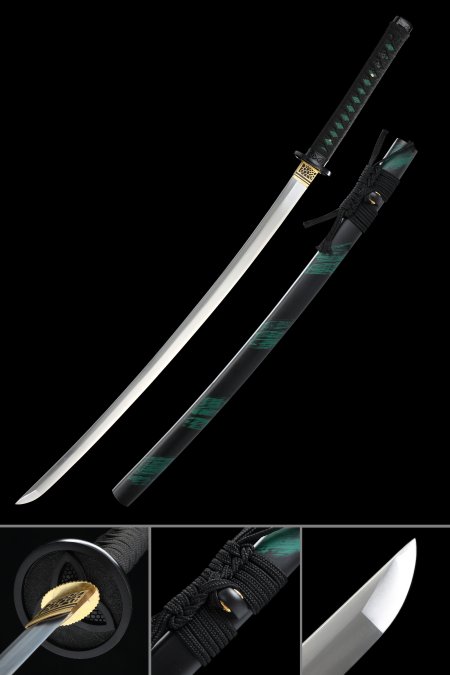
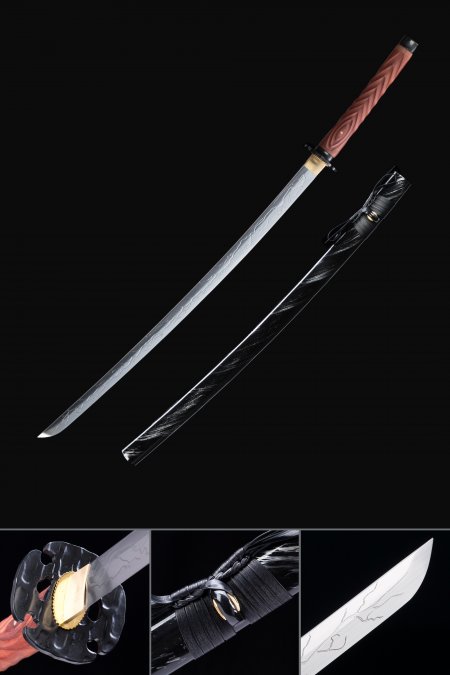
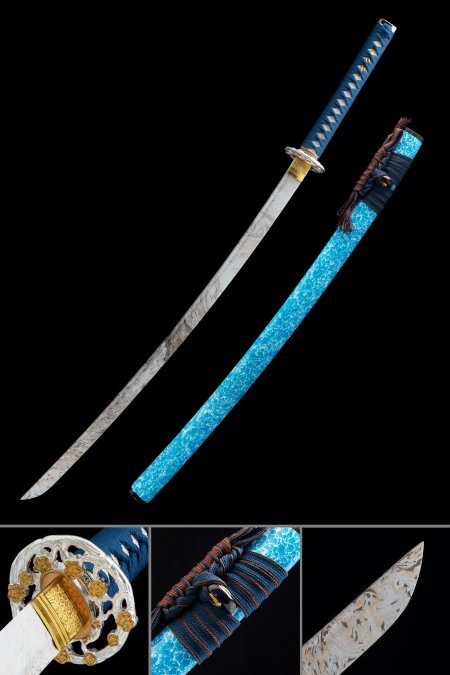
Wave Saya Katana brings together hand-forged blades and lacquered scabbards adorned with flowing wave motifs — a fusion of traditional craftsmanship and striking visual artistry. Each piece in this collection features full-tang construction and carefully selected carbon or Damascus steel, making them prized display collectibles for serious enthusiasts. Enjoy free standard shipping on every order, plus hassle-free returns for complete peace of mind.
Showing 9 Products

Frequently Asked Questions

What makes a wave saya different from a plain lacquered scabbard?
A wave saya is distinguished by its hand-applied flowing wave pattern, typically achieved through layered lacquer work or hand-painted finishes that create visible depth and motion across the surface. Unlike a solid-color or matte-finish saya, a wave-lacquered scabbard uses contrast — often pairing dark base coats with lighter swirl or ripple overlays — to produce a three-dimensional visual effect. Because the pattern is applied by hand rather than printed or stamped, each saya carries slight variations in curve placement, color saturation, and gloss level. For collectors, this individuality is a primary part of the appeal: the scabbard becomes as much a focus of display as the blade itself.
How does clay tempering affect the blade compared to standard hardening?
Clay tempering is a traditional differential hardening process in which a layer of clay is applied along the spine of the blade before it enters the quench. The clay insulates the spine, allowing it to cool slowly and remain relatively soft and flexible, while the uncoated edge cools rapidly and hardens. The boundary between these two zones produces the hamon — a visible temper line that runs along the blade's length. In standard through-hardening, the entire blade is hardened uniformly, which increases brittleness and eliminates the hamon entirely. Clay-tempered blades like those in T10 and 1095 steel display a naturally occurring hamon that is unique to each piece, making them far more sought after as display collectibles compared to conventionally hardened alternatives.
Is Damascus steel or T10 steel a better choice for a display katana?
The choice depends primarily on what a collector values aesthetically and metallurgically. Damascus steel — produced by folding and forge-welding multiple steel layers — displays a distinctive flowing grain pattern across the blade surface that makes each piece visually unique and conversation-worthy. T10 tool steel, by contrast, has a cleaner, more uniform appearance but is prized for its ability to produce a crisp, well-defined hamon through clay tempering. T10 also holds a fine edge characteristic and has a reputation for high carbon content with added silicon for wear resistance. If layered visual texture is the priority, Damascus is the more dramatic display choice. If a collector values the authentic hamon and the story of differential tempering, T10 clay-tempered pieces deliver that more directly.
How should I store a lacquered saya katana to preserve its finish?
Lacquer finishes on wave saya pieces are durable but sensitive to a few specific conditions. Direct sunlight is the most significant threat — UV exposure causes lacquer pigments to fade and can introduce micro-cracking over extended periods. Store or display the piece away from windows, or use UV-filtering display cases for long-term preservation. Humidity is the second concern: moisture trapped inside the saya can migrate to the blade surface and accelerate oxidation. In humid climates, silica gel packets near the storage area help maintain stable moisture levels. Apply a thin coat of choji oil to the blade every two to three months, and wipe the saya exterior occasionally with a soft, dry cloth to remove dust without abrading the lacquer surface.
Do wave saya katanas work as gifts for collectors who already own swords?
They are an excellent choice precisely because the wave saya aesthetic is visually distinct from standard black or natural-wood scabbards. A collector who already owns several katanas is likely to appreciate a piece where the scabbard design is treated with the same seriousness as the blade. Pairing options matter: a gold dragon tsuba against a marble wave saya creates a very different display character than a chrysanthemum guard against a cyan lacquer finish. When selecting a gift for an experienced collector, consider the steel type first — someone who values metallurgical craft will respond more to a clay-tempered T10 with real hamon, while a collector drawn to visual artistry may prefer a Damascus blade paired with a richly patterned wave saya. Either way, the combination of hand-forged steel and artisan lacquerwork makes these pieces stand apart on any display.

Customer Reviews

Ross Nichols Oregon, United States

Couldn't find anything wrong with this looker other than a slight pop or tink when I aggressively swing it coming from the suba, wich isn't a problem because this is for showing not cutting(wich it would without any doubt). Its beautiful artistic harmon is excellent and the leather handle is flawless and very grippy really like the leather and the fishscale Saya is flawless and awesome and the fit is flush and tight enough to hold upside-down , worth every penny.

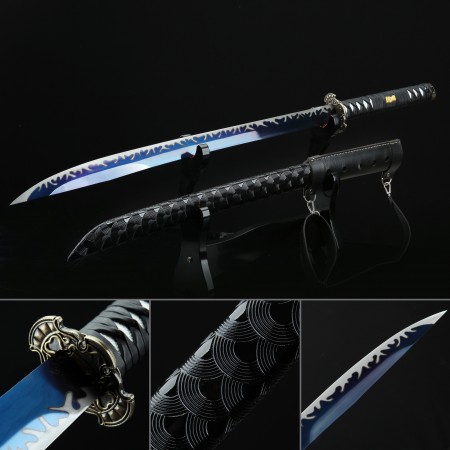
Clay-Tempered T10 Steel Katana with Blue Hamon Finish in Black PU Leather Saya - Full Tang Collectible Clay-Tempered T10 Steel Katana with Blue Hamon Finish in Black PU Leather Saya - Full Tang Collectible
Seth Burns West Virginia, United States

Very well made for the price, fairly sharp, I have stress tested the edge against thick steel cable, very little wearing occurred to the edge and required only a little bit of sharpening to repair, overall a very good, durable sword. Not sure if it rlly is spring steel, it doesn't seem to act like it but whatever it is, it seems to do a good job. Well done
Spring Steel Katana with Gold Geometric Tsuba - Black & Green Saya Wave Pattern, Full Tang Spring Steel Katana with Gold Geometric Tsuba - Black & Green Saya Wave Pattern, Full Tang