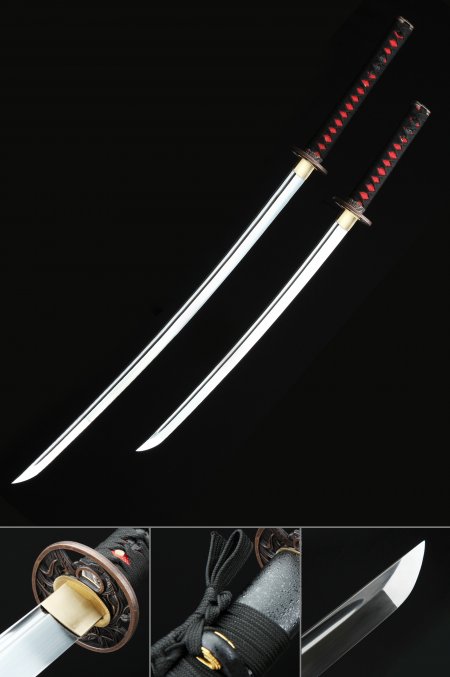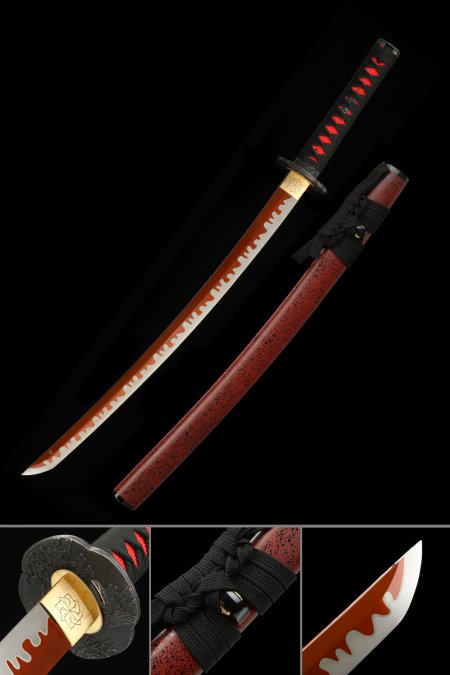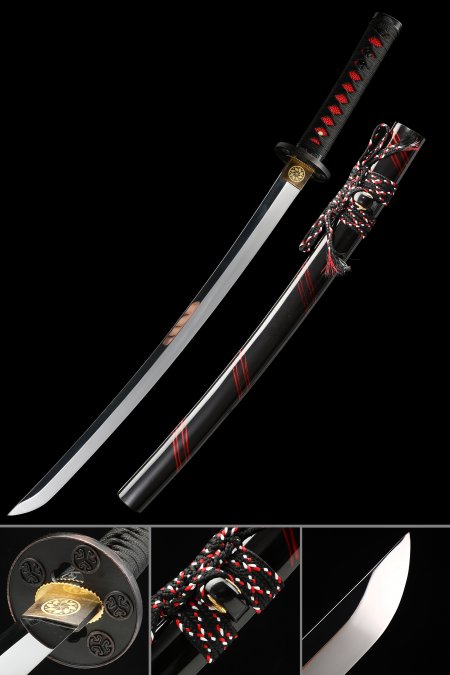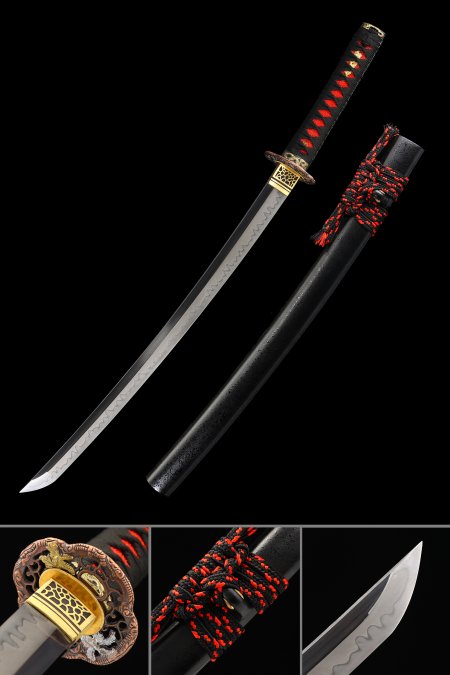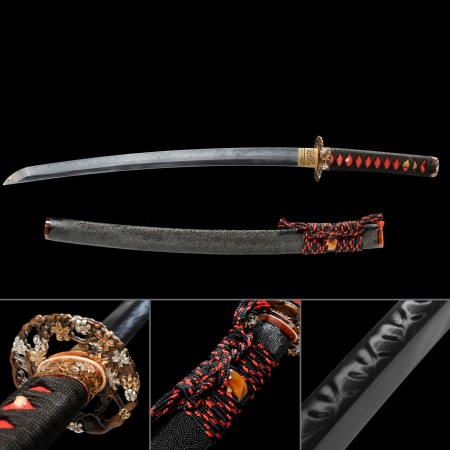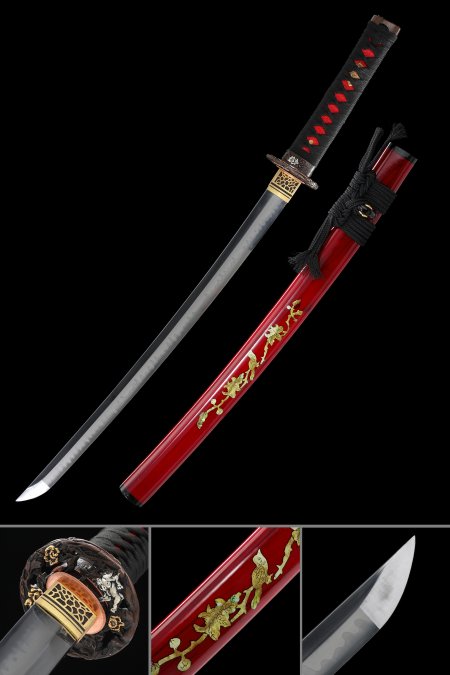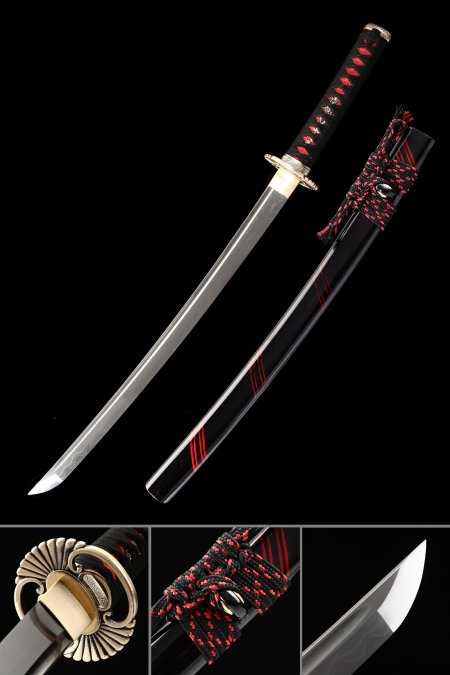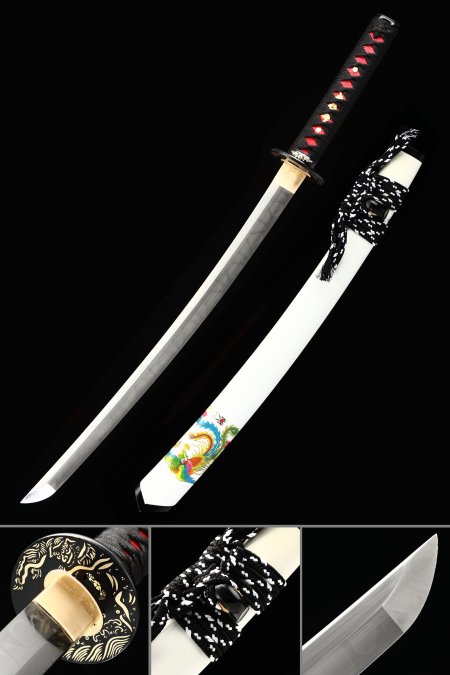
Black Red Handle Wakizashi

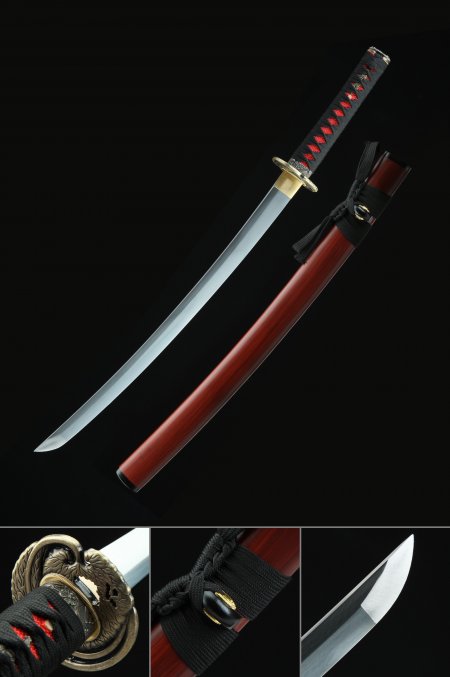
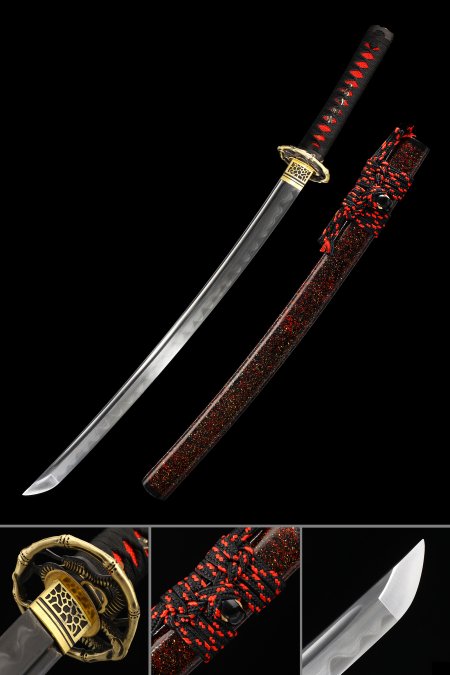
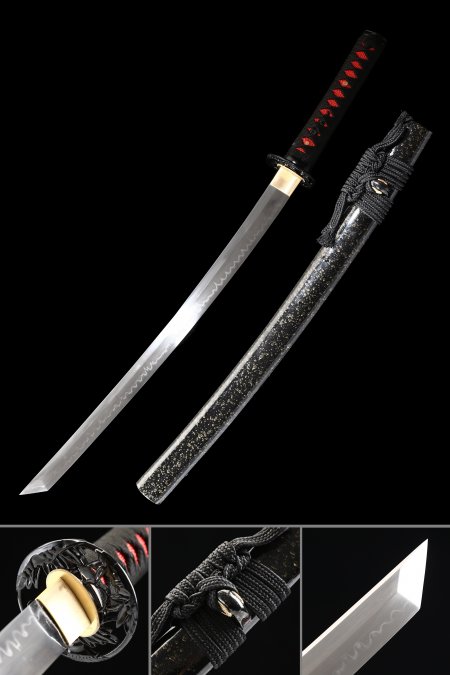
Black and red wakizashi blades bring a bold sense of contrast to any serious collection - pairing deep lacquered saya with richly wrapped tsuka for a striking display presence. Each piece is hand-assembled with period-inspired fittings, from floral alloy tsuba to genuine rayskin handles, reflecting the refined aesthetic of classical Japanese sword craft. Explore the full range and enjoy free standard shipping on every order, backed by our hassle-free return policy.
Showing 11 Products

Related Collections

Red Ninjato7 items


29 Reviews

Black Naginata4 items


4 Reviews

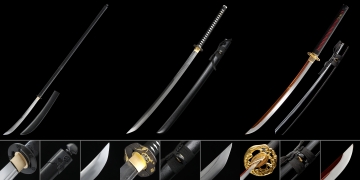
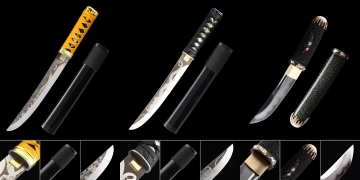
Black Aikuchi6 items


5 Reviews

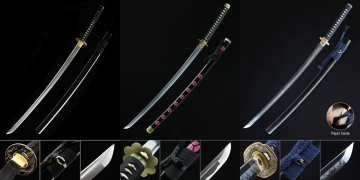
Black Saya Katana590 items


3142 Reviews

Frequently Asked Questions

What makes black-red koshirae a popular choice for wakizashi collectors?
The black-and-red color combination has deep roots in Japanese aesthetics - it evokes lacquerware, formal armor fittings, and the high-contrast visual language of classical sword presentation. On a wakizashi, this palette tends to unify the koshirae into a cohesive display object: a dark lacquered saya grounds the piece, while red ito wrapping over rayskin draws the eye along the tsuka. Collectors are drawn to it because it photographs well, holds visual impact from a distance, and pairs naturally with a wide variety of display stand materials, from natural wood to black lacquered mounts. It also has enough historical precedent that it reads as authentic rather than purely decorative.
How does a real hamon differ from an etched one on a wakizashi blade?
A genuine hamon is produced through clay tempering - a process where the bladesmith applies a layer of clay along the spine before the final quench, causing the edge and spine to cool at different rates. This differential hardening creates a visible crystalline boundary along the blade known as the hamon, which has a soft, cloudy quality and subtle activity when examined under light. An etched or acid-washed hamon, by contrast, is applied chemically to the surface of a uniformly heat-treated blade and tends to look sharper, more uniform, and less varied in texture. For collectors, a clay-tempered hamon on T10 or high-carbon steel is a meaningful indicator of authentic production technique and adds lasting display and appreciation value to the piece.
What is the difference between a Daisho set and a standalone wakizashi?
A Daisho is a matched pair consisting of a katana and a wakizashi finished in the same koshirae style - same ito color, same tsuba design, same saya finish. Historically, the Daisho was the formal pairing worn by samurai, with the longer katana for outdoor carry and the shorter wakizashi worn indoors or kept as a companion blade. For collectors, a Daisho set offers the advantage of visual symmetry on display and a coherent aesthetic statement, while a standalone wakizashi allows for more targeted selection of a specific steel type, tsuba motif, or saya finish. If you're building a tiered display or want to reference the classical pairing tradition, a Daisho is a compelling starting point.
How should I store and maintain a lacquered saya long-term?
Piano lacquer saya - whether black or red - are relatively low-maintenance but benefit from a few consistent practices. Keep the saya in a stable environment away from direct sunlight, which can fade or crack the lacquer finish over time. Avoid extreme humidity fluctuations, as the wooden core beneath the lacquer can expand and contract, potentially affecting fit. Wipe the exterior gently with a soft dry cloth to remove fingerprints or dust; avoid abrasive materials or chemical cleaners. The blade inside should be lightly oiled with choji or mineral oil before storage to prevent any moisture contact with the steel. Remove the blade periodically to inspect both the edge and the interior of the saya for any buildup or residue.
Is a Damascus steel wakizashi purely decorative or does it have collector merit?
Damascus, or pattern-welded steel, carries genuine collector merit distinct from standard monosteel blades. The visual patterning - swirling, ladder, or raindrop figures across the blade surface - is the direct result of forge-welding multiple layers of steel and manipulating them through twisting and folding before final shaping. No two Damascus blades produce identical patterns, which gives each piece an inherent uniqueness. From a collector's perspective, the value lies in that visual individuality combined with the skill required in production. A Damascus wakizashi paired with black-red koshirae creates a piece where both the blade and the fittings reward extended observation, making it especially well suited for close-up display cases where the blade surface is visible and lit.

Customer Reviews

Tucker D Thein Arizona, United States

I received this is perfect condition. Super sharp and you can tell it’s just well built, I liked this specifically cause it’s hard to find the slanted tip on the blade and I think it looks super cool, It’s also hard to find swords that aren’t only decorative, my purpose for buying is decorative but I also want it to be solid and sharp because I don’t want to show off a knock off fake sword, I want to show off something that is legit and this is.
T10 Folded Clay Tempered Wakizashi Sword with Real Hamon in Black Gold-Flecked Saya and Red Samegawa T10 Folded Clay Tempered Wakizashi Sword with Real Hamon in Black Gold-Flecked Saya and Red Samegawa
Cart 0 Items

Your cart is empty