What makes Damascus steel visually unique on a tanto blade?
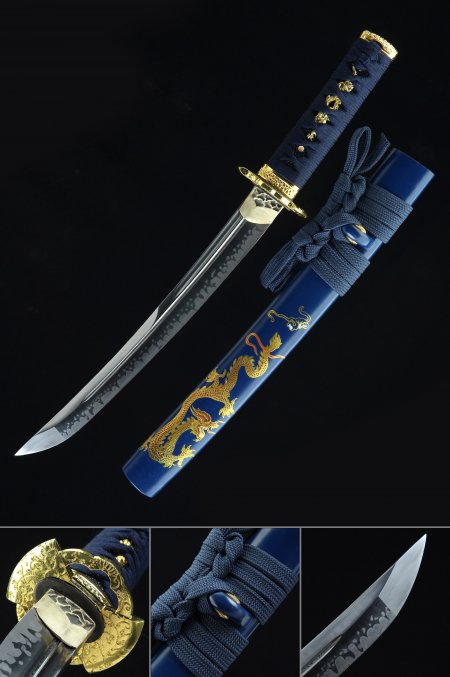
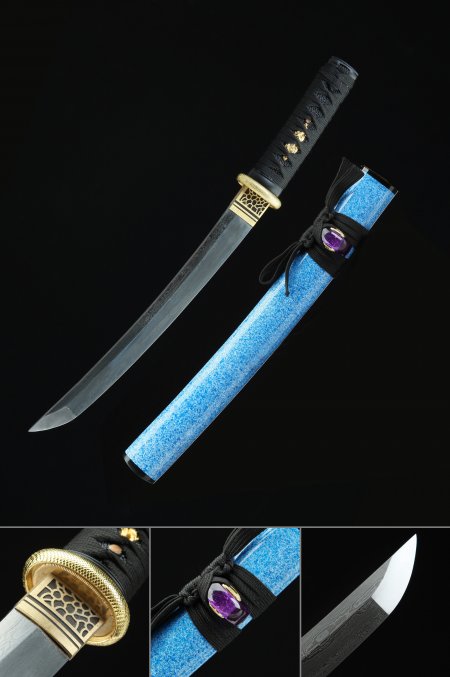
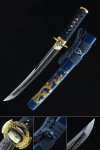
Damascus steel is produced by stacking and forge-welding multiple layers of high-carbon and lower-carbon steel, then repeatedly folding and drawing out the billet under heat and hammer. As the smith works the metal, the two alloys flow and intermingle, and when the finished blade is ground and etched with an acid solution, the differing carbon contents react at different rates — revealing the internal layer structure as a visible surface pattern. On a tanto, which has a relatively short and geometrically precise profile, those swirling or ladder-like Damascus patterns are especially prominent because there is less curvature to distract from the surface. Every blade etches differently depending on layer count, fold orientation, and steel composition, which means the pattern on a Damascus tanto is effectively unrepeatable. That individuality is a significant part of what draws serious collectors to Damascus pieces over blades ground from a single steel bar.
How does a Damascus tanto differ from a standard high-carbon tanto?
A standard high-carbon tanto — typically forged from a single steel type such as 1045, 1060, or 1095 — offers consistent, predictable metallurgical properties throughout the blade. It is straightforward to heat-treat and grind, and quality examples perform reliably. A Damascus tanto, by contrast, is made from a composite billet of layered steels, which introduces a more complex forging process and a visually distinctive result. The primary difference a collector notices is aesthetic: the Damascus surface pattern is irreplaceable and individual. From a structural standpoint, well-made Damascus billets — properly forge-welded without cold shuts or delamination — are structurally sound and hold a good edge. For display-focused collectors, the layered visual complexity of Damascus steel is the defining distinction, turning the blade itself into the primary decorative element rather than relying solely on fittings or saya color.
Does the blue saya on these tantos require any special storage care?
Blue lacquered sayas are finished with pigmented lacquer coats over a wood core, and the finish holds up well under normal indoor display conditions. To preserve the color depth and prevent surface dulling, keep the saya out of direct sunlight for extended periods, as UV exposure can gradually shift pigmented lacquers toward a faded or washed-out tone. High humidity is the other concern: wood cores can expand slightly in very humid environments, which may cause the blade to sit tighter in the saya over time. Storing displayed pieces in a climate-controlled room — roughly 40–60% relative humidity — is the standard recommendation for lacquered wood housings. Avoid pressing the saya against other hard surfaces in storage, as lacquer can chip at contact edges. An occasional light wipe with a dry, soft cloth is sufficient to maintain the finish; no oils or polishes should be applied to lacquered wood.
Is a tanto a good starting point for a Damascus steel collection?
A tanto is genuinely one of the better entry points for Damascus collecting for a few practical reasons. The shorter blade length means the piece occupies less display space while still showcasing the full Damascus pattern — you get the visual payoff without committing to the wall footprint of a full-length katana. The compact format also typically places the tanto in a more accessible price range within the Damascus category, allowing a new collector to acquire a high-craft piece without an outsized initial investment. The blue saya variant in particular photographs and displays with strong visual contrast, making it an effective centerpiece or accent piece in a mixed collection. Collectors who start with a Damascus tanto and find the aesthetic compelling often expand into larger formats — a Damascus odachi or a full katana — once they have a reference point for what to look for in layer quality and fit-and-finish on fittings.
What should I look for in the fittings when evaluating a Damascus tanto?
On a well-assembled tanto, the fittings should function as a cohesive visual system rather than a collection of separate parts. The tsuba — the handguard — should seat cleanly against the habaki (blade collar) without visible gaps or lateral wobble. For the gold alloy tsuba found on these blue tanto sets, look for even finish across the surface with no rough casting marks or uneven plating. The tsuka, or handle, should feel solid in hand with the cord wrap lying flat and uniform, no loose sections or crossing irregularities. On tantos featuring accent stones or gem details, check that the stone is seated evenly and not proud of the surrounding fitting material. The sageo (saya cord) should be tied correctly and match the color scheme of the overall set. These details distinguish a thoughtfully assembled collectible from a piece where fittings were selected and fitted without attention to the whole.