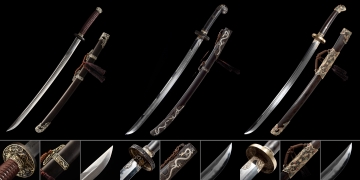
What makes olive Damascus katanas distinct from other Damascus katanas?
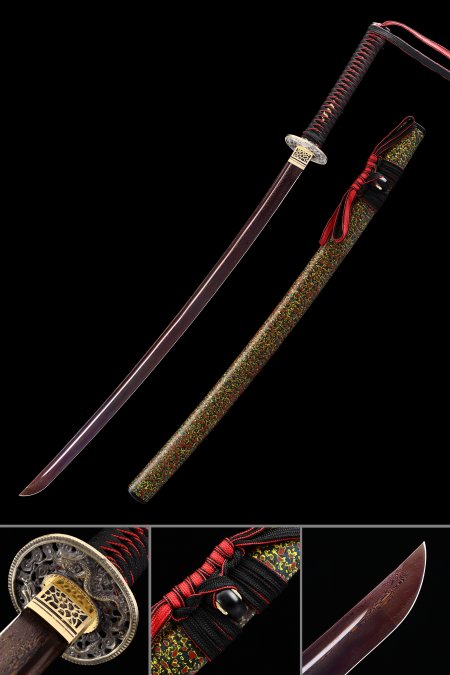
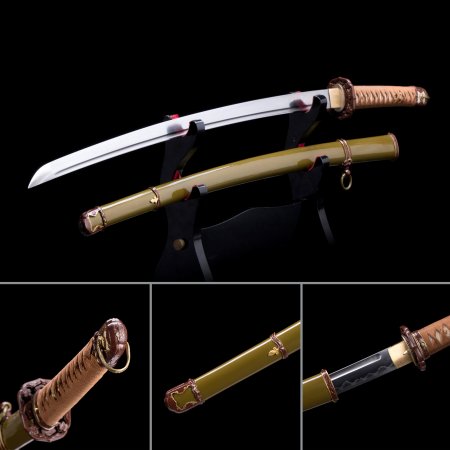
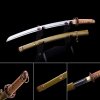
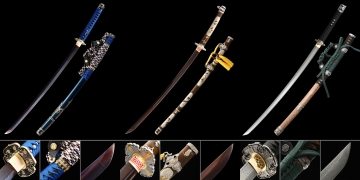
The distinction is primarily aesthetic and contextual rather than structural. While the blade construction — layered high-carbon Damascus steel with a full-tang assembly — is consistent across Damascus katana categories, olive-configured pieces are defined by their coordinated earthy fittings: olive lacquer saya, tsuba designs that complement subdued tones, and handle wrapping that avoids high-contrast color choices. This palette has historical grounding in Japanese military sword tradition, particularly officer katanas of the mid-20th century, where olive and subdued field colors were standard. For collectors, this makes olive Damascus katanas appealing both as purely aesthetic objects and as historically referenced display pieces within a broader collection.
How is the Damascus pattern formed on the blade surface?
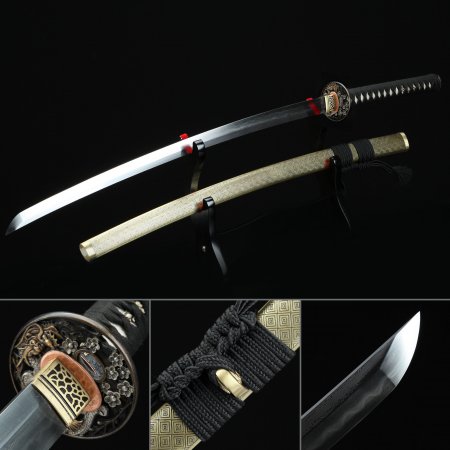
Damascus patterning is produced through a forge-welding and folding process in which two or more steel types — typically differing in carbon content — are layered, heated, and hammered together repeatedly. Each fold doubles the layer count, and the final surface grind reveals the grain structure created by those alternating steel layers. The specific pattern that emerges — woodgrain, ladder, twist, or random — depends on how the smith manipulates and cuts the billet before the final grind. No two hand-forged Damascus blades produce an identical pattern, which is a core reason collectors value them: each piece carries a surface that is structurally and visually unique to that individual forging session.
What should I know about maintaining a Damascus steel display piece?
Damascus steel, like all high-carbon steel, is susceptible to surface oxidation if left unprotected. For display purposes, the most important maintenance habit is applying a thin coat of food-grade mineral oil or traditional choji oil to the blade surface every two to three months, or more frequently in humid climates. Fingerprints left on the steel are particularly problematic — the oils and salts from skin contact accelerate localized surface rust. Always handle the blade with clean cotton gloves or a soft cloth. Store displayed pieces away from direct humidity sources, and if storing in a saya, ensure the interior is dry before sheathing, as trapped moisture against the steel surface is a common cause of preventable pitting.
Is the olive saya finish durable enough for long-term display?
Hardwood saya with lacquer finishes are well-suited to static display environments provided they are kept away from direct sunlight and significant humidity fluctuations. UV exposure over extended periods can cause lacquer to yellow or crack, so positioning away from windows or under UV-filtering display glass is advisable. The olive lacquer used on quality saya is typically applied in multiple coats over a sealed wood substrate, which provides meaningful protection to the underlying wood. For collectors planning long-term display, a horizontal or angled stand that avoids contact pressure on a single point of the saya exterior will prevent finish wear at contact areas over time.
How does the Type 98 Shin Gunto design differ from a traditional tachi or uchigatana?
The Type 98 Shin Gunto was a standardized officer's sword produced during Japan's military expansion period, and its design deliberately merged traditional Japanese sword aesthetics with military manufacturing practicalities. Unlike classical tachi or uchigatana mountings — which feature ray skin (same) wrapped handles, elaborate menuki, and lacquered scabbards with specific hardware types — the Type 98 uses a simplified metal tsuba, a more utilitarian hilt assembly, and a field-appropriate olive or brown scabbard. The blade geometry can closely resemble a traditional katana, but the koshirae (overall mounting) reflects industrial standardization. For collectors, this creates a genuinely distinct historical category that sits at the intersection of militaria collecting and Japanese sword appreciation.