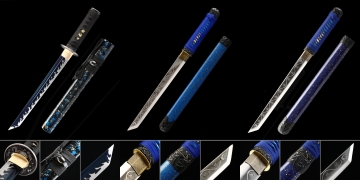
What steel grades are used in blue handle wakizashi?
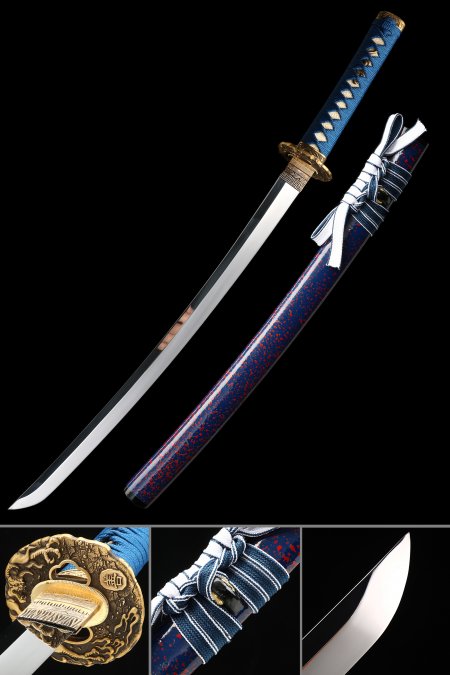
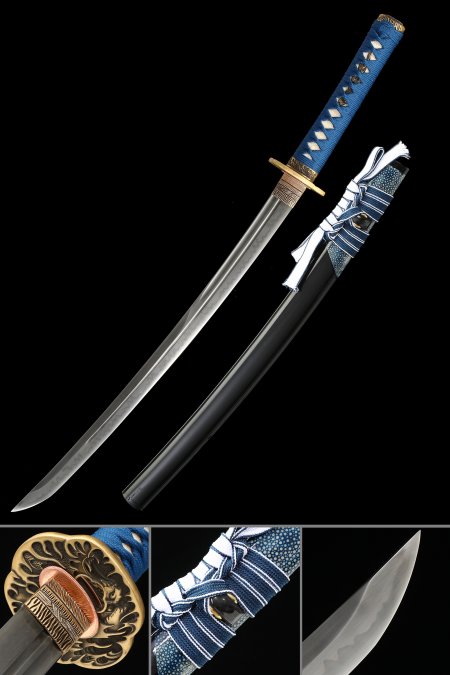
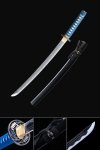
The blue handle wakizashi in this collection are forged from three high-carbon steel grades: 1065, 1095, and T10. Each grade has distinct properties worth understanding before you collect. 1065 carbon steel offers reliable hardness with slightly more flex, making it a forgiving choice for display pieces that may be handled frequently. 1095 is a popular mid-range option with higher carbon content, resulting in a harder edge and more defined grain structure visible after polishing. T10 steel is the most refined of the three — it contains trace tungsten, which improves wear resistance and allows the blade to develop a vivid, naturally occurring hamon through differential hardening. For collectors who prioritize visible hamon activity and surface detail, T10 pieces are typically the standout choice. All three grades are full-tang construction, meaning the steel extends through the entire handle assembly for structural integrity and authentic balance.
How is the blue ito handle wrap applied on a wakizashi?
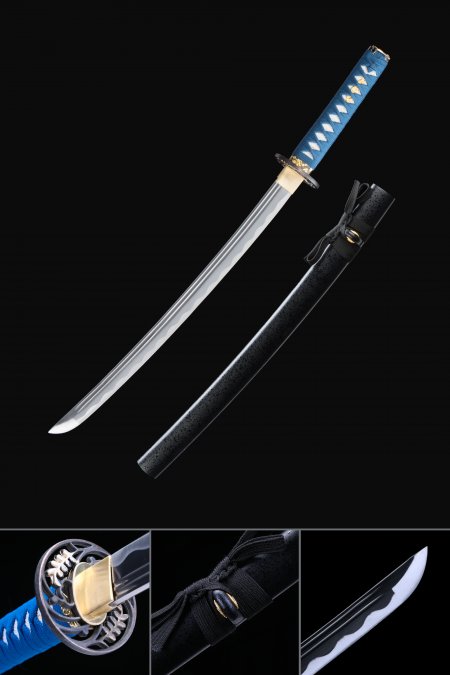
Blue ito is a cotton or silk cord wrapped over the tsuka (handle) in a traditional diamond pattern called tsuka-maki. Before the ito is applied, the handle core is wrapped with same — ray skin — which provides a textured, non-slip base layer with natural moisture-wicking properties. The ito passes over and under the same in a figure-eight crossing pattern, creating the characteristic diamond windows that expose the same beneath. This is not a purely decorative technique; the wrapping method distributes grip pressure evenly and prevents the cord from shifting over time. On a properly wrapped tsuka, the diamonds should be uniform in size, the cord tension consistent, and the end knot neatly secured near the kashira (pommel cap). When evaluating a piece, symmetrical diamonds and clean crossings are good indicators of careful assembly.
How does a wakizashi differ from a tanto in a collection?
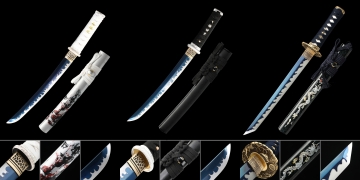
Both the wakizashi and the tanto are shorter-format Japanese blades, but they occupy different roles in a collection. A tanto typically measures under 12 inches in blade length and has a compact, angular profile originally associated with close-quarter utility. A wakizashi sits in the 12- to 24-inch range — long enough to have a flowing curvature similar to a katana, but compact enough to be worn alongside one as part of a traditional daisho pairing. For display purposes, the wakizashi has a more dynamic visual presence than a tanto due to its length and curvature, while remaining more manageable in a display case or wall mount than a full-length katana. Collectors who want a piece that bridges both worlds — the intimacy of a shorter blade and the sweeping aesthetics of a curved sword — often find the wakizashi format the most satisfying single-piece acquisition.
How should I store and maintain a lacquered saya?
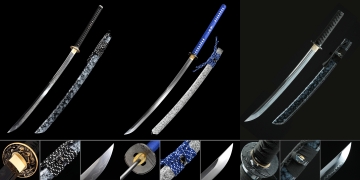
Black lacquer saya are both functional and fragile — beautiful when properly maintained, vulnerable when neglected. For storage, keep the saya in a low-humidity environment away from direct sunlight, which can cause lacquer to crack or discolor over time. If you live in a particularly dry climate, a slightly padded display case helps moderate temperature fluctuations. Never store the blade inside the saya long-term without periodic inspection; moisture trapped between blade and saya can lead to surface oxidation on the steel. For the lacquered surface itself, a soft, dry cloth is all that's needed for routine cleaning — avoid solvents or furniture polishes, which can strip or cloud the finish. The blade should be lightly coated with choji oil (clove oil) or a food-grade mineral oil before being re-sheathed after handling, ensuring the steel stays protected without transferring excess oil to the saya interior.
Is a blue handle wakizashi a good collector gift?
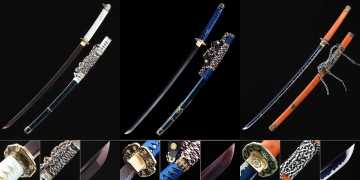
A blue handle wakizashi makes a genuinely distinctive gift for collectors interested in Japanese sword aesthetics, martial arts history, or East Asian decorative arts. Unlike generic decorative items, each piece carries identifiable craft details — the steel grade, the hamon line, the tsuba design — that give a knowledgeable recipient something specific to appreciate and research. The blue ito adds a personal aesthetic dimension that feels considered rather than generic. For gifting, pieces featuring a Dragon Tsuba or a Gold Crane Tsuba tend to have strong visual impact at the moment of presentation and carry enough cultural symbolism to make them conversationally interesting. If the recipient already owns a katana, a coordinating wakizashi expands their display into a daisho-style arrangement. Pairing with a wall mount or display stand completes the presentation and makes the piece immediately displayable.