Blue Sageo Hamidashi
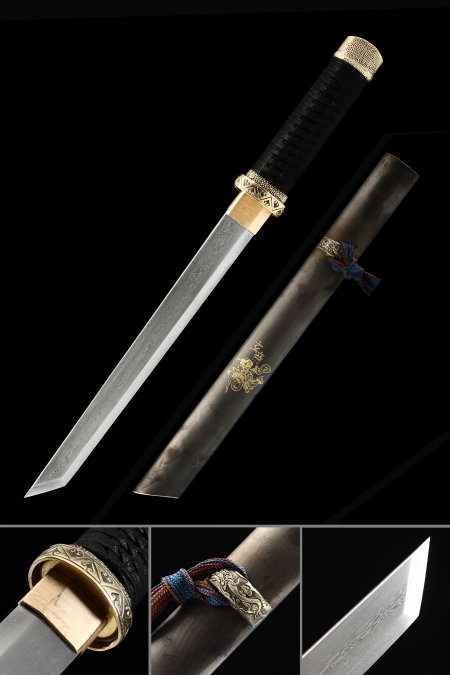
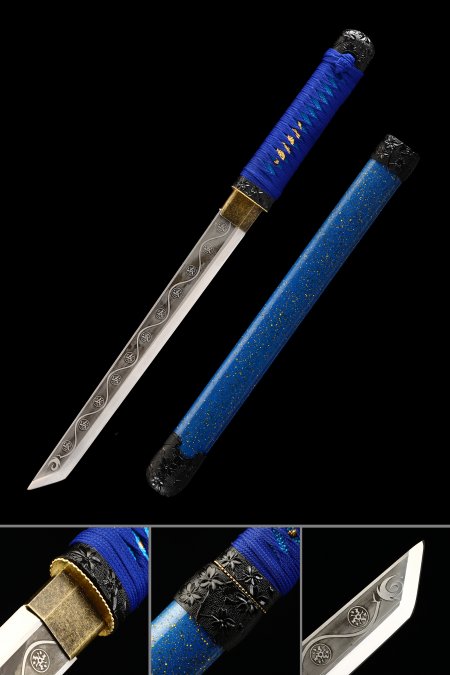
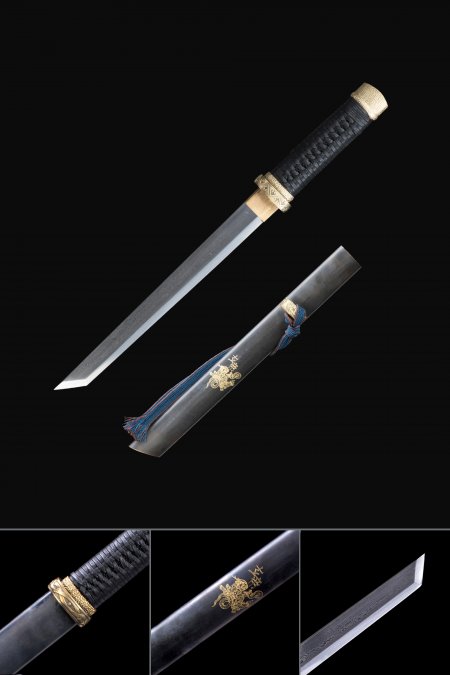
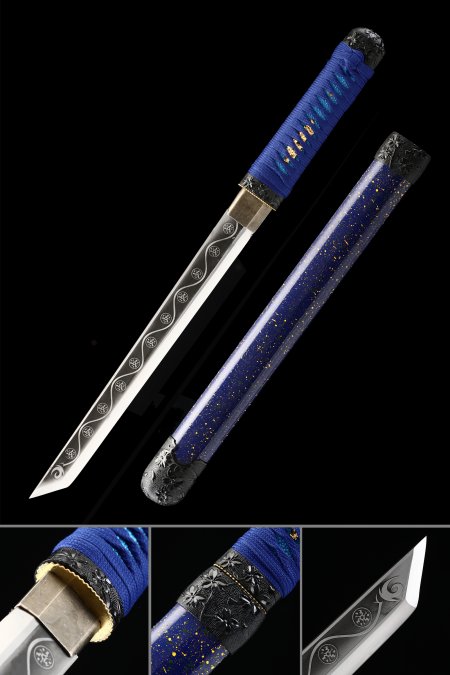
The Blue Sageo Hamidashi collection brings together finely crafted tanto-style collectibles distinguished by vivid blue cord wrapping, intricate tsuba designs, and hand-finished blades in engraved or Damascus patterns. Each piece is built on a full-tang construction with thoughtfully matched saya and handle components - details that serious collectors notice immediately. Every order ships free with hassle-free returns, so adding to your display is always risk-free.
Related Collections
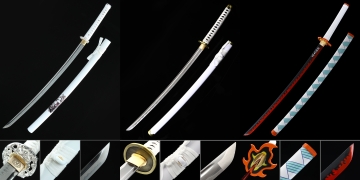
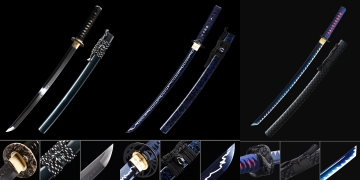
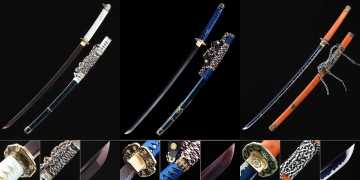
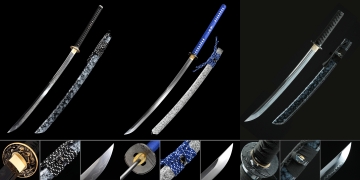
Frequently Asked Questions
What makes a tanto a Hamidashi style?
The Hamidashi is defined by its unusually small tsuba - a guard that barely extends beyond the width of the handle collar rather than forming the wide disc seen on standard tanto or katana. This architectural choice shifts the visual balance of the piece, giving more prominence to the handle wrap and sageo. In display terms, it creates a sleeker, more elongated silhouette. Collectors often favor Hamidashi for cases where they want the blade and cord work to carry the eye rather than the guard. The style has historical roots in the need for a compact sidearm that could be drawn quickly, but today its proportions are prized for their understated elegance in display arrangements.
What is the difference between manganese steel and Damascus blade patterns?
Manganese steel produces a dense, fine-grained surface that is particularly receptive to engraving - lines stay crisp and motifs like waves or chrysanthemums hold detail cleanly over time. The surface tone is consistent and allows the engraved design to be the primary visual event. Damascus-pattern blades, by contrast, achieve their visual character through a layered folding process that creates flowing surface lines - sometimes called the watermark or ladder pattern - which shift in tone depending on the angle of light. Neither is objectively superior for display; the choice depends on whether you prefer a single focused motif or a surface with inherent visual movement. Many collectors maintain examples of both to represent different facets of blade-finishing craft.
Does blue sageo cord fade over time, and how do I preserve it?
Sageo cord - typically silk, rayon, or polyester in modern collectibles - can experience color shift when exposed to prolonged direct sunlight or UV light. Blue tones, especially deep navy and vivid cobalt, are among the more UV-sensitive hues in the traditional color spectrum. To preserve vibrancy, store or display pieces away from direct window light, or use UV-filtering display case glass. Humidity is a secondary concern: sageo stored in consistently humid environments can develop a stiff or tacky texture over time. A controlled environment between 45-55% relative humidity is ideal. Avoid handling the cord with bare hands frequently, as skin oils can transfer and dull the surface sheen of braided silk.
How should I display a blue sageo tanto in a case or on a stand?
Tanto are typically displayed horizontally on a single-tier stand with the blade edge facing upward - the traditional katana-kake orientation adapted for shorter blades. For Hamidashi pieces, where the tsuba is small, the stand cradles the saya and handle without obscuring the guard, which is an advantage over larger-tsuba designs. The blue sageo can be left loosely draped alongside the saya or tied in a formal knot against the saya body, depending on the display aesthetic you prefer. When pairing multiple pieces in a case, positioning the blue cord against a neutral or dark background liner maximizes color contrast and draws attention to the cord work as an intentional design element.
Is a copper tsuba a good choice for a long-term display collection?
Copper-finished tsuba are an excellent choice for collectors interested in natural material aging as part of the piece's character. Raw or lightly lacquered copper will develop a patina over time - shifting from bright reddish-orange toward warmer brown or greenish tones depending on air exposure. Some collectors embrace this as a mark of authenticity and age. If you prefer to maintain the original finish, a light application of Renaissance Wax or a similar archival-grade metal protectant will slow oxidation significantly. Copper also has a visual warmth that complements blue sageo and gray or black saya finishes particularly well, creating a tricolor palette that reads as both traditional and visually sophisticated in a display setting.