Cherry Blossom Tsuba Hamidashi

The Cherry Blossom Tsuba Hamidashi collection brings together finely crafted hamidashi tanto distinguished by intricately detailed sakura-motif tsubas and hand-engraved blades. Each piece reflects a refined aesthetic rooted in classical Japanese artistry — from silver floral guards to vine-traced steel — making every tanto a worthy centerpiece for any serious display collection. Enjoy free standard shipping on all orders, with hassle-free returns to ensure complete confidence in your purchase.
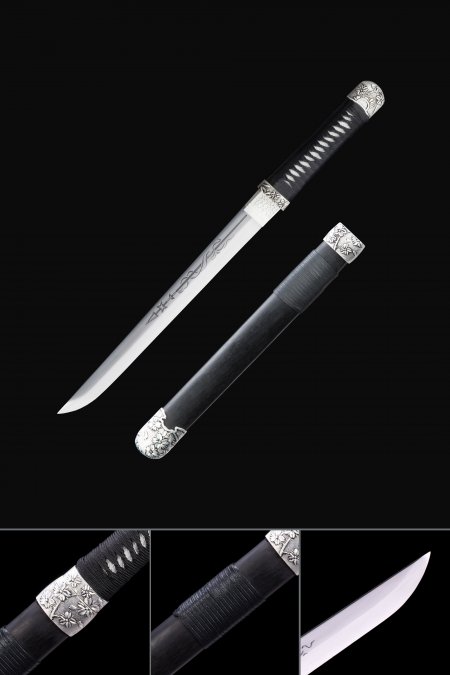
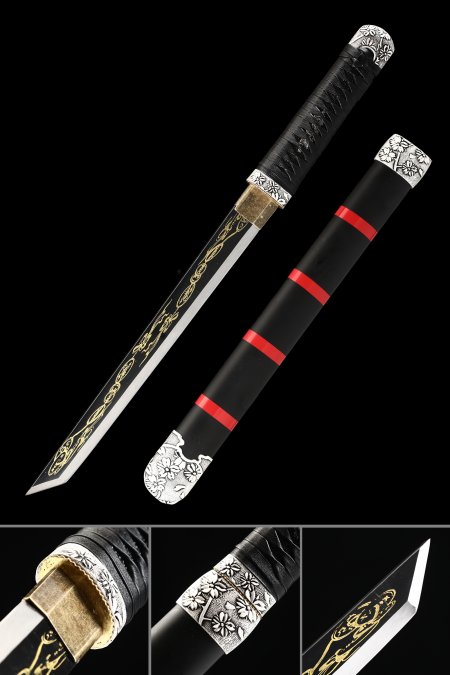
Showing 2 Products

Frequently Asked Questions

What makes a hamidashi tanto different from a standard tanto?
The defining difference lies in the size and placement of the tsuba. A standard tanto typically features a full-sized guard that sits flush within or against the koiguchi — the opening of the scabbard. A hamidashi tanto uses a significantly smaller guard, one that partially protrudes from the saya rather than seating fully inside it. This creates a cleaner, more streamlined silhouette that many collectors associate with a restrained, aristocratic aesthetic. The word hamidashi itself translates roughly to "protruding" or "jutting out," which directly references this fitting characteristic. From a display standpoint, the smaller tsuba gives the piece a visual lightness that suits decorative Japanese fittings extremely well.
How does high manganese steel differ from stainless steel in a display tanto?
High manganese steel is known for its ability to develop rich surface activity — including visible hamon lines — during the forging and heat-treatment process, giving each blade a unique, layered appearance that shifts with the angle of light. It has a slightly warmer tone and more visual texture than stainless steel. Stainless steel, on the other hand, is highly resistant to surface oxidation and discoloration, making it better suited for open-display environments where humidity and air circulation cannot be tightly controlled. For sealed display cases or climate-stable rooms, high manganese steel offers exceptional visual character. For low-maintenance display in varied conditions, stainless steel provides lasting surface clarity with minimal upkeep.
What is the cultural significance of the cherry blossom motif on sword fittings?
The sakura — cherry blossom — has been woven into Japanese aesthetic culture for over a millennium. In the context of sword fittings, it symbolizes the intersection of beauty and impermanence, a philosophical pairing deeply embedded in classical Japanese thought. Artisans working in the Edo period frequently incorporated sakura motifs into tsuba, fuchi, and kashira to signal both seasonal awareness and a sense of refined taste. On a collector piece, a cherry blossom tsuba is not simply decorative; it connects the object to a specific visual language understood by anyone familiar with Japanese craft traditions. It also lends the fitting a timeless quality — the sakura motif has never fallen out of aesthetic favor across centuries of Japanese metalworking.
How should I store and maintain a decorative hamidashi tanto?
For long-term display and preservation, the most important factors are humidity control, surface protection, and proper support. Keep the tanto in an environment where relative humidity stays between 40–60%; excessive moisture encourages surface oxidation on carbon-based steels and can warp wooden saya over time. Apply a very light coat of choji oil or mineral oil to the blade surface every few months using a soft, lint-free cloth — this is especially important for high manganese steel blades. The tsuba and fittings can be gently wiped with a dry microfiber cloth to remove fingerprint oils. When displaying horizontally, use a dedicated tanto stand that supports both the saya and the blade evenly to avoid stress on the habaki fitting over time.
Is a cherry blossom tsuba hamidashi a good choice as a collector's gift?
Yes — and for several specific reasons. The hamidashi tanto is a compact form, making it easier to display in a variety of spaces compared to a full-length katana or tachi. The cherry blossom tsuba provides an immediate visual identity that resonates even with recipients who are new to Japanese blade collecting, while offering enough craft detail — engraved blades, contrasting saya finishes, matched fittings — to satisfy more experienced collectors. A tanto with a distinct decorative theme also functions as a natural conversation piece within a display collection. For gifting purposes, the combination of recognizable cultural symbolism and genuine craftsmanship makes these pieces appropriate for milestone occasions, study collections, or as an introductory centerpiece for someone beginning to explore Japanese edged artistry.

Customer Reviews

Takami Matsubara California, United States

It looks great, nice details, doesn't shake inside the sheath, and it has a nice heavy feel. But I do wish it was more sharp for slicing, stabbing through a body was easy but slicing off a limb seemed to be difficult. It felt more like I had to chop it off like a tree. Maybe this is my personal preference but I wish it was thinner. The blade I got was 0.75 cm thick, which is thin and make the blade durable and easy to maintain. I think I cut about 15 and blade had only minor damage. But I think 0.45 ~ 0.35cm thickness will make the blade easier to slice and maneuver around.
High Manganese Steel Hamidashi Tanto with Black Saya - Gold Engraved Blade, Silver Floral Tsuba High Manganese Steel Hamidashi Tanto with Black Saya - Gold Engraved Blade, Silver Floral Tsuba