
Chinese Jian Sword
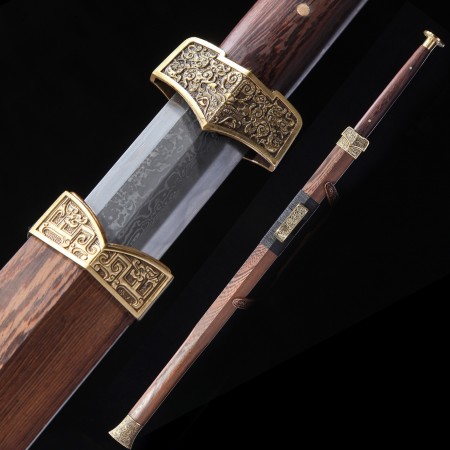
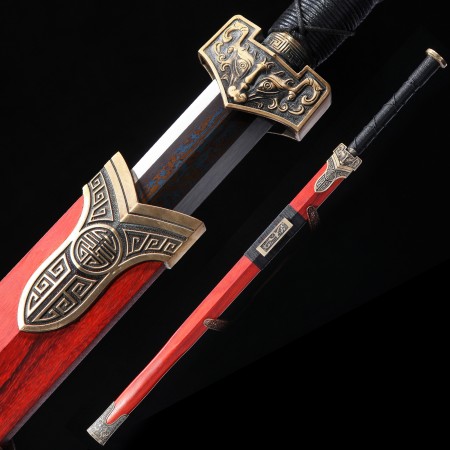
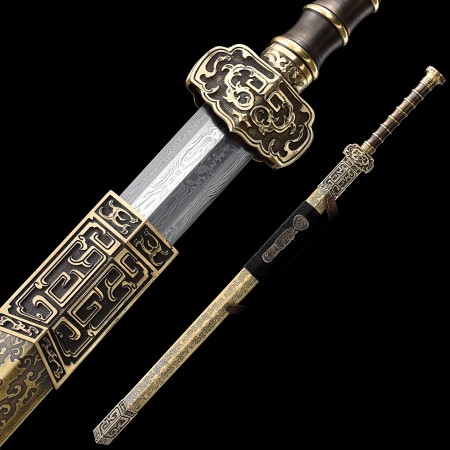
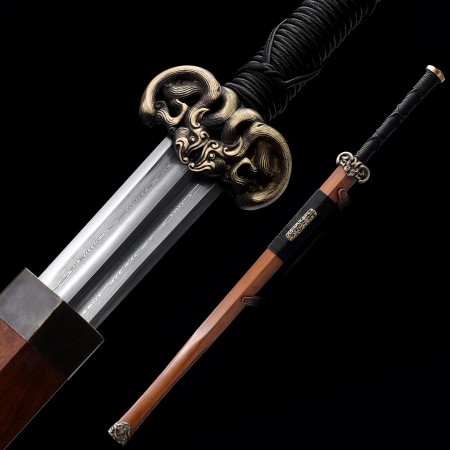
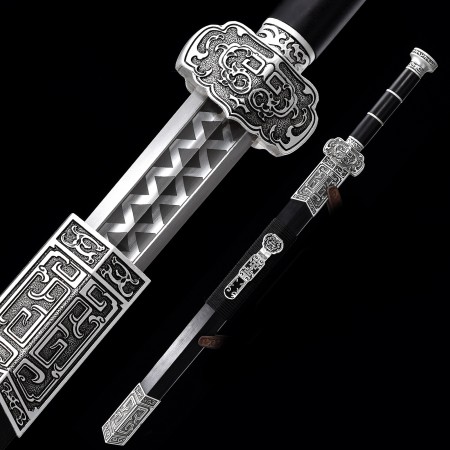
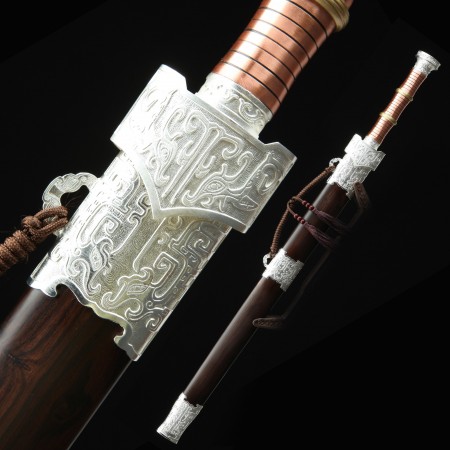
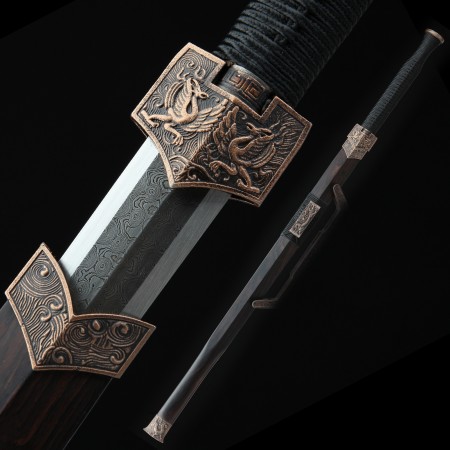
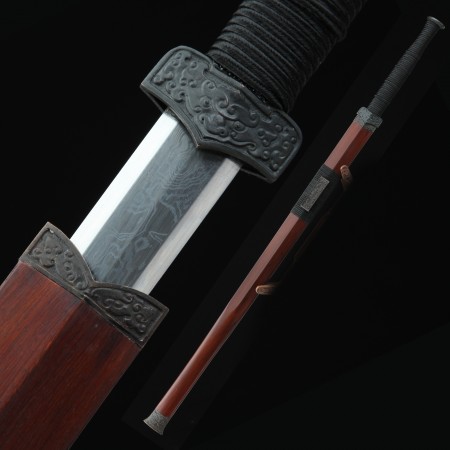
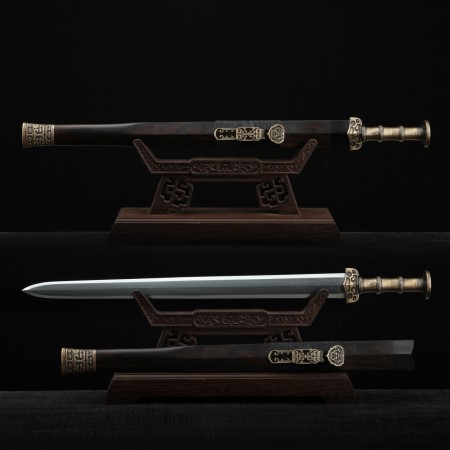
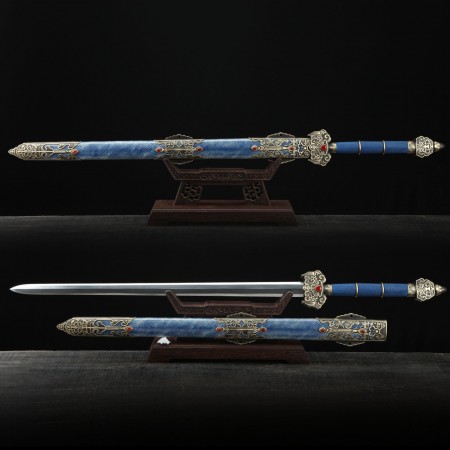
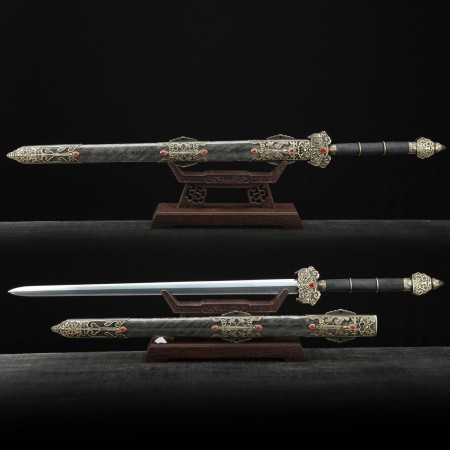
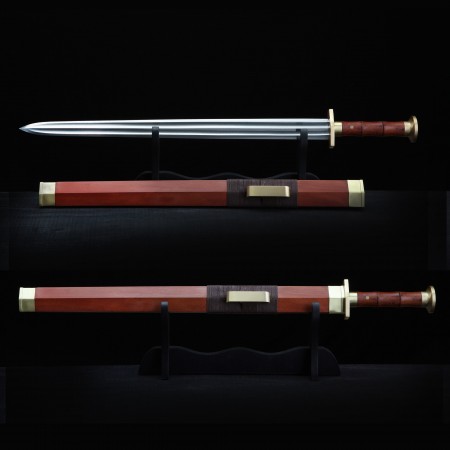
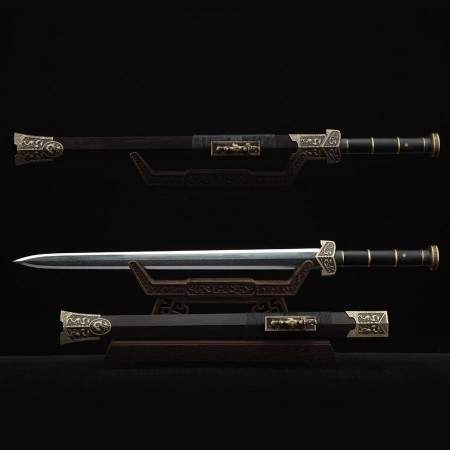
The Chinese jian swords in this collection span the full breadth of the double-edged straight sword tradition - Han Dynasty, Tang Dynasty, and Ming Dynasty forms in manganese steel, Damascus, 1095 carbon, and folded steel with a wide range of blade treatments and scabbard styles. Each sword is hand-forged with full-tang construction and fitted to traditional Chinese sword standards. Free shipping and a 30-day return policy are included with every order.
Free Shipping
479.00 USD
Free Shipping
739.00 USD
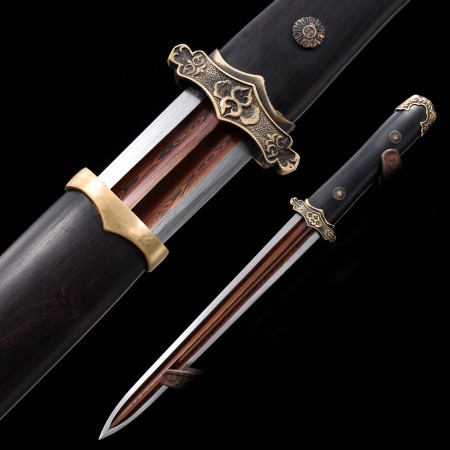
Free Shipping
249.00 USD
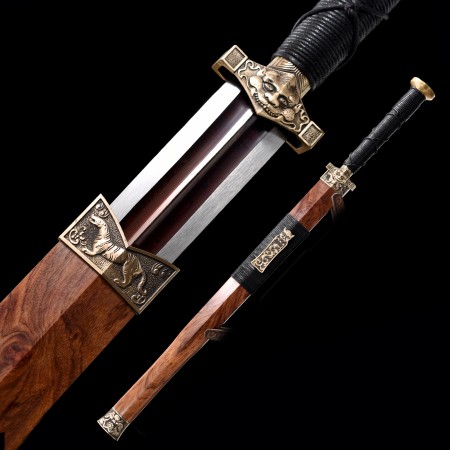
Free Shipping
459.00 USD
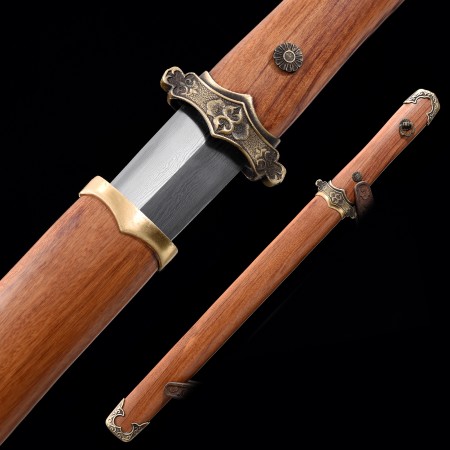
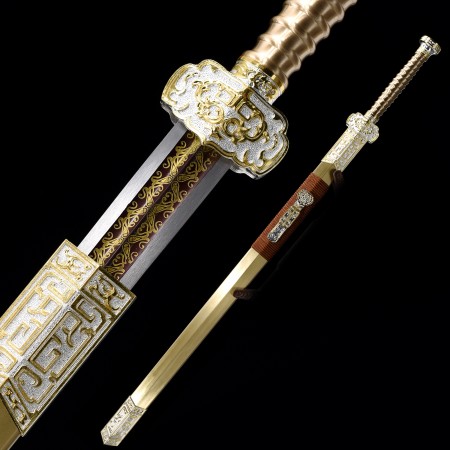
Free Shipping
449.00 USD
Free Shipping
1,289.00 USD
Free Shipping
829.00 USD
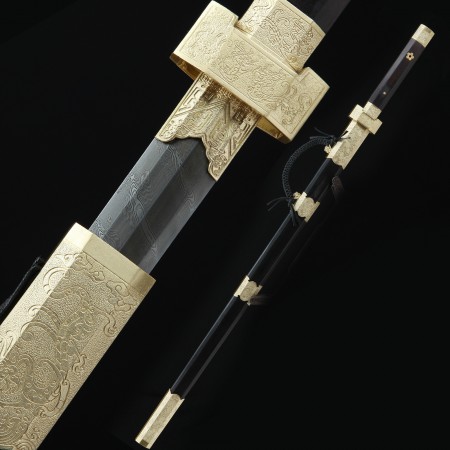
Free Shipping
1,159.00 USD
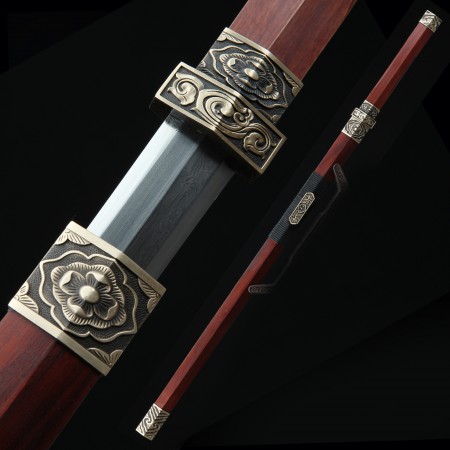
Free Shipping
509.00 USD
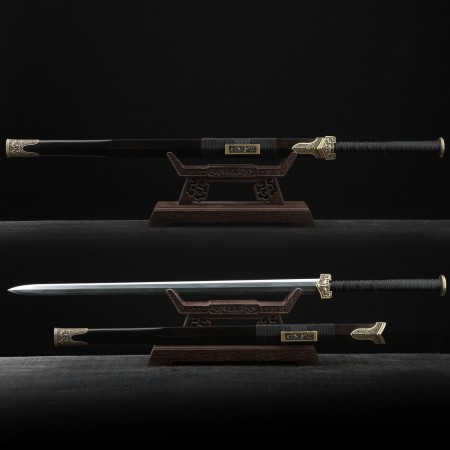
Free Shipping
479.00 USD
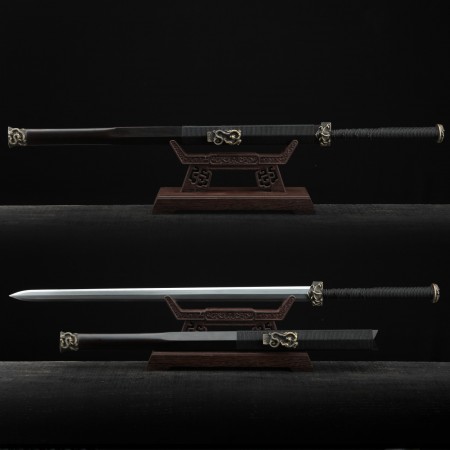
Free Shipping
549.00 USD
Free Shipping
269.00 USD
Free Shipping
1,379.00 USD
Free Shipping
1,379.00 USD
Related Collections
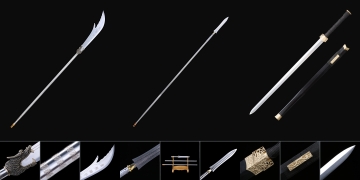
Chinese Warrior Sword128 items
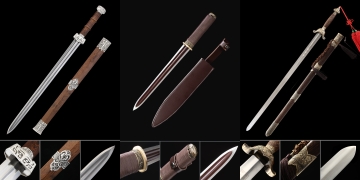
Handmade Chinese Sword82 items
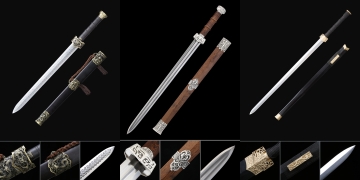
Slategray Han Dynasty Swords73 items
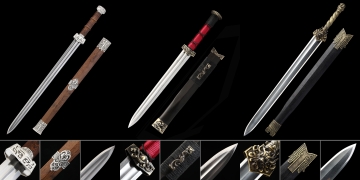
Handmade Han Dynasty Swords36 items
Frequently Asked Questions
What dynasties are represented in the Chinese jian sword collection?
The collection includes jian swords styled after three major Chinese dynasties: the Han Dynasty (206 BCE - 220 CE), the Tang Dynasty (618 - 907 CE), and the Ming Dynasty (1368 - 1644 CE). Each period produced distinct jian design conventions. Han Dynasty jian tend toward clean, restrained proportions with minimal ornamentation - a reflection of the utilitarian military context in which large numbers of these swords were produced. Tang Dynasty jian typically feature slightly different blade profiles and fittings that reflect the cosmopolitan character of Tang culture and its absorption of diverse artistic influences. Ming Dynasty jian often carry more elaborate fittings and decorative elements, as this later period saw sword production shift increasingly toward prestige and ceremonial contexts. Understanding which dynasty's style appeals to you can help narrow the selection within this collection, as the design differences between eras are visible and meaningful for collectors interested in Chinese historical context.
What is the difference between branding blade and standard blade treatments on these jian swords?
Branding blade treatments - the red, gold, blue, and patterned finishes seen on many swords in this collection - are surface treatments applied to manganese or pattern steel blades that create controlled color variations on the blade surface. The most common method produces a reddish-brown or orange tone associated with oxidation treatment, while gold and blue variants use different chemical or thermal processes to achieve their respective colors. Pattern steel swords have a secondary layer of visual complexity from the layered grain structure of the steel itself, which becomes visible through acid etching and creates flowing lines across the blade surface. Standard blade finishes - plain polished steel or satin finishes - present the steel as-is, without additional color treatment. Both approaches use the same underlying steel and construction; the difference is purely visual. Collectors who prefer a traditional Chinese sword appearance often choose branding blade treatments, which have historical precedent in Chinese sword decoration, while those who prefer the steel to speak for itself lean toward untreatted finishes.
How does a Chinese jian differ from a Japanese katana in construction?
The Chinese jian and Japanese katana differ in several fundamental ways that reflect their distinct martial and cultural traditions. The most obvious difference is blade geometry: a jian is straight and double-edged, while a katana has a characteristic curve and is single-edged with a sharpened edge and an unsharpened spine. This affects how each sword is used - jian technique uses both edges in a more symmetrical, directional manner, while katana technique emphasizes the single cutting edge and the specific leverage the curved geometry provides. The handle systems also differ: a jian typically uses a straight handle with a disc or crossguard-style tsuba and a pommel that provides counterbalance, while a katana uses a longer two-handed handle with a different guard profile. Steel traditions vary as well: Japanese swordsmithing emphasizes differential hardening through clay tempering as a central technique, while Chinese smithing includes clay tempering but also produces many swords through other heat treatment methods. Both traditions produce exceptional results through different technical paths.
Are there left-handed or ambidextrous options in the Chinese jian collection?
Chinese jian swords are inherently ambidextrous because of the double-edged blade geometry. Unlike a single-edged sword where one orientation is clearly correct for cutting, a double-edged jian has active edges on both sides and can be used effectively in either hand without the blade geometry working against you. The handle on a jian is typically straight and symmetrical, with no grip shaping that favors one hand over the other. The scabbard fitting is also neutral, with no hand-specific draw orientation built into the design. This makes Chinese jian swords naturally suited to both left-handed and right-handed collectors for display and handling purposes. The ambidextrous character of the jian is one of the features that distinguishes its handling tradition from single-edged sword systems, and it is worth noting for collectors who use left-handed equipment or who intend to display the sword in a specific orientation.
Customer Reviews
David Edward Self
Tennessee, United States
Very satisfied with product.Sword is lightweight and easy to handle and blade and point both are sharp.
 |
Han Dynasty Jian Sword - 1045 Carbon Steel with Wenge and Rosewood Scabbard in Bronze Alloy Fittings |
Brian D Schreffler
Pennsylvania, United States
Smaller then I expected, but it still is a beautiful sword. Very sharp.
|
Han Dynasty Jian Sword - 1045 Carbon Steel with Wenge and Rosewood Scabbard in Bronze Alloy Fittings |
Josh Segars
Georgia, United States
Excellent craftsmanship. Prompt service. Top notch.
|
Han Dynasty Jian Sword - 1045 Carbon Steel with Wenge and Rosewood Scabbard in Bronze Alloy Fittings |
David L Harrington
Florida, United States
Very nice historic style Chinese sword. Excellent fittings and scabbard. Not very sharp, would need work to be a "cutting" sword, but for the price, I think it is a fine value. Size is smallish, but accurate to the period it represents.
|
Han Dynasty Jian Sword - 1045 Carbon Steel with Wenge and Rosewood Scabbard in Bronze Alloy Fittings |
Christian V Gomez
Texas, United States
Shipping was lightning quick! However, the fit and finish aren't perfect, the center ornament on the scabbard is loose, the sword doesn't sheath well, and the ornaments on the hilt look rushed. At a distance, it looks fantastic which is not a bad thing but overall, It was good, not great but good
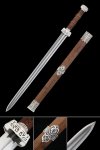 |
Han Dynasty Jian - Handmade 1095 High Carbon Steel Double Edged Chinese Straight Sword |
John Thomas
Pennsylvania, United States
sword to scabbard loose but still nice. I keep buying from you.
|
Han Dynasty Jian Sword - 1045 Carbon Steel with Wenge and Rosewood Scabbard in Bronze Alloy Fittings |
Malcolm Nicholson
North Carolina, United States
Every sword is better than the next. I am consistently impressed with the quality of Truekatana. Their colored blades are absolutely gorgeous, and the steel-grade appears to be exactly what they claim it is.r
Shipping was also very fast and well-packed.r
r
Handmade Chinese Straight Double Edged Sword High Manganese Steel Han Dynasty With Brown Scabbard: r
The "fishscale" engraved Jian is a work of art. Perfectly balanced and handsome redwood, I can see why they tout this model as something of a flagship.r
r
Handmade Chokuto Ninjato And Tanto Sword Set With Blue Blade:r
The blades are the selling point here. They are a lovely deep-blue with a slight reddish purple gradient in the light, with a striking pattern down the spine. The pattern is adhered very well to the surface. The grips and fittings are a bit on the cheap-side but they are designed for "minimalist, tactical use" so they may just what some people are looking for. The blades are still full tang, as evidenced by the great balance point.r
r
Handmade Japanese Katana Sword With Golden Blade And Brown Scabbard:r
This is a hidden gem. I feel like it resembles a "Dao" in many ways, but the blade does appear to have a traditional katana-style taper. The use of leather and the bronze-like highlights on the scabbard are stunning. The golden blade is a subtle hue, not overpowering, giving it a very classy appearance.r
r
All of these swords feel rock-solid in your hand. Highly recommended all around
|
Han Dynasty Jian Sword - 1045 Carbon Steel with Wenge and Rosewood Scabbard in Bronze Alloy Fittings |
Armando Robledo
Texas, United States
Love the sword. Looks exactly like the pictures. The shipping was fairly quick also
|
Han Dynasty Jian Sword - 1045 Carbon Steel with Wenge and Rosewood Scabbard in Bronze Alloy Fittings |