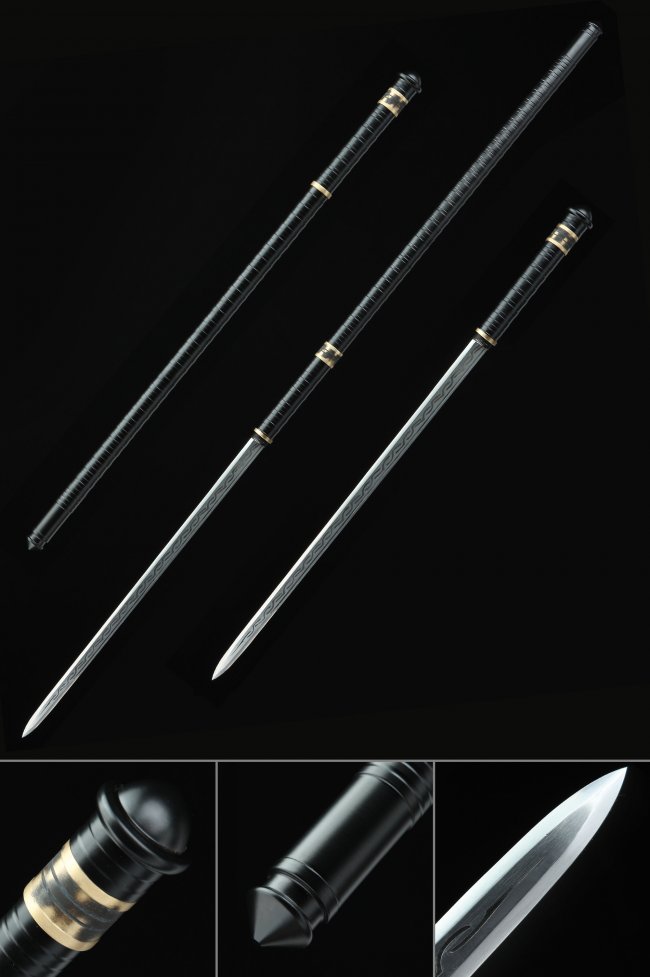
Chinese Spear
Discover our Chinese Spear collection, featuring hand-forged reproductions of traditional Chinese polearm designs. Chinese spears — qiang — represent one of the oldest and most revered weapon traditions in Chinese martial history. Each spear features hand-forged steel heads with traditional shaft construction. Free U.S. shipping and 30-day return guarantee.
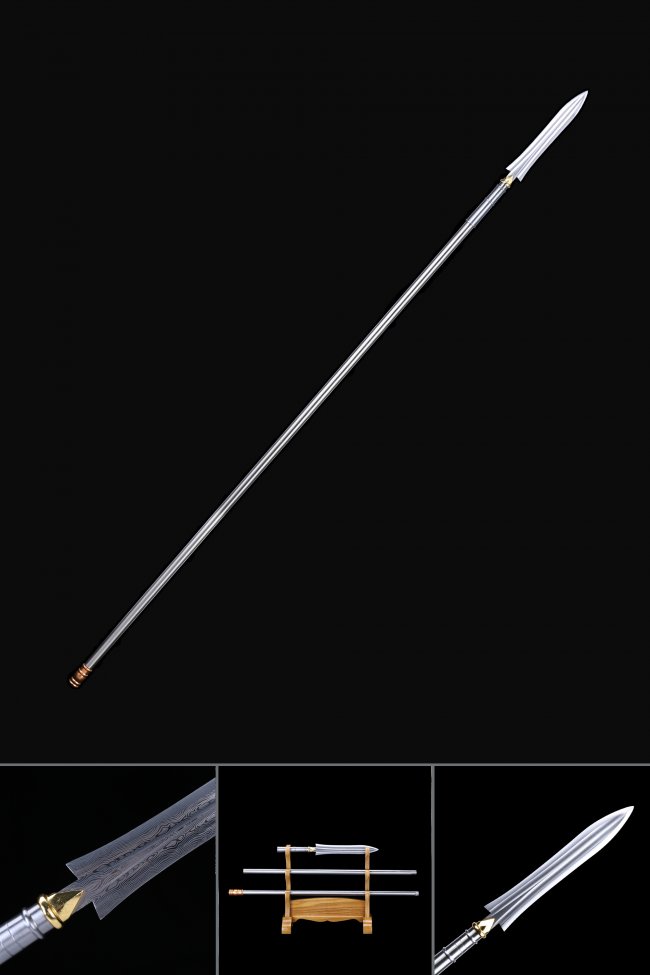
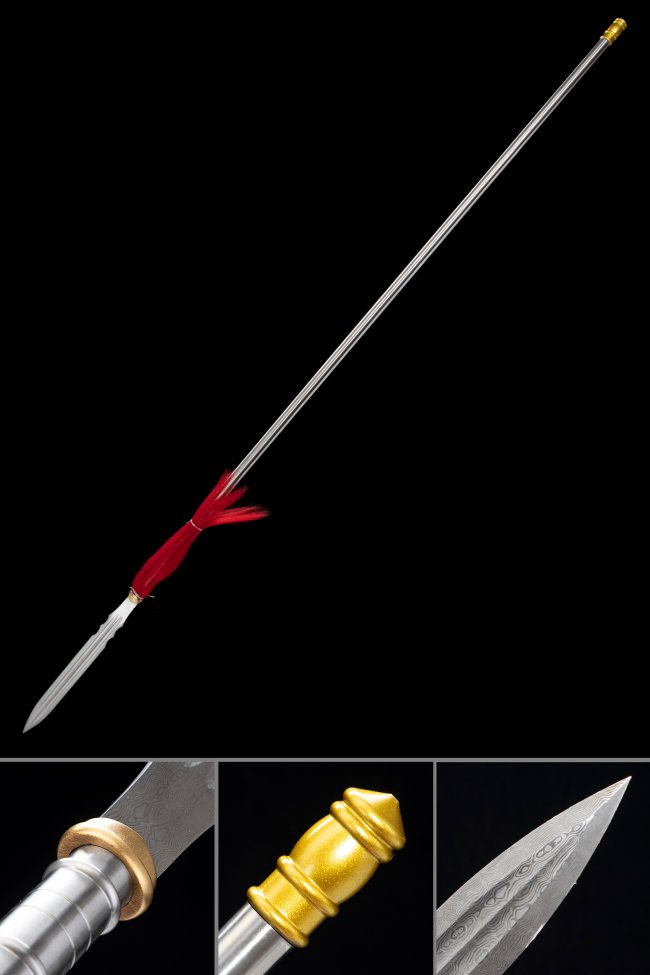
Chinese Overlord Spear - Manganese Steel Kung Fu Spear 79 Inches Foldable With Polished Blade
2 Reviews
ON SALE 20% OFF
$189.00
$239.00
Related Collections
Customer Reviews
My sons were very excited to get these katanas! Great service and I would recommend TrueKatana.com
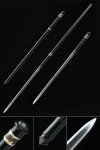 1045 Carbon Steel Expandable Spear Sword with Black Iron Saya and Brass Accents - Ninjato Collectible
Verified Purchase
1045 Carbon Steel Expandable Spear Sword with Black Iron Saya and Brass Accents - Ninjato Collectible
Verified Purchase
I love the spear. It has a really nice weight to it and it is longer than I thought it would be which is perfect for me.
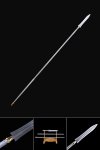 Chinese Overlord Spear - Manganese Steel Kung Fu Spear 79 Inches Foldable With Polished Blade
Verified Purchase
Chinese Overlord Spear - Manganese Steel Kung Fu Spear 79 Inches Foldable With Polished Blade
Verified Purchase
Truly awesome especially cause u follow through with deliveries and make a great product!
1045 Carbon Steel Expandable Spear Sword with Black Iron Saya and Brass Accents - Ninjato Collectible
Verified Purchase
The blade arrived a little crooked but overall, it still looks amazing.
1045 Carbon Steel Expandable Spear Sword with Black Iron Saya and Brass Accents - Ninjato Collectible
Verified Purchase
Great weapon to study with. Solid. If there were a strong twist and click twist and lock for quicker access connecting components. I love it.
1045 Carbon Steel Expandable Spear Sword with Black Iron Saya and Brass Accents - Ninjato Collectible
Verified Purchase
The Ninjato came with quick delivery. It is A well made and beautiful product for it's price. Thanks for the discount True Katana.
1045 Carbon Steel Expandable Spear Sword with Black Iron Saya and Brass Accents - Ninjato Collectible
Verified Purchase
The Ninjato condenses down to the height of a walking stick.
It’s heavy enough for cane defense.
Inner hardware is sturdy.
When opened up as a pole-arm, the Ninjato feels graceful while stabbing and thrusting. I find this to be a very fun weapon to have and look forward to incorporating this piece into my practice.
1045 Carbon Steel Expandable Spear Sword with Black Iron Saya and Brass Accents - Ninjato Collectible
Verified Purchase
Just a little dirty, but the sword is in really good shape!
1045 Carbon Steel Expandable Spear Sword with Black Iron Saya and Brass Accents - Ninjato Collectible
Verified Purchase
The sword is pretty good but could u plz don’t use ups as your delivery method. The tax cost too much while other delivery methods don’t have such high tax
1045 Carbon Steel Expandable Spear Sword with Black Iron Saya and Brass Accents - Ninjato Collectible
Verified Purchase
Yes. Completely met my expectations. Love it sword.
The craftsmanship is what I'm all about. And it sufficed that expectation.
So much so, I will be ordering another straight sword from y'all.
Just a little longer.
A completely satisfied customer.
~Darrick.
1045 Carbon Steel Expandable Spear Sword with Black Iron Saya and Brass Accents - Ninjato Collectible
Verified Purchase
Not a total fail. Needs quick release latches to make practical.
1045 Carbon Steel Expandable Spear Sword with Black Iron Saya and Brass Accents - Ninjato Collectible
Verified Purchase
I LOVE it thank you! It's a really good healthy hobby outlet tool and perfect function and aesthetic wise
Much appreciated
P.S. I used to get demonized, made fun of for this kind of stuff so thanks for the self esteem boost too
Chinese Overlord Spear - Manganese Steel Kung Fu Spear 79 Inches Foldable With Polished Blade
Verified Purchase
The blade was a little small and there's little to no protection to it when it's sheathed. I would say that's its worth the money
1045 Carbon Steel Expandable Spear Sword with Black Iron Saya and Brass Accents - Ninjato Collectible
Verified Purchase
First review but have made multiple orders. Everything I have gotten is of trememdous. Collected quite a few blades and none of the swords match up to the quality of all my True Katana orders. I'm kind of addicted now.
1045 Carbon Steel Expandable Spear Sword with Black Iron Saya and Brass Accents - Ninjato Collectible
Verified Purchase
Beautiful craftsmanship and extremely well made.The only issues I had was the fact that the spearhead is only partially double bladed,considering at one point it goes from bladed to blunt on the top part of the blade and that once you turn the sword into a spear there is no place to put the cap that conceals the grooves except your pocket.Other than that it is an extremely good product and I would highly recommend!
1045 Carbon Steel Expandable Spear Sword with Black Iron Saya and Brass Accents - Ninjato Collectible
Verified Purchase
Loading more reviews...