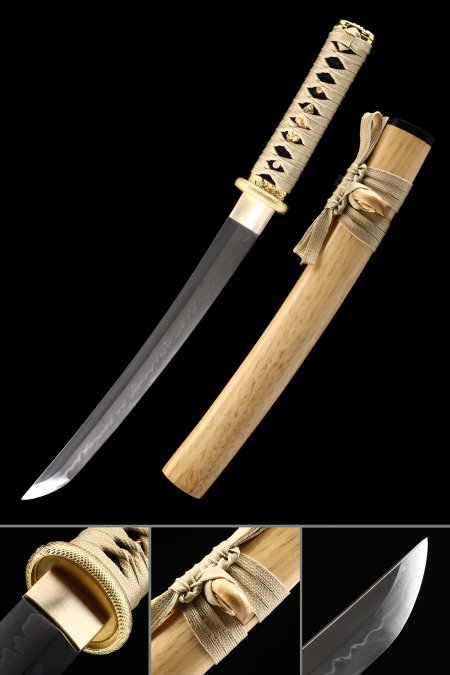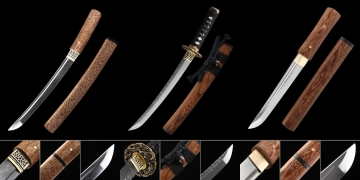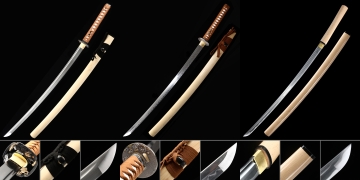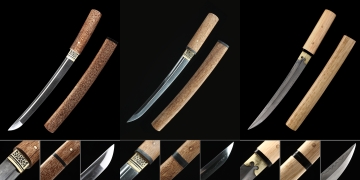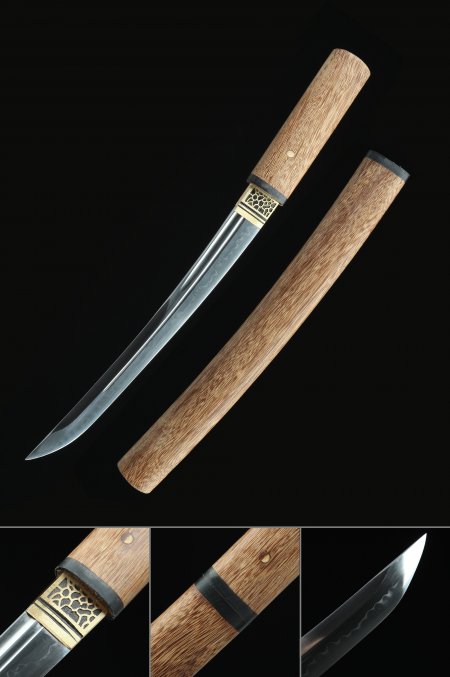
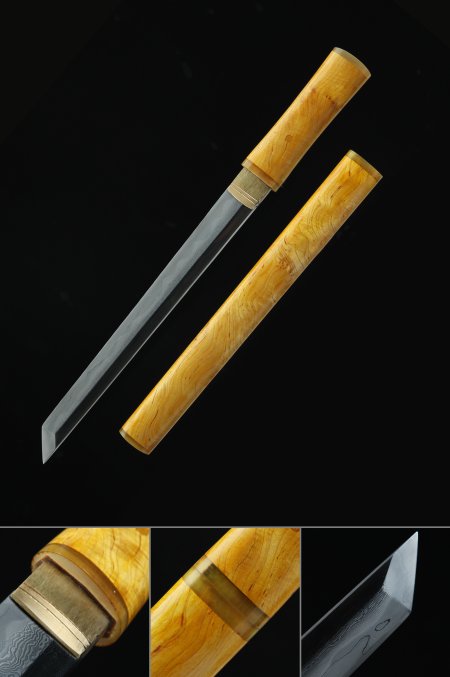
Natural Wood Saya Tanto

Natural Wood Saya Tanto brings together the quiet elegance of hand-selected hardwood and the refined craft of traditional Japanese short-sword making. Each piece in this collection features authentic materials - from T10 clay-tempered blades with real hamon to folded steel construction - finished in naturally grained saya that collectors genuinely appreciate. Whether displayed in a study or added to a curated collection, these tanto represent artisanship worth owning. Enjoy free shipping on your order, backed by our hassle-free return policy.
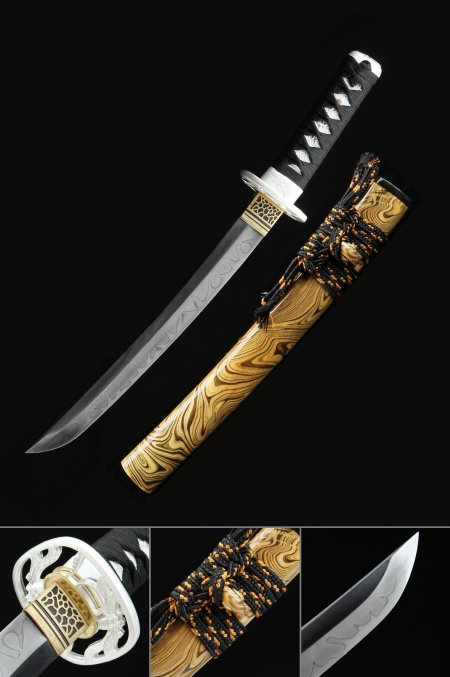
Showing 4 Products

Related Collections

Natural Tanto20 items


122 Reviews

Frequently Asked Questions

What makes natural wood saya different from lacquered ones?
Lacquered saya are finished with multiple layers of urushi or synthetic coating that completely conceal the underlying wood grain. Natural wood saya, by contrast, are finished minimally - sometimes with a thin oil or left near-bare - so the actual grain, color variation, and texture of the timber remain visible. This matters to collectors for two reasons. First, the aesthetic is quieter and more honest; the material speaks for itself rather than hiding beneath a coating. Second, natural wood saya age distinctively over time, developing a patina tied to how and where the piece has been stored. Rosewood, for example, deepens in tone over years of careful display. That evolution is part of the appeal for serious collectors who view their pieces as long-term acquisitions rather than static objects.
How is a real hamon formed on a T10 tanto blade?
A real hamon is produced through clay tempering, a traditional heat-treatment technique. Before quenching, the smith applies a clay mixture to the blade - thicker along the spine, thinner near the edge. When the blade is heated and then submerged in water, the thinly coated edge cools rapidly, forming a hard martensitic structure. The clay-insulated spine cools more slowly, remaining comparatively softer and more flexible. The boundary between these two zones is the hamon. On T10 steel, which has a relatively high carbon content, this process produces a crisp, well-defined activity line that can show nie (fine crystalline particles) and nioi (a misty boundary effect) visible under good lighting. This is fundamentally different from an acid-etched hamon, which is simply a surface pattern applied chemically without any change to the steel's internal structure.
What is an aikuchi tanto and why do collectors value it?
An aikuchi is a tanto mounted without a tsuba - the hand guard that typically separates the grip from the blade. The term literally means "meeting mouth," referring to the way the koiguchi (scabbard mouth) meets the fuchi (collar) directly, with no guard in between. Historically, this mounting style was associated with formal court dress in Japan, where a visible tsuba was considered inappropriate in certain social contexts. For collectors, the aikuchi configuration represents one of the most restrained and historically grounded forms of Japanese short-sword mounting. Its appeal lies in the visual continuity of the handle and saya as a unified object, and in the historical narrative it carries. Paired with natural wood, the result is a piece defined entirely by proportion and material quality rather than decorative hardware.
How should I store and maintain a natural wood saya tanto?
Natural wood is sensitive to humidity fluctuations. Storing your tanto in an environment with stable, moderate humidity - roughly 45 to 55 percent - prevents the saya from cracking or warping over time. Avoid placing the piece near heating vents, windows with direct sunlight, or areas prone to moisture. For the blade, apply a thin coat of food-grade mineral oil or traditional choji oil every few months using a clean cloth, wiping from the habaki toward the tip. This protects the high-carbon steel from oxidation without leaving a heavy residue. Periodically check the fit between the blade and the saya; a properly fitted tanto should rest snugly without requiring force to seat or draw. If the fit loosens, humidity adjustment or minor professional fitting may be needed. Never store the blade seated in a damp saya.
Is a natural wood saya tanto a good gift for a serious collector?
Yes - with some consideration for the recipient's existing collection and preferences. A natural wood saya tanto works particularly well as a gift when the collector already appreciates Japanese aesthetics but may not yet own a short-sword piece to complement a longer katana display. The compact format means it requires minimal display space, and the natural wood finish pairs visually with both traditional and contemporary display cases. For collectors who value material authenticity, specifying a T10 clay-tempered blade with a real hamon adds meaningful technical value that distinguishes the piece from decorative-only items. If the recipient tends toward minimalist aesthetics, a shirasaya or aikuchi mounting is a strong choice. If they prefer more visual detail, a piece with dragon tsuba work or gold-toned fittings provides that contrast while retaining the natural wood saya as the grounding element.

Customer Reviews