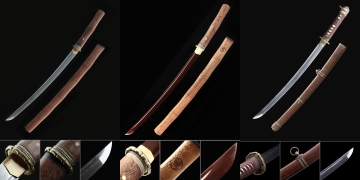
Pattern Steel Aikuchi

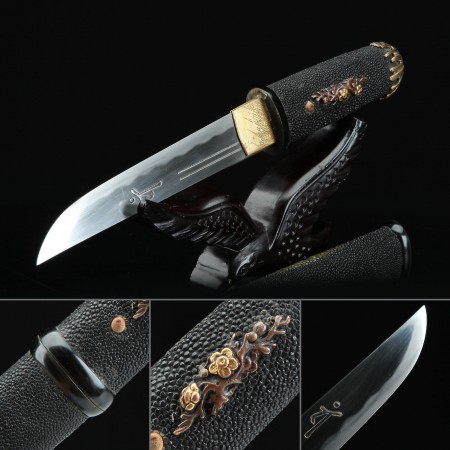
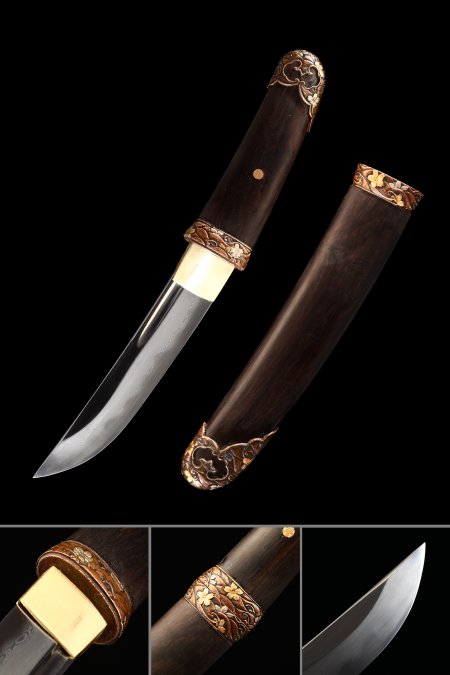
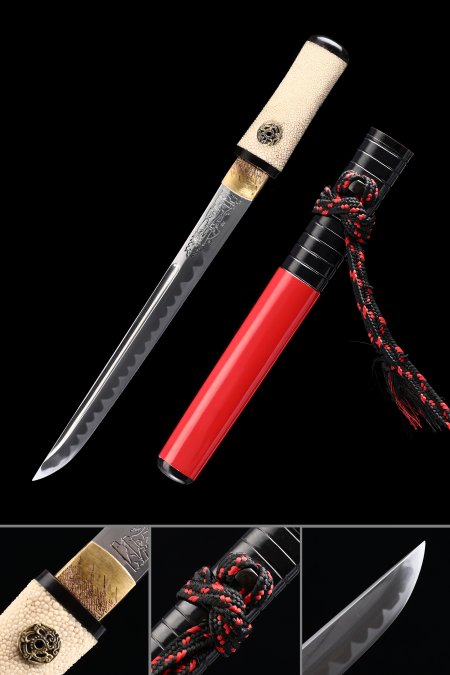
Pattern Steel Aikuchi tanto are among the most refined short blades in Japanese sword collecting — defined by the absence of a tsuba and the layered visual depth of hand-forged Damascus steel. Each piece in this collection is individually crafted, featuring authentic hamon, genuine rayskin wrapping, and detailed fittings in bronze, copper, or gold. Whether displayed in a hardwood saya or presented as a considered gift, these tanto reward close attention from any serious collector. Every order ships free with hassle-free returns.
Showing 8 Products

Related Collections

Frequently Asked Questions

What makes an aikuchi different from a standard tanto?
The defining characteristic of the aikuchi style is the complete absence of a tsuba — the hand guard that typically separates the handle from the scabbard on Japanese blades. In a well-made aikuchi, the fuchi (handle collar) fits flush against the koiguchi (scabbard mouth), creating an uninterrupted visual line from pommel to saya tip. This design places greater aesthetic responsibility on every other element of the mounting: the handle wrap, habaki, and saya finish must all work together without the structural anchor of a guard. Historically, the aikuchi was associated with formal court dress and civilian wear, where an understated silhouette was preferred over the martial profile of a guarded blade. For collectors, this makes the aikuchi an exercise in appreciating subtle proportion and material harmony rather than dramatic hardware.
How is Damascus pattern steel different from standard high-carbon steel?
Damascus steel — called pattern steel in many collecting contexts — is produced by forge-welding alternating layers of high-carbon and low-carbon steel, then folding and drawing out the billet repeatedly. The final layer count can range from dozens to several hundred, depending on the smith's intended pattern. After forging and shaping, the blade is acid-etched, which reacts differently with the two steel types and reveals the grain structure as a flowing, organic surface pattern. Standard monosteel high-carbon blades, by contrast, have a uniform internal structure with no visible grain. From a collector's standpoint, Damascus steel offers a visual record of the smith's process: the tightness of the grain, the regularity of the folds, and the clarity of the pattern after etching all indicate the care and skill applied during forging. No two Damascus blades ever produce the same surface, which is a meaningful consideration for collectors who value individuality in their pieces.
Is real rayskin (same) used on the handles, and why does it matter?
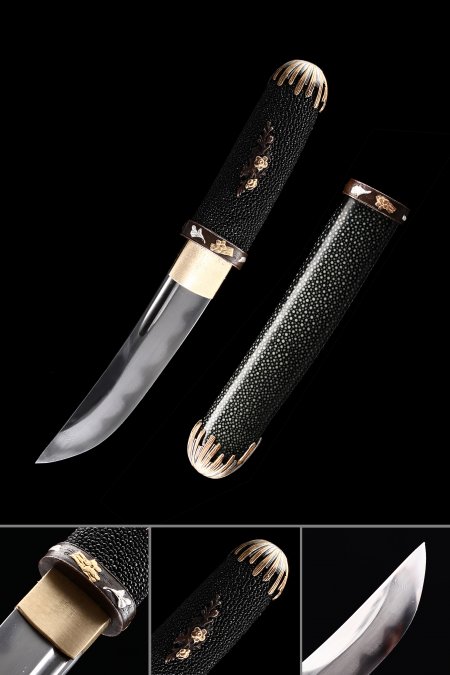
Several pieces in this collection use genuine rayskin, known in Japanese as same, for handle wrapping or saya covering. Rayskin is made from the hide of the stingray, which has a naturally pebbly surface composed of small calcium nodules called denticles. This texture provides grip under the cord wrapping on a handle and creates a visually distinctive surface that has been used in Japanese sword furniture since at least the Heian period. For collectors, genuine same is distinguishable from synthetic alternatives by the irregular size and spacing of the nodules and a slight translucency when held to light. The center pearl — a larger nodule visible on the spine of the hide — is traditionally positioned facing upward on the handle and is considered a mark of authentic construction. Rayskin wrapped saya, such as those seen on the black samegawa models in this collection, offer a matte tactile surface that contrasts effectively with polished metal fittings.
How should I store and maintain a Damascus steel aikuchi?
Damascus steel's layered structure makes it slightly more susceptible to surface oxidation than some monosteels, primarily because the acid etching process opens the grain and creates micro-texture that can hold moisture. For display and long-term storage, the blade should be lightly coated with a thin, even layer of mineral oil or traditional choji oil (clove-infused mineral oil) before being returned to the saya. Avoid leaving the blade in the saya for extended periods in humid environments without periodic inspection, as trapped moisture can cause patina or spotting along the grain lines. When handling, use clean cotton gloves or ensure your hands are dry — fingerprint oils are mildly acidic and will eventually etch the surface if left unattended. For display pieces kept out of the saya, a low-humidity environment away from direct sunlight preserves both the blade finish and the lacquer or wood finish on the saya. Inspect fittings annually to ensure habaki and menuki remain secure.
Are these aikuchi tanto suitable as gifts for Japanese sword enthusiasts?
Pattern steel aikuchi tanto are well-regarded gifts within the sword-collecting community for several reasons. The Damascus grain makes each piece visually distinct — the recipient is receiving something that cannot be replicated exactly, which carries genuine meaning for collectors who track provenance and individuality in their pieces. The variety of mounting styles across this collection means you can select a piece whose aesthetic matches the recipient's existing collection or personal taste: understated dark lacquer with gold habaki for a collector who favors formal presentation, or a copper-fitted floral model for someone drawn to classical decorative themes. When presenting as a gift, the saya protects the blade during transport and display, and many of these pieces arrive in a state suitable for immediate display on a stand. If the recipient collects across blade lengths, pairing an aikuchi tanto with a katana from our Pattern Steel Tanto collection creates a thematically cohesive set with consistent Damascus aesthetics.

Customer Reviews

Jeffery Willis California, United States

I absolutely LOVE this Copper Tanto!

It really is the length of a dirk as it is too long for a dagger and too short for a short sword.
I would categorize this as a dirk, not a tanto.

Having said that:

The fit was superb, with a nice and light, audible click as the dirk is sheathed in the scabbard and locks into place. The patterns and décor of the piece is wonderful. This is a quality piece. The steel of the blade itself is high quality, and can be seen as a pattern steel in all of its splendor.

There was a small burr on one of the hanger rings, but nothing a little rat tail file couldn't take care of. That is going to happen from time to time with manufacturing like this.

The Wakizashi was also very nice. The steel of the blade has a real hamon and is quite sharp indeed. The handle was a little bit on the large side, however, for those with larger hands, this is not going to be a problem. The fit of the saya on the blade was a little too loose and required my attention to add a small shim to properly fit the blade and scabbard. All the same, this is a beautiful piece, and that's why I chose it. It's a keeper.

Damascus Steel Double-Edged Tanto with Bronze Metal Saya - Dragonfly Nature Engraving Damascus Steel Double-Edged Tanto with Bronze Metal Saya - Dragonfly Nature Engraving