Plain Tsuba Hamidashi

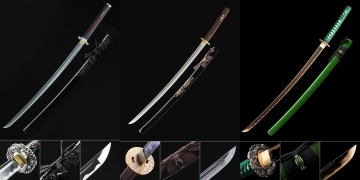
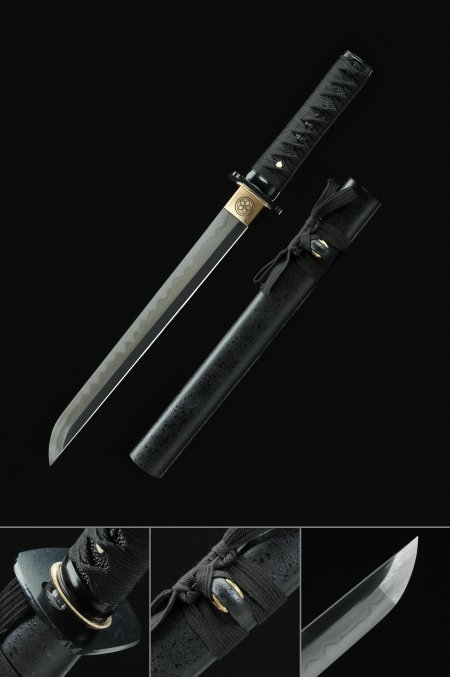
The Plain Tsuba Hamidashi collection showcases compact tanto-style blades defined by their understated, minimalist guard — a shallow, unadorned tsuba that sits flush with the handle for a sleek, refined silhouette. Each piece is crafted for serious collectors who appreciate restraint in design and precision in construction, from hand-forged high manganese and T10 carbon steel blades to authentic hamon activity and lacquered saya. Free standard shipping is included on all orders, and we stand behind every piece with a straightforward return policy.
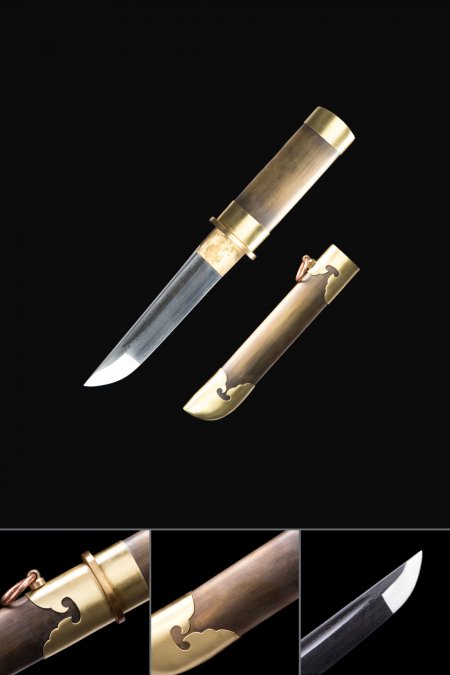
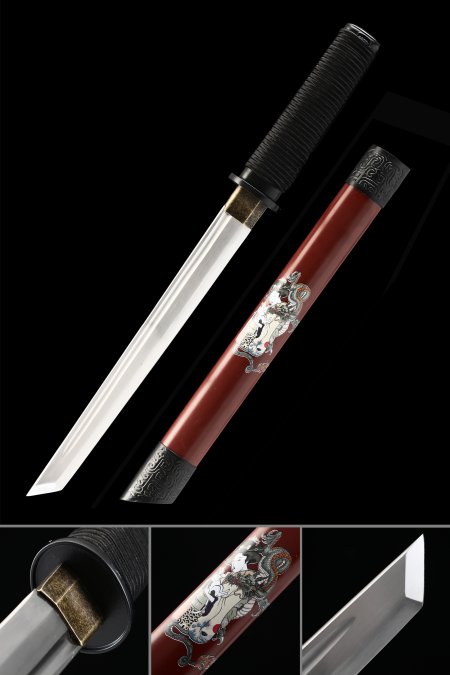
Showing 4 Products

Related Collections

Snake Tsuba Katana41 items


86 Reviews

Flower Tsuba Katana61 items


389 Reviews

Vine Saya Katana47 items


297 Reviews

Wave Tsuba Katana40 items


169 Reviews

Frequently Asked Questions

What makes a tanto a hamidashi style?
A hamidashi is defined by its unusually shallow tsuba — the guard that sits between the blade and handle. While a standard tanto may have a conventional full-sized tsuba or no guard at all (known as aikuchi), the hamidashi occupies a middle ground: the tsuba is present but extremely small, often barely wider than the handle itself. This creates a nearly flush profile that gives the overall koshirae a streamlined, unified appearance. The term literally references something that 'protrudes slightly,' describing how the guard just barely extends beyond the handle's silhouette. Collectors often seek hamidashi configurations precisely because this minimal guard treatment places maximum visual emphasis on blade geometry and saya craftsmanship rather than the fitting itself.
How does T10 steel differ from high manganese steel in a tanto?
T10 is a high-carbon tool steel with a small tungsten addition that improves wear resistance and edge retention, and it is the steel most capable of producing an authentic hamon when clay-tempered and water-quenched. The differential hardening process creates a martensitic edge zone and a softer spine, visible as the characteristic temper line. High manganese steel, by contrast, achieves its toughness through manganese content rather than carbon-based hardening, making it less prone to chipping under stress but also less likely to develop the dramatic hamon activity collectors prize. For display-focused collectors, T10 is generally the preferred choice when visible hamon activity is the primary aesthetic goal, while high manganese steel suits those prioritizing a bright, consistent blade polish over temper line detail.
What is a habaki, and why does the gold accent matter?
The habaki is a sleeve-shaped collar that fits snugly over the base of the blade, sitting between the edge and the tsuba. Its primary functional role in a display piece is to create a firm friction fit between blade and saya, ensuring the sword stays securely seated without a separate locking mechanism. Aesthetically, the habaki is one of the most closely examined fittings in a complete koshirae because it bridges the blade and the guard visually. A gold-accented or brass habaki introduces a warm metallic contrast against a polished steel blade and a lacquered saya, drawing the eye to the transition point where all three materials meet. In traditional Japanese sword appreciation, the quality and finish of the habaki is considered a direct indicator of the overall craftsmanship standard of the entire mounting.
How should I store a lacquered saya tanto for long-term display?
Lacquered saya are susceptible to two primary environmental threats: humidity fluctuation and prolonged direct light exposure. High humidity can cause the wooden core beneath the lacquer to swell, potentially cracking the finish over time, while UV exposure fades pigment depth in colored lacquers — particularly reds and blacks. For long-term display, keep the piece in an environment maintained between 40–55% relative humidity, away from windows or direct artificial lighting. Store or display horizontally rather than vertically to prevent any moisture from pooling at the saya's mouth. Applying a thin coat of choji oil (clove oil traditionally used for Japanese sword maintenance) to the blade before sheathing protects the steel from oxidation without affecting the lacquer. Avoid touching the lacquer surface with bare hands frequently, as skin oils can dull the finish over months of handling.
Does a Damascus tanto make a good gift for a collector?
A Damascus steel tanto in full koshirae — with matching tsuba, handle, and saya — is one of the more visually immediate gifts in Japanese edged arts collecting because the fold-welded surface pattern is legible and striking even to someone with no prior collecting background. Unlike a polished monosteel blade where the steel's quality requires some knowledge to appreciate, Damascus patterning communicates craftsmanship at a glance through its flowing, organic layered texture. For gift-giving purposes, a brass-fitted example with matching saya, tsuba, and handle creates a unified aesthetic that presents well as a complete display object. It suits collectors interested in metallurgical process as much as historical form, making it a versatile choice across different collecting orientations.

Customer Reviews

Johnathan Chapman Pennsylvania, United States

Beautiful blade. I’m very happy with my purchase. My only minor inconveniences are that the very tip of the blade is ever so slightly bent, and the sheath has very small damage (most likely from shipping). Other than those two things, everything about the piece is well made and aesthetically pleasing to look at and hold.

T10 Carbon Steel Hamidashi Tanto with Real Hamon in Black Piano Lacquer Saya - Gold Habaki Accent T10 Carbon Steel Hamidashi Tanto with Real Hamon in Black Piano Lacquer Saya - Gold Habaki Accent
Russell Noyes Alabama, United States

I love almost everything thing about this tanto blade. While I could nitpick over insignificant details, my only real complaint is that the blade could be sharper, but bare in mind, I've been a professional cook for nearly 30 years and I'm comparing the sharpness to culinary standards even though I have no intention of using it for cooking.
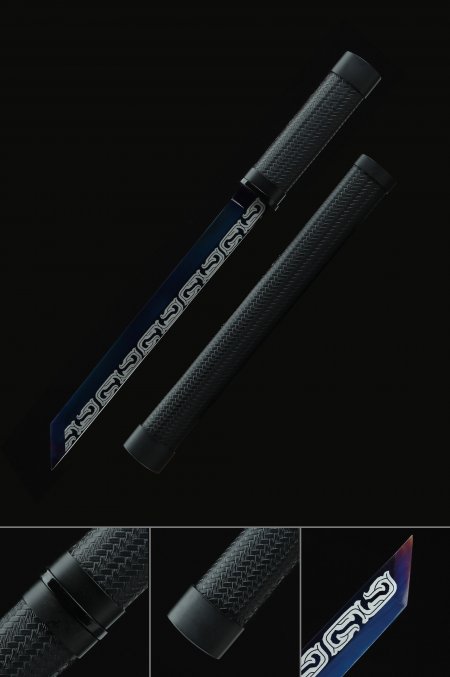
Blue Manganese Steel Hamidashi Tanto with Etched Pattern and Black Carbon Fiber Weave Saya Blue Manganese Steel Hamidashi Tanto with Etched Pattern and Black Carbon Fiber Weave Saya
Cart 0 Items

Your cart is empty