What makes a tanto saya blue - is it paint or lacquer?
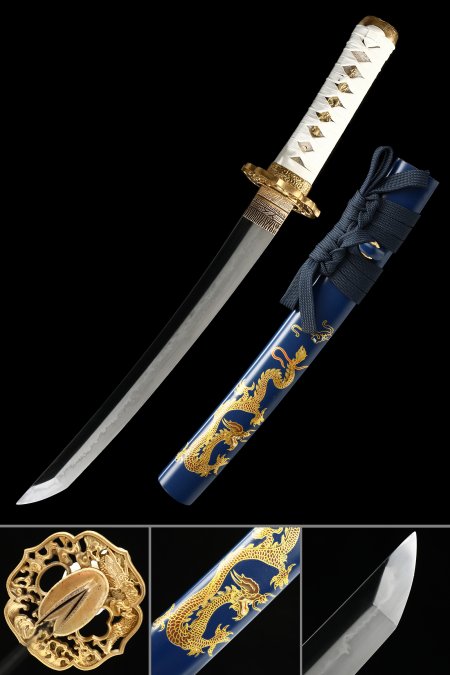
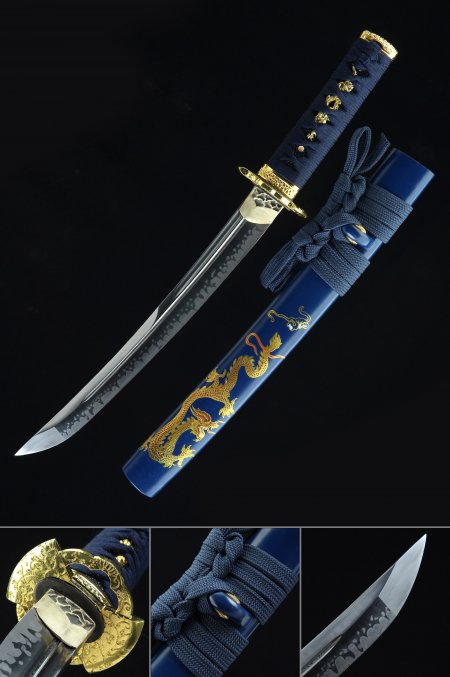
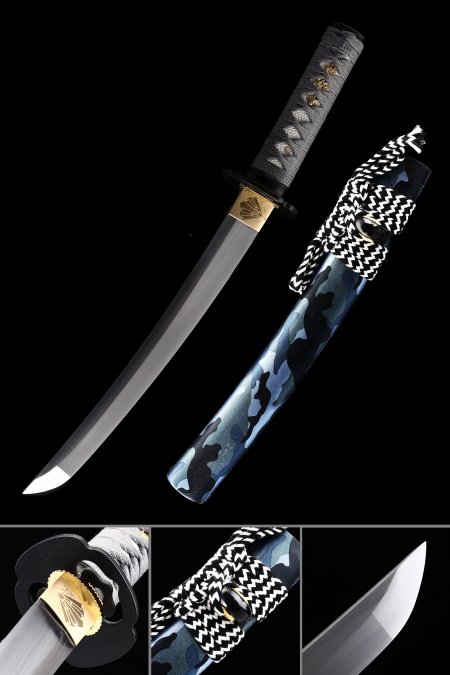
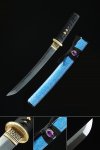
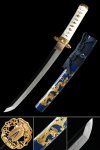
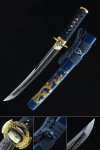
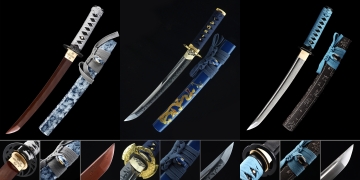
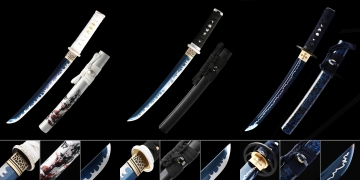
The blue color on a tanto saya is achieved through lacquerwork, not paint. Traditional Japanese saya lacquering involves applying multiple thin coats of urushi (lacquer) or modern lacquer compounds to a wooden core, with each coat cured before the next is applied. The layered process builds depth and a subtle sheen that paint cannot replicate. On blue saya tanto in this collection, the finish is smooth and hard, protecting the wooden scabbard from moisture and impact while giving the piece its signature color. The richness of the blue - whether solid navy, camo-patterned, or dragon-motif carved - comes from this deliberate finishing process, not a surface coating.
How does Damascus steel differ from T10 steel in a tanto?
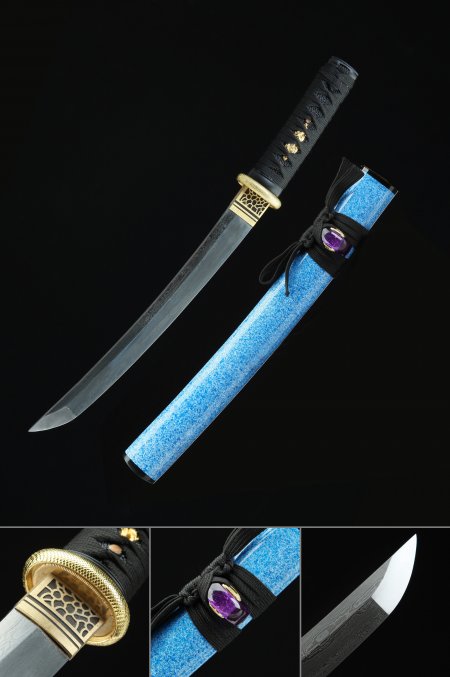
Damascus steel and T10 steel produce very different visual and structural results in a tanto blade. Damascus is created by folding and forge-welding multiple layers of steel together, producing the distinctive flowing grain pattern visible across the blade surface. The aesthetic is the primary draw for many collectors - no two Damascus blades have identical patterning. T10, by contrast, is a high-carbon tool steel valued for its ability to form a real hamon - the visible temper line that results from differential clay hardening. The hamon is a hallmark of traditional Japanese blade craft, and T10's carbon content makes it particularly responsive to this process. If surface pattern is your priority, Damascus is the stronger choice. If an authentic temper line matters more to your collection goals, T10 is the more historically resonant option.
How should I store a tanto with a lacquered saya long-term?
Long-term storage of a lacquered saya tanto requires attention to both the blade and the scabbard. Keep the tanto in a horizontal position on a proper stand, away from direct sunlight, which can fade lacquer over time. Humidity is the main risk to both the wooden saya and the steel blade - aim for a stable environment between 40-60% relative humidity. Apply a light coat of choji oil or mineral oil to the blade every few months to prevent oxidation, and use a soft cloth to wipe down the saya surface occasionally. Avoid storing the blade inside the saya for extended periods if you live in a high-humidity climate, as trapped moisture can cause rust at the habaki collar. A dedicated sword bag adds an extra layer of dust and humidity protection.
Is a blue saya tanto a good display piece alongside a full katana?
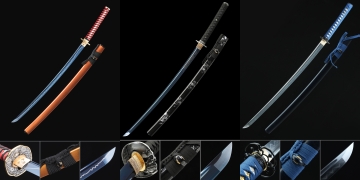
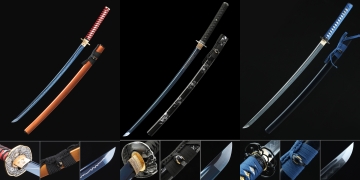
Yes - a blue saya tanto pairs exceptionally well with a full-length katana in a display setting, particularly when the color themes align. In traditional Japanese culture, a samurai might carry a daisho pairing: a katana and a wakizashi or tanto worn together. Recreating a thematically matched set - such as a blue saya tanto displayed alongside a blue-accented katana - gives collectors a visually cohesive presentation that carries historical resonance. When selecting pieces for a paired display, matching the tsuba style (for example, both featuring gold alloy guards) and the cord wrap color creates a unified composition. The size contrast between the tanto and a full katana also makes the display dynamic without requiring a large amount of shelf or wall space.
What do the fittings on a tanto - tsuba, menuki, habaki - actually do?
Each fitting on a tanto serves a specific structural or functional role that collectors benefit from understanding. The tsuba is the handguard, positioned at the junction of blade and handle to protect the hand. On tanto, tsuba are typically smaller and more decorative than on katana, and their design - iron chrysanthemum, gold alloy, or pierced geometric - significantly affects the piece's overall character. The habaki is a metal collar that fits snugly around the base of the blade and locks the sword securely inside the saya through friction - it's what prevents the blade from rattling or sliding out unintentionally. The menuki are ornamental pieces seated beneath the handle wrapping (ito), originally designed to improve grip ergonomics, now treasured for their decorative detail. On pieces in this collection, accent menuki such as purple gem inlays add a distinctive finishing touch that elevates the tanto from display piece to art object.