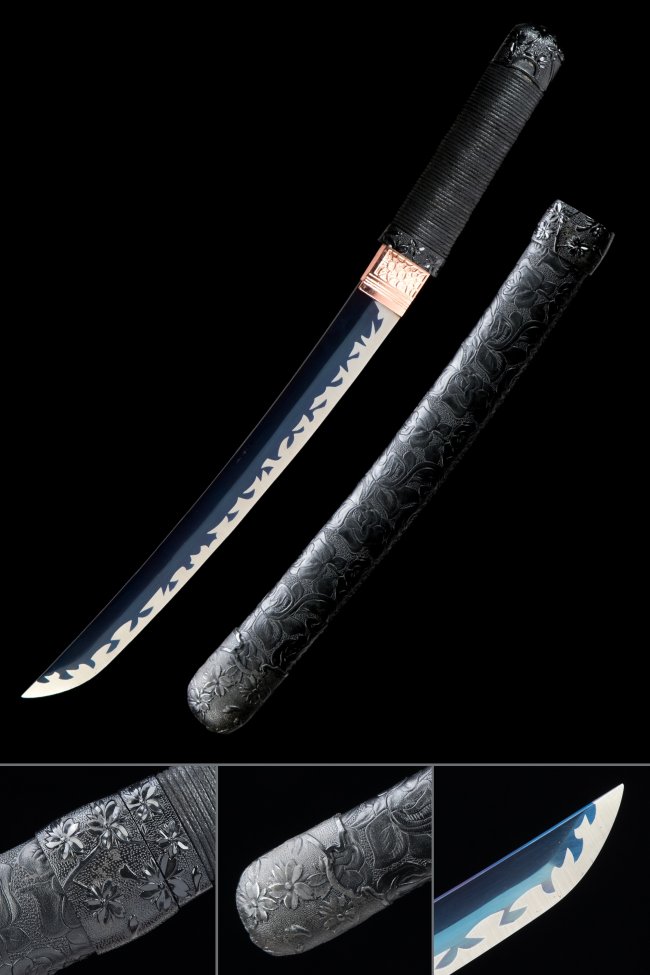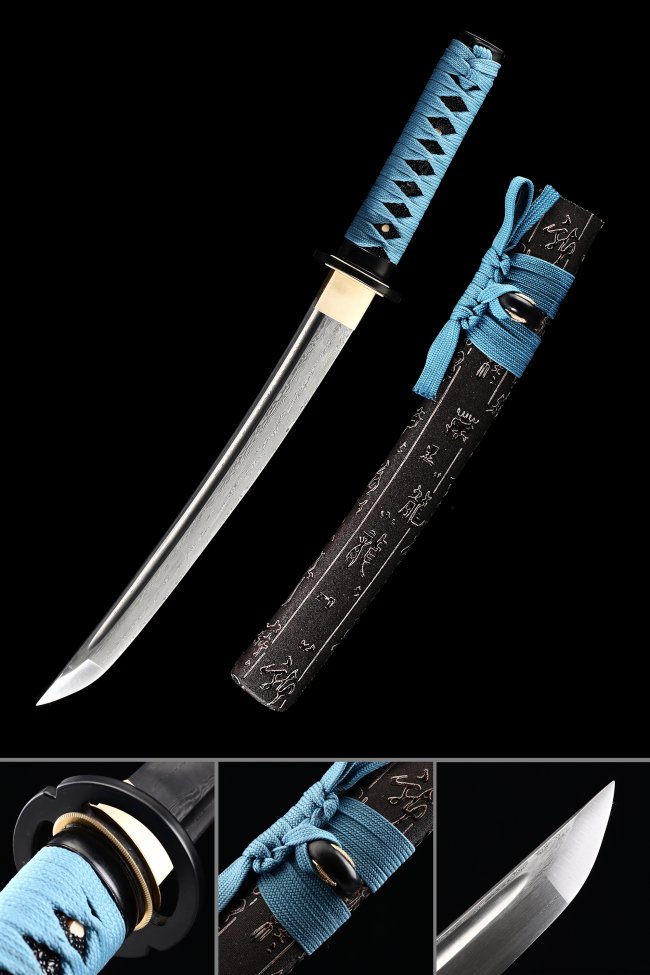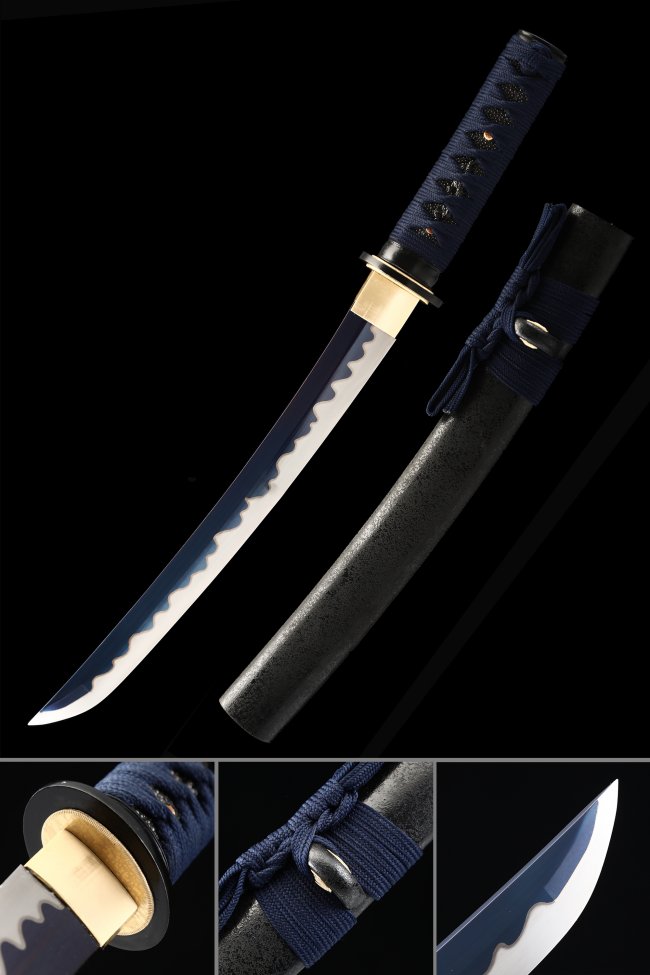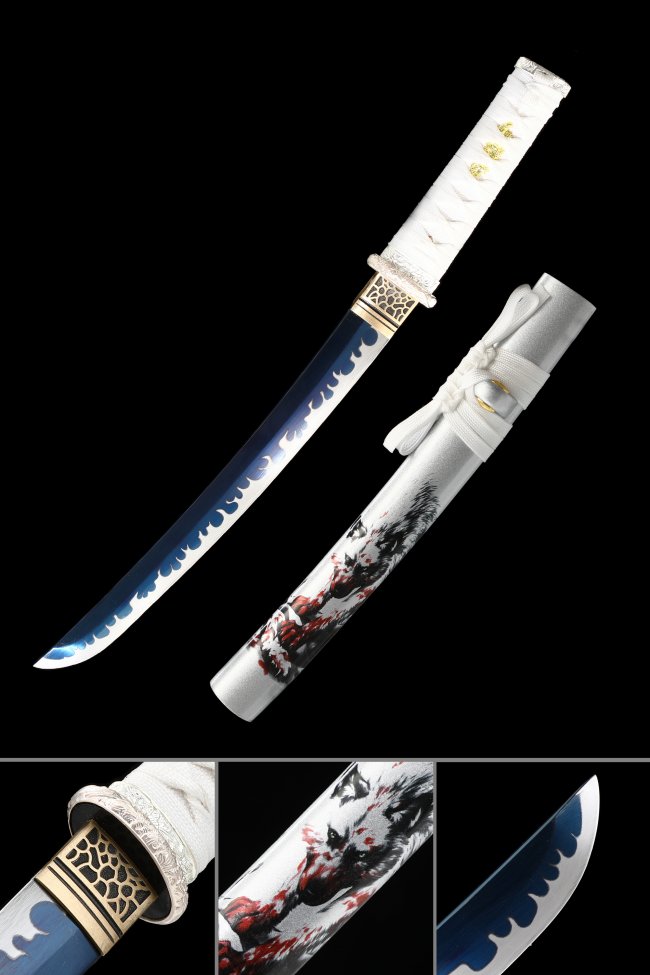
Manganese Steel Blue Flame Tanto With Hand-painted Wolf Saya In White - Gold Tsuba Collectible Sword
ON SALE 30% OFF
$129.00
$189.00

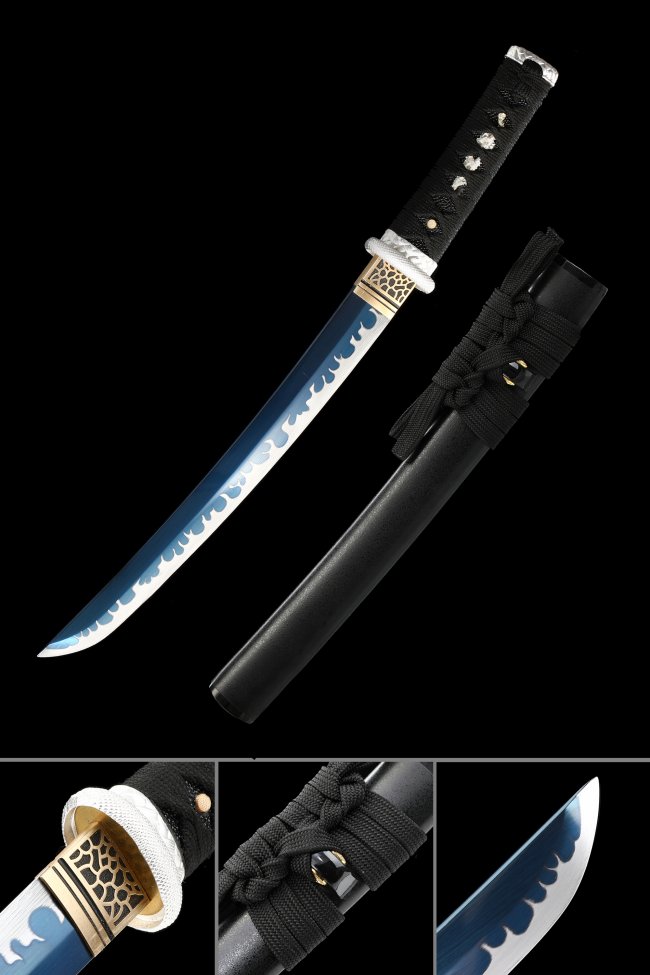
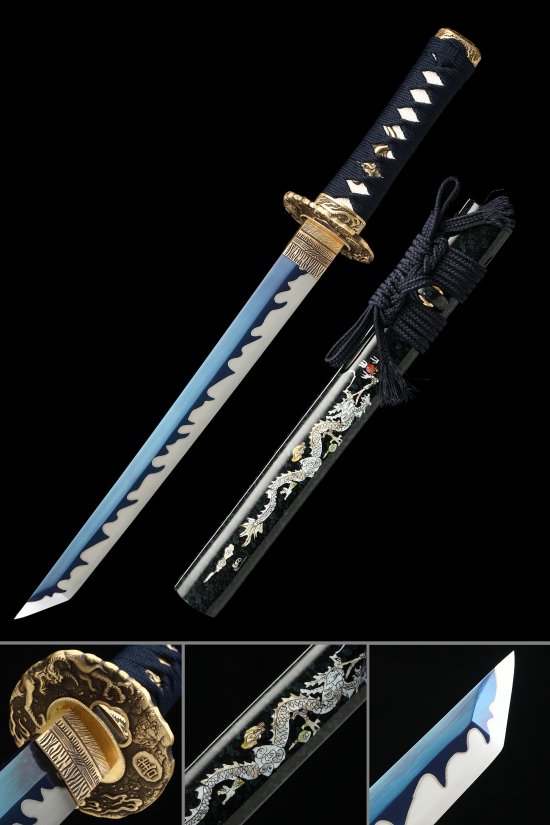
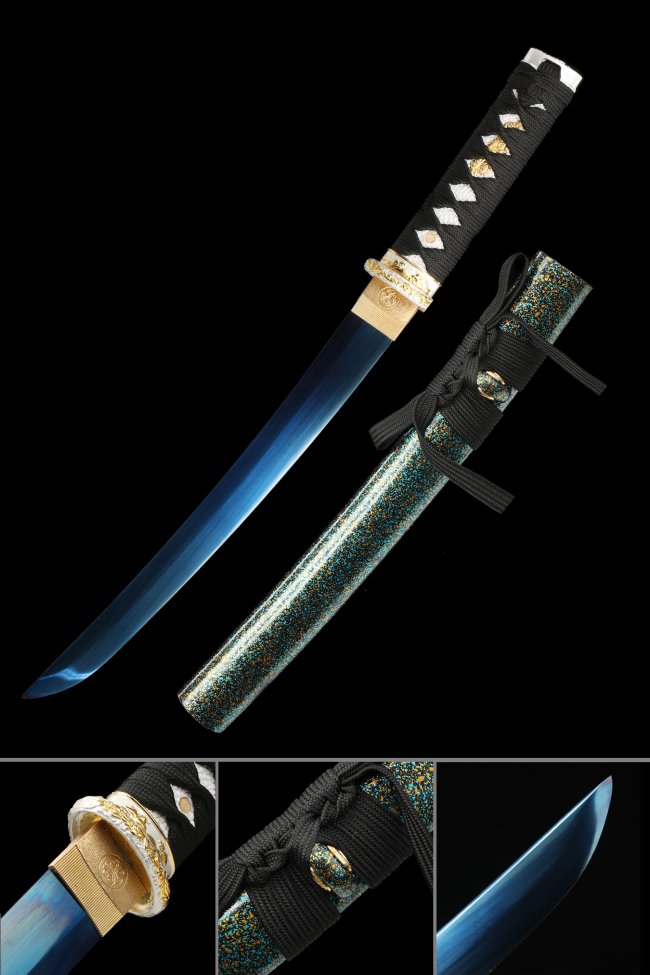
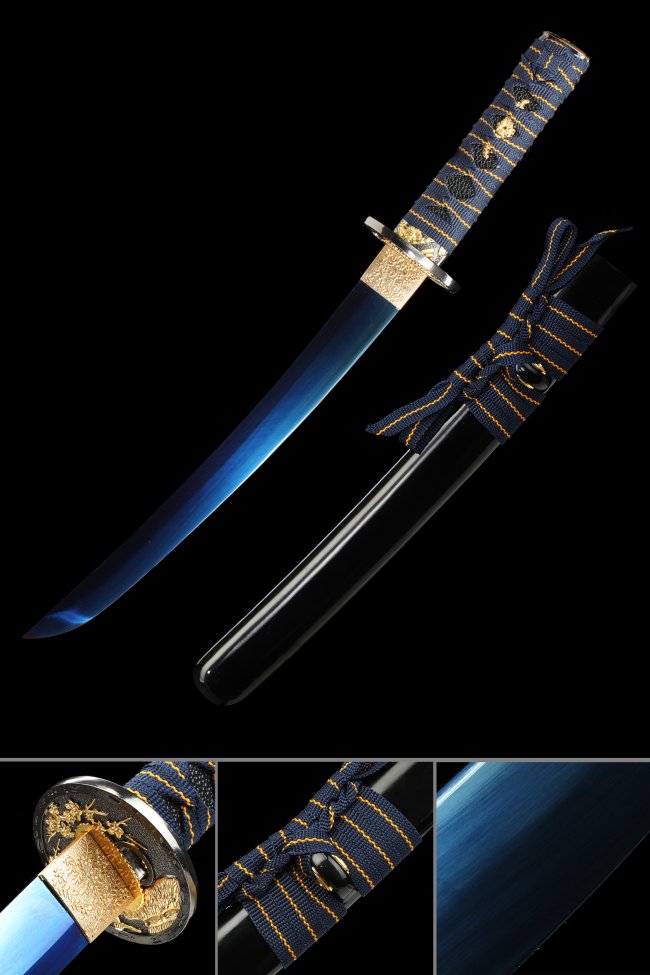
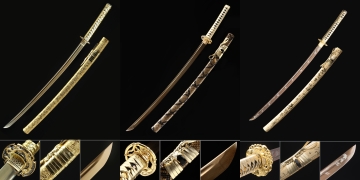
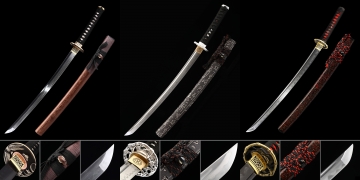
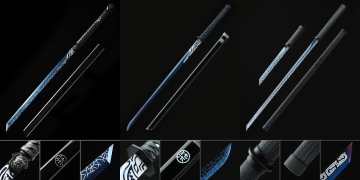
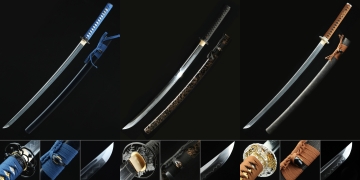
These katana's are very special, they enhance our walls as a decortive piece.r
r
The quality is excellent in workmanship and it will last a lifetime.r
r
When displayed they invoke a Japanese motife and lend another layer of the art of the katana.r
r
We have many of these katanas in our home and we recommend them to all who seek a different but distinctive look.
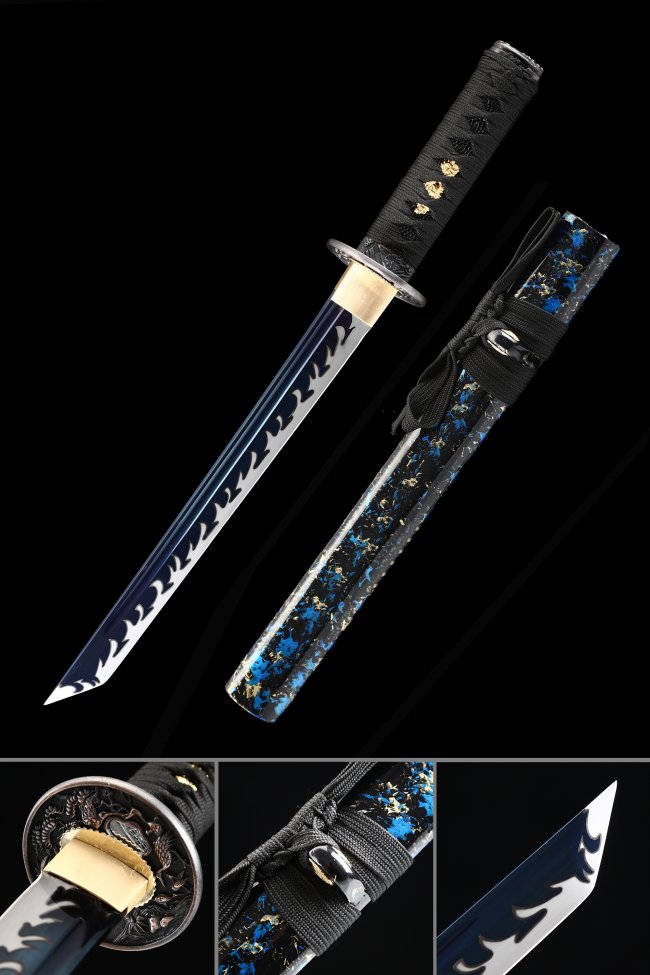
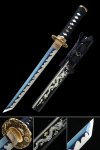 Tanto Replica in 1095 Carbon Steel with Blue Flame Blade, Gold Dragon Tsuba & Black Lacquer Saya
Verified Purchase
Tanto Replica in 1095 Carbon Steel with Blue Flame Blade, Gold Dragon Tsuba & Black Lacquer Saya
Verified Purchase
Product well crafted and arrived as promised. There was a festival and I was concerned about shipping and I was immediately contacted back. highly recommend! Beautiful
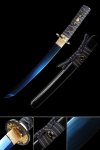 1060 Carbon Steel Tanto in Blue Blade with Black Lacquer Saya and Gold Tsuba
Verified Purchase
1060 Carbon Steel Tanto in Blue Blade with Black Lacquer Saya and Gold Tsuba
Verified Purchase
I love almost everything thing about this tanto blade. While I could nitpick over insignificant details, my only real complaint is that the blade could be sharper, but bare in mind, I've been a professional cook for nearly 30 years and I'm comparing the sharpness to culinary standards even though I have no intention of using it for cooking.
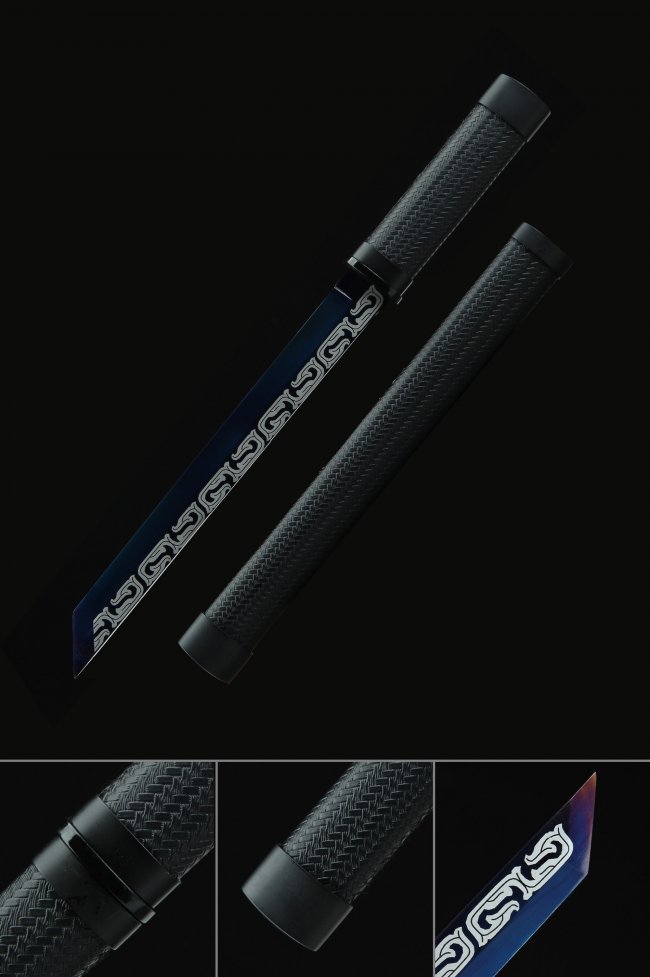
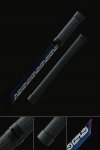 Blue Manganese Steel Hamidashi Tanto with Etched Pattern and Black Carbon Fiber Weave Saya
Verified Purchase
Blue Manganese Steel Hamidashi Tanto with Etched Pattern and Black Carbon Fiber Weave Saya
Verified Purchase
The Tanto arrived in less than a week a was carefully packaged. As far as appearances go the item is exactly as pictured. The blue hue is brilliant and the blade is sharp. I will definitely be purchasing from True Katana again.
1060 Carbon Steel Tanto in Blue Blade with Black Lacquer Saya and Gold Tsuba
Verified Purchase
Everything I buy from here is phenomenal quality for the price.
Tanto Replica in 1095 Carbon Steel with Blue Flame Blade, Gold Dragon Tsuba & Black Lacquer Saya
Verified Purchase
Excellent quality, fantastic craftsmanship, and looks awesome! The company kept me informed all along the shipping process. This was my second purchase and I readily recommend Truekatana.
1060 Carbon Steel Tanto in Blue Blade with Black Lacquer Saya and Gold Tsuba
Verified Purchase
beautifully crafted. will be buying the matching katana soon
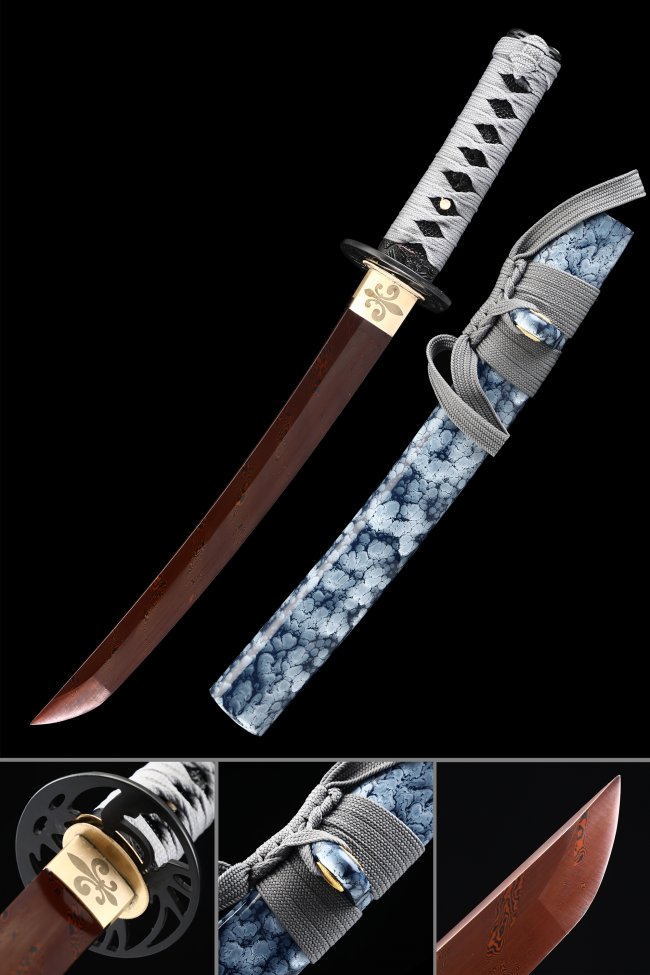
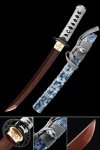 Damascus Steel Tanto with Red Blade - Blue Floral Hardwood Saya, White-Black Tsuka
Verified Purchase
Damascus Steel Tanto with Red Blade - Blue Floral Hardwood Saya, White-Black Tsuka
Verified Purchase
The tantos were acceptable overall. However one was too tight when fitting in the scabbard while the other was too loose. Otherwise, good blades.
Damascus Steel Tanto with Red Blade - Blue Floral Hardwood Saya, White-Black Tsuka
Verified Purchase
Very sharp clean and fits great in my hand nice feeling as well overall great
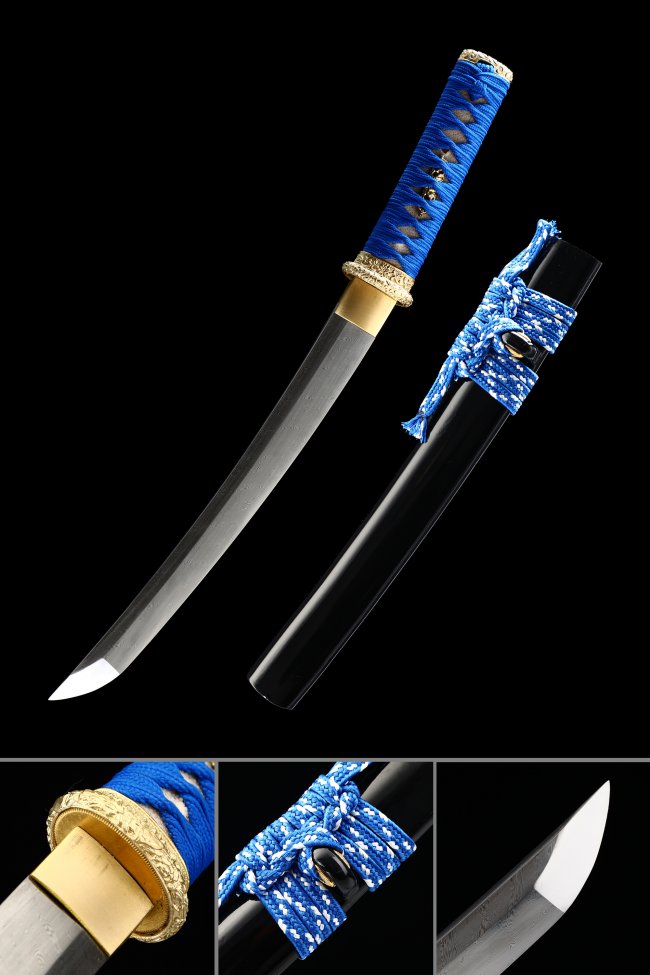
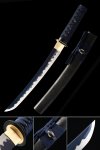 T10 Steel Tanto with Blue Blade, Black Hardwood Saya in Navy Blue Ito Wrap
Verified Purchase
T10 Steel Tanto with Blue Blade, Black Hardwood Saya in Navy Blue Ito Wrap
Verified Purchase
Your wishlist is empty
Tap the ♡ on any product to save it for later.