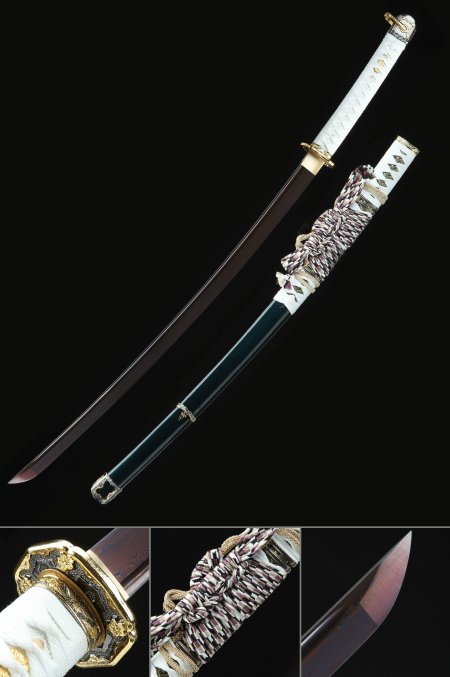
Blue Tachi Sword

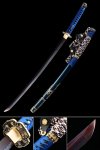
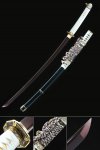
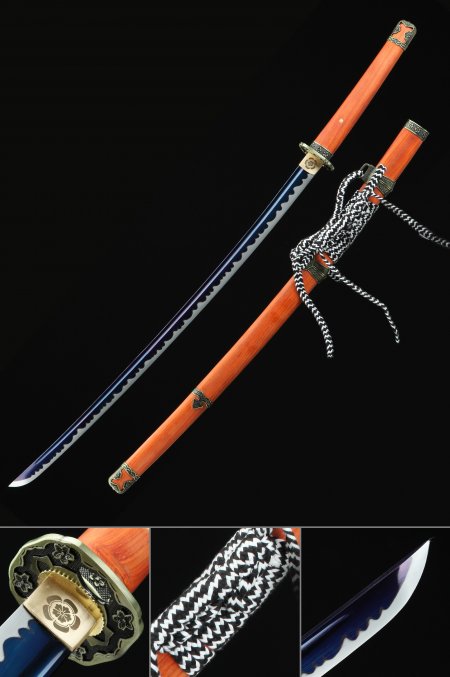
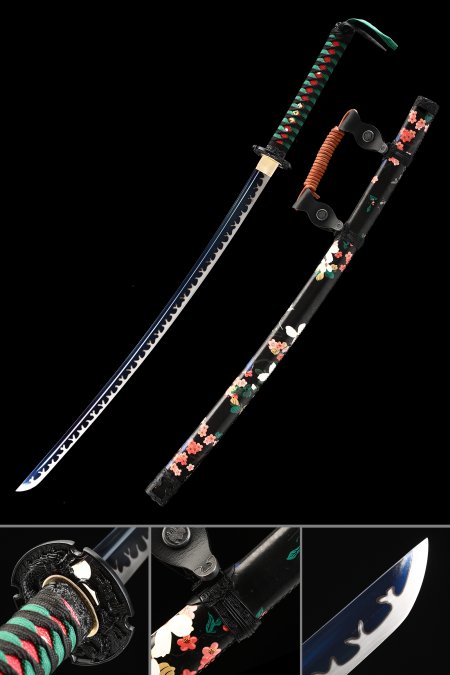
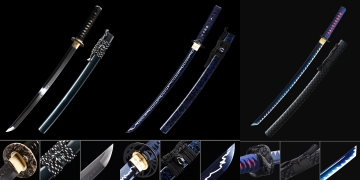
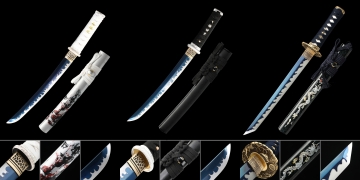
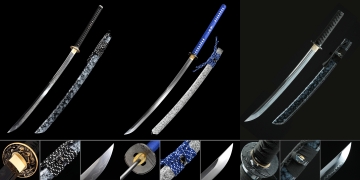
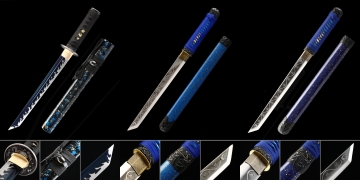
Blue Tachi swords bring together the sweeping elegance of classical Japanese long-sword design and eye-catching blade coloration that makes each piece a true conversation centerpiece. Crafted from Damascus steel, high manganese steel, or carbon steel, these tachi feature hand-forged construction, full-tang assembly, and ornate fittings - from gold floral tsuba to bronze chrysanthemum guards - that reward close study. Every sword arrives display-ready, finished with a lacquered saya and hand-wrapped tsuka. Enjoy free shipping and hassle-free returns on your order.
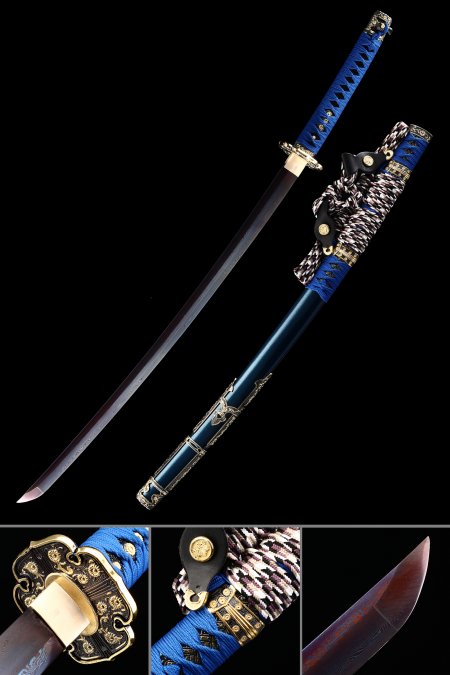
Showing 4 Products

Related Collections

Blue Wakizashi7 items


19 Reviews

Blue Tanto10 items


68 Reviews

Blue Naginata3 items


7 Reviews

Blue Hamidashi3 items


3 Reviews

Frequently Asked Questions

What makes a tachi different from a katana?
The tachi predates the katana by several centuries and differs in three meaningful ways collectors should understand. First, blade length: tachi typically measure 70 cm or more along the cutting edge, noticeably longer than the katana's standard 60-73 cm range. Second, curvature: tachi blades carry a deeper, more pronounced curve that begins further down toward the handle, producing a silhouette that is immediately recognizable. Third, mounting orientation: the tachi was traditionally suspended edge-down from the belt, which influenced how the blade's taper and curvature were designed. Katana, by contrast, were thrust through the belt edge-up. For display purposes, this distinction matters - tachi are conventionally displayed edge-down on horizontal mounts, while katana are shown edge-up, and honoring that convention adds authentic context to any collection.
How is the blue color applied to tachi blades?
The blue finish on tachi blades in this collection is produced through one of several surface treatment processes depending on the base steel. On Damascus steel blades, acid etching is used to reveal the layered grain pattern, and a controlled oxidation or chemical treatment is then applied to introduce the blue tone across the surface while the grain remains visible underneath. On high manganese steel blades, the finish is typically achieved through a heat-based bluing process or chemical treatment that bonds color directly to the steel's surface. Neither process is purely cosmetic - both interact with the steel's actual metallurgical structure. Collectors should note that the blue finish is a surface treatment, and the underlying steel grade - Damascus, 1045 carbon, or high manganese - determines the blade's structural character independently of its color.
What does Damascus steel mean for a collectible tachi?
Damascus steel in the context of modern collectible tachi refers to pattern-welded steel: multiple layers of steel with differing carbon content are forge-welded together, then folded and drawn out repeatedly before the final blade profile is shaped. The result is a blade with a distinctive flowing grain pattern across its entire surface - a visual signature that cannot be replicated by machining or casting. For collectors, Damascus construction signals a higher degree of hand-forging involvement and gives each blade a genuinely individual appearance, since the grain pattern shifts slightly with every fold. On blue-finished tachi, the contrast between the colored surface and the underlying grain is particularly pronounced, making the layering effect one of the primary aesthetic features to evaluate when selecting a piece.
How should I care for a blue tachi on long-term display?
Long-term display care for a blue tachi involves three consistent practices. First, apply a thin coat of purpose-made sword oil or food-grade mineral oil to the blade every three to four months. This prevents surface oxidation without disturbing the blue finish - avoid petroleum-based oils, which can degrade certain surface treatments over time. Second, keep the sword away from direct sunlight and humidity fluctuations. UV exposure can dull the lacquered saya finish, and humidity cycling causes the wooden core of both saya and tsuka to expand and contract, which gradually loosens fittings and wrapping. A climate-stable interior room is ideal. Third, inspect the tsuka-ito wrapping - the handle cord - seasonally. If it shows any loosening near the fuchi or kashira fittings, re-securing it early prevents more significant unraveling. Store the tachi in its saya when not on active display.
Is a blue tachi a good choice as a display centerpiece or gift?
A blue tachi works particularly well as a display centerpiece because its color and proportions both command attention at scale. The combination of a long, curved blade in a vivid blue finish with ornate tsuba work - chrysanthemum, dragon, or gold floral designs - creates visual interest that holds up under close inspection as well as at a distance. As a gift, the tachi format is well suited for collectors who already own katana and are looking to expand into a historically distinct sword form, or for anyone building a Japanese-themed interior display. Pairing a blue tachi with a matching blue-finished katana from our Blue Steel Katana collection creates a cohesive two-piece display that spans two distinct periods and configurations of Japanese sword design.

Customer Reviews