4 Reviews
ON SALE 20% OFF
$219.00$279.00

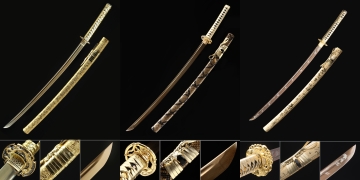
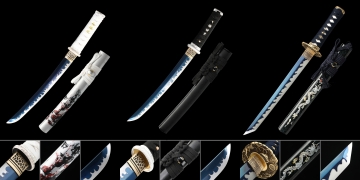
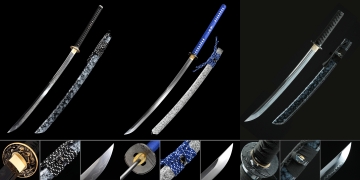
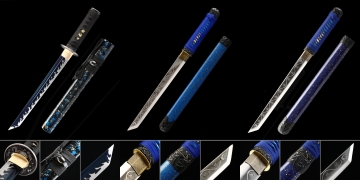
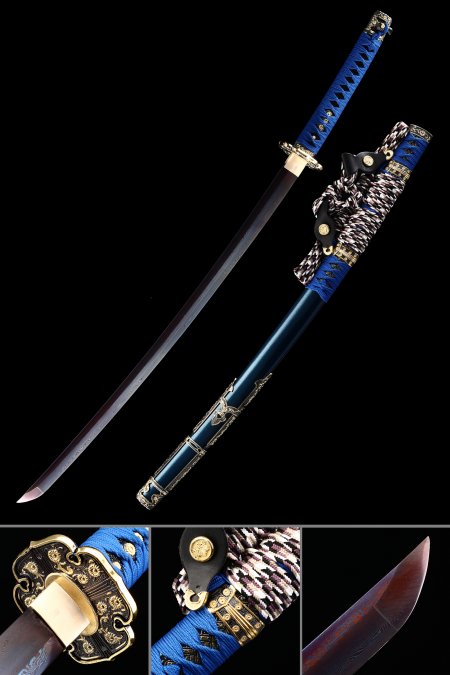
Blue Tachi swords bring together the sweeping elegance of feudal Japanese sword-making and the quiet sophistication of hand-lacquered presentation. Each piece in this collection features a full-length curved tachi blade paired with a striking blue piano-lacquer saya, crafted as a display collectible that honors centuries of artisan tradition. Free standard shipping is included on every order, and we stand behind each piece with a hassle-free return policy.
Awesome purchase, the spirit of my tachi has returned to me. What's more, mine was forged with a bo-hi, astonshing crafstmanship, without a shadow of a doubt!
 |
Damascus Steel Tachi Sword with Clay-Tempered Red Blade in Blue Piano Lacquer Saya with Gold Floral Tsuba |
I wanted a relatively cheap display piece I got what I ordered.
|
Damascus Steel Tachi Sword with Clay-Tempered Red Blade in Blue Piano Lacquer Saya with Gold Floral Tsuba |
5 Stars for perfection with first time buyer! The fast delivery and product is definitively great!
Very happy with this purchase!
 |
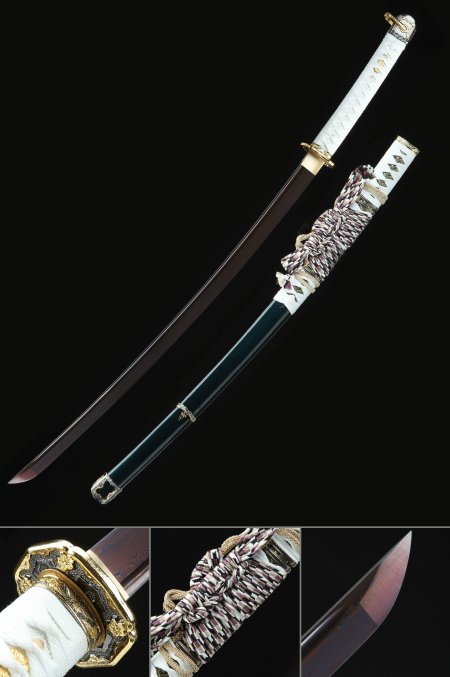
Damascus Steel Tachi Sword Dark Red Blade with Dark Green Saya & White Tsuka - Chrysanthemum Tsuba |
Extremely great sword Shipping was faster than Expected Don't hesitate to buy one you won't be disappointed now I'm looking forward to buying 1 of high end swords call mom
|
Damascus Steel Tachi Sword with Clay-Tempered Red Blade in Blue Piano Lacquer Saya with Gold Floral Tsuba |
Love these swords! They came within a week, which is a pretty respectable time frame considering the distance. The swords are absolutely divine! If you love Japanese swords, this is the too go place!
|
Damascus Steel Tachi Sword with Clay-Tempered Red Blade in Blue Piano Lacquer Saya with Gold Floral Tsuba |
Really good quality, sharp enough to cut paper, i’ve already ordered 2 more katanas
|
Damascus Steel Tachi Sword with Clay-Tempered Red Blade in Blue Piano Lacquer Saya with Gold Floral Tsuba |
Sword quality is very good and so was the customer service. It was only about 3 weeks from the time I ordered the sword until I received it. This Tachi is the 19th sword I have purchased over the past 2 years and I will buy more from True Katana as I expand my collection.
|
Damascus Steel Tachi Sword Dark Red Blade with Dark Green Saya & White Tsuka - Chrysanthemum Tsuba |
Very Beautiful sword why the blade was not sharpened to a razor edge.
|
Damascus Steel Tachi Sword with Clay-Tempered Red Blade in Blue Piano Lacquer Saya with Gold Floral Tsuba |