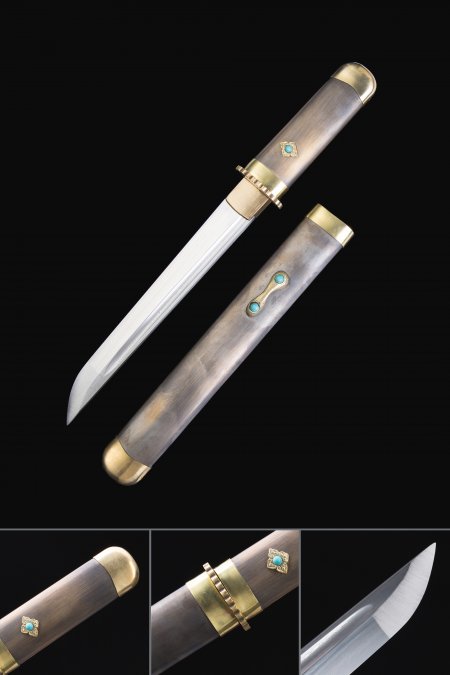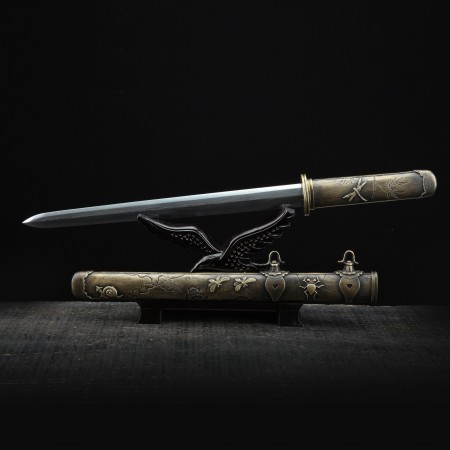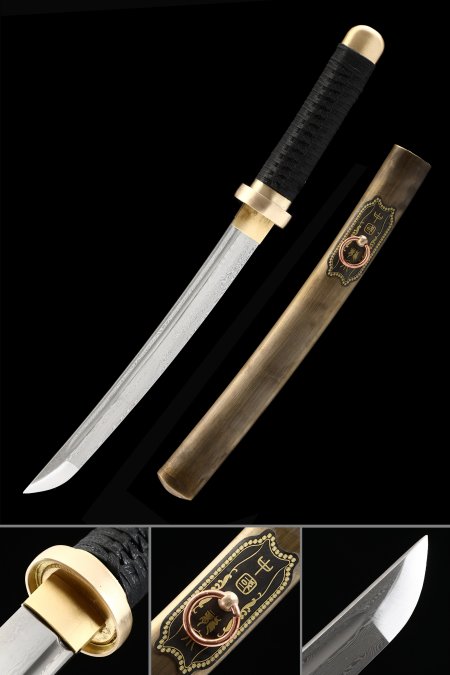
Bronze Damascus Steel Tanto

Bronze Damascus Steel Tanto blades unite centuries-old folded-steel artistry with warm, oxidized bronze fittings that patina beautifully over time. Every piece in this collection is hand-forged from layered Damascus steel, delivering the flowing grain patterns and visual depth that serious collectors prize. Each tanto ships with free standard shipping and is backed by our hassle-free return policy, making it easy to add a standout display piece to your collection with complete confidence.
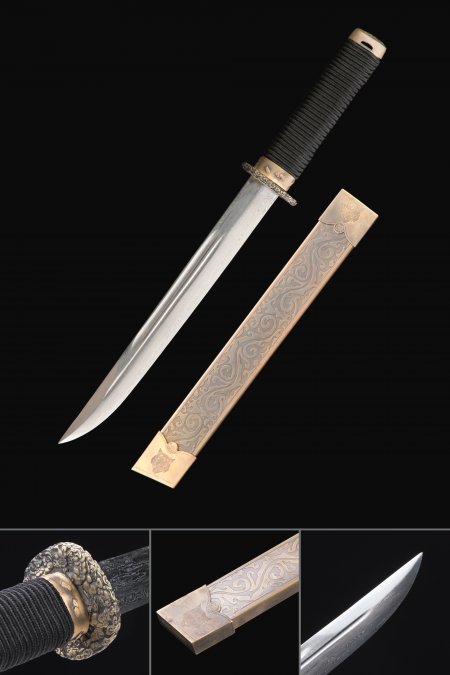
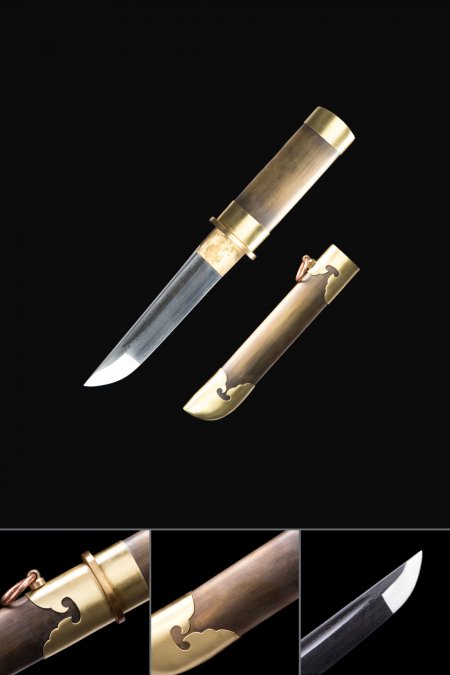
Showing 5 Products

Related Collections

Damascus Odachi13 items


21 Reviews

Damascus Ninjato19 items


19 Reviews

Damascus Chokuto19 items


19 Reviews

Damascus Broadsword7 items


1 Reviews

Frequently Asked Questions

What makes Damascus steel visually unique on a tanto blade?
Damascus steel is produced by folding and forge-welding multiple layers of high-carbon and lower-carbon steel together, then drawing the billet out into a blade. The folding process creates distinct watery or woodgrain-like surface patterns called the Damascus hada. On a tanto's shorter blade, these patterns are especially concentrated and visible, often appearing more dramatic than on longer blades simply because the pattern density is higher relative to the blade surface area. After forging, the blade is acid-etched, which causes the different steel layers to react at different rates — darker layers recede slightly while brighter layers stand proud, producing the three-dimensional visual texture that collectors seek. No two Damascus tantos will ever show an identical pattern, which is a primary driver of their appeal as individual collectible art objects.
How do bronze fittings differ from brass on a tanto?
Bronze and brass are both copper-based alloys, but their secondary metals differ in ways that affect both appearance and aging behavior. Brass is an alloy of copper and zinc, producing a bright, golden-yellow tone that tends to retain its shine and develops a relatively uniform patina over time. Bronze is an alloy of copper and tin — sometimes with small additions of aluminum or phosphor — and displays a deeper, warmer amber-to-reddish tone straight from the foundry. More importantly for collectors, bronze develops a richer, more complex patina over years of display, gradually shifting toward green-brown verdigris tones in areas exposed to humidity and air. This living-finish quality is why many collectors prefer bronze fittings for long-term display pieces: the aging process adds rather than subtracts from the visual character of the tanto as a whole.
What is an aikuchi tanto and how is it different from a standard tanto?
An aikuchi is a specific style of tanto mounting distinguished by the absence of a tsuba — the hand guard that typically separates the blade from the handle on Japanese edged pieces. In aikuchi construction, the habaki (blade collar) fits directly against the koiguchi (mouth of the saya) and the handle begins immediately, giving the assembled piece an exceptionally clean, streamlined silhouette. Historically, aikuchi mountings were favored by court nobles and attendants who required discreet, elegant carry without the visual interruption of a guard. For modern collectors, aikuchi tanto are prized for their minimalist aesthetic and their strong association with classical Japanese court culture. The absence of a tsuba also means the metalwork craftsmanship on the habaki and saya fittings receives more visual attention, making material quality in those components especially important.
How should I store a Damascus tanto with bronze fittings long-term?
Long-term storage for a Damascus tanto with bronze fittings involves managing two different material needs simultaneously. For the blade, the primary concern is preventing oxidation: apply a thin layer of choji oil or pharmaceutical-grade mineral oil every three to four months, and wipe away any fingerprint residue after handling since skin oils are mildly acidic and can etch the Damascus pattern unevenly over time. For the bronze fittings, controlled humidity is the key variable — relative humidity between 40% and 55% is ideal. Very low humidity can cause cord wrappings to dry and loosen, while high humidity accelerates verdigris formation on the bronze in ways that may not be aesthetically even. Store the tanto horizontally in its saya on a padded display rack, away from direct sunlight and heating vents. If storing inside a cabinet or drawer for extended periods, include a silica gel desiccant packet and replace it annually.
Is a Bronze Damascus Steel Tanto a good gift for a collector?
A Bronze Damascus Steel Tanto is an excellent choice for a collector gift because it combines visual immediacy — the Damascus pattern is striking even to someone unfamiliar with the category — with genuine artisan depth that rewards closer study over time. Unlike purely decorative display pieces, these tanto are built on full-tang construction with hand-forged blades, details that experienced collectors immediately recognize and appreciate. The bronze fittings add a warmth and visual sophistication that photograph beautifully, which matters for collectors who document and share their acquisitions. For gifting purposes, the self-contained nature of the tanto — compact, complete with its saya, and requiring no additional accessories to display — makes it practical as well as impressive. Pieces with engraved saya or symbolic motifs such as dragonfly designs add a personal, narrative dimension that elevates the gift beyond a generic collectible.

Customer Reviews

Jeffery Willis California, United States

I absolutely LOVE this Copper Tanto!

It really is the length of a dirk as it is too long for a dagger and too short for a short sword.
I would categorize this as a dirk, not a tanto.

Having said that:

The fit was superb, with a nice and light, audible click as the dirk is sheathed in the scabbard and locks into place. The patterns and décor of the piece is wonderful. This is a quality piece. The steel of the blade itself is high quality, and can be seen as a pattern steel in all of its splendor.

There was a small burr on one of the hanger rings, but nothing a little rat tail file couldn't take care of. That is going to happen from time to time with manufacturing like this.

The Wakizashi was also very nice. The steel of the blade has a real hamon and is quite sharp indeed. The handle was a little bit on the large side, however, for those with larger hands, this is not going to be a problem. The fit of the saya on the blade was a little too loose and required my attention to add a small shim to properly fit the blade and scabbard. All the same, this is a beautiful piece, and that's why I chose it. It's a keeper.
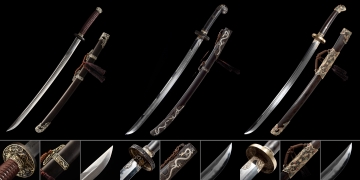
Damascus Steel Double-Edged Tanto with Bronze Metal Saya - Dragonfly Nature Engraving Damascus Steel Double-Edged Tanto with Bronze Metal Saya - Dragonfly Nature Engraving
Cart 0 Items

Your cart is empty