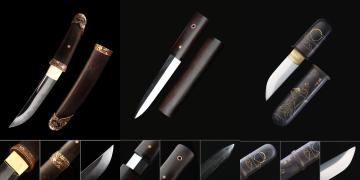
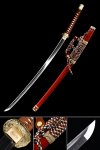
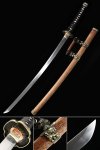
Brown Sageo Tachi

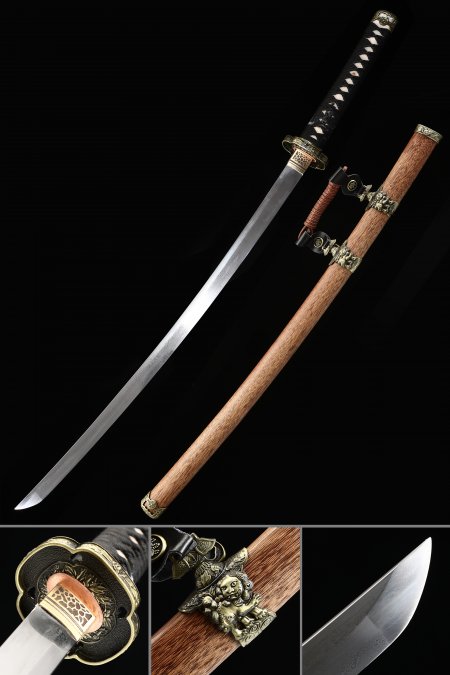
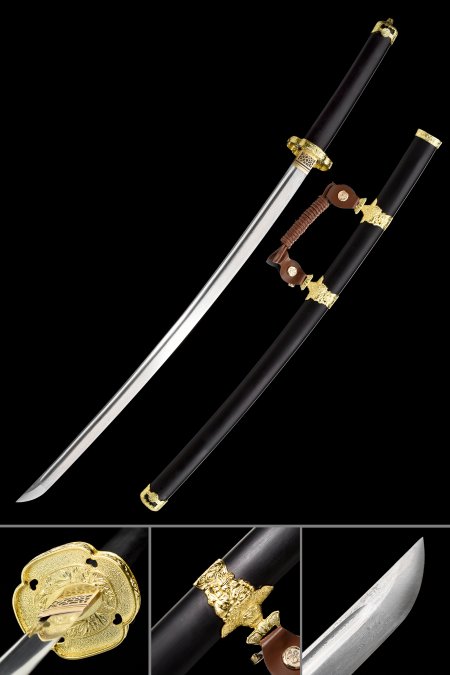
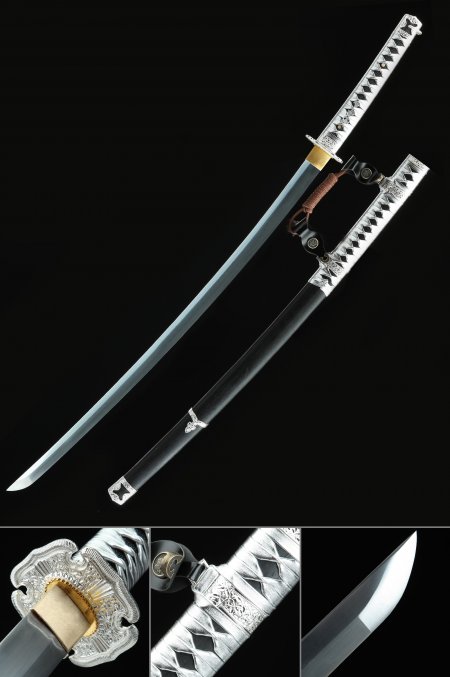
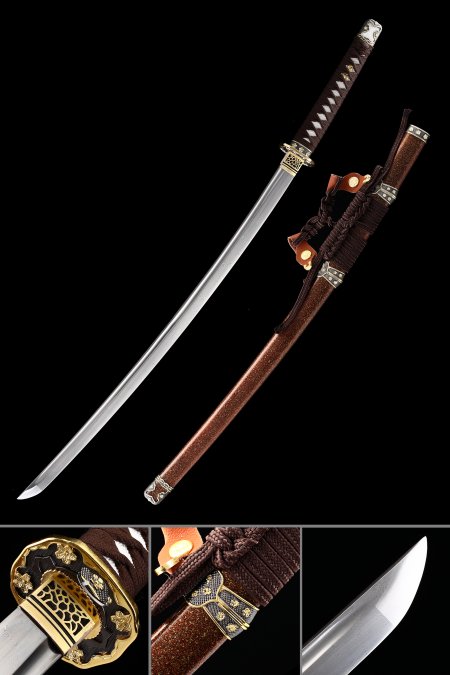
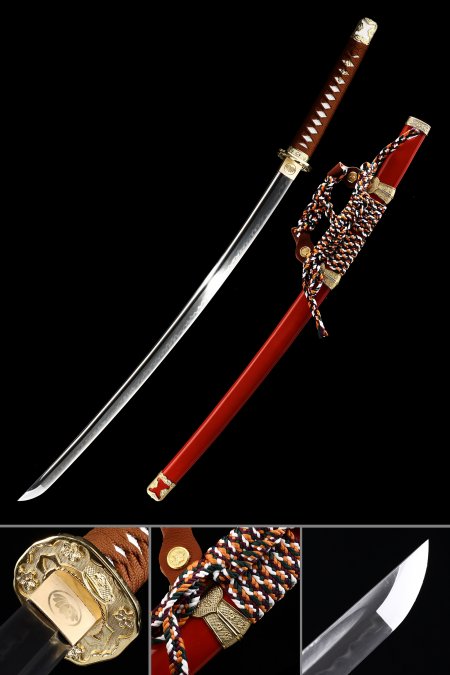
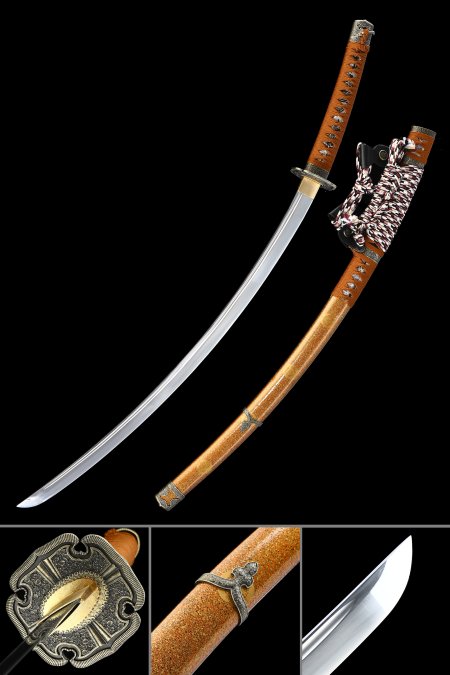
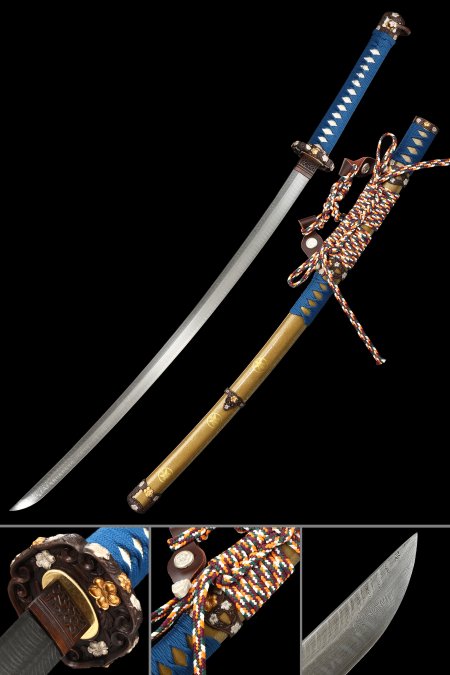
Brown sageo tachi swords combine the sweeping curvature of classical Japanese long blades with the warm, earthy elegance of hand-wrapped brown cord suspension. Each piece in this collection is crafted with full-tang construction, high-carbon or Damascus steel blades, and period-inspired koshirae fittings - built for serious display and devoted collectors. Enjoy free shipping on every order, backed by our hassle-free return policy.
Showing 11 Products

Related Collections

Brown Tanto15 items


42 Reviews

Brown Wakizashi6 items


71 Reviews

Brown Ninjato8 items


34 Reviews

Brown Aikuchi5 items


9 Reviews

Frequently Asked Questions

What makes a tachi different from a katana?
The tachi is the older of the two forms, developed primarily during the Heian and Kamakura periods. Its blade is generally longer - often exceeding 70 cm - and carries a deeper, more pronounced curvature (sori) compared to a katana. The most telling functional difference is how each was worn: a tachi was suspended edge-down from the belt using cords attached to the saya, while a katana was thrust edge-up through the obi. This mounting distinction drove the tachi's longer handle geometry and its more dramatically curved profile, optimized for a drawing arc suited to a mounted posture. On collectible pieces today, the tachi-koshirae mounting - complete with sageo cord, coordinated tsuba, and full lacquered saya - remains the defining presentation format that sets tachi apart from other Japanese sword forms.
What is the sageo cord used for on a tachi?
The sageo is the braided or flat-woven cord threaded through the kurikata - a small knob on the saya - and used to secure the scabbard to the wearer's belt or obi. On a tachi specifically, the sageo was integral to the suspension system, as the blade was carried edge-down and required stable cord attachment at two points along the saya. Beyond its structural role, the sageo was a deliberate aesthetic choice: its color and material were selected to complement the tsuka-ito, saya lacquer, and tsuba metalwork as part of a unified koshirae. Brown sageo in particular became associated with a warm, grounded palette that pairs well with gold fittings, dark lacquer sayas, and natural hardwood mounts. On display pieces, a well-matched sageo signals that the entire koshirae was considered as a design whole rather than assembled from unrelated components.
How does Damascus steel differ from 1095 carbon steel in tachi blades?
Damascus steel tachi blades are produced by forge-welding multiple layers of high-carbon and low-carbon steel, then folding and drawing the billet repeatedly. The result is a surface with flowing grain patterns - called the hada - that appear as wood-grain, water-ripple, or ladder-like lines depending on the folding method. No two Damascus blades share an identical surface pattern. By contrast, 1095 carbon steel is a single-alloy high-carbon steel valued for its predictable hardness, edge retention, and responsiveness to clay tempering. A 1095 blade subjected to differential hardening develops a genuine hamon - the misty boundary line between the hardened edge and the softer spine - which is visible as a natural feature of the steel itself rather than a surface treatment. Collectors who prioritize visual complexity and uniqueness tend to favor Damascus; those who value the authentic temper aesthetics of traditional Japanese blade craft often gravitate toward 1095 or T10 steel pieces with real hamon.
How should I store and maintain a tachi for long-term display?
Tachi displayed horizontally should rest on a two-tiered sword stand with the edge facing upward - the traditional orientation for storage. Apply a light coat of choji oil or mineral oil to the blade every three to six months to prevent surface oxidation, especially in humid environments. Use a soft, lint-free cloth or traditional uchiko powder ball to remove fingerprint oils before applying fresh oil. The saya should never be forced over the blade; if it feels tight, check for moisture-related wood expansion and allow both parts to acclimate before sheathing. Keep lacquered sayas away from prolonged direct sunlight, which can fade pigment and dry out the wood substrate over time. Brown sageo cord should be inspected periodically for fraying at the kurikata contact point, and stored loosely tied rather than pulled taut to preserve the fiber's integrity.
Are tachi with chrysanthemum or dragon tsuba more collectible?
Both motifs carry significant historical and symbolic weight in Japanese sword culture, but they represent different collecting registers. The chrysanthemum (kiku) tsuba references the imperial mon of Japan's royal house and was used extensively in formal presentation swords of the Edo period - making kiku-motif fittings associated with ceremonial prestige and refined court aesthetics. Dragon (ryu) tsuba, by contrast, connect to a deeper spiritual tradition: in Japanese cosmology, the dragon is a protective deity associated with water, transformation, and divine guardianship of the blade. Dragon koshirae are more commonly found across a broader range of period styles, from practical warrior fittings to elaborately carved decorative guards. From a display perspective, chrysanthemum tsuba create a quieter, more symmetrical visual focal point, while dragon tsuba introduce movement and narrative detail. The choice between them often reflects whether a collector is building toward a formal aesthetic or a more dramatic, mythological presentation.

Customer Reviews

Paul Sproesser Maryland, United States

The sword is very cool for the price, however what I do not like about it is the visible hot glue that I can see from when it was put together. Also the rope handle on the sheath has come loose and the pieces that connect the rope to the sheath slide freely on the sheath. The inside of the sheath leaves wood chips on the blade when it is drawn or put back inside. Still I do like the way it looks and I keep it in my room.
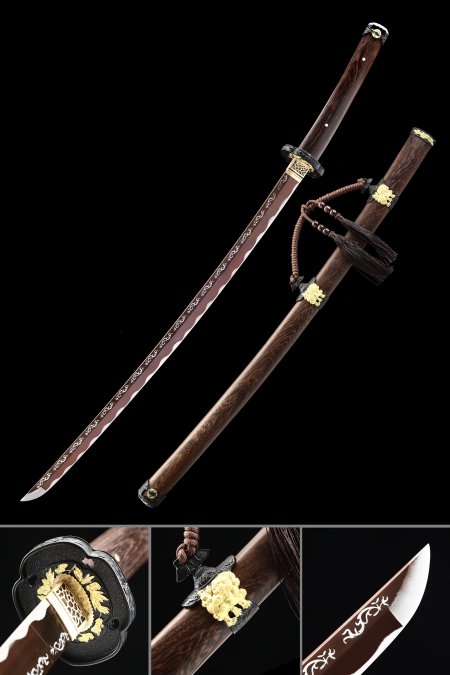
Nodachi Sword 1095 Carbon Steel Dark Red Blade with Vine Engraving, Brown Hardwood Saya, Chrysanthemum Tsuba Nodachi Sword 1095 Carbon Steel Dark Red Blade with Vine Engraving, Brown Hardwood Saya, Chrysanthemum Tsuba