What makes Damascus steel visually distinct on a tachi blade?
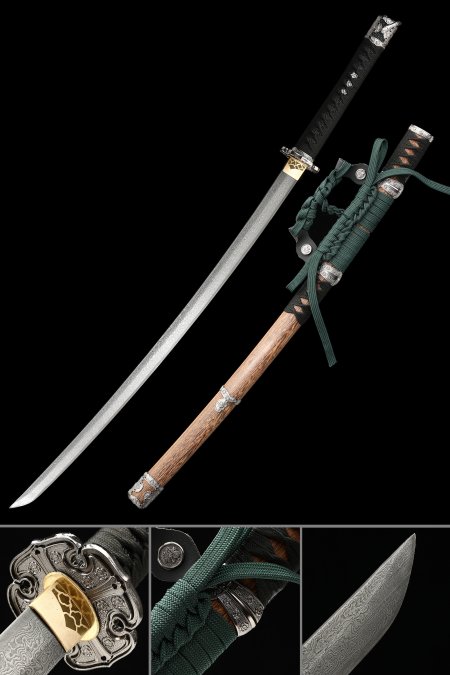
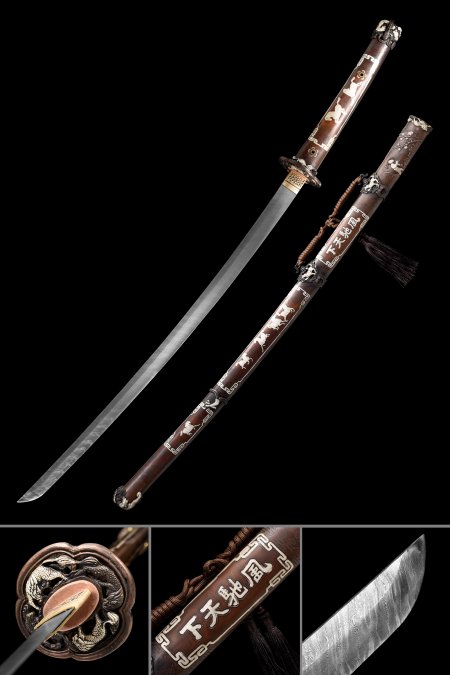
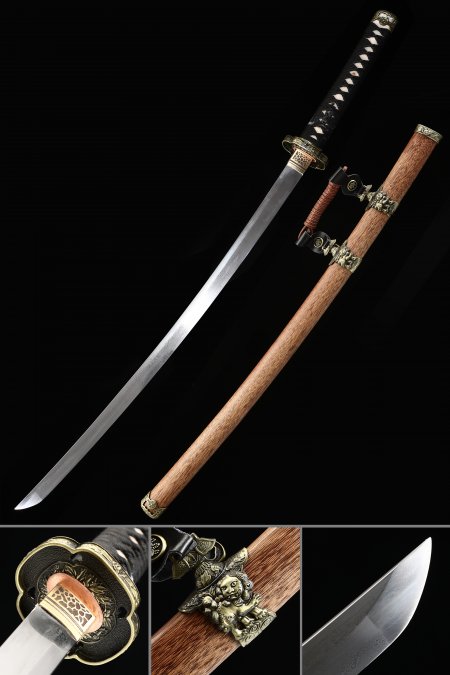
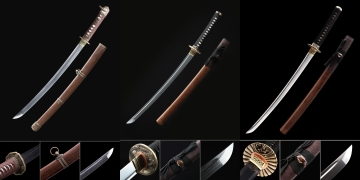
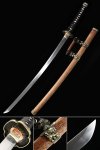
Damascus steel is produced by folding and forge-welding multiple layers of steel together, then etching the finished blade to reveal the contrasting grain patterns within. On a tachi, this process creates flowing, water-like surface patterns — sometimes called "ladder," "rain drop," or "twist" patterns depending on the forging technique — that shift in tone and definition as the light moves across the blade. The brown coloration characteristic of this collection comes from the finishing stage, where controlled oxidation deepens the warm, earthy tones of the steel surface. No two Damascus blades carry identical patterning, which is a key reason collectors prize them: each piece is visually unrepeatable.
How does a tachi differ from a katana in terms of design?
The tachi and katana are related but distinct sword forms. The tachi is generally longer, with a blade typically exceeding 70 cm, and features a more pronounced curvature along its length. Historically, the tachi was worn suspended edge-downward from a belt cord, which influenced its swept geometry. The katana, which evolved later, is worn edge-upward through the obi and tends to have a tighter, more consistent curvature optimized for a quick draw. From a collector's perspective, the tachi's longer profile and deeper curve give it a more dramatic display presence, while the fittings — particularly the saya suspension hardware and sageo cord — reflect its distinct heritage.
What should I look for in a quality Damascus tachi for display?
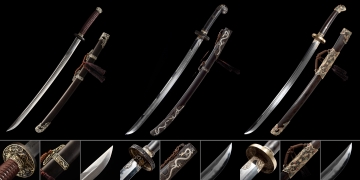
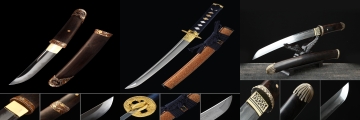
For display-focused collectors, three elements define a well-made Damascus tachi: blade construction, fitting quality, and material cohesion. On the blade, look for a visible hamon (temper line) alongside the Damascus patterning — this indicates genuine differential heat treatment rather than decorative etching alone. Full-tang construction, where the steel extends through the entire handle, is a mark of structural authenticity even in display pieces. For fittings, examine whether the tsuba, ito wrap, and saya are made from substantive materials — cast copper or iron tsuba, genuine hardwood saya, and tightly wound cord wraps all signal a piece built with care. Finally, assess whether the brown tones of the blade, the saya finish, and the handle materials form a unified visual language rather than a mismatched assembly.
How do I maintain a Damascus steel tachi in a display setting?
Damascus steel requires a modest but consistent maintenance routine to preserve its surface patterning and prevent oxidation. Every two to three months, apply a thin, even coat of choji oil or food-grade mineral oil to the blade using a soft cloth, then wipe away any excess — over-oiling can attract dust and leave residue. Store the tachi on a horizontal stand in a climate-controlled environment, away from direct sunlight and humidity. Avoid storing the sword in its saya for extended periods without periodic checks, as moisture can become trapped between blade and saya and accelerate surface changes. When handling for cleaning or repositioning, use a clean cloth or cotton gloves to prevent skin oils from contacting the blade.
Does a tachi make a meaningful gift for a Japanese sword enthusiast?
A Damascus steel tachi is one of the more considered gifts you can give to someone who collects or appreciates Japanese swords. Unlike more common katana replicas, the tachi represents a historically earlier and somewhat rarer form — a distinction that resonates with knowledgeable enthusiasts. The addition of Damascus steel patterning elevates the piece further, giving it strong visual presence on a display stand. For gift purposes, look for a piece where the fittings — tsuba design, sageo color, and saya finish — reflect the recipient's aesthetic preferences. A dragon-motif tsuba with dark red hardwood saya reads very differently from a minimal gold-black copper tsuba with black ito, and matching that character to the collector's existing display sensibility makes the gift genuinely personal.