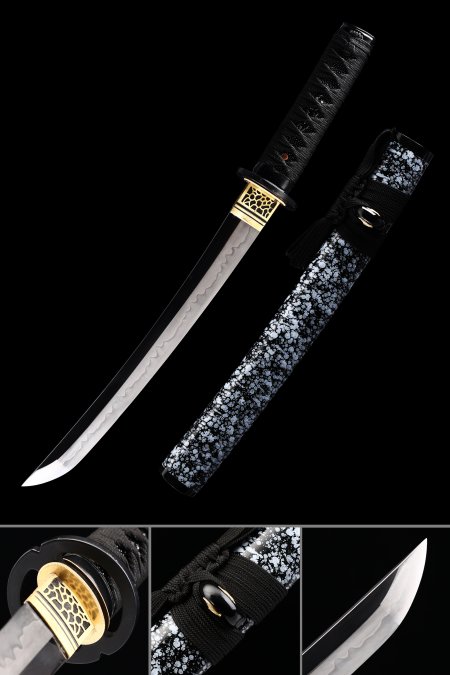
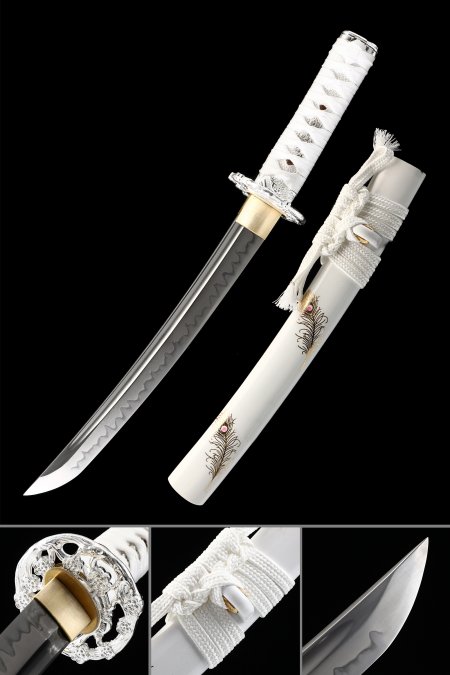
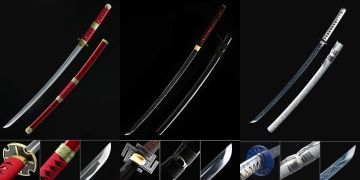
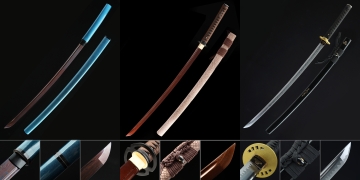
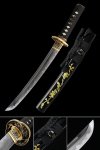
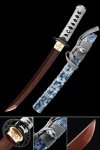
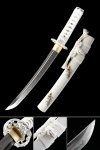
What makes flower saya tanto different from standard tanto?
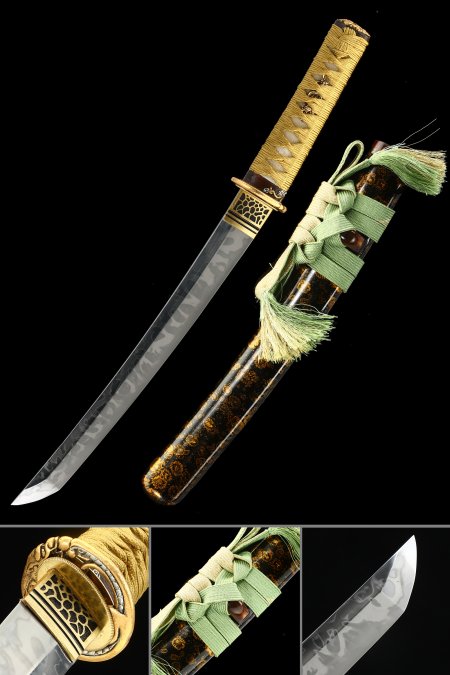
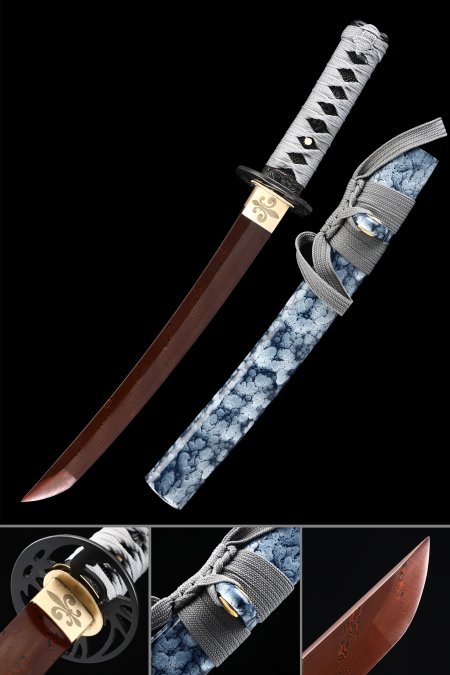
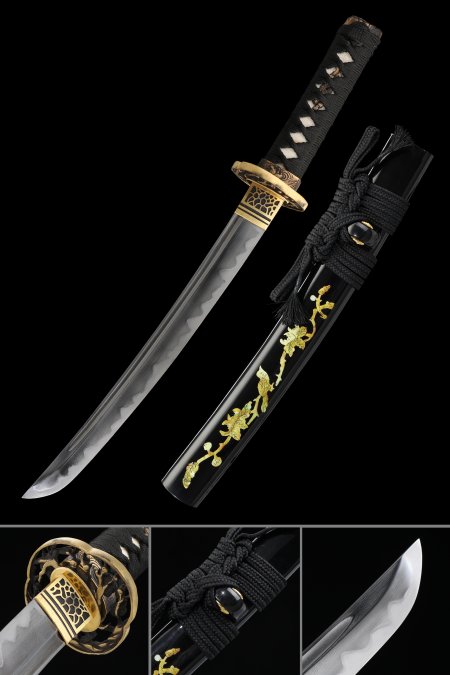
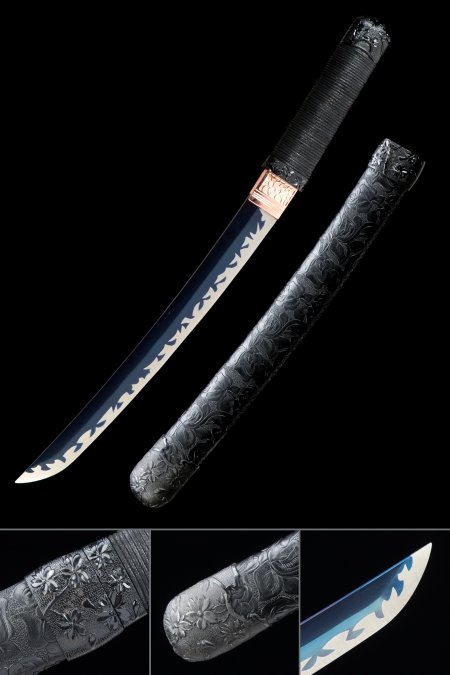
The defining distinction lies in the saya itself. A standard tanto saya is typically finished in plain black or brown lacquer with minimal surface decoration — functional and understated. Flower saya tanto, by contrast, feature sheaths treated as independent artistic objects: hand-painted floral motifs, carved relief patterns, or layered lacquer designs applied over hardwood or piano lacquer bases. The blade construction — full-tang, traditionally tempered, with a real clay-tempered hamon — remains consistent with conventional tanto standards. What changes is the mounting philosophy, which elevates the piece from a single-element collectible into a coordinated display object where saya, tsuba, and tsuka are visually unified around a decorative theme.
How is a real hamon different from a painted or etched one?
A real hamon — also called a nie or nioi hamon depending on its crystalline texture — is produced through differential hardening, a process where clay is applied along the blade spine before quenching. The clay-covered area cools slowly, remaining softer, while the exposed edge cools rapidly, forming martensite and creating the visible temper line. This line is a structural feature of the steel itself, not a surface treatment. Painted or acid-etched hamon, by contrast, are cosmetic finishes applied after the blade is complete. They can mimic the visual pattern but have no relationship to the steel's actual hardness gradient. On T10 carbon steel, the real hamon is particularly pronounced and varies naturally along the blade's length, making each piece genuinely unique.
Is T10 or Damascus steel better for a tanto collectible?
Neither is objectively superior — they serve different collector priorities. T10 high-carbon steel is valued for its ability to produce a vivid, well-defined real hamon through clay tempering, and its polished surface develops a mirror-like quality that emphasizes blade geometry. Damascus steel, formed by folding and forge-welding multiple steel layers, offers a surface patterning — often described as flowing water or wood grain — that is visible throughout the blade and unique to each piece. Collectors drawn to structural performance and hamon clarity often prefer T10. Those prioritizing surface visual complexity and the historical appeal of folded-layer construction tend to favor Damascus. Both are appropriate for display and long-term collection.
How should I maintain a lacquered flower saya long-term?
Lacquered hardwood sayas require attention to both the wood substrate and the decorative surface. Store the tanto in a stable environment with relative humidity between 40–55%; humidity swings cause wood to expand and contract, which can crack lacquer over time. Avoid direct sunlight, which fades painted motifs and yellows clear lacquer coatings. Clean the exterior surface with a dry or very slightly damp microfiber cloth — no solvents or polishing compounds. For the blade itself, apply a thin layer of choji or mineral oil every two to three months, wiping off any excess before returning the blade to the saya. Leaving an oiled blade sheathed for months without inspection can trap moisture between steel and wood, so periodic checks are worthwhile.
Are flower saya tanto a good gift for Japanese culture enthusiasts?
They are among the more considered gift options in Japanese blade collectibles because the decorative investment is immediately visible — a recipient does not need deep knowledge of steel metallurgy to appreciate the artistry on the saya. Floral motifs in Japanese aesthetics carry layered meaning: cherry blossoms reference impermanence, peonies represent prosperity, and chrysanthemums carry imperial and seasonal associations. A tanto with a themed floral saya becomes a culturally resonant object rather than a generic display piece. For gifting, pieces featuring a coordinated koshirae — where tsuba, tsuka, and saya share a unified visual language — tend to present most impressively and display well on a simple wooden stand without additional accessories.