FAST SHIP
105 Reviews
Free Shipping
139.00 USD
ON SALE! 15% OFF
Was: $169.00

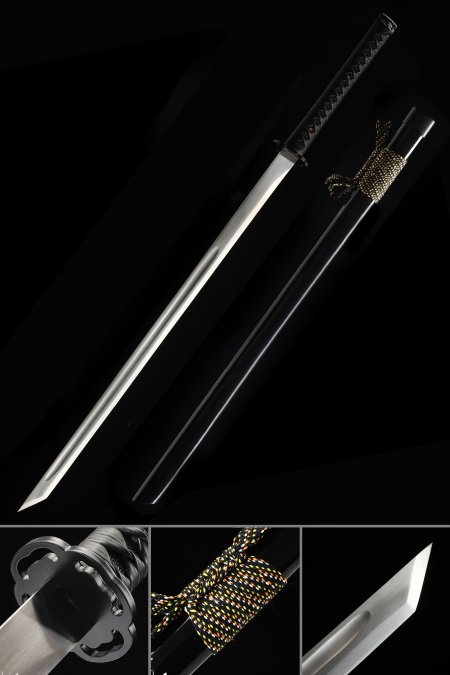
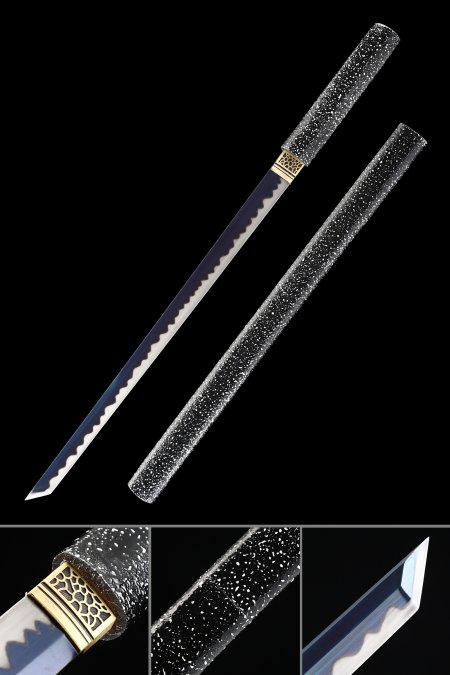
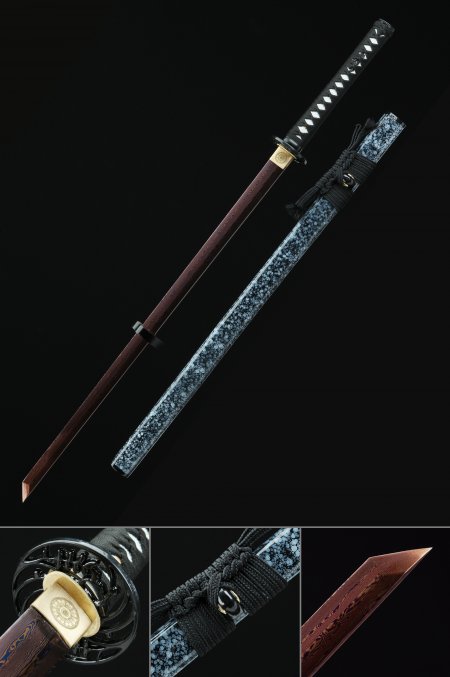
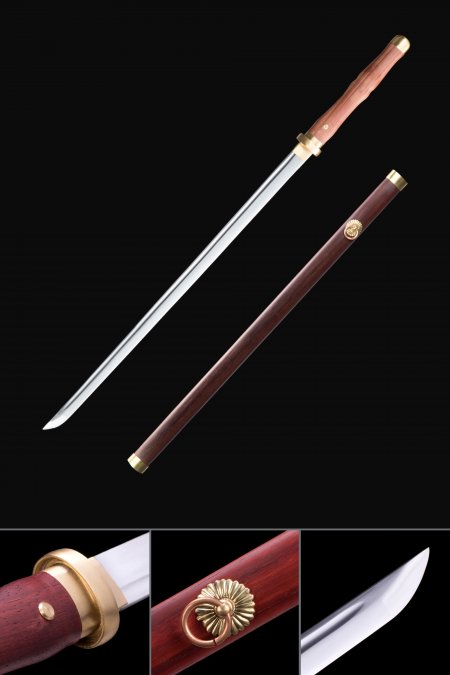
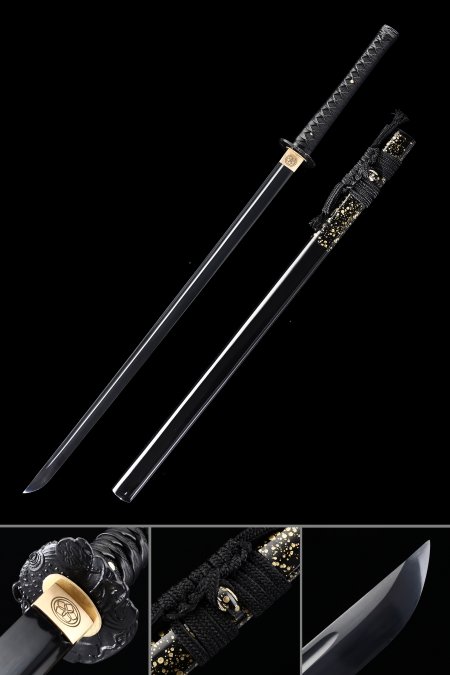
Every ninjato in this collection carries full-tang construction — the blade steel runs unbroken from tip to pommel, locked through the handle with mekugi pins for a single rigid assembly. We forge these straight-blade swords in 1045 carbon steel, 1060 high carbon steel, and T10 tool steel with clay-tempered hamon lines. Blade lengths sit between 24 and 29 inches, paired with square iron tsuba and wrapped in genuine ray skin with silk or cotton ito. Whether you train ninjutsu forms, cut tatami for tameshigiri, or collect functional Japanese blades, a full-tang ninjato delivers the structural integrity that partial-tang replicas simply cannot match.
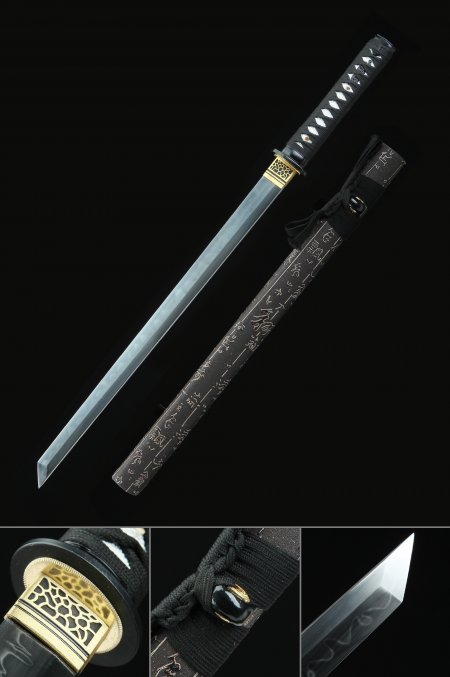
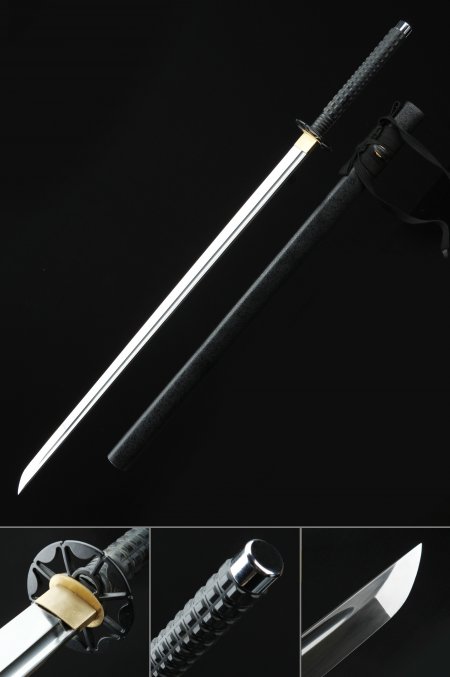
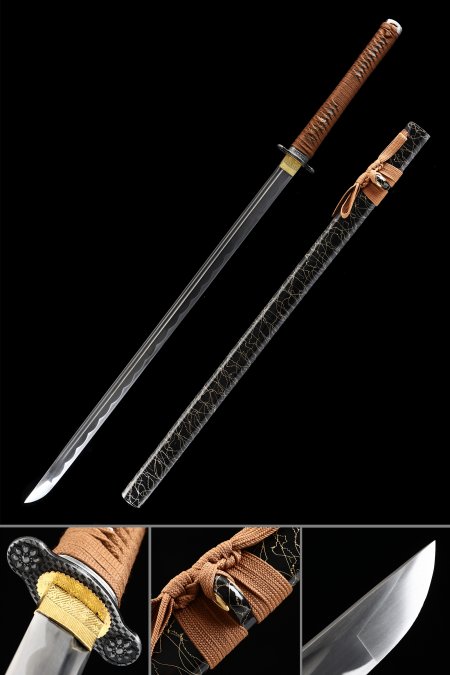
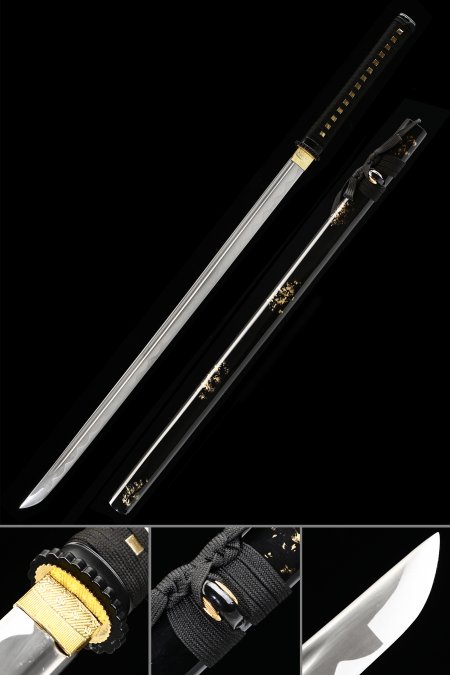
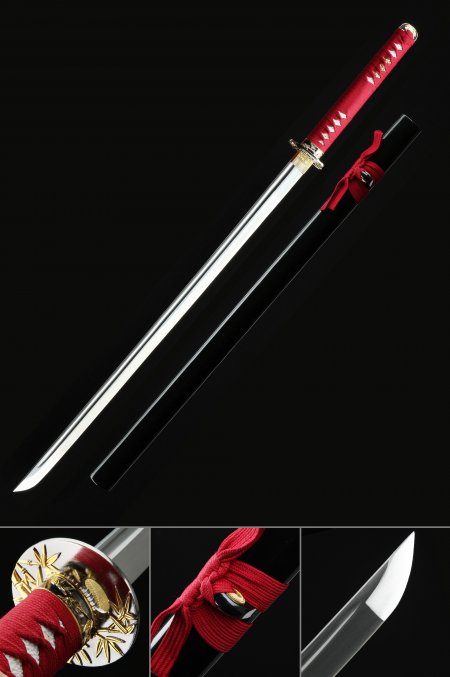
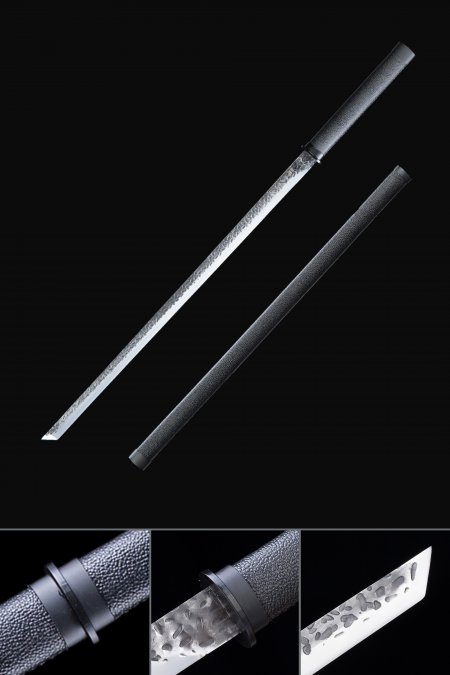
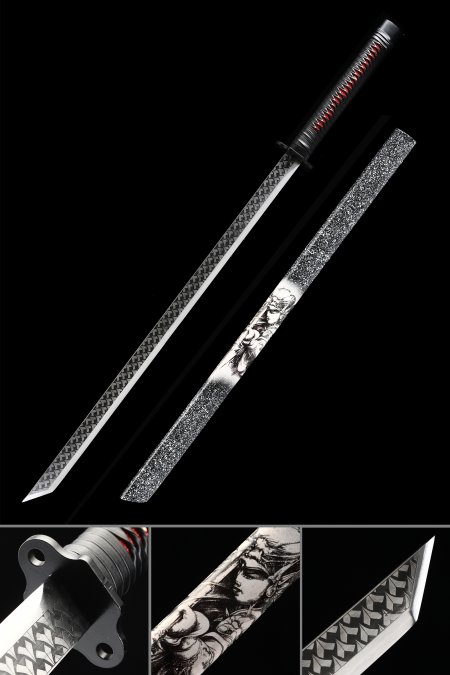
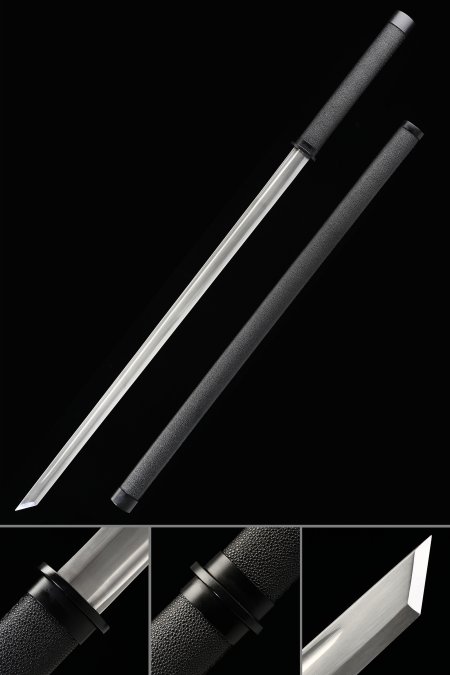
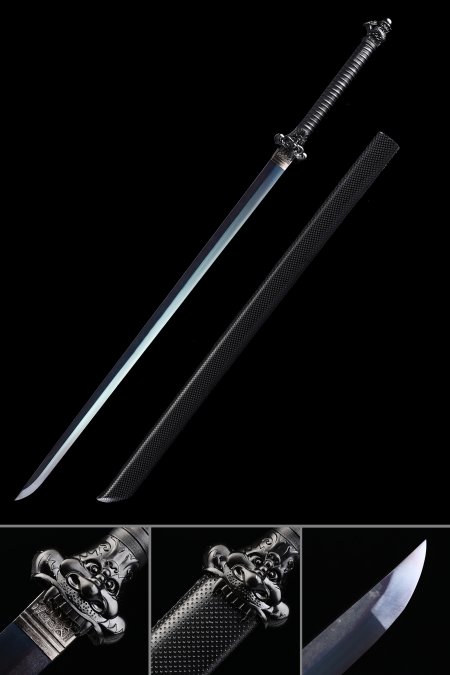
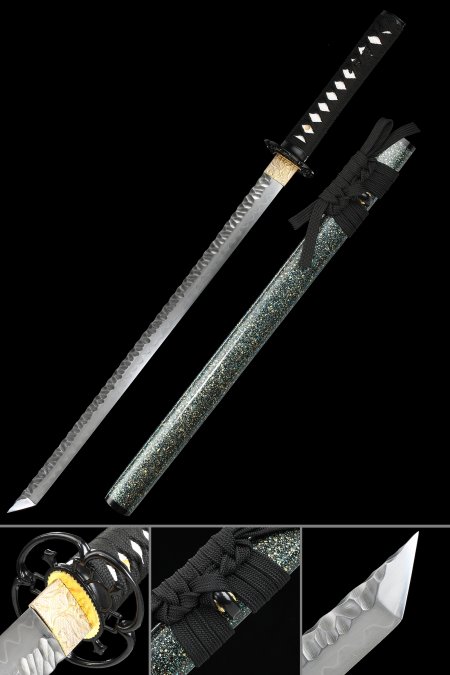
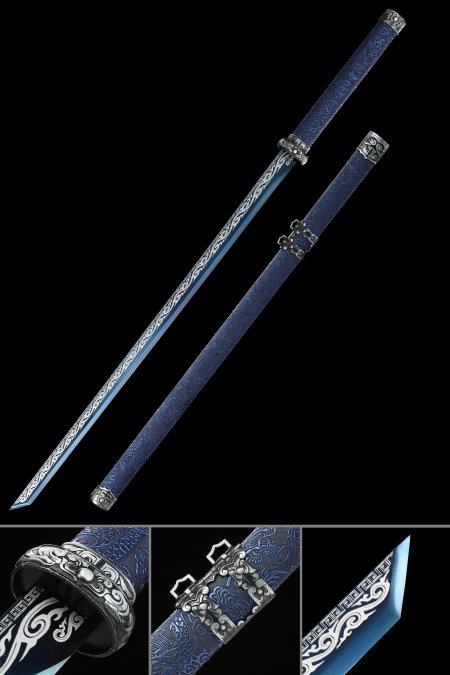
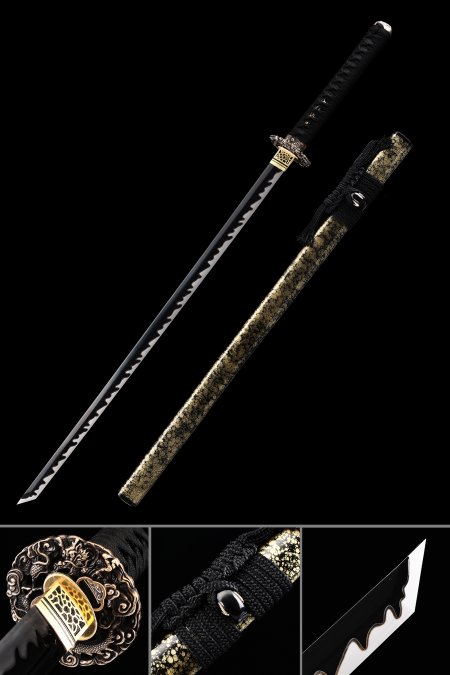
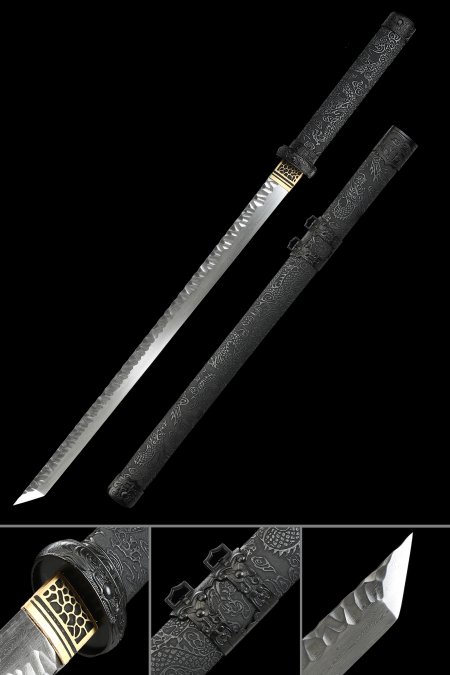
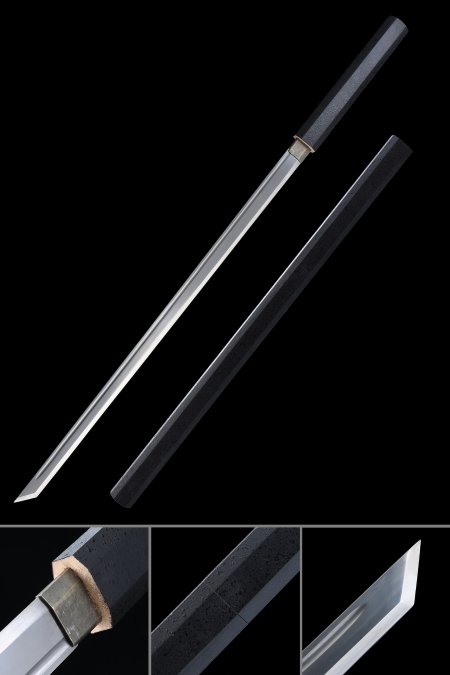
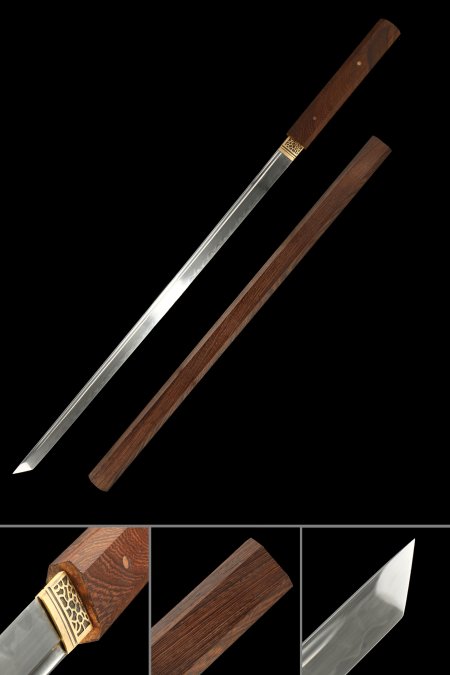
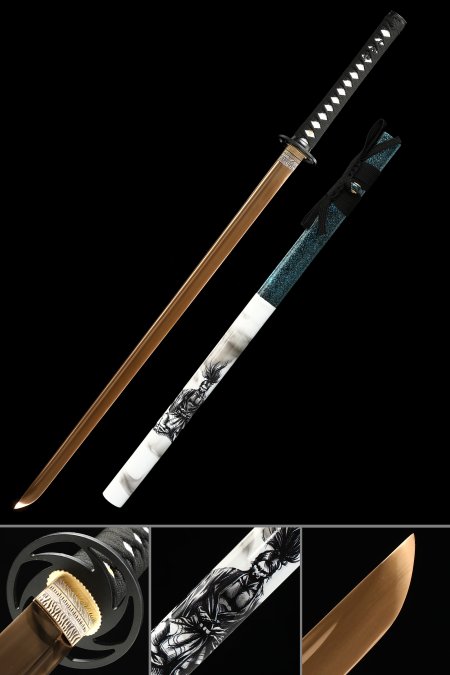
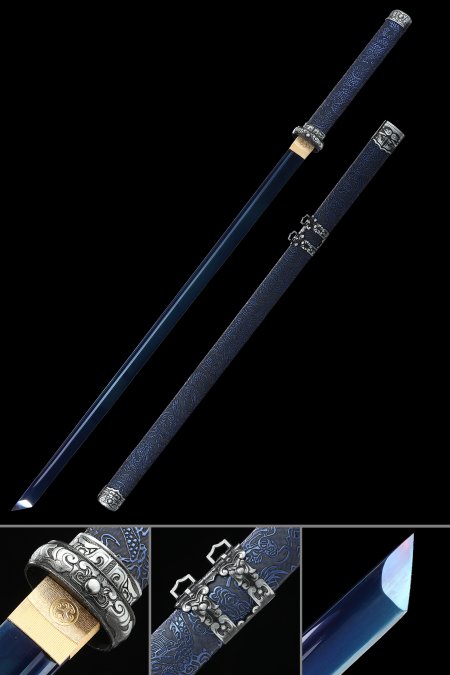
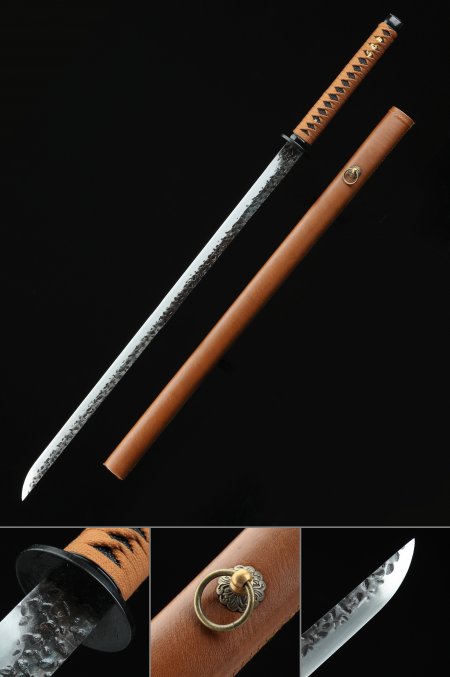
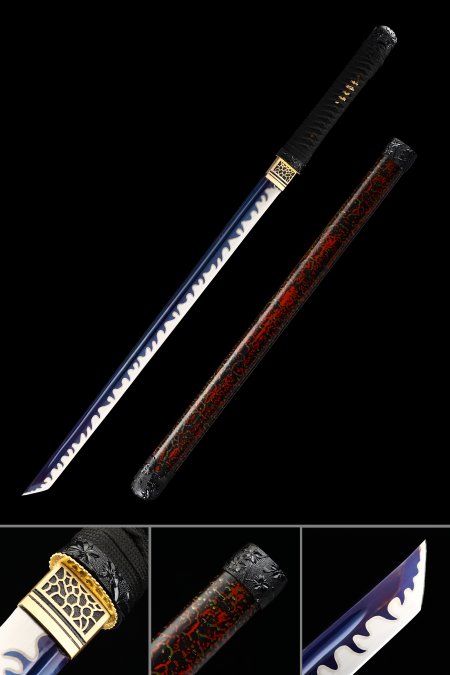
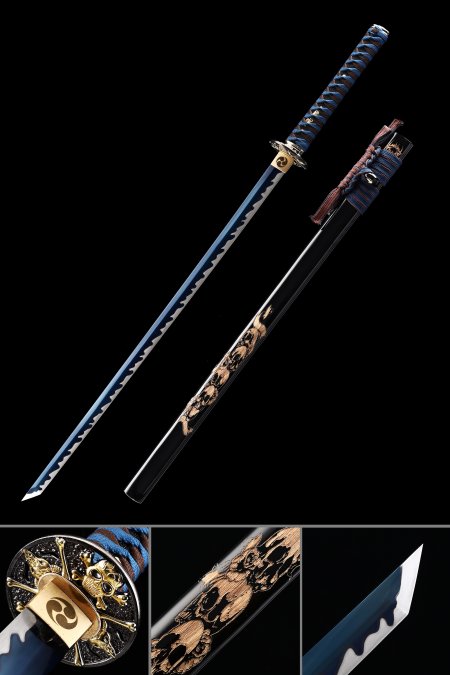
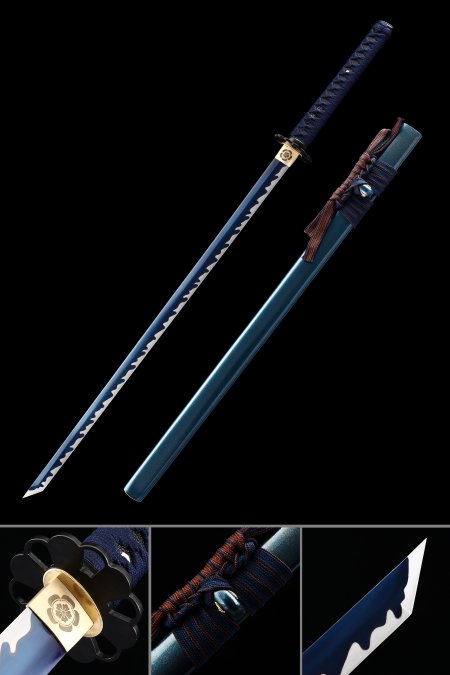
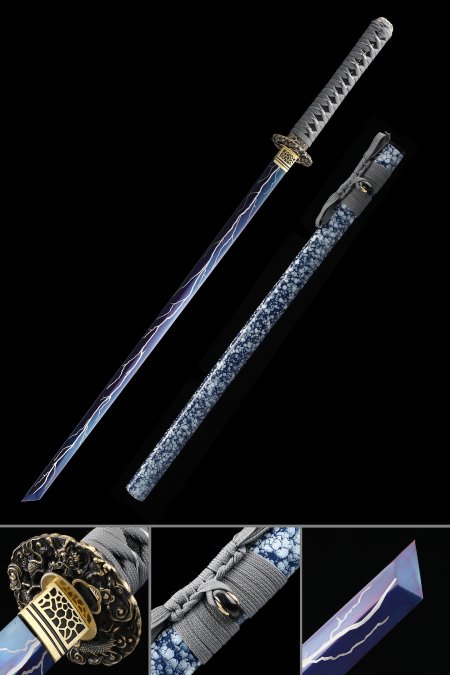
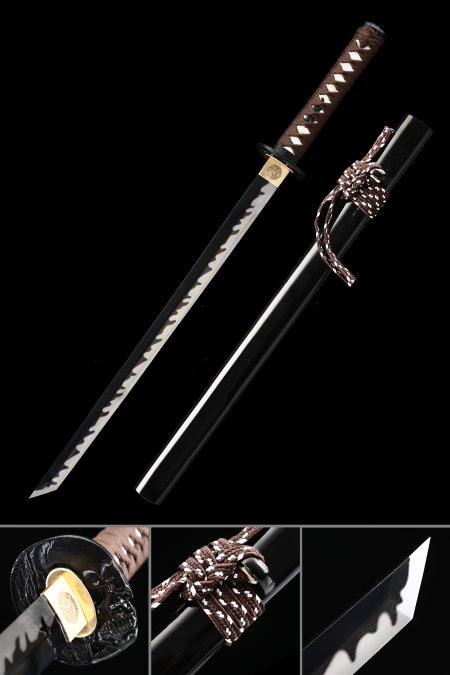
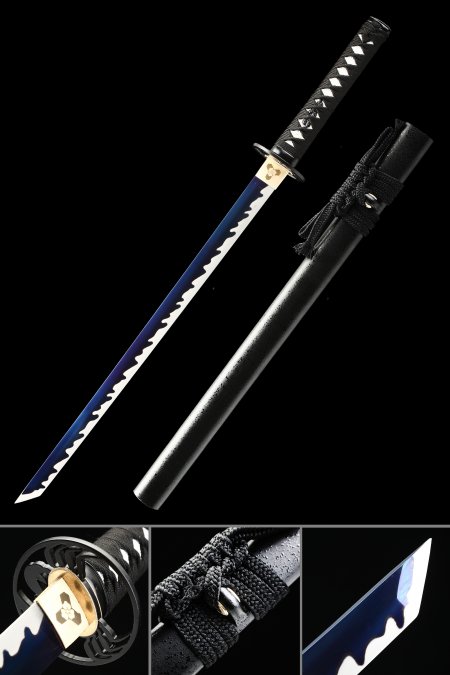
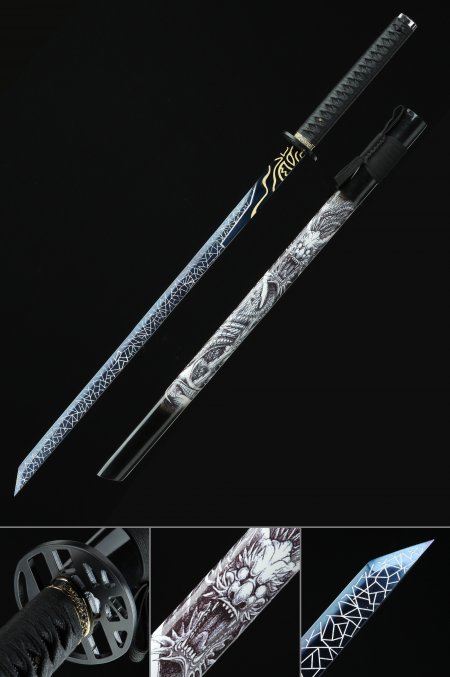
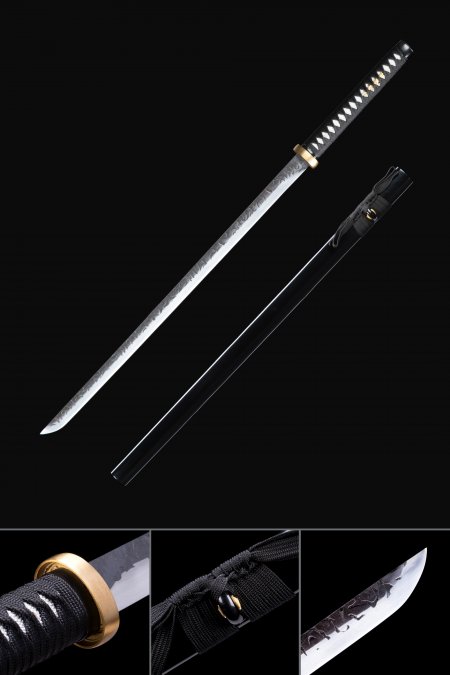
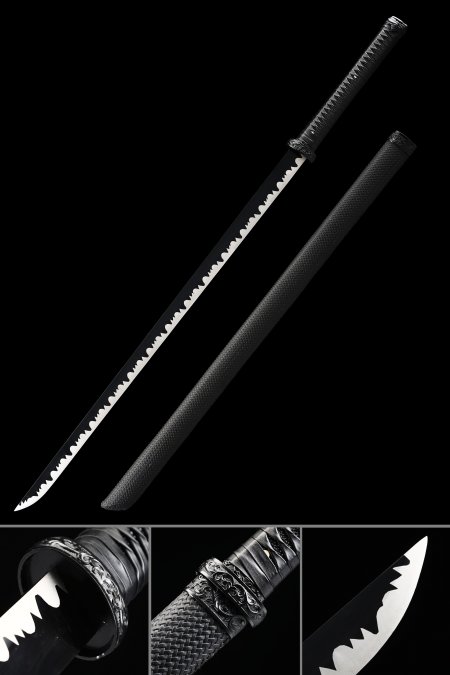
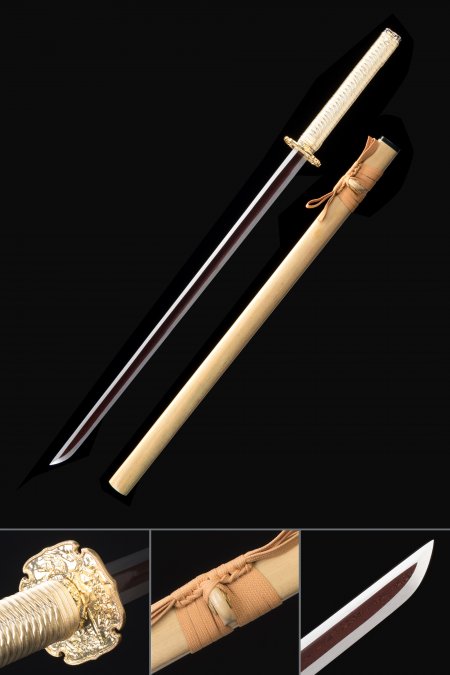
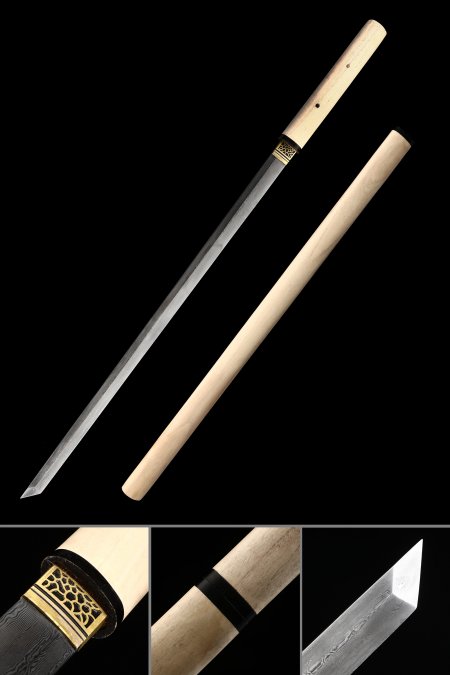
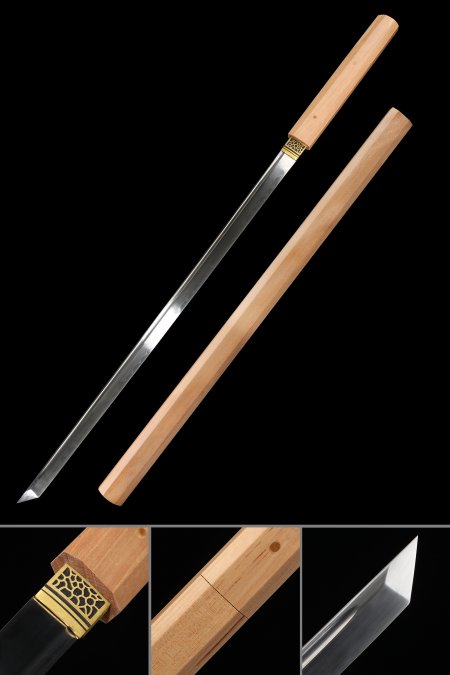
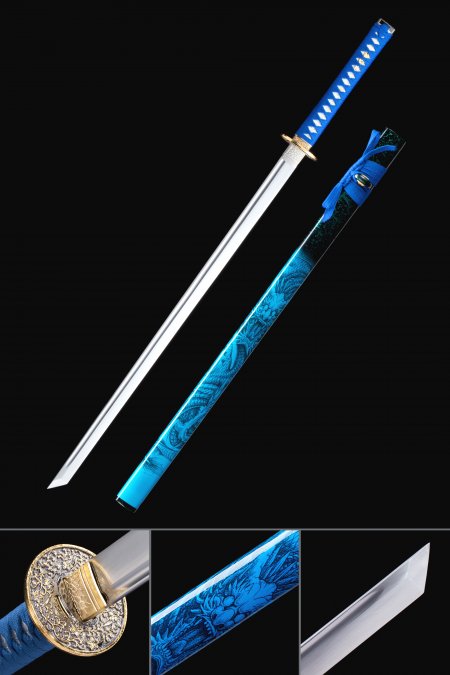
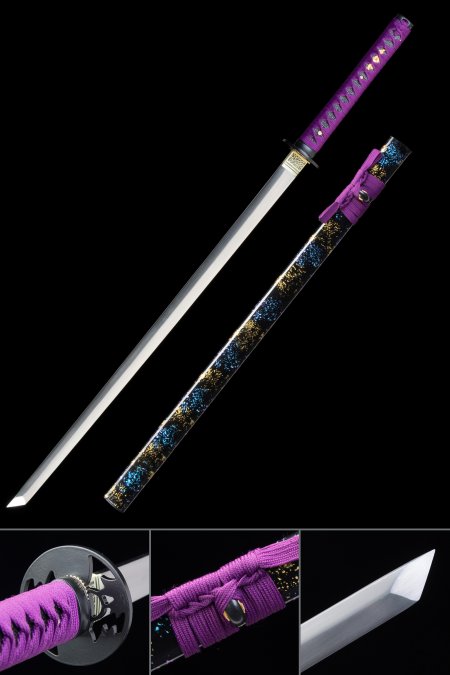
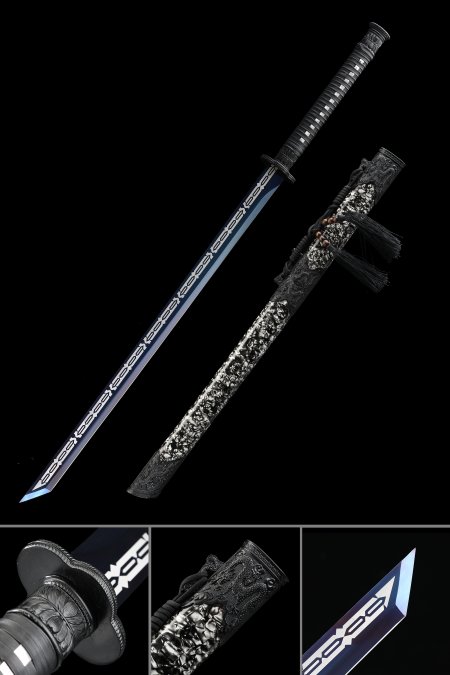
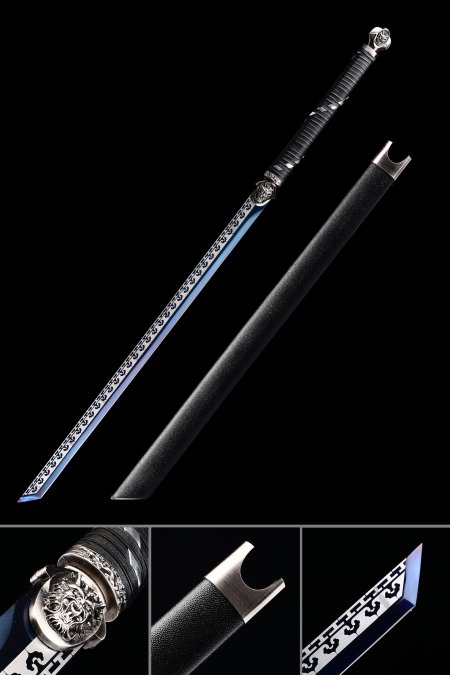
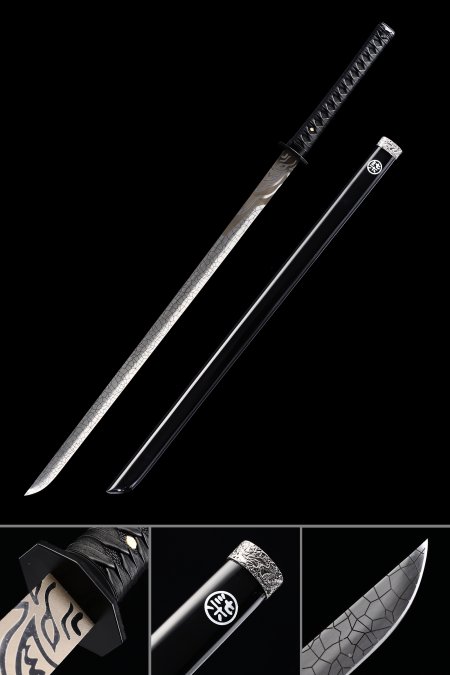
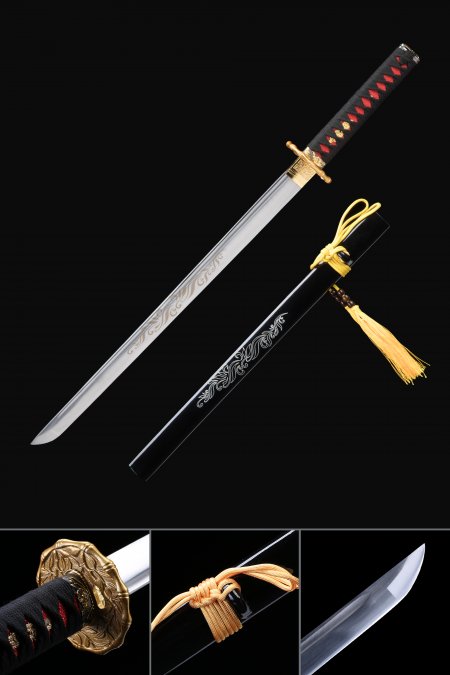
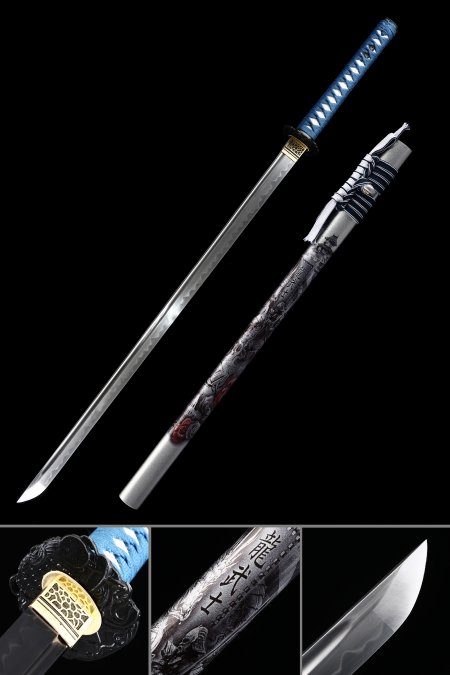
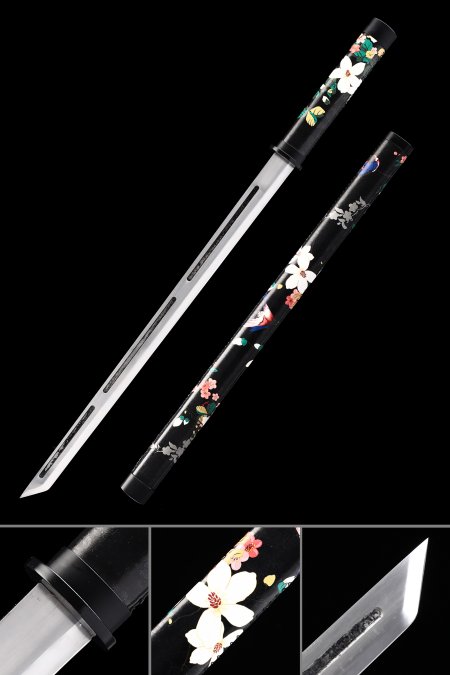
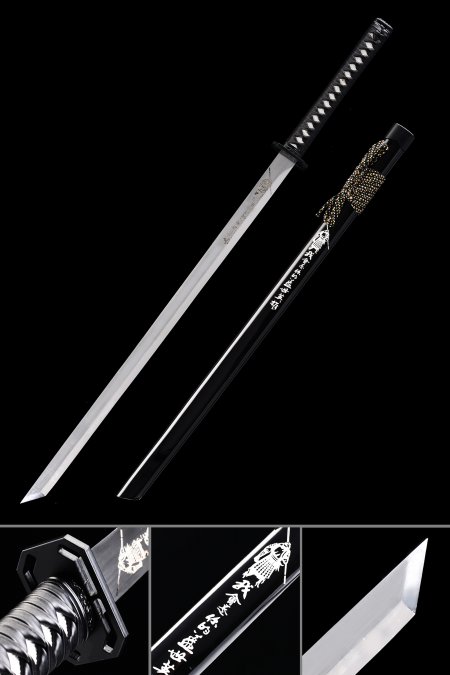
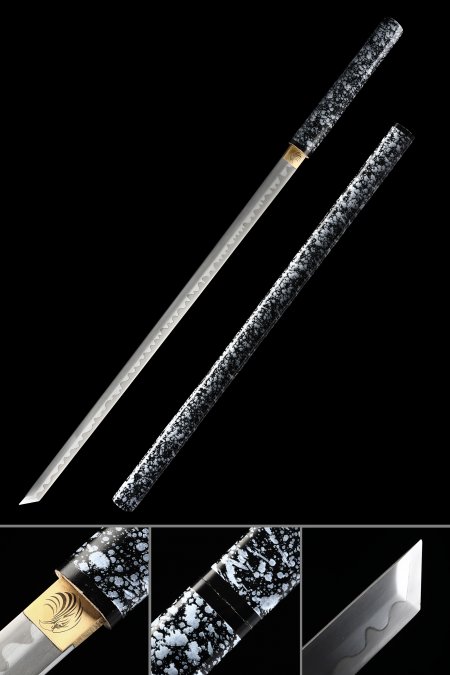
The ninjato and chokuto are both straight-bladed Japanese swords, but they come from entirely different historical contexts and carry distinct design philosophies. A chokuto is among the oldest Japanese sword types, dating back to the Kofun period before the eighth century, when Japanese bladesmiths had not yet developed the differential hardening and curvature techniques that would later define the tachi and katana. Early chokuto were heavily influenced by Chinese and Korean straight sword designs, and they were single-edged or double-edged blades used primarily for thrusting and hacking before mounted cavalry warfare drove the evolution toward curved blades. The ninjato, by contrast, is a modern concept associated with the shinobi tradition, characterized by a straight blade shorter than a katana, a square tsuba, and a design optimized for covert close-quarters use. In terms of blade profile, chokuto tend to have a wider range of shapes — some are leaf-shaped, some taper strongly toward the point, and some carry a ridge line similar to later katana — while ninjato almost universally follow a uniform-width straight blade with a simple angled or chisel-tipped kissaki. Functionally, chokuto were battlefield sidearms used by early Japanese warriors in open combat, whereas ninjato were supposedly tools of infiltration and ambush. For modern buyers, the distinction often blurs because both share the fundamental trait of a straight blade, and retailers sometimes use the terms interchangeably. The clearest way to distinguish them in a modern catalog is by fittings: a sword with a round or ornate tsuba and Kofun-period styling is marketed as a Japanese chokuto, while a sword with a square tsuba and plain black fittings reads as a ninjato. Many collectors own both to represent the full timeline of straight-blade development in Japanese sword making.
A ninjato is a straight-bladed Japanese sword historically associated with ninja warriors, though its exact origins remain debated among historians. The most visible difference between a ninjato and a katana is blade geometry — a katana carries a pronounced curve called sori that enables draw-cutting techniques, while a ninjato runs straight from guard to tip, favoring thrusting and chopping actions. Ninjato blades are typically shorter, ranging from 24 to 29 inches compared to the katana's 26 to 30 inches, and the overall sword is lighter because the straight blade lacks the thick shinogi ridge and wide curvature that add mass to a katana. The tsuba on a ninjato is traditionally square rather than round, and theories suggest this shape allowed shinobi to use the guard as a stepping platform when leaning the sword against a wall. In practice, the ninjato's straight blade gives the wielder faster point control for stabbing, quicker draw from the scabbard in confined spaces, and a more direct force delivery on chopping cuts. The katana excels at flowing slicing techniques where the curve does much of the cutting work, making it the superior sword for open-field combat and iaido practice. Neither sword is inherently better — they were designed for different tactical situations. Modern martial artists who train in ninjutsu systems use the ninjato as their primary weapon, while those practicing kendo, iaido, or kenjutsu work with curved blades. For collectors, owning both a katana and a chokuto style ninjato provides a comprehensive view of Japanese blade design philosophy and the different combat doctrines each weapon represents.
This is one of the most contested questions in Japanese sword scholarship, and the honest answer is that no one can prove the ninjato existed in feudal Japan as a standardized weapon. No surviving ninjato has been recovered from any archaeological site, and no period document from the Sengoku or Edo era describes a straight-bladed short sword used specifically by shinobi. The modern image of the ninjato — straight blade, square guard, shorter than a katana — entered popular culture through mid-twentieth-century martial arts demonstrations and was cemented by ninja films from the 1960s and 1970s. Masaaki Hatsumi's Bujinkan organization teaches techniques with a weapon matching this description, but the historical sources he references are difficult for outside researchers to verify independently. However, the absence of physical evidence does not automatically mean the weapon never existed. Ninja operated as covert agents whose entire methodology centered on leaving no trace, and their equipment was likely improvised, adapted from available weapons, and discarded after use. A shinobi might have carried a shortened katana, a repurposed wakizashi, or a crudely forged straight blade — none of which would have been cataloged or preserved the way samurai swords were. Some researchers suggest the straight-blade concept may trace to early Japanese chokuto designs that predated the curved tachi and katana. What is historically certain is that the ninjato as a functional straight sword design works effectively for close-quarters combat, and whether it matches a specific Sengoku-era artifact matters less to modern practitioners than its proven performance in cutting and martial arts training.
The best steel depends on how you plan to use the ninjato and how much maintenance you are willing to perform. Three grades dominate the functional ninjato market, each with distinct characteristics. 1045 carbon steel is the entry-level option with approximately 0.45 percent carbon content. It produces a blade that takes a serviceable edge, flexes well without snapping, and is forgiving of beginner mistakes in cutting technique. The trade-off is that 1045 blades dull faster and can develop minor bends from hard impacts, though these bends are usually correctable. 1060 carbon steel raises the carbon to around 0.60 percent, which meaningfully increases hardness and edge retention while reducing flexibility slightly. For a ninjato's straight-blade chopping style, the added stiffness of 1060 actually improves cutting performance because the blade drives through targets rather than flexing away. Most experienced practitioners consider 1060 the sweet spot for a training and cutting ninjato that will last years with basic care. T10 tool steel pushes carbon near 1.0 percent and adds tungsten for wear resistance, producing the hardest and most edge-retentive blade in the group. When T10 is clay tempered — a process where insulating clay is applied to the spine before quenching — it develops a genuine hamon line where the hard edge meets the softer spine, giving the ninjato both superior cutting ability and visual beauty. T10 ninjato hold their edge through dozens of tatami cuts without noticeable dulling, making them the preferred choice for serious chokuto ninjato tameshigiri sessions. The maintenance cost of T10 is slightly higher because the harder steel is more susceptible to rust if left unoiled, but for practitioners who care for their blades properly, T10 remains the top recommendation.
Yes, a full-tang ninjato works well for tameshigiri, and many experienced cutters deliberately train with straight blades because they demand better technique than a curved katana. When you cut tatami with a katana, the blade's curvature naturally assists the cut by creating a slicing action as it passes through the target — the geometry does some of the work for you. A ninjato offers no such assistance. The straight edge meets the target at whatever angle you deliver it, and if your edge alignment is off by even a few degrees, the mat will fold, deflect, or only partially separate instead of cutting cleanly. This unforgiving feedback loop is exactly what makes ninjato tameshigiri valuable as a training exercise. You learn to generate cutting power entirely through body mechanics — hip rotation, proper grip pressure, follow-through, and precise hasuji — rather than relying on blade curvature to compensate for sloppy form. For successful ninjato tameshigiri, steel choice matters significantly. A 1045 blade will cut soaked tatami adequately but may develop edge rolling on denser targets like double-rolled mats or fresh green bamboo. 1060 handles these tougher targets reliably, and T10 pushes through them with minimal edge deformation. The shorter blade length of most ninjato also changes your cutting distance compared to katana tameshigiri, requiring you to stand slightly closer to the target and adjust your footwork accordingly. Many dojos that teach straight katana techniques incorporate ninjato tameshigiri specifically to refine students' fundamentals, and some cutting competitions include a straight-blade division that draws dedicated ninjato practitioners.
Most functional ninjato carry blades between 24 and 29 inches, with the majority falling in the 26 to 28 inch range. This makes the ninjato noticeably shorter than a standard katana, which typically runs 26 to 30 inches, though there is overlap in the middle of both ranges. The overall length including handle usually sits between 36 and 40 inches for a ninjato versus 39 to 45 inches for a katana. The shorter blade length was supposedly practical for the ninjato's intended role — covert operations in confined spaces where a full-length katana would catch on walls, low ceilings, or doorframes during a draw. A 26-inch straight blade clears a standard scabbard faster than a 29-inch curved blade because there is no curvature forcing the saya to angle during the draw stroke. In tight corridors or while climbing, this speed advantage could mean the difference between deploying the weapon in time or being caught mid-draw. For modern practitioners, blade length affects balance and handling. Shorter ninjato feel quicker in the hand, recover faster between cuts, and fatigue the wrists less during extended training sessions. Longer ninjato within the range provide more reach and slightly more cutting authority due to increased mass behind the edge. Your choice should match your primary use — if you train forms and do light cutting, a 24 to 26 inch blade keeps things fast and nimble. If tameshigiri and heavier cutting work interest you, the 27 to 29 inch range gives you enough blade to drive through dense targets. Either way, a full-tang ninjato in this length range balances compactness with genuine cutting function.
A full-tang ninjato is an excellent choice for beginners, and in some ways it is a better starting sword than a katana. The shorter blade length — typically 24 to 28 inches — means less weight at the end of the lever, which translates to easier control for someone still developing grip strength and wrist stability. New sword owners tend to over-grip and muscle through cuts rather than letting the blade do the work, and a lighter, shorter ninjato is more forgiving of this common mistake than a heavier full-length katana. The straight blade geometry also simplifies edge alignment for beginners. With a curved katana, you need to account for the curvature when setting your cutting angle, and the sweet spot shifts along the blade depending on the degree of sori. A ninjato's straight edge presents a consistent cutting plane from guard to tip, so a beginner can focus purely on body mechanics without compensating for blade curvature. For steel selection, beginners should start with a 1045 carbon steel ninjato. It is the most affordable option, the softest of the functional steel grades which means it absorbs minor technique errors without chipping, and it teaches maintenance habits because it will show neglect quickly through surface oxidation if left unoiled. Once cutting fundamentals are solid, upgrading to a 1060 or T10 ninjato provides a measurable performance improvement that a trained hand can actually appreciate. The one caution for beginners is that a ninjato is still a real sword — the edge comes sharp enough to cut tatami, flesh, and bone. Treat it with the same respect you would any bladed weapon, learn basic sword safety before your first swing, and never cut without verifying your surroundings are clear. A beginner-friendly short katana or ninjato paired with proper instruction makes the entry into Japanese swordsmanship both accessible and safe.
There is no historical precedent for pairing a ninjato with a wakizashi as a daisho set — the traditional daisho consisted of a katana and wakizashi worn together as a matched pair by samurai, and ninja were not part of the social class that carried daisho. However, modern collectors frequently create their own pairings based on aesthetic preference and practical function, and a ninjato-wakizashi combination makes surprisingly good sense. The ninjato serves as the primary long blade for cutting and training, while a wakizashi provides a shorter companion piece for close-quarters technique practice or simply for display contrast. When selecting a matched pair, look for consistent fittings — matching tsuba style, similar ito wrap color and material, and compatible saya finish create visual cohesion even though the blade geometries differ. Some collectors go further and pair a straight ninjato with a straight-bladed wakizashi to create an all-straight display set, which presents a striking alternative to the traditional curved daisho. TrueKatana offers several wakizashi options that complement their ninjato line, including black wakizashi variants with dark iron fittings that pair naturally with the typically dark aesthetic of a ninjato. For display purposes, a horizontal two-tier sword stand accommodates both swords cleanly, with the ninjato on top and the wakizashi below following daisho convention. If you intend to actually train with both swords, practicing dual-wielding techniques called nitojutsu, ensure both blades are full tang and similar enough in weight that your dominant and off-hand can manage them without extreme imbalance. The pairing may not be traditional, but in a modern collection focused on functional Japanese swords, it fills the display beautifully and gives you two distinct training tools in complementary lengths.
Functional full-tang ninjato occupy a wide price range depending on steel grade, forging method, and fittings quality. At the entry level, a 1045 carbon steel full-tang ninjato with basic iron fittings and a lacquered wood saya typically runs between 80 and 150 dollars. These swords are genuinely functional — they cut tatami, hold up during forms practice, and will last years with proper maintenance — but they use simpler forging methods and more standardized fittings. The mid-range tier from 150 to 300 dollars covers 1060 carbon steel and some T10 steel ninjato with upgraded features like genuine ray skin samegawa, tighter ito wrapping, hand-fitted habaki, and more refined blade geometry. This price range represents the best value for practitioners who want a reliable training and cutting sword without paying for premium cosmetic details. High-end full-tang ninjato in the 300 to 600 dollar range feature T10 tool steel with clay-tempered hamon, hand-polished blades, custom-fit fittings with artistic tsuba designs, and premium silk ito wrapping over authentic ray skin. These swords are equally suited to hard cutting and display-quality collection. Above 600 dollars you enter the territory of custom-commissioned ninjato where blade length, steel type, fittings, and saya design are specified by the buyer. The critical point across all price ranges is that full-tang construction should be non-negotiable — a 100-dollar full-tang ninjato will always be safer and more durable than a 200-dollar sword with a rat-tail tang and fancy cosmetic fittings. Allocate your budget toward structural integrity first, then move up in steel grade and fittings as your collection and skill level grow.
I am not a swordsman so I can't comment on how good it is but as an amateur I'm very happy it looks sturdy and made with quality materials
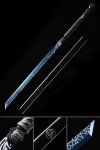 |
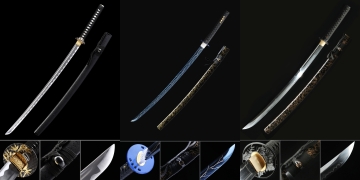
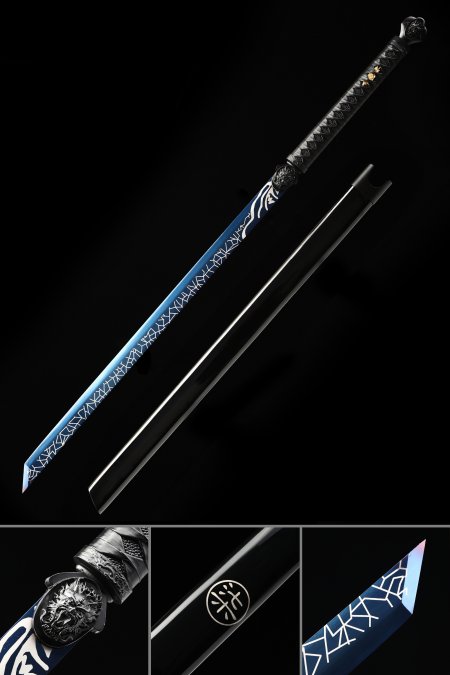
Blue Blade Manganese Steel Ninjato Sword Full Tang with Black Leather Handle and Dragon Pommel |
Really love the sword. Better than I expected. Will definitely be a returning customer
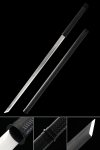 |
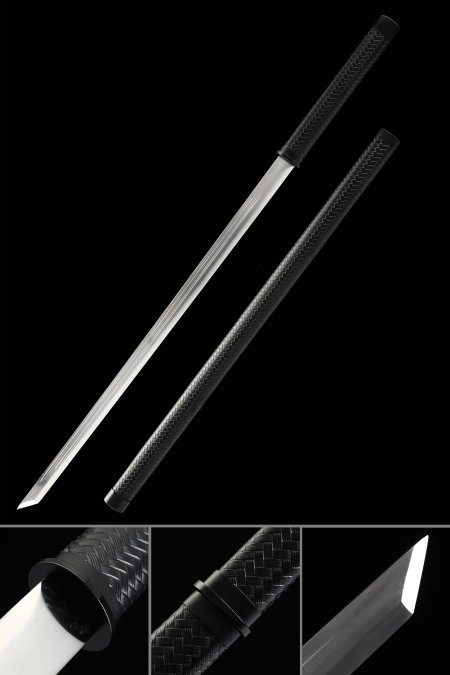
1045 Carbon Steel Ninjato Sword with Black Faux Leather Wrapped Saya in Full Tang Construction |
Received my Shinai in record time, very satisfied with the quality. Will definitely shop there again.
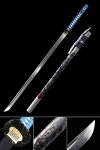 |
T10 Carbon Steel Ninjato with Real Hamon, Blue Ito & Dragon-Engraved Silver Saya |
The quality is superb. I love the sharpness of the blade and it matches the other 2 blade that are almost identical to one another. By far one of the best purchases i made thus far when it comes to collecting blades.
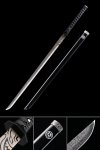 |
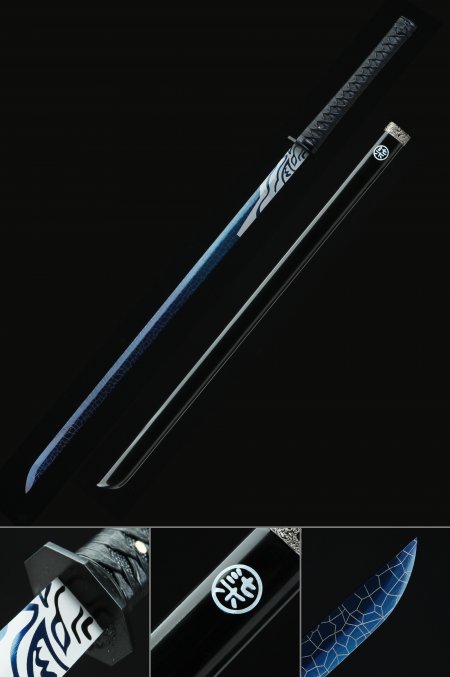
Kokushibo Ninjato in Manganese Steel with Crackle Hamon, Black Lacquer Saya & Dragon Kojiri |
This is an awesome purchase , I would have given it 5 stars but by the time the sword got to me the little bit of glue that they used for both end caps came loose and I had to re-hot glue them back on . Not a big deal at all but I absolutely love the sword ! I’ll order from true katana again !!!!
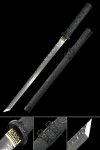 |
Damascus Steel Ninja Sword Full Tang with Dragon-Carved Black PU Leather Saya - Geometric Gold-Black Tsuba |
I love this sword. It's my first one. I wanted a katana ever since I was a kid. I decided on ninjatu on my first order and plan to get few more in different designs and some actual katanas. I highly recommend TurKatana.com for good quality swords.
|
Blue Blade Manganese Steel Ninjato Sword Full Tang with Black Leather Handle and Dragon Pommel |
I really love the sword and the speediness of the delivery, but blade could be sharper. But otherwise I love it
|
1045 Carbon Steel Ninjato Sword with Black Faux Leather Wrapped Saya in Full Tang Construction |
A lot more heft than I thought. But great for training, and it’s beautiful.
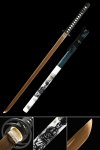 |
1095 Carbon Steel Ninja Sword with Gold Blade - Teal-White Painted Saya, Black Ito |