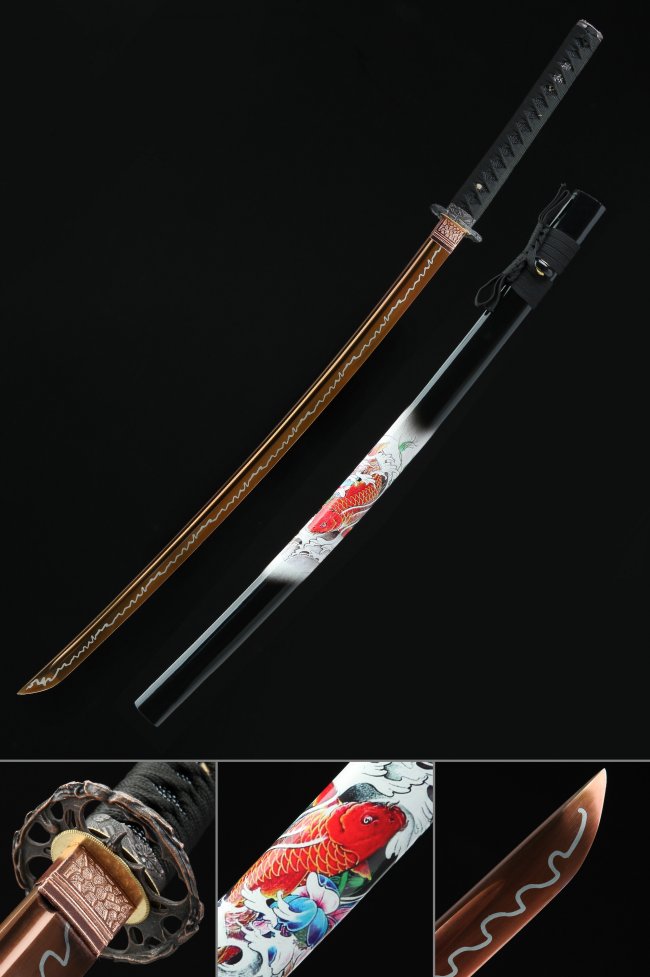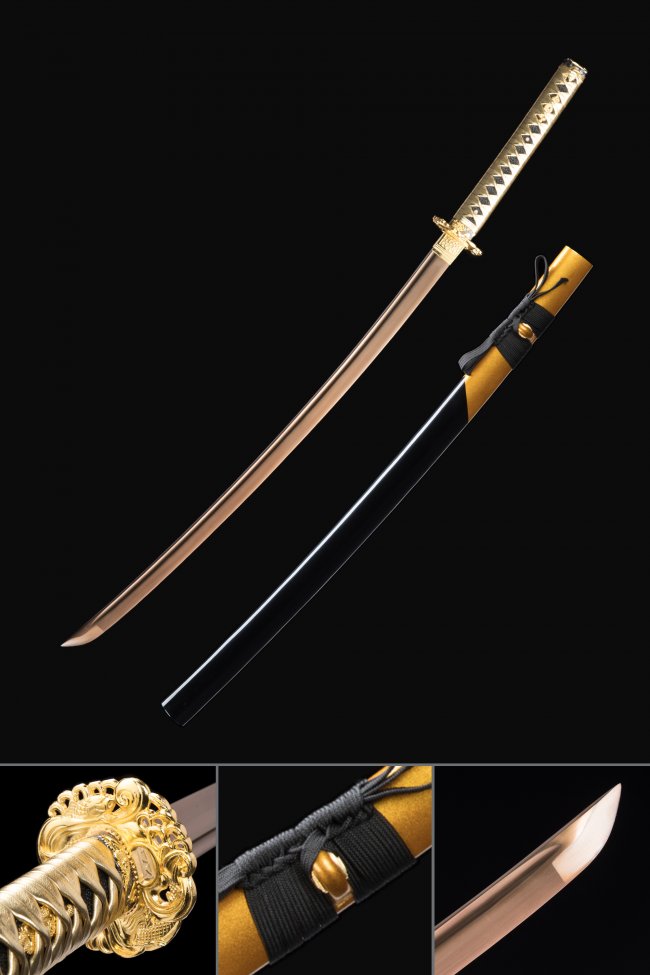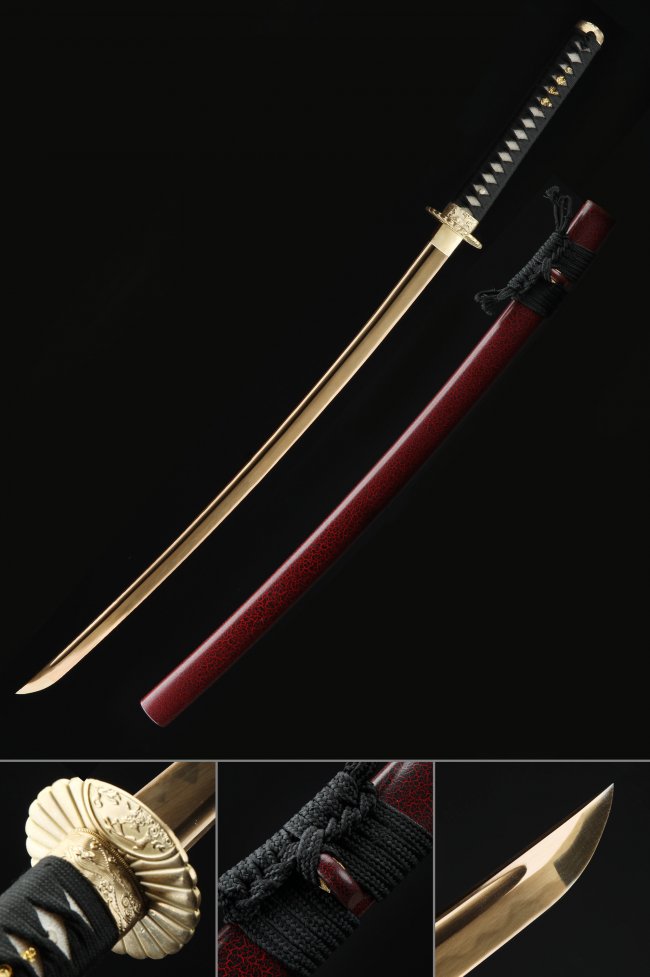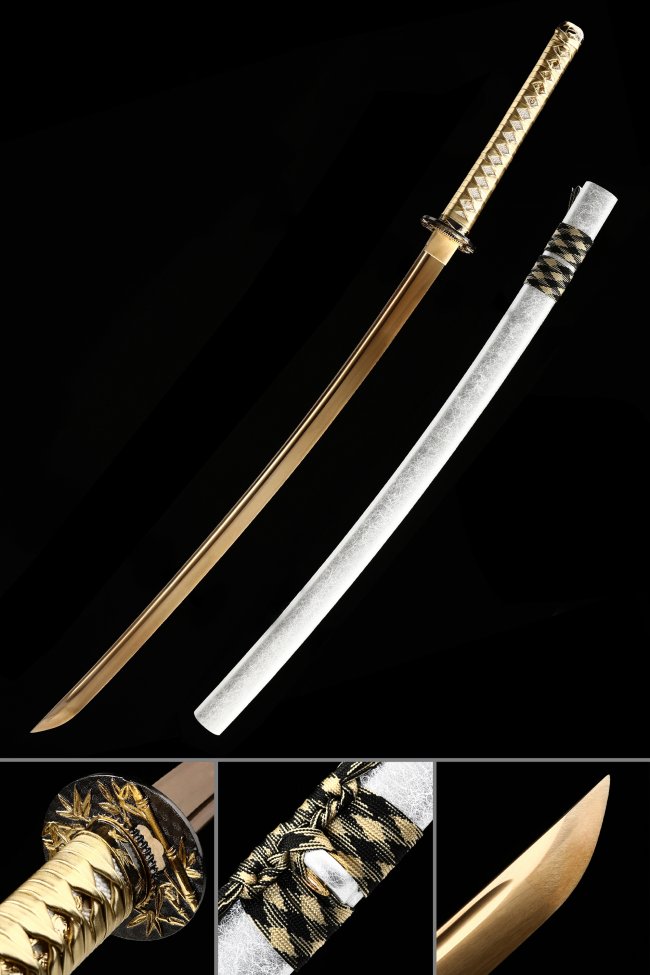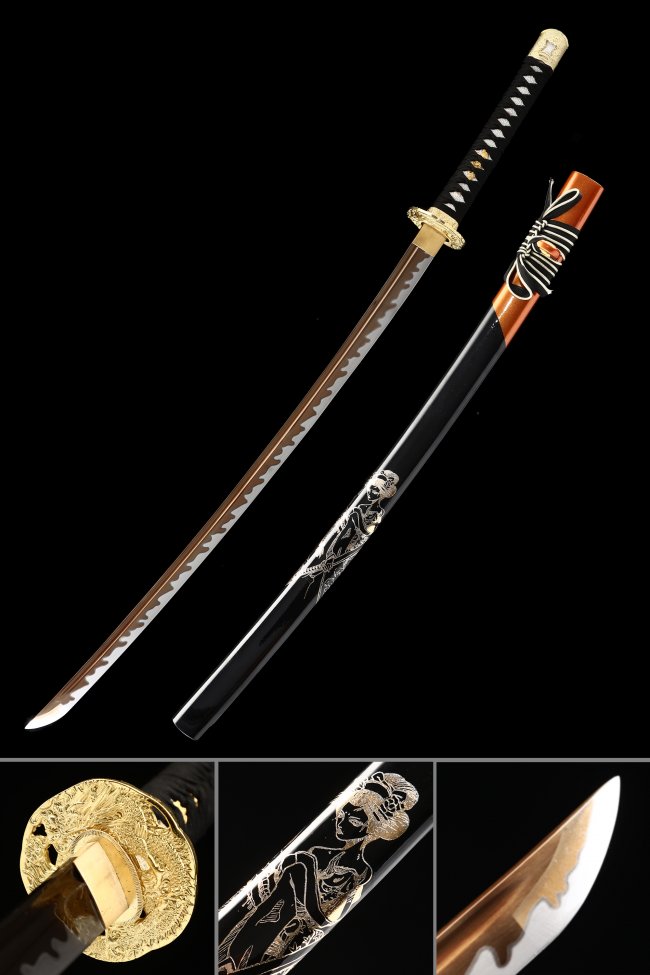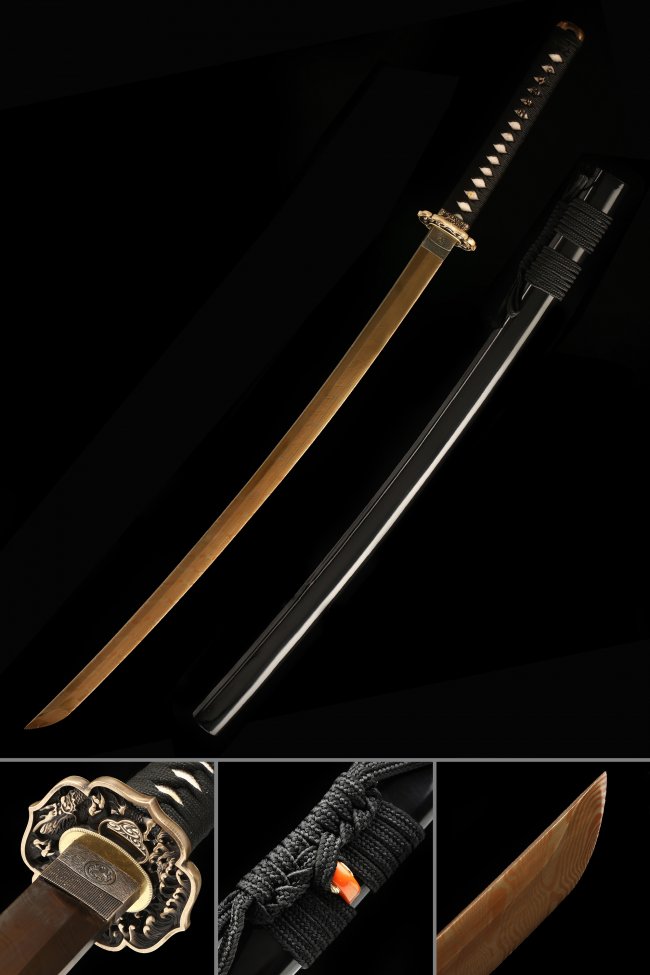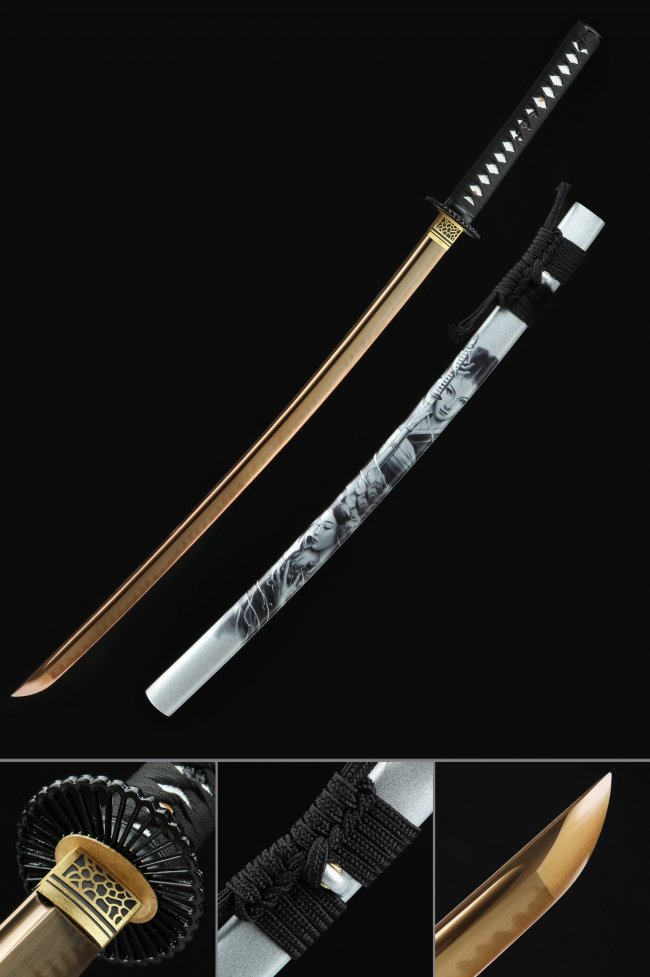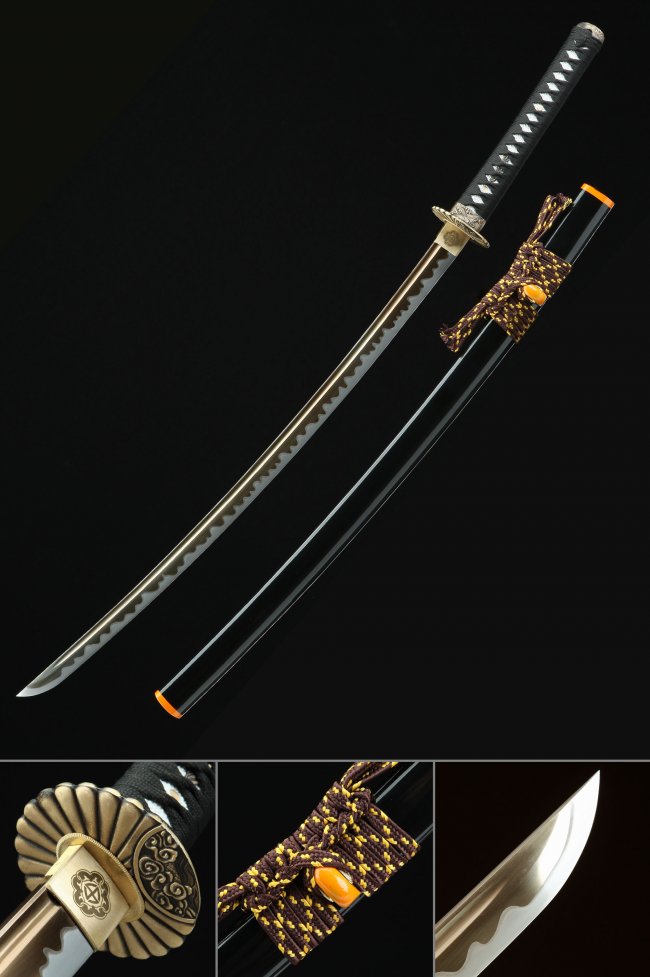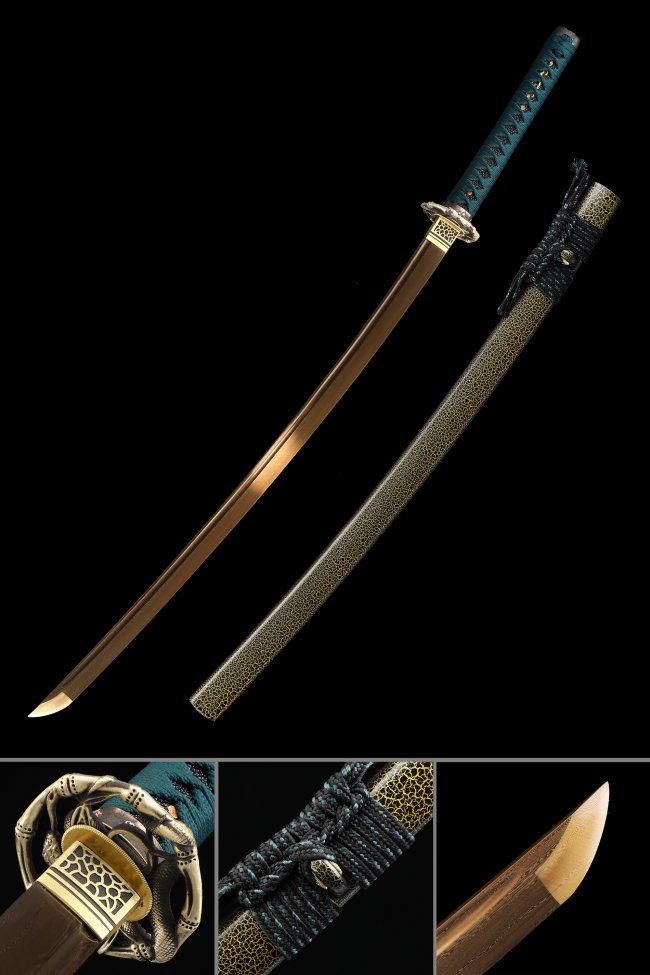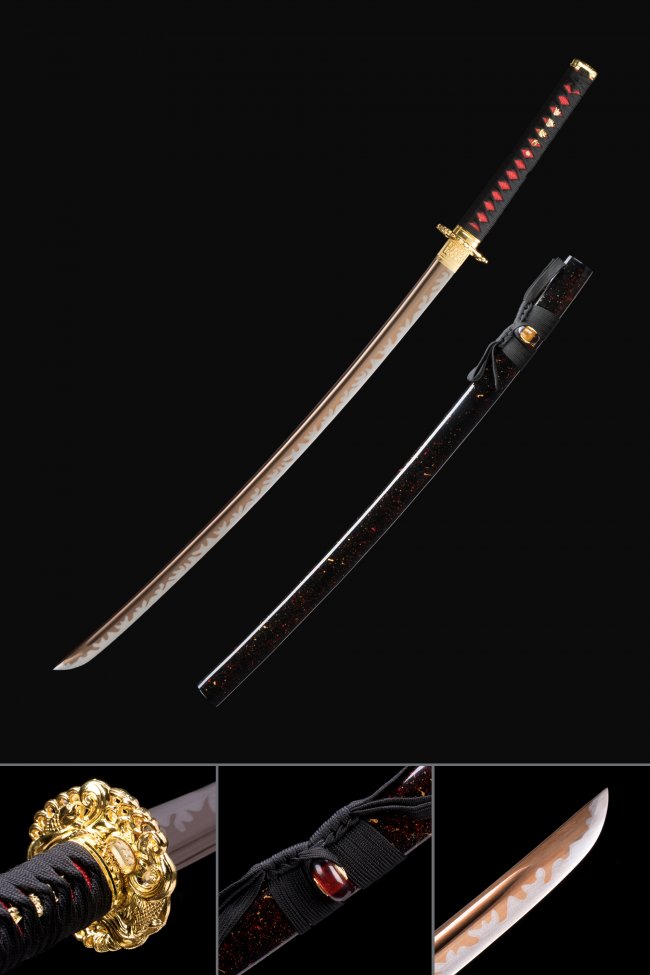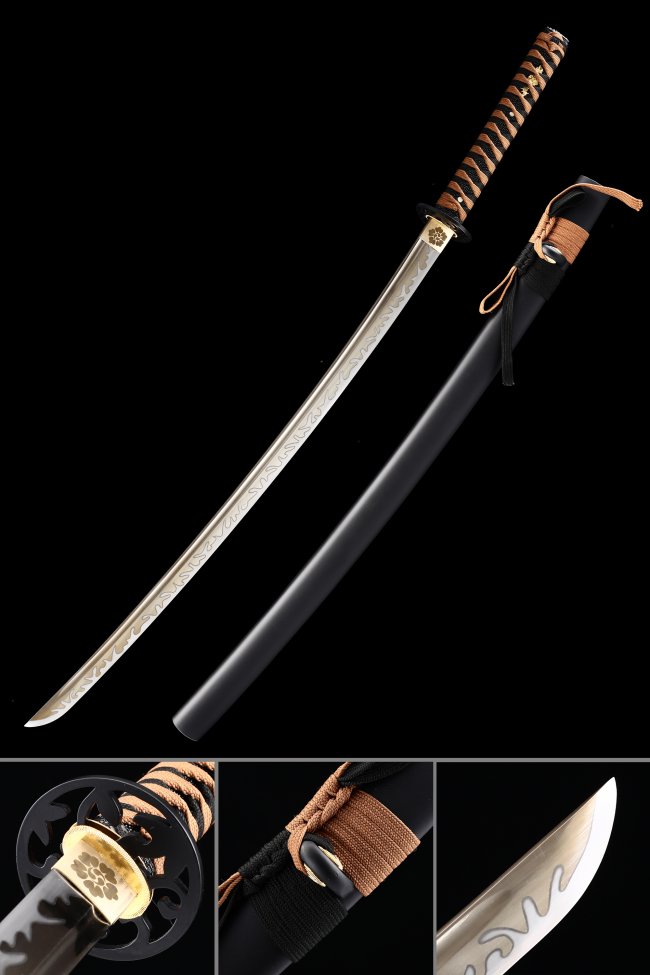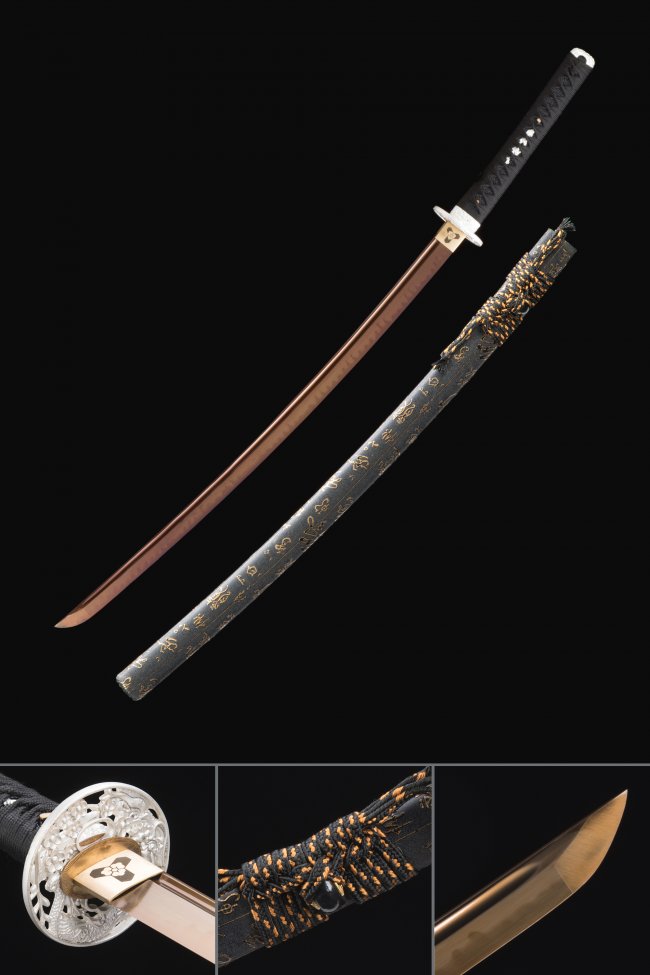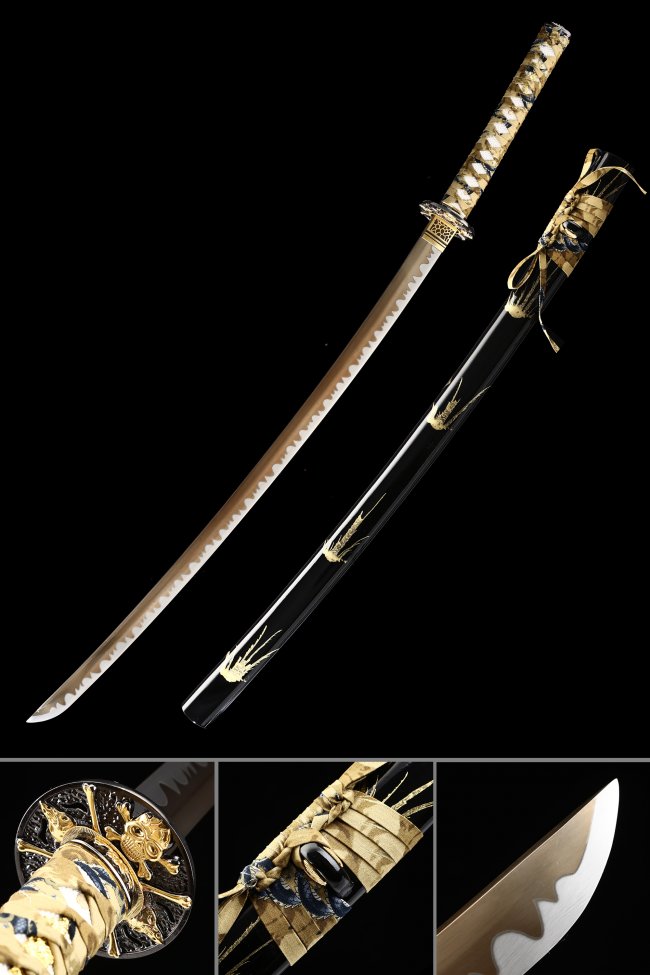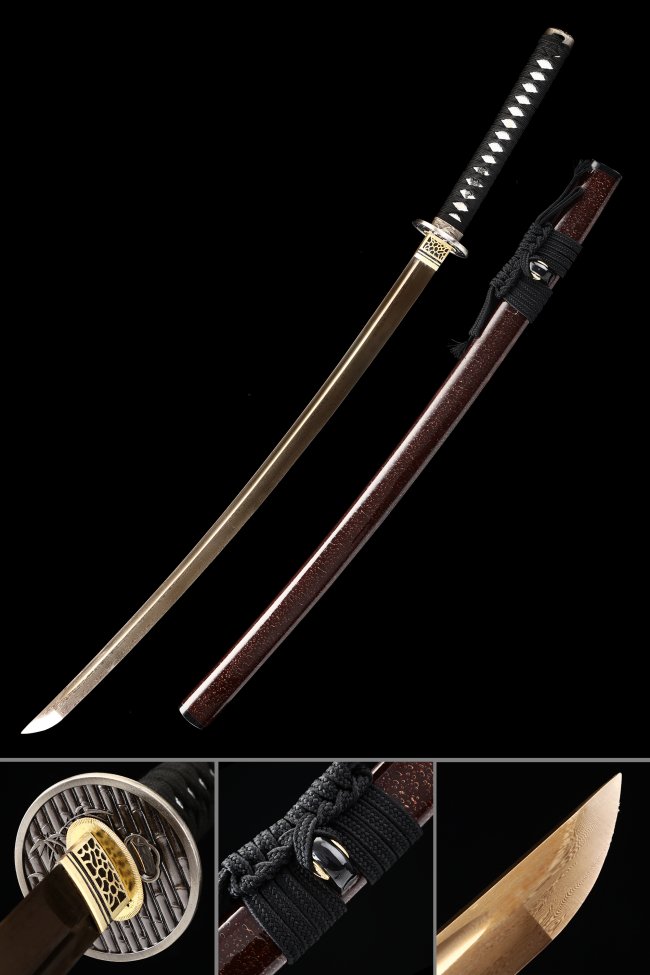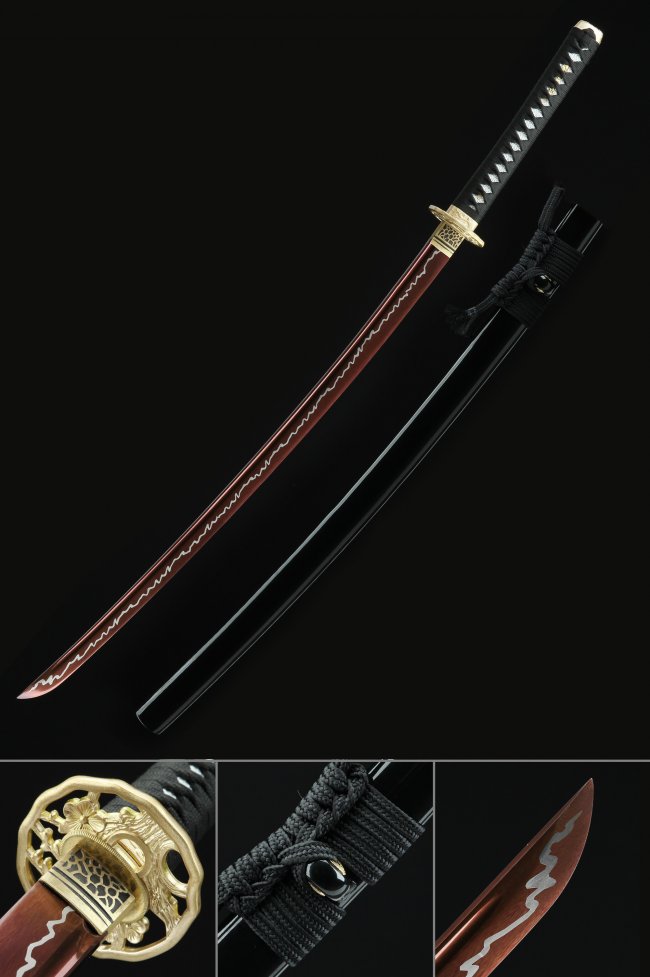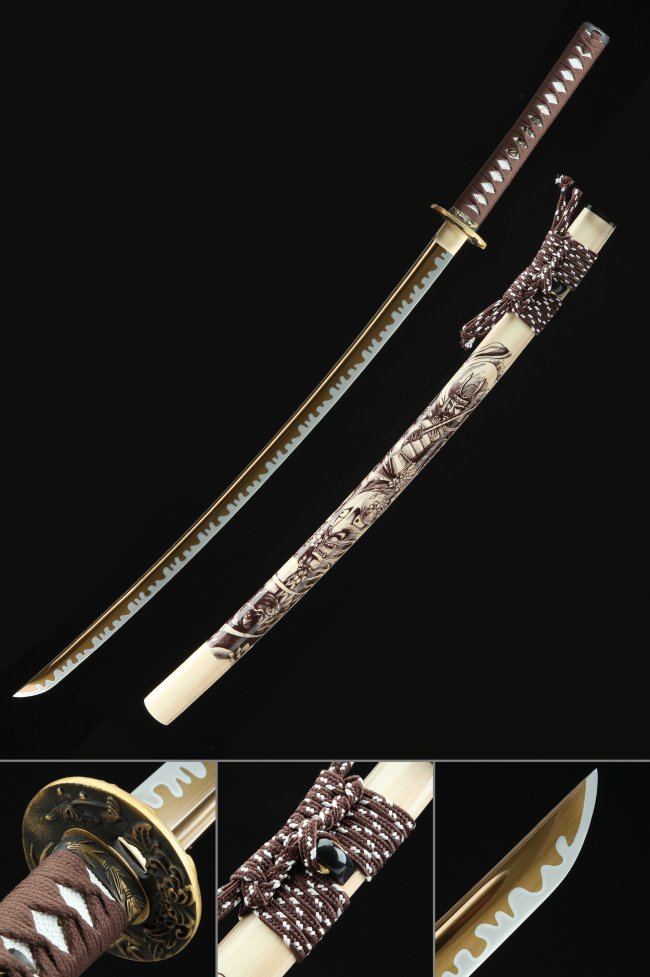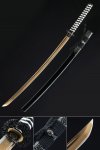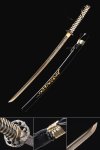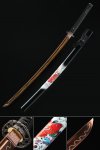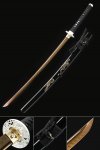
Gold Blade Katana

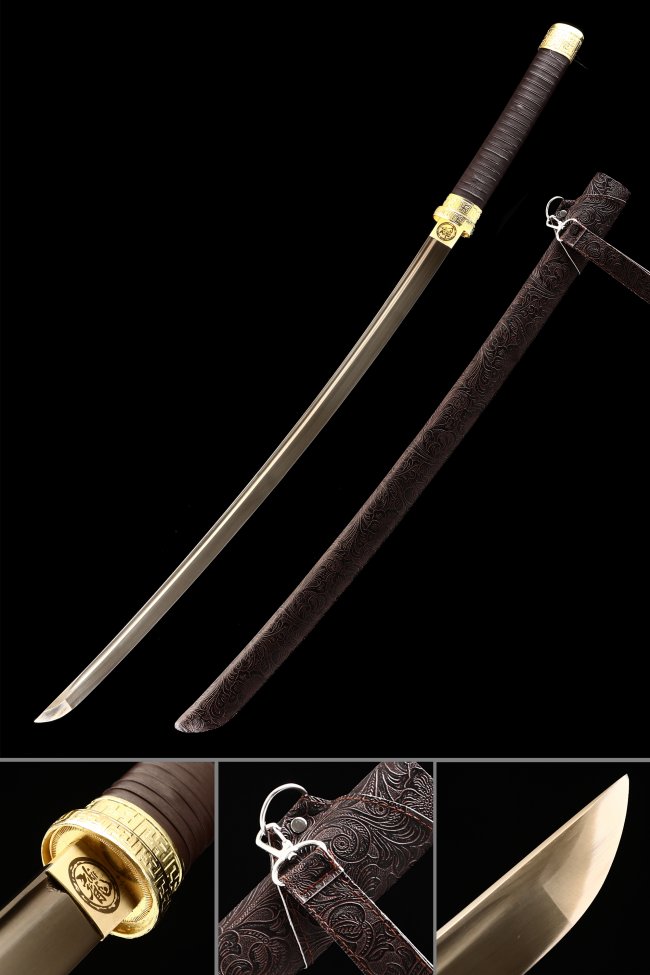
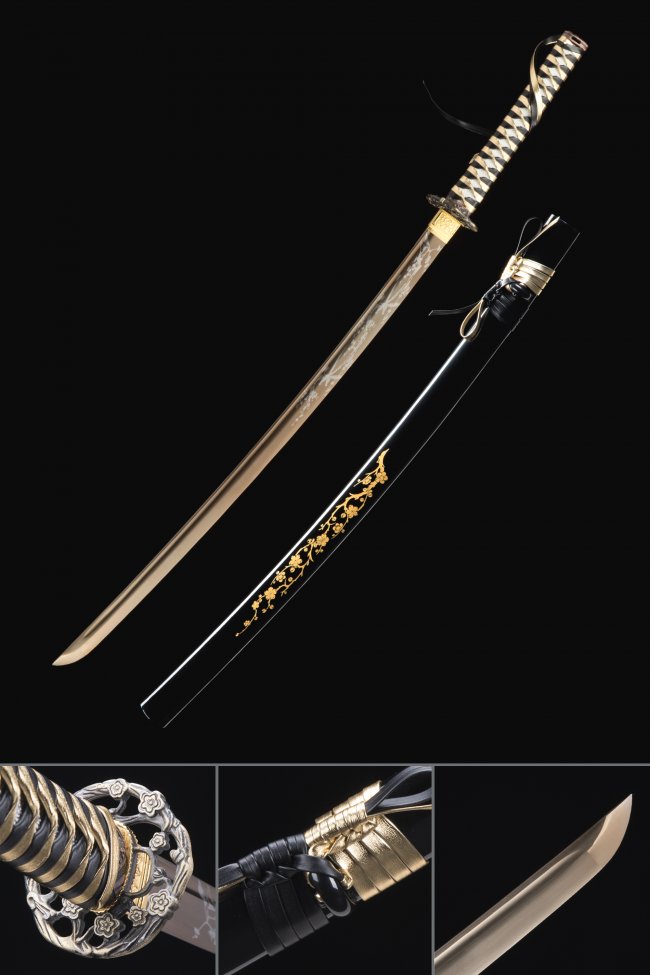
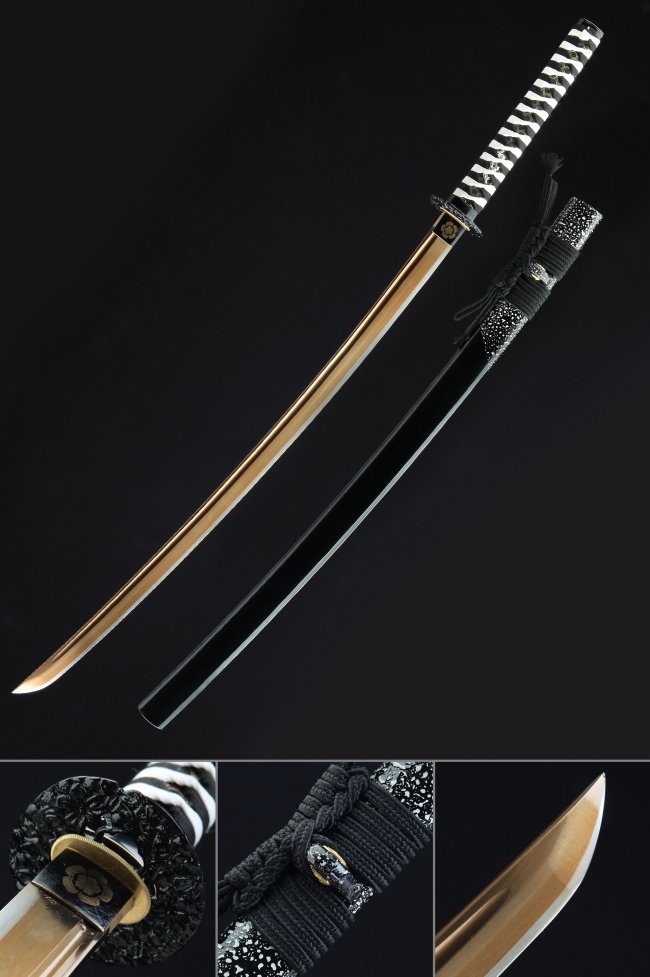
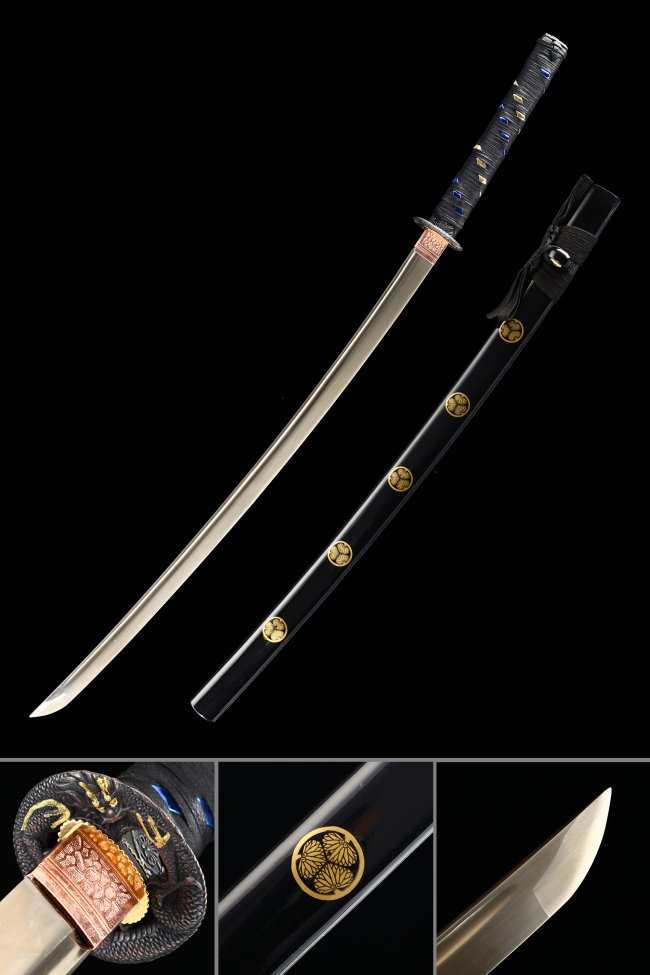
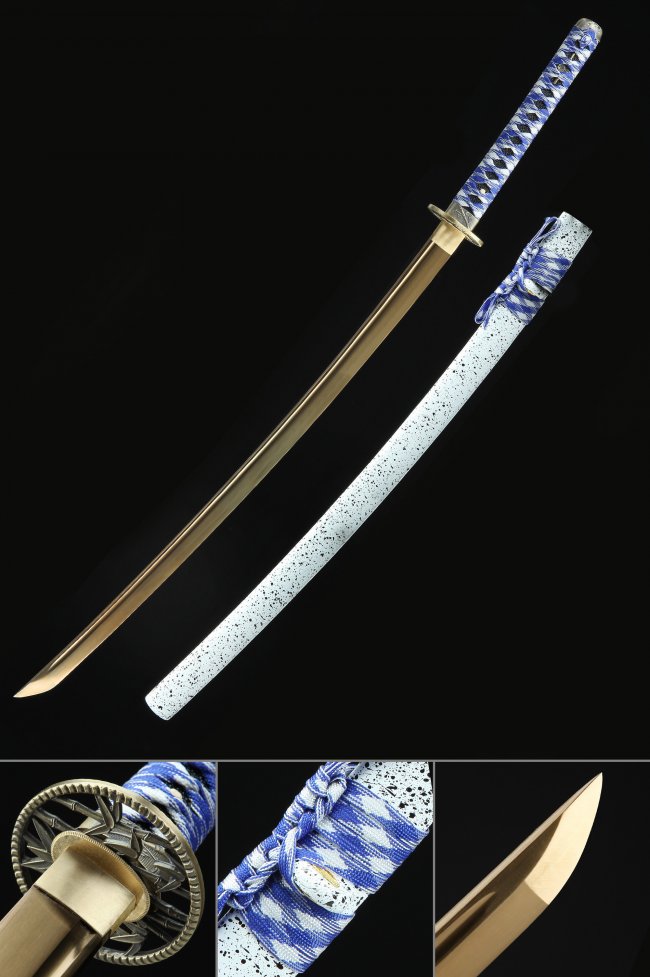
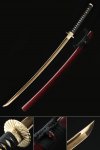
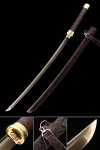
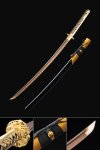
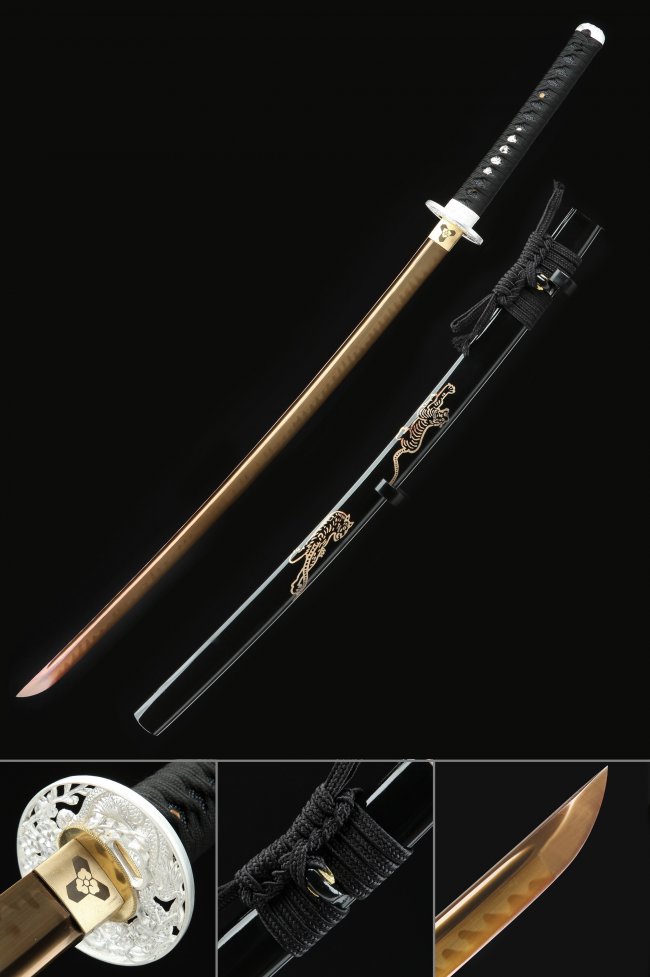
Gold blade katana in this collection are hand-forged from T10 clay-tempered, 1060, and 1045 carbon steels, with a golden blade finish that makes each sword a standout display piece. The gold treatment is applied after full heat treatment, preserving the steel's core properties while delivering a warm, bold visual character unlike any conventionally finished katana. All orders ship free with a 30-day return policy.

Showing 22 Products

Related Collections

Gold Dragon Katana2 items


Reviews

Gold Saya Ninjato4 items


5 Reviews

Frequently Asked Questions

What makes a gold blade T10 clay-tempered katana unique compared to other gold swords?
A gold blade T10 clay-tempered katana combines two features that are rarely paired: the genuine hamon of a clay-tempered high-carbon blade and a golden surface finish that makes that hamon significantly more visible. On a standard polished T10 katana, the hamon is visible as a lighter zone along the blade edge when examined under directional light. On a gold-finished T10 blade, the contrast between the hamon activity and the surrounding blade surface is enhanced by the warm golden background, making the temper line easier to see and more visually interesting even under ordinary room lighting. The clay tempering process itself is unchanged - the blade is still differentially hardened using the traditional clay coat and water quench, producing a genuinely harder edge zone and a flexible spine. The gold finish is applied after this process is complete. The result is a sword that offers both the aesthetic impact of a gold blade and the technical credibility of a properly clay-tempered T10 piece.
How does 1060 carbon steel compare to T10 in a gold blade katana?
The difference between 1060 and T10 in a gold blade katana comes down to the type of steel and how it is processed. 1060 is a standard high-carbon steel with approximately 0.60% carbon content. It is tough, reliable, and responds well to heat treatment, producing a blade with solid hardness and good toughness - qualities that suit a display katana intended for careful handling. T10 is a higher-carbon tool steel with a small tungsten addition that improves wear resistance and allows it to reach higher hardness during quenching. T10 katana are typically clay-tempered, which means they have a genuine hamon and a differential hardness profile that 1060 swords do not replicate unless they are also clay-tempered. For a gold blade katana, the 1060 version offers dependable construction and a clean presentation. The T10 version adds the visible hamon as an additional layer of visual and technical interest. Both are well-made pieces; the T10 is the more technically ambitious of the two.
Does the gold finish affect the visibility of the hamon on a clay-tempered blade?
The gold finish affects the visibility of the hamon in an interesting way - it typically makes the temper line more rather than less visible. On a standard polished blade, the hamon is visible primarily as a contrast between the harder, lighter edge zone and the softer, slightly darker spine area. This contrast can be subtle on a highly polished blade and may require specific lighting angles to see clearly. On a gold-finished blade, the overall surface coloration changes the baseline against which the hamon is read. The hamon activity - nie, nioi, and the undulating boundary line - still reflects light differently than the surrounding steel, but the golden background gives it a different visual quality that many collectors find more immediately striking. The hamon is not obscured by the finish; it remains visible as a zone of different reflective character within the golden blade surface. Under directional light, it reads as a lighter, more active line against the warm gold of the broader blade.
What fittings come standard on the gold blade katana in this collection?
The gold blade katana in this collection come with fittings matched to the golden blade presentation. The tsuba varies by model - gold-toned tsuba and dragon-themed tsuba are the primary options, both selected to complement rather than contrast with the gold blade. The habaki, the blade collar that seats between blade and tsuba, is fitted to the individual blade for a secure seat. The fuchi and kashira, the collar and cap fittings at the handle ends, are finished to coordinate with the tsuba and overall color scheme. The tsuka is wrapped in ito over a ray skin base using the traditional diamond wrap pattern, with wrap color chosen to work with the gold blade and tsuba. The wooden saya is finished in a complementary tone - typically black, dark brown, or a warm color - and fitted precisely to the individual blade for smooth, controlled drawing. All fittings are individually assembled to each sword rather than using generic components, which is what gives the finished piece its coherent, intentional appearance.

Customer Reviews