What makes a tachi different from a katana in design?
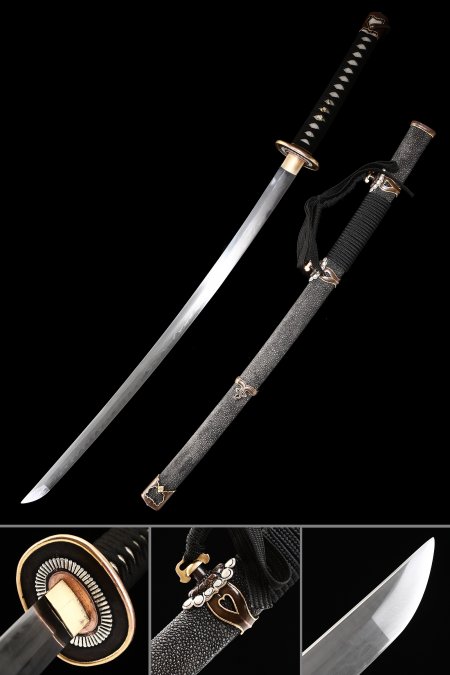
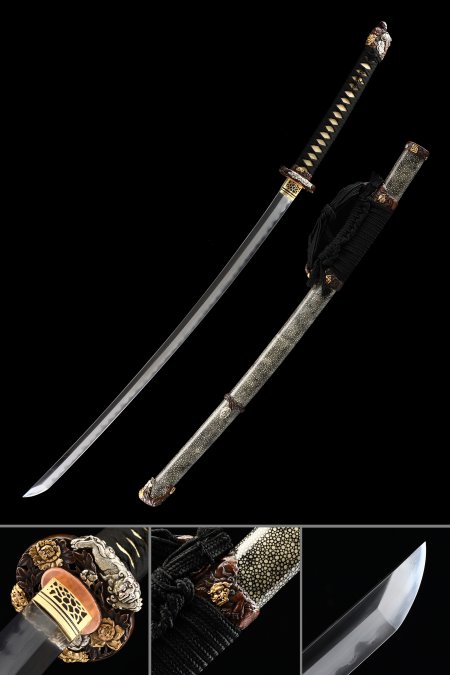
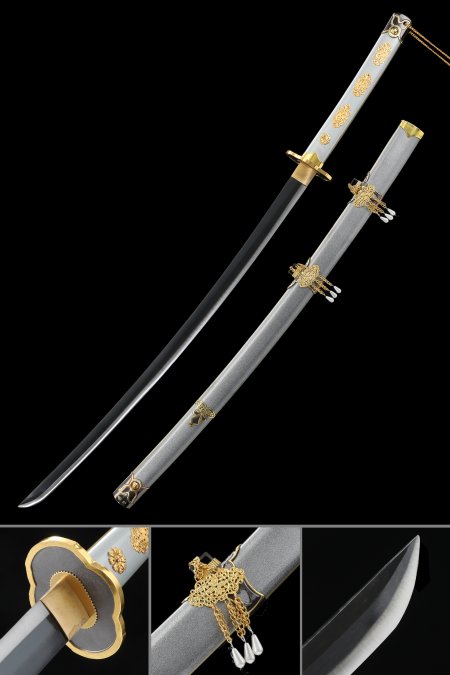
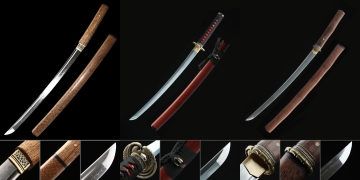
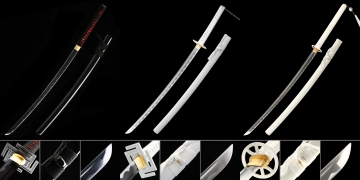
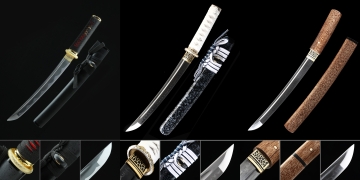
The most immediate difference is how each sword was historically carried. A tachi hangs edge-down from cords attached to the saya, while a katana is thrust edge-up through the obi sash. This distinction drives several design choices: tachi blades typically exhibit deeper sori (curvature) to facilitate a downward draw, and the tang (nakago) is signed on the opposite side compared to a katana. Tachi also tend to feature a longer overall blade length and a more pronounced taper toward the kissaki. On a gray tachi, these proportions are easy to appreciate because the muted finish draws attention to the blade's geometry rather than surface ornamentation.
Why is clay tempering important on a T10 steel tachi?
Clay tempering, or tsuchioki, is the traditional technique of applying a clay mixture along the spine and sides of the blade before quenching. The insulated areas cool more slowly and develop a softer, more resilient pearlite grain structure, while the exposed edge cools rapidly into hard martensite. On T10 tool steel — which contains roughly 0.95–1.04% carbon plus a small tungsten addition for wear resistance — this process yields a genuine hamon visible along the blade. The practical result is a blade with a hard edge capable of holding a fine line and a tough spine that absorbs stress without cracking, a balance that has defined quality Japanese swords for centuries.
How should I maintain a gray rayskin saya?
Gray rayskin (samegawa) is naturally durable because it consists of calcified nodules embedded in shark or ray skin, but it benefits from occasional care. Wipe the saya with a soft, dry microfiber cloth after handling to remove oils and moisture. If dust accumulates in the textured surface, use a very soft brush — a clean makeup brush works well — to sweep it away. Avoid silicone-based polishes or solvents, as they can discolor the gray finish over time. Store the saya in a climate-controlled environment with moderate humidity (around 45–55%) and keep it out of direct sunlight to prevent fading. A light application of Renaissance wax once or twice a year adds an invisible protective layer without altering the matte appearance.
Is a gray tachi a good gift for a sword collector?
A gray tachi makes an excellent gift precisely because of its versatility. The neutral palette fits virtually any display setting, from a traditional tokonoma alcove to a contemporary living room shelf. Unlike highly themed replicas tied to a specific character or era, a gray-toned tachi has broad appeal across collector tastes. If the recipient already owns darker-finished swords, a gray piece provides welcome visual contrast. For someone just beginning a collection, it serves as a sophisticated foundation piece. Pairing it with a wooden display stand and a bottle of choji oil for maintenance makes the gift feel thoughtful and complete.
What copper tsuba designs appear on these gray tachi swords?
Our gray tachi collection features hand-finished copper tsuba with motifs drawn from classical Japanese decorative arts. One prominent design is the peony blossom, a symbol of prosperity and elegance that has adorned sword fittings since the Muromachi period. The warm copper tone of the tsuba creates a deliberate contrast against the cool gray of the saya and tsuka wrapping, adding a focal point without overwhelming the sword's restrained aesthetic. Each tsuba is cast and then hand-detailed with chasing and patina work, so subtle variations between individual pieces are normal and actually add to their collectible character.