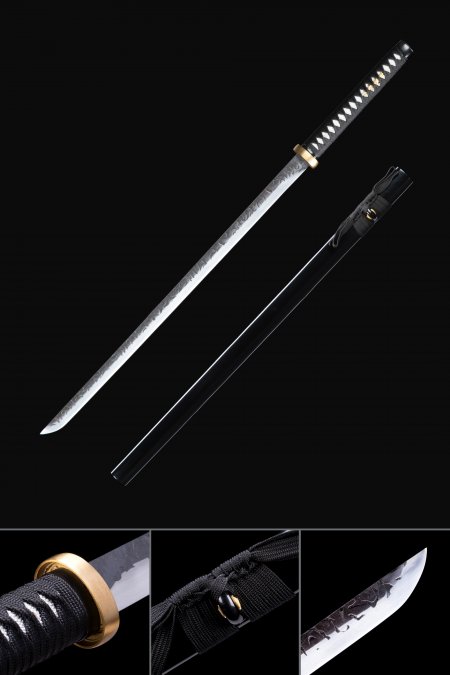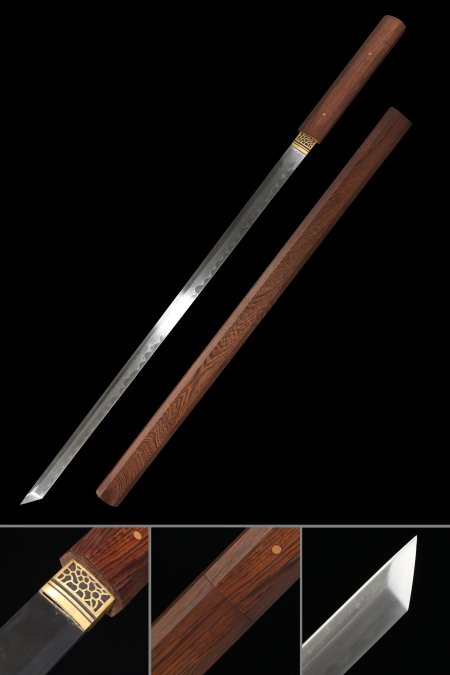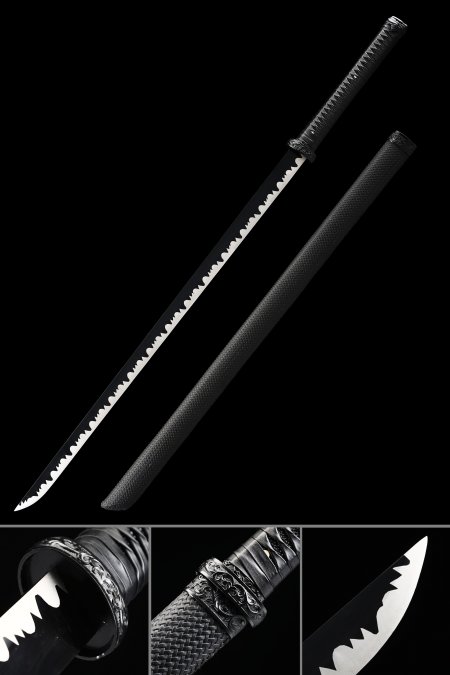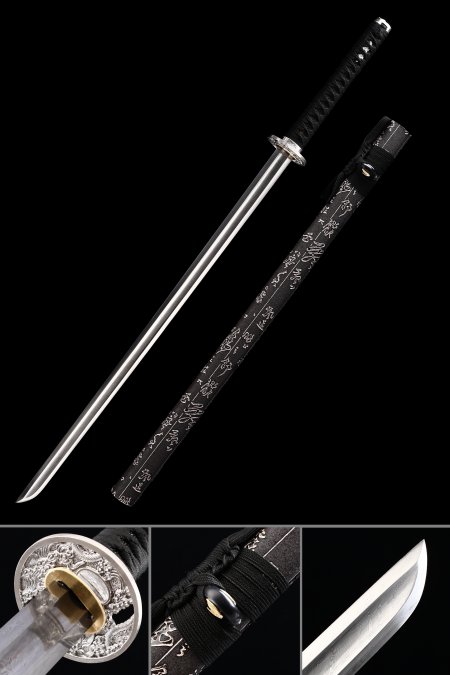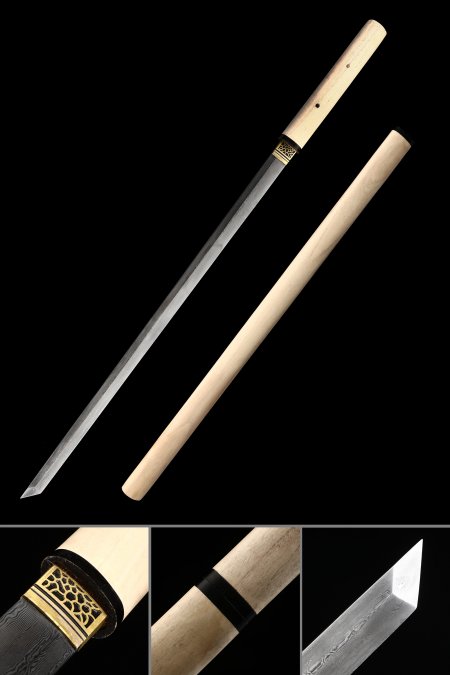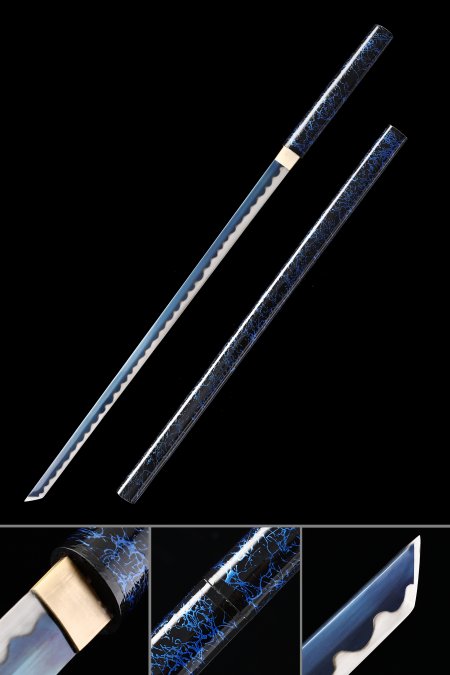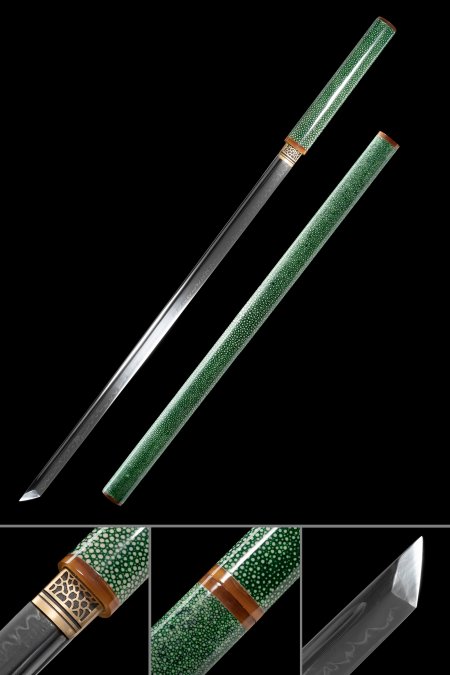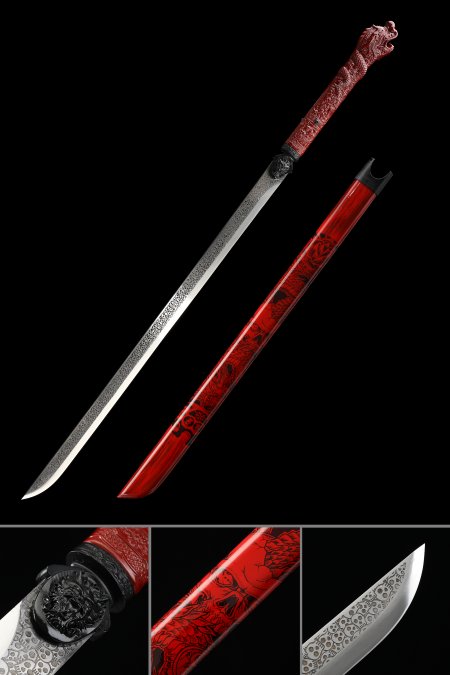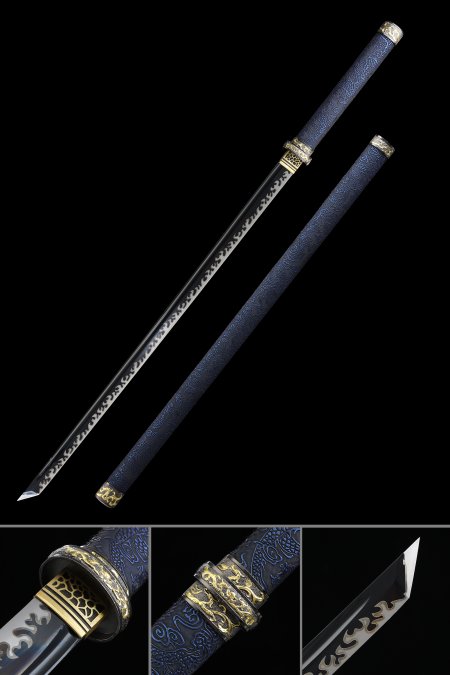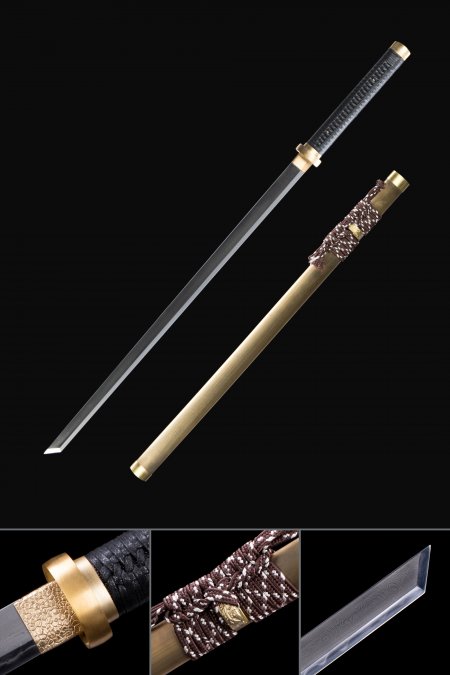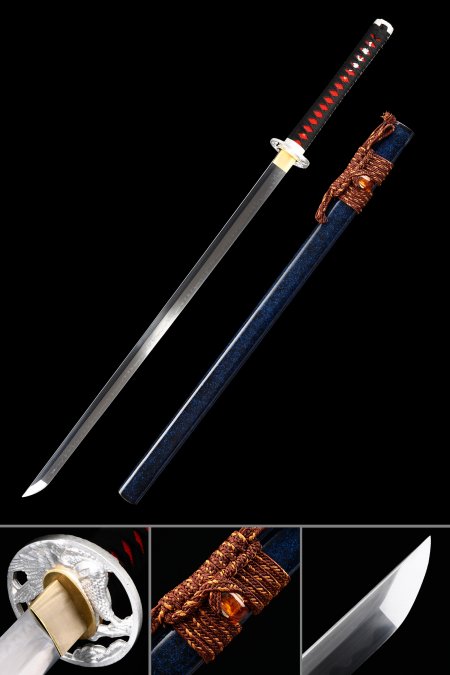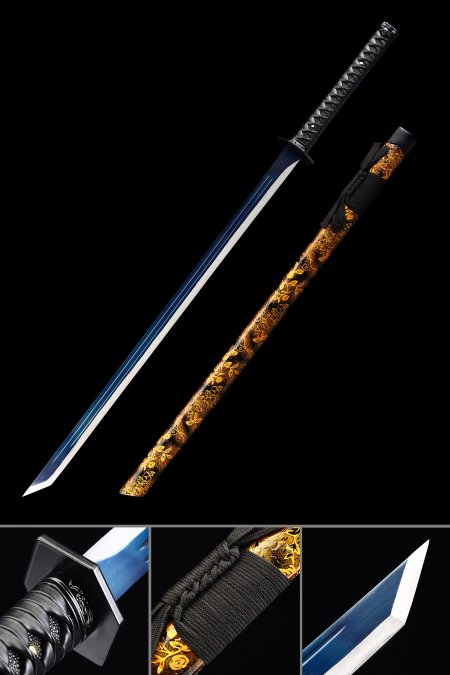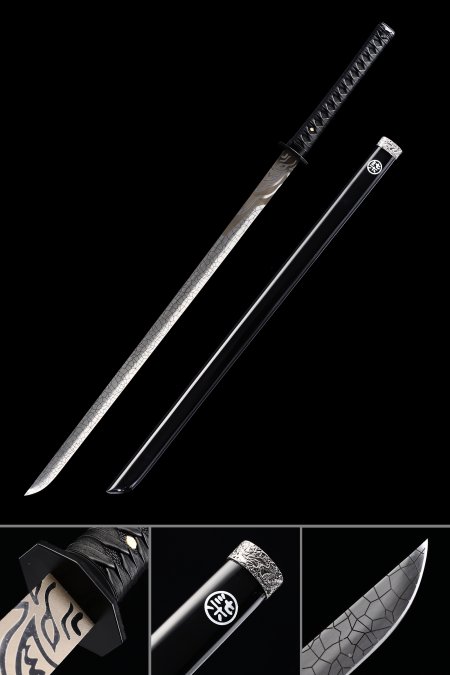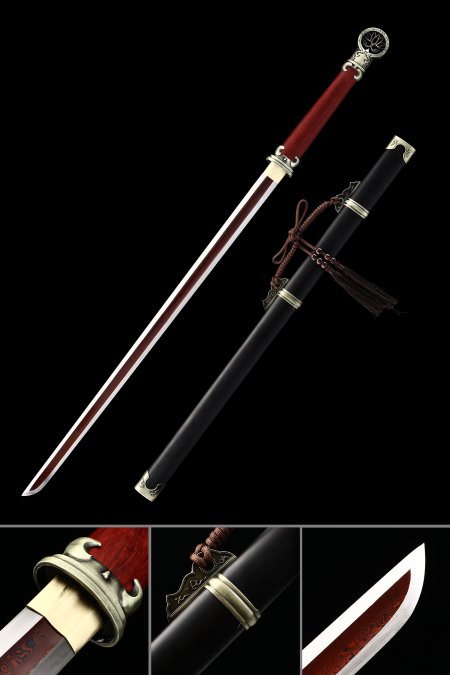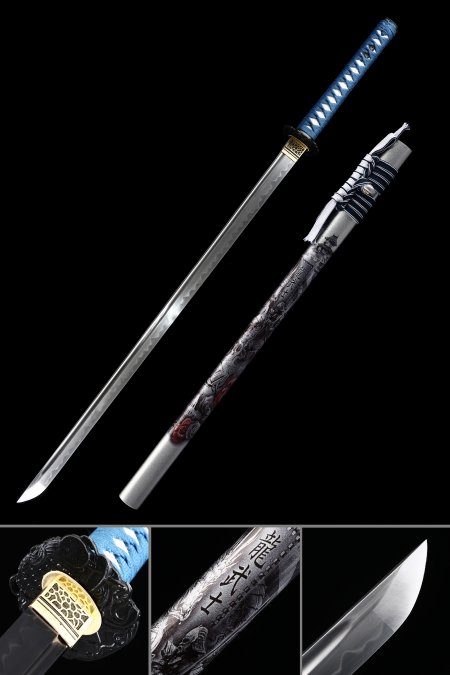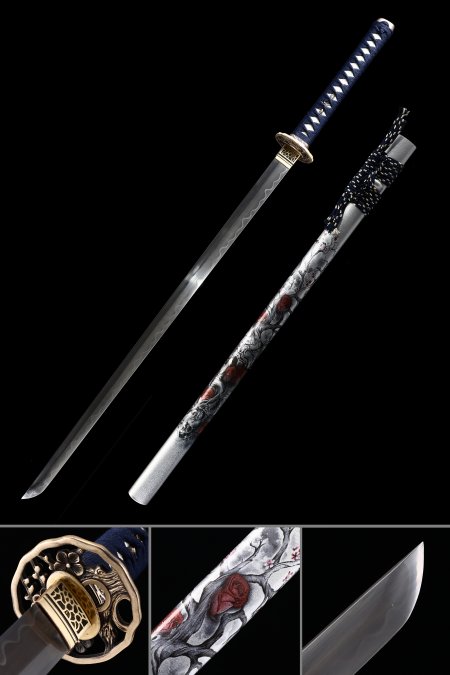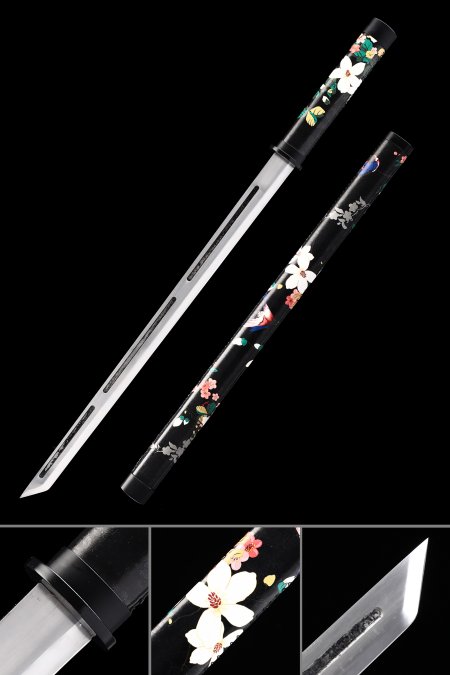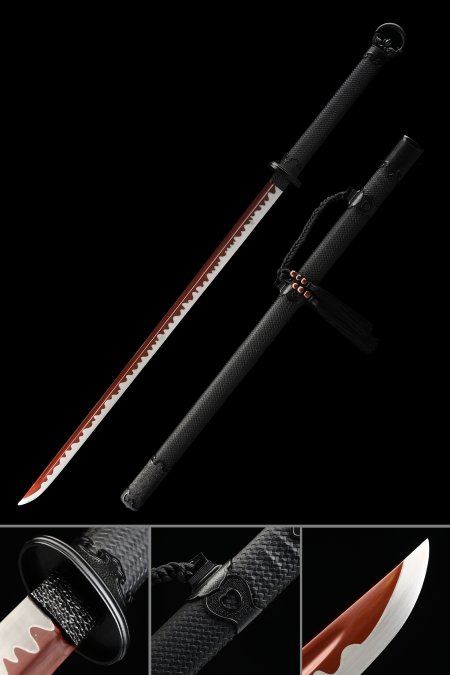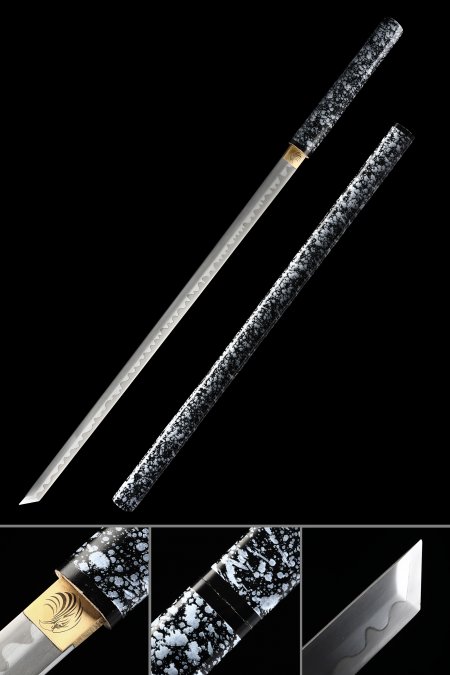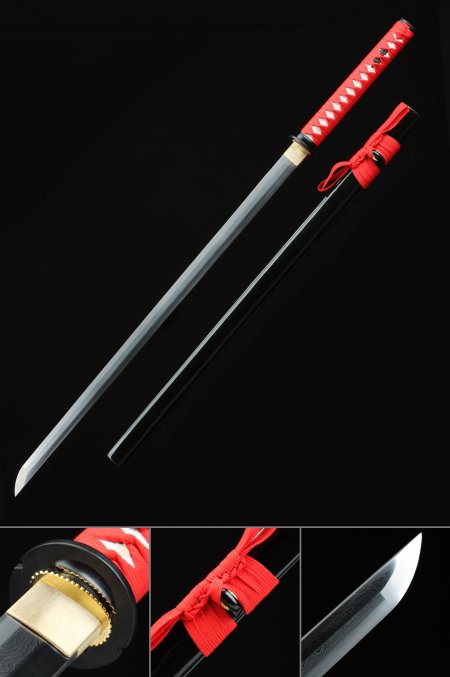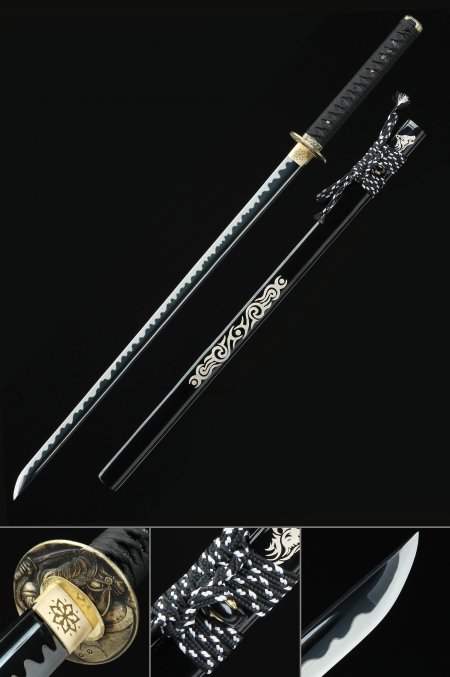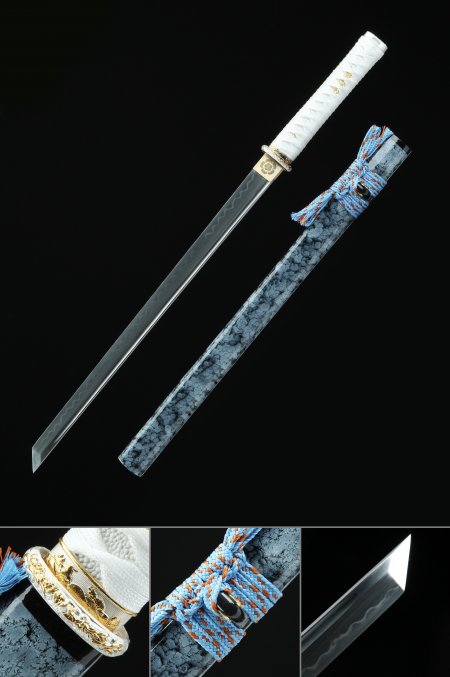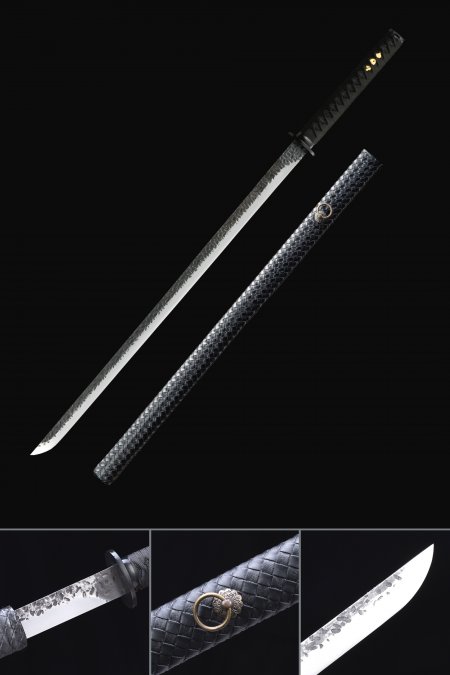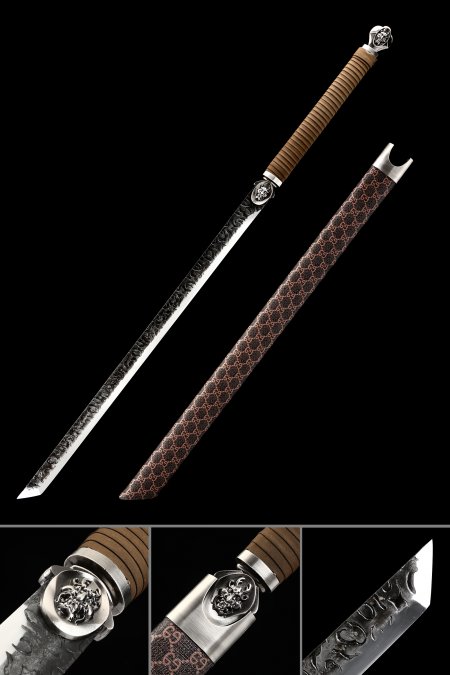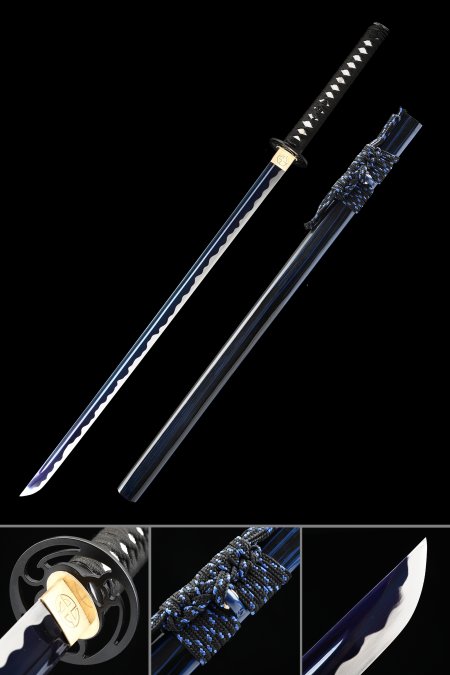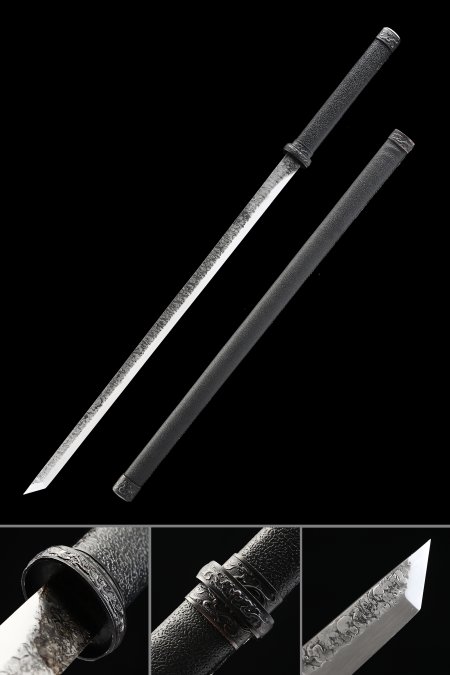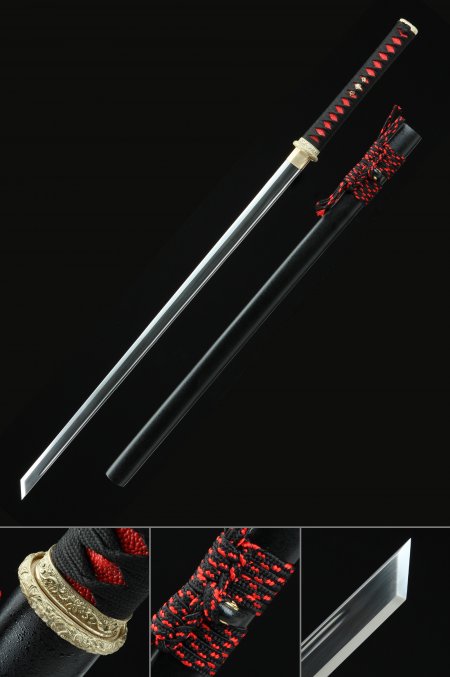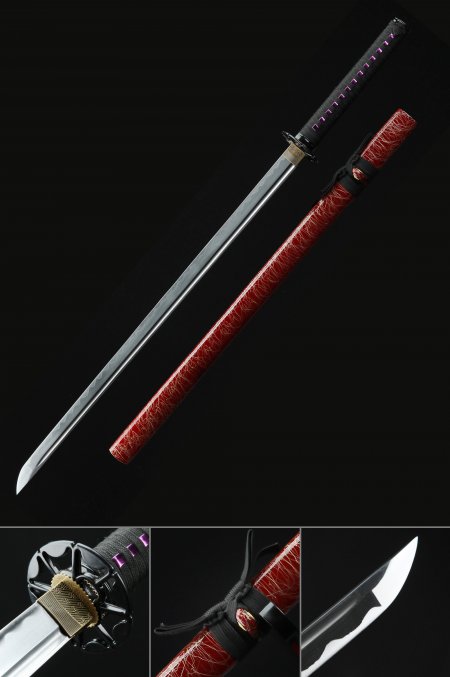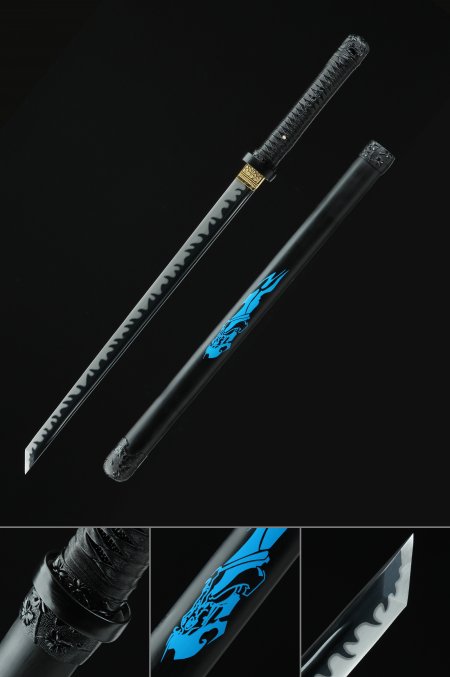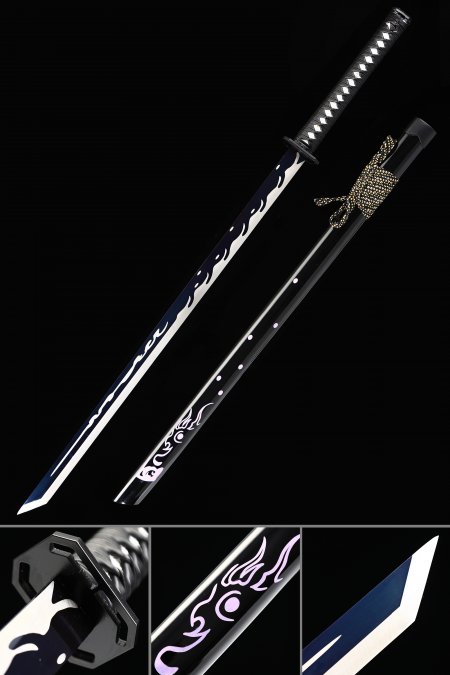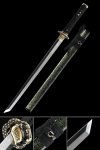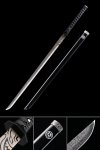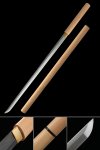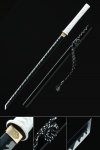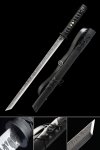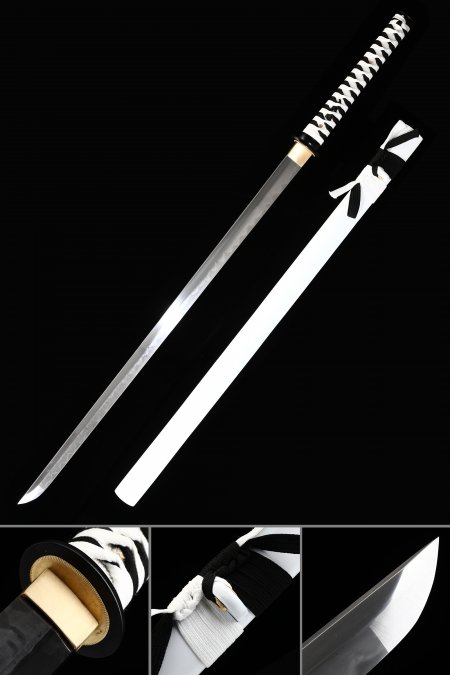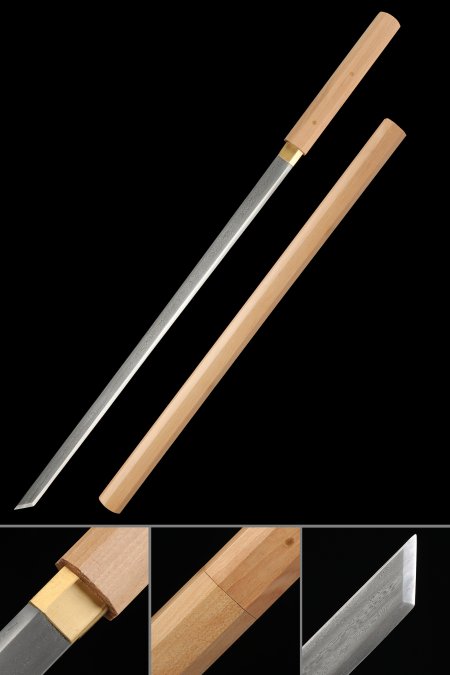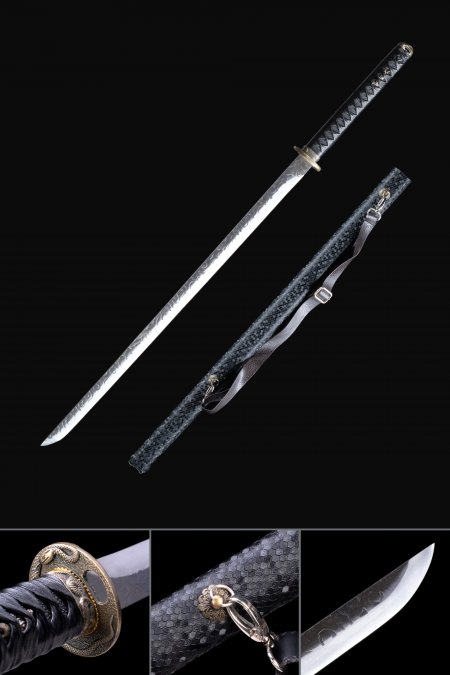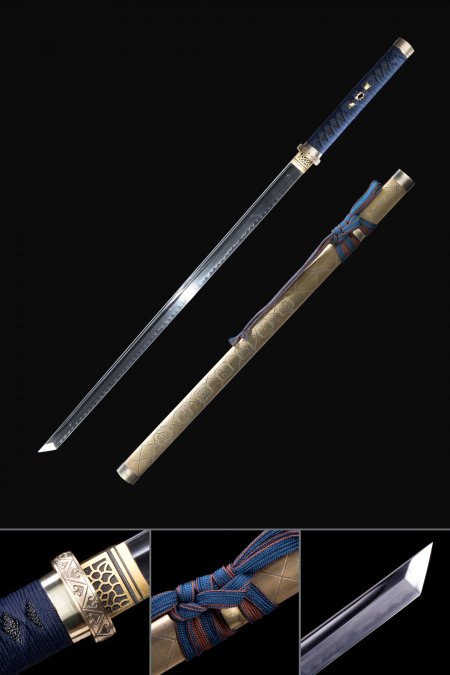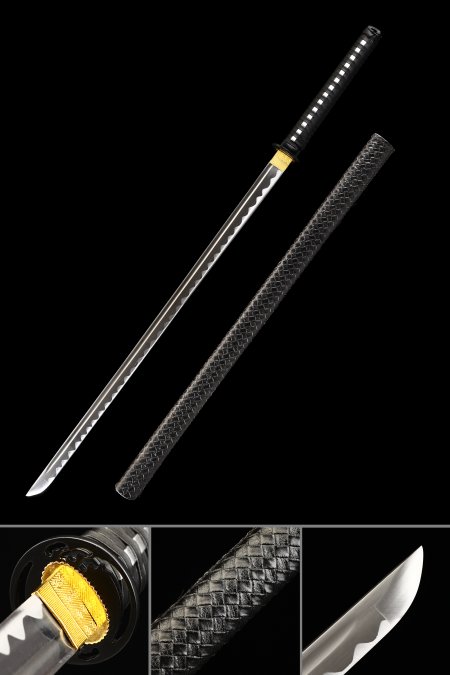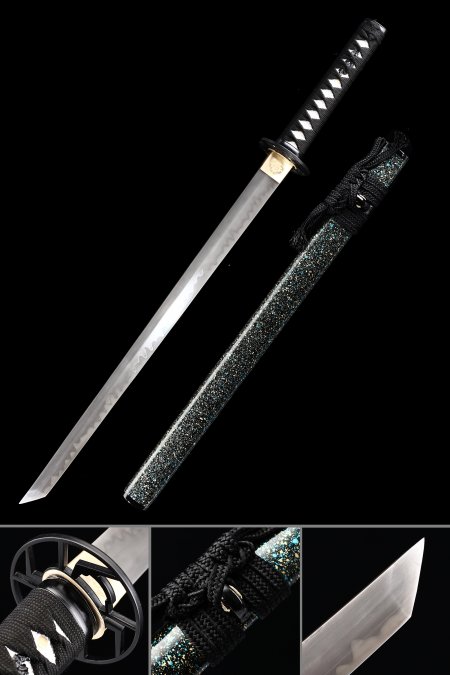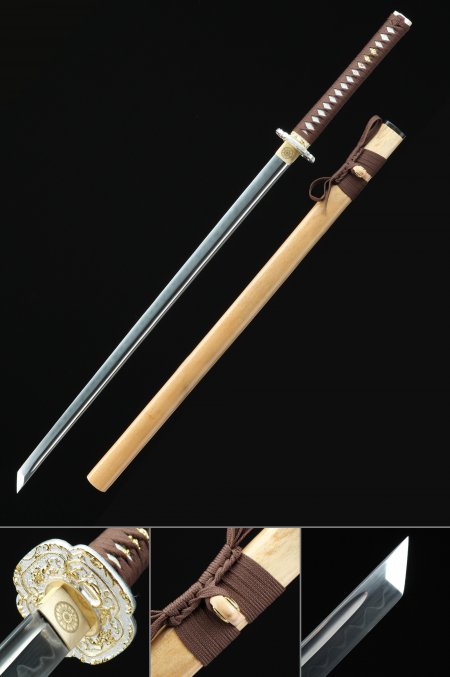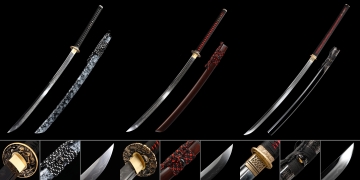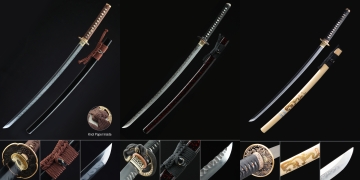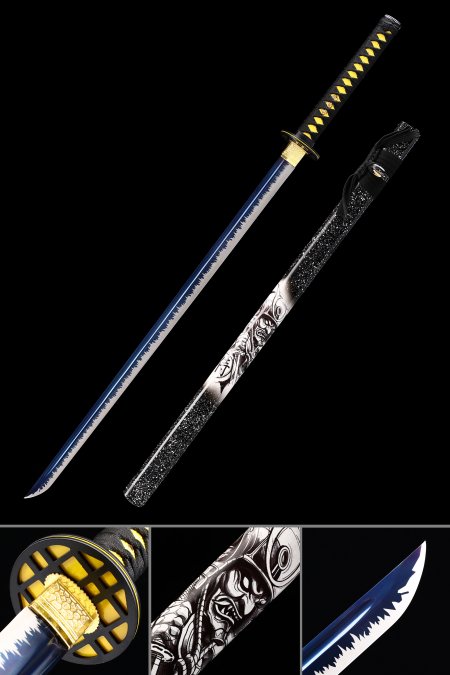
Real Hamon Ninjato

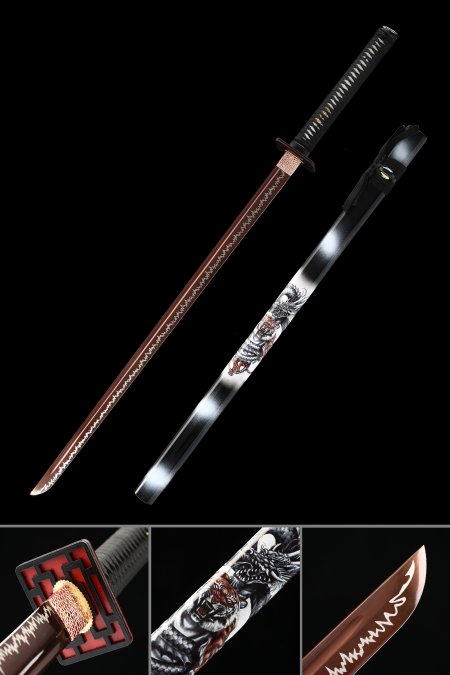
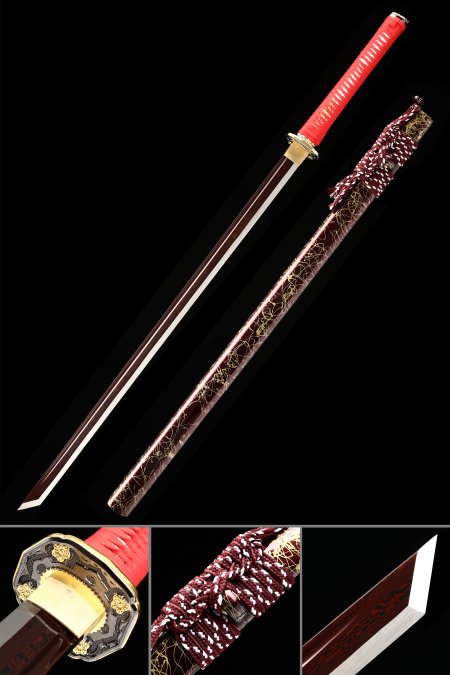
Explore our Real Hamon Ninjato collection — hand-forged straight blades featuring authentic temper lines created through traditional clay tempering. Each piece highlights the distinctive wave pattern along the edge, a hallmark of Japanese differential hardening techniques refined over centuries. Free shipping and free returns on every order.
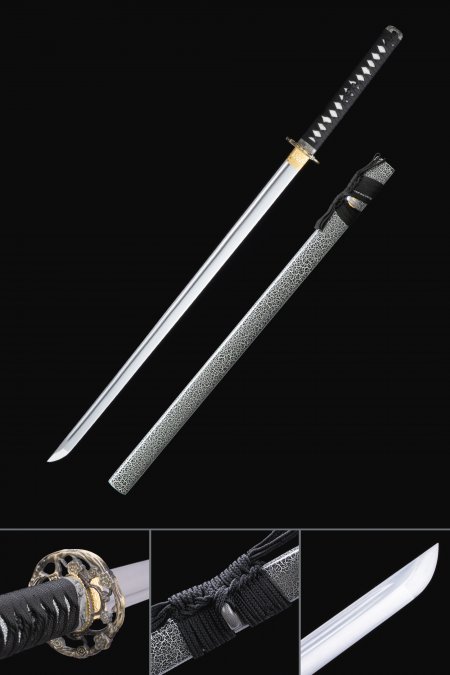
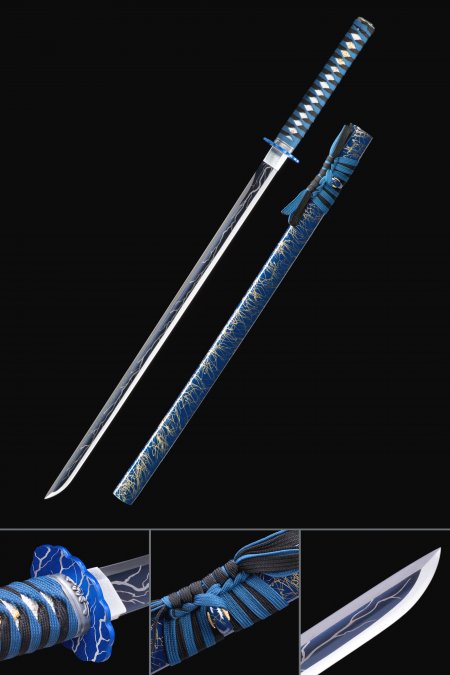
Showing 90 Products

Related Collections

Real Wakizashi40 items


171 Reviews

Real Tanto46 items


213 Reviews

Real Naginata5 items


8 Reviews

Real Handmade Katana114 items


70 Reviews

Frequently Asked Questions

What makes a hamon on a ninjato "real" versus decorative?
A real hamon is a structural feature created during the heat-treatment stage of forging. The smith applies clay of varying thickness along the blade before quenching it in water or oil. Steel beneath the thin clay cools rapidly and transforms into hard martensite, while steel under the thick clay cools slowly and remains as tougher pearlite. The visible line between these two grain structures is the authentic hamon. A decorative hamon, by contrast, is etched or acid-washed onto a uniformly hardened blade after forging. You can distinguish the two by examining the line under magnification: a real hamon displays nioi and nie — tiny crystalline particles that shimmer along the boundary — while an etched line appears flat and uniform. Real hamon blades also exhibit a measurable hardness difference between edge and spine, typically ranging from around HRC 58–60 at the edge down to HRC 38–42 at the spine.
How does T10 steel compare to 1045 for hamon visibility?
T10 tool steel contains roughly 0.95–1.04% carbon plus a small percentage of tungsten, which refines the grain and produces a tight, high-contrast hamon after clay tempering. The temper line on T10 tends to be vivid with well-defined nie particles, making it a favorite among collectors who prioritize visual impact. By comparison, 1045 carbon steel has about 0.45% carbon and no tungsten. It still produces a legitimate hamon through differential hardening, but the lower carbon content means the contrast between the hardened edge and softer spine is less dramatic. The line appears softer and more diffused. For collectors focused on 1045 Steel Ninjato pieces, the appeal often lies in the steel’s greater toughness and the subtle, understated temper pattern it yields.
Why are ninjato blades straight instead of curved?
The ninjato, also called chokuto in its broader historical context, features a straight blade profile rather than the signature curve of the katana or tachi. Historically, straight-bladed swords predate the curved designs that emerged during the late Heian period when mounted cavalry demanded geometry optimized for draw-cuts from horseback. The ninjato’s straight edge is associated with an earlier, simpler forging tradition and with covert operatives who valued compact, utilitarian design over battlefield flourish. From a collecting standpoint, the straight geometry displays the hamon in an uninterrupted line from habaki to kissaki, giving the temper pattern a clean visual runway that curved blades do not offer. It also makes the ninjato a distinctive complement to curved swords on a wall display.
How should I maintain a real hamon ninjato for long-term display?
Start by applying a light coat of choji oil — refined clove oil blended with mineral oil — using a soft, lint-free cloth or a traditional nuguigami paper. Wipe the entire blade surface, including the spine and mune, every three to four weeks, or more frequently in humid climates. Before re-oiling, remove the previous layer with a clean cloth to prevent buildup that can dull the hamon’s appearance. Store the ninjato horizontally on a wooden sword rack or inside its saya, edge facing upward to avoid prolonged contact between the cutting edge and the scabbard’s interior. Keep the room temperature stable and humidity between 40–55%. Always handle the blade with cotton gloves or a cloth barrier, because fingerprint oils are mildly acidic and will etch polished carbon steel within hours if left untreated.
Is a real hamon ninjato a good gift for someone new to collecting?
It is an excellent entry point. The ninjato’s straightforward geometry makes the hamon easy to appreciate without specialized knowledge of curvature profiles or complex kissaki shapes. A real hamon piece immediately introduces the recipient to differential hardening, one of the most celebrated aspects of Japanese metallurgy, and provides a tangible reference point for understanding terms like nie, nioi, and midare. Paired with a display stand and a basic maintenance kit — choji oil, a polishing cloth, and a storage bag — it becomes a self-contained gift set. For givers who want to expand the theme, adding a compact blade from the Real Tanto collection creates a matched pair that looks striking on a two-tier rack.

Customer Reviews