Red And Yellow Katana Sword
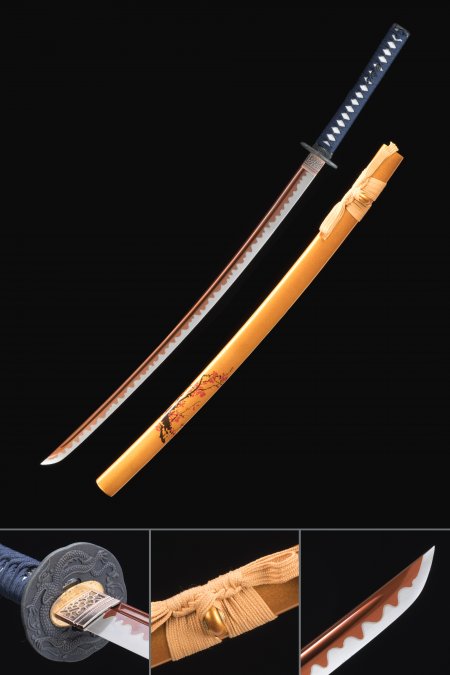
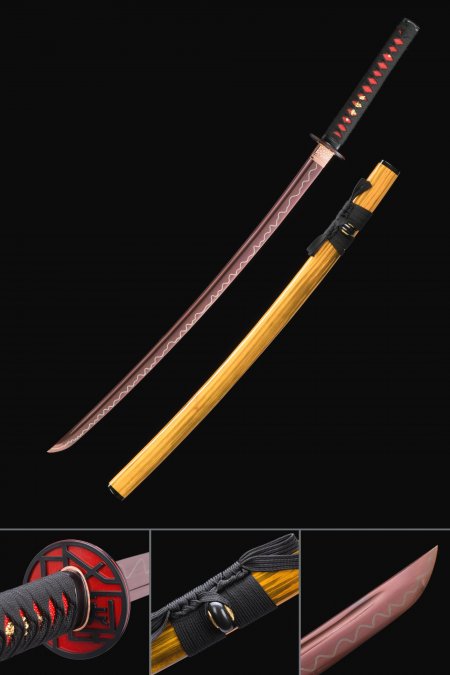
Red and yellow katana swords bring together the warmth of lacquered saya finishes, vibrant ito wrappings, and ornate tsuba work into pieces that command attention on any display stand or collector's shelf. Each sword in this collection is crafted with genuine attention to traditional Japanese sword-making details - from hand-wrapped tsuka to forge-finished blades in 1045 carbon, T10, or Damascus steel. Enjoy free standard shipping on your order, and shop with confidence backed by our hassle-free return policy.
Free Shipping
209.00 USD
Related Collections
Red Wakizashi Sword11 items
Red And Black Sword89 items
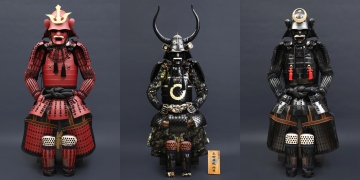
Red And Black Samurai Armor38 items
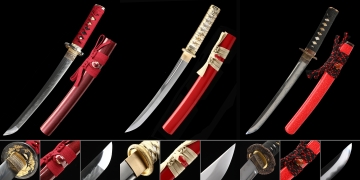
Red Tanto Swords11 items
Frequently Asked Questions
What steel types are used in red and yellow katana swords?
This collection spans three primary steel traditions. 1045 high-carbon steel is the most accessible, offering solid density and a smooth polished finish well-suited to decorative display. T10 tool steel is a step up - it contains trace tungsten that improves wear resistance and holds fine surface detail, and when clay tempered, it produces a genuine hamon (temper line) visible along the blade. Damascus steel, sometimes called folded steel, is forged by layering multiple steel billets and drawing them out repeatedly, resulting in a flowing grain pattern across the blade surface that is unique to each individual piece. For collectors, the steel choice affects not just appearance but also the visual depth and authenticity of the finished sword.
What does clay tempering do, and can I see it on the blade?
Clay tempering is a traditional Japanese heat-treatment technique where a mixture of clay is applied unevenly along the blade before the final quench. The clay-coated spine cools more slowly than the exposed edge, creating a differential hardness across the blade. The boundary between these two zones becomes the hamon - a visible, irregular line that runs along the lower portion of the blade. On T10 steel, the hamon appears as a misty, undulating pattern sometimes described as an 'activity line.' It is one of the most sought-after features among katana collectors because it cannot be etched or faked on a properly forged piece - it is a direct record of the heat-treatment process itself.
How should I store a display katana with a lacquered saya?
Lacquered saya require a few specific care habits. Store the sword horizontally on a katana stand with the edge facing upward - this is traditional orientation and prevents uneven pressure on the lacquer surface. Avoid enclosing the sword in an airtight case for extended periods, as trapped moisture accelerates lacquer crazing and can cause the wooden saya core to swell. Wipe down the saya periodically with a soft dry cloth, and keep the display area away from direct sunlight, which yellows and cracks lacquer finishes over time. The blade itself should be lightly oiled with choji oil every few months to prevent surface oxidation, applied with a soft cloth and wiped to a thin, even coat.
Is a full-tang construction important for a display katana?
Full-tang construction means the blade steel extends through the entire length of the handle, secured by a mekugi (peg) through the tsuka. For display swords, this matters for two reasons. First, it ensures the blade and handle remain a single stable unit over years of display, eliminating the risk of loosening that can occur in partial-tang or rat-tail constructions. Second, full-tang assembly is the standard used in authentic Japanese swordsmithing, so collectors who value historical fidelity consider it a baseline quality indicator. When examining a katana, the visible mekugi peg through the tsuka and a tight, non-rattling handle are the most immediate signs of proper full-tang assembly.
How do red and yellow katana swords work as a display set with tanto?
Pairing a katana with a matching tanto is a practice rooted in Japanese tradition - the daisho pairing of long and short blades was a formal expression of samurai status. In a modern display context, collectors often build themed sets around a consistent color palette. A red lacquer katana paired with a red tanto from the same aesthetic family creates a visually unified grouping that reads as intentional rather than assembled. The tanto's shorter blade and proportionally scaled fittings allow both pieces to occupy the same display stand without competing for visual weight. Matching sageo cord colors and complementary tsuba designs across the two pieces are the details that elevate a grouping from a coincidence of color to a cohesive collector's statement.