How is the red color applied to a tanto blade?
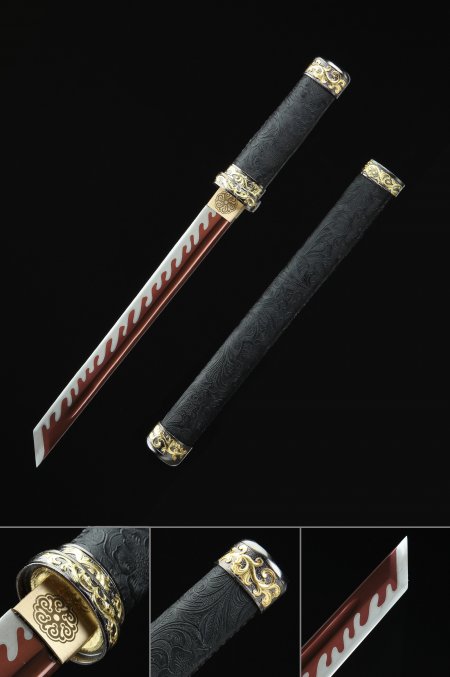
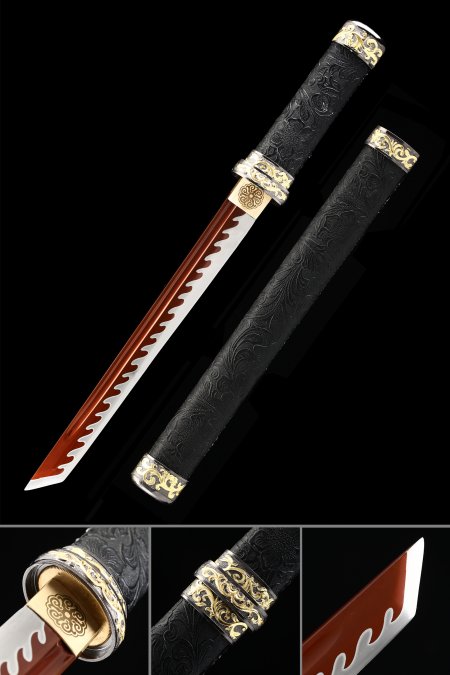
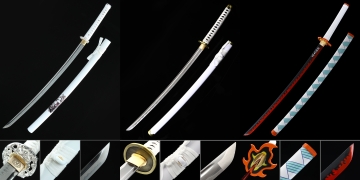
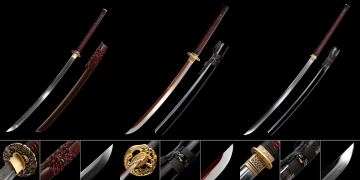
The crimson finish on a Red Blade Tanto is achieved through one of two primary methods: controlled oxidation, which bonds a color layer directly into the steel's surface chemistry, or a specialized heat-applied coating that adheres without filling the fine surface texture of the blade. Neither method is simply paint — both are designed to follow the blade's geometry, leaving details like the shinogi ridge and, on clay-tempered pieces, the hamon fully legible. The result is a finish with visible depth rather than a flat uniform tone, and one that holds up well under standard indoor display conditions when the blade is lightly oiled at regular intervals.
What's the difference between 1045 carbon steel and manganese steel in a tanto?
1045 carbon steel is a mid-carbon alloy with a well-established track record in hand-forged Japanese-style blades. When clay-tempered, it develops a genuine hamon — the wavy temper line prized by collectors — and polishes to a bright, reflective surface. Manganese steel contains a higher proportion of manganese as an alloying element, which increases toughness and resistance to surface wear. Manganese steel tantos tend to hold their finish cleanly over time and are slightly less susceptible to humidity-related patina, making them a practical choice for long-term display in environments where climate control isn't perfect. If the hamon is a priority for your collection, clay-tempered 1045 is the stronger pick; if resilience and low-maintenance display longevity matter more, manganese steel is a sound alternative.
What does 'hamidashi' style mean on a tanto?
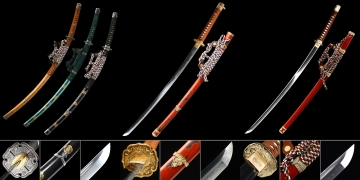
A hamidashi tanto is defined by its unusually small tsuba — the hand guard — which barely extends beyond the width of the handle itself. In contrast to a standard tanto, where the tsuba provides a clear visual break between handle and blade, the hamidashi's minimal guard creates a seamless, elongated silhouette that emphasizes the blade's length and the quality of its geometry. This compact guard style has strong historical roots in Japanese blade design and is particularly well suited to display contexts where the profile of the full piece is meant to be read as a single flowing line. On the Red Blade Tanto examples in this collection, the small tsuba is typically finished in bronze scroll or gold-silver inlay, adding ornamental detail without disrupting the overall minimalism.
How should I care for a tanto kept on open display?
For a tanto displayed outside its saya, the main maintenance tasks are dust removal and moisture protection. Use a soft, lint-free cloth — traditional uchiko powder is optional but not necessary for display pieces — to wipe the blade surface monthly. Apply a very thin film of choji oil or food-grade mineral oil using a clean cloth, working from the spine toward the edge rather than along it. This protects the steel from humidity without creating visible pooling. Keep the piece away from air vents, windows with direct sun exposure, and kitchens, where airborne moisture and grease accelerate surface changes. For the saya and handle, occasional conditioning with a leather-appropriate product (for wrapped handles) or a dry wipe (for lacquered surfaces) is sufficient. Consistent light maintenance outperforms occasional intensive cleaning every time.
Is a Red Blade Tanto a good gift for a Japanese culture enthusiast?
A Red Blade Tanto makes a considered, specific gift for someone interested in Japanese blade history, decorative arts, or samurai culture. The red blade sets it apart visually from more common collector pieces, and the combination of traditional construction methods — hand-forging, clay tempering on select models, ornate metalwork fittings — gives it genuine substance as a collectible rather than just a decorative object. It works well as a standalone display piece or as part of a growing collection. If the recipient already collects Japanese swords, pairing it with a matching saya style or a complementary longer blade in the same color palette adds thoughtfulness to the gift. For someone new to collecting, the compact size and distinctive finish make it an approachable entry point with lasting visual appeal.