What makes a silver tsuba tanto different from other tanto?
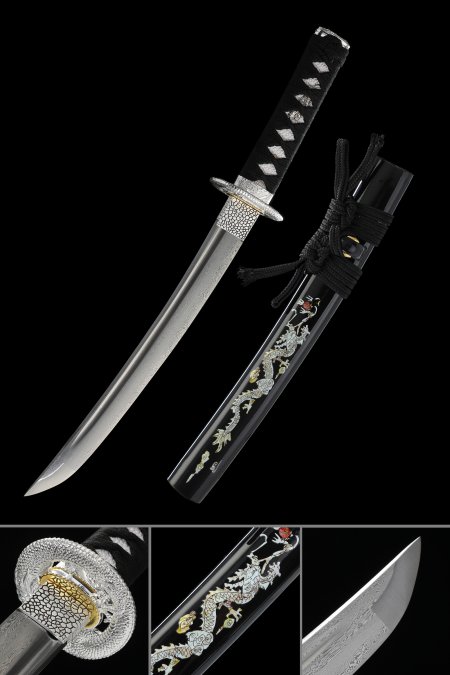
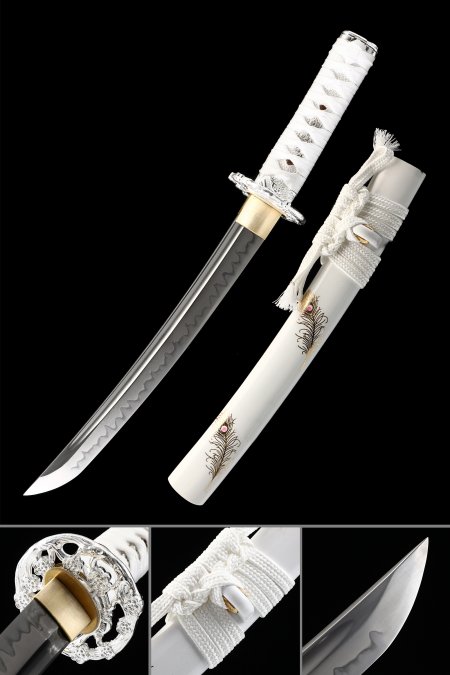
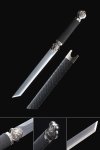
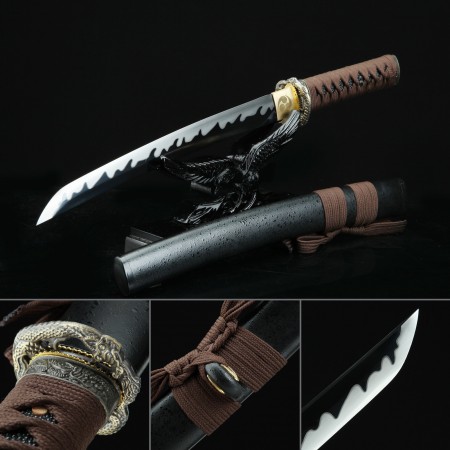
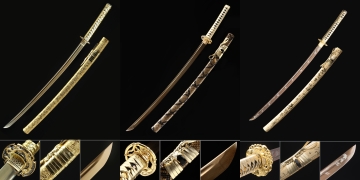
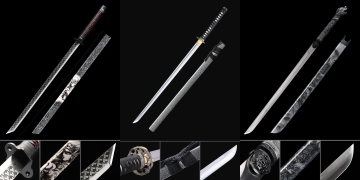
The defining feature is the tsuba — the circular or shaped guard between blade and handle. In this collection, tsuba are cast from silver-toned alloy, often featuring dragon relief work or geometric detailing that elevates the piece well beyond standard fittings. Most tanto collections use iron or plain steel tsuba; the silver alloy version reflects a deliberate aesthetic choice that pairs well with high-polish or lacquered saya. It's a meaningful visual distinction that makes these tanto particularly suitable as display centerpieces or curated collector additions rather than plain study pieces.
How does T10 steel compare to Damascus steel in a tanto?
T10 is a high-carbon tool steel with roughly 1.0% carbon content and trace tungsten, known for taking a clean hamon when clay tempered. Its surface is typically uniform in color, with the visual interest coming from the temper line itself — a misty or sharp boundary between hardened edge and softer spine. Damascus steel, by contrast, is pattern-welded from multiple steel layers, producing flowing grain lines visible across the entire blade surface. Both are hand-forged in this collection, but they offer very different aesthetics: T10 reads as classical and restrained, while Damascus is expressive and visually complex. Neither is categorically superior — the choice is a matter of collector preference.
Is the rayskin (same) on the handle genuine or synthetic?
The tanto in this collection use genuine rayskin, known in Japanese as same, beneath the ito cord wrapping. Rayskin is composed of small, bead-like dermal denticles that create a naturally textured surface with a distinctive pearlescent quality when lightly polished. It has been the traditional under-wrap material for Japanese sword handles for centuries, valued for both its grip characteristics and its durability. When wrapped with cord, only portions of the rayskin are visible through the diamond gaps of the wrap — a detail that knowledgeable collectors look for as a mark of authentic construction rather than a cost-cutting synthetic substitute.
How should I store and maintain a display tanto long-term?
For long-term display storage, apply a thin coat of choji oil or pure mineral oil to the blade every two to three months, or more frequently in humid environments. The oil prevents oxidation without harming the steel's surface finish or hamon. Store the tanto horizontally or on a proper sword stand with the edge facing upward, away from direct sunlight, which can fade lacquered saya over time. Avoid storing in leather enclosures, as leather retains moisture. The silver alloy tsuba requires minimal care — occasional wiping with a soft cloth to remove fingerprint oils is sufficient. Avoid abrasive polishes on the tsuba, as they can remove the fine relief detail of cast dragon motifs.
Does a tanto with a hand-painted saya make a good collector's gift?
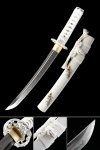
A tanto with a hand-painted saya is among the more distinctive gift options in Japanese blade collecting. The painted designs — such as peacock feather motifs — are applied to a lacquered base, meaning each saya is effectively a small piece of decorative lacquerwork in addition to a functional enclosure. For a recipient who appreciates Japanese aesthetics, craft history, or East Asian decorative arts, the combination of a hand-forged blade, silver tsuba, and illustrated saya covers multiple areas of appreciation in a single object. It arrives as a complete, self-contained display piece with immediate visual impact, without requiring additional stands or accessories to present well.