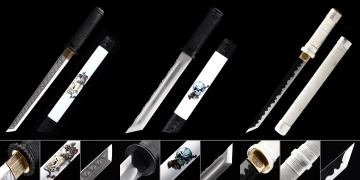
What makes a white tsuba different from a standard iron guard?
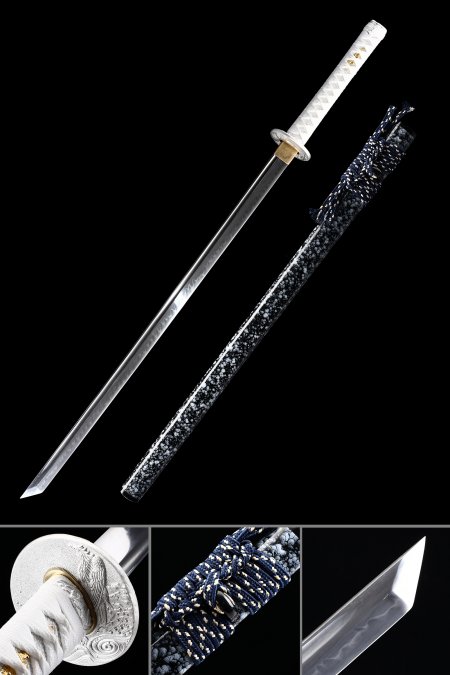
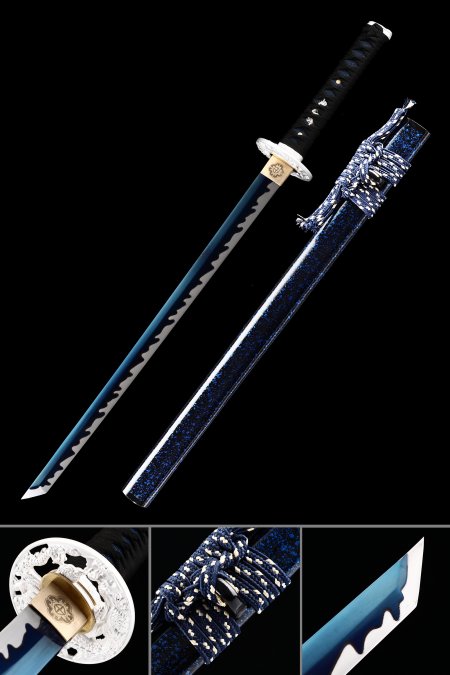
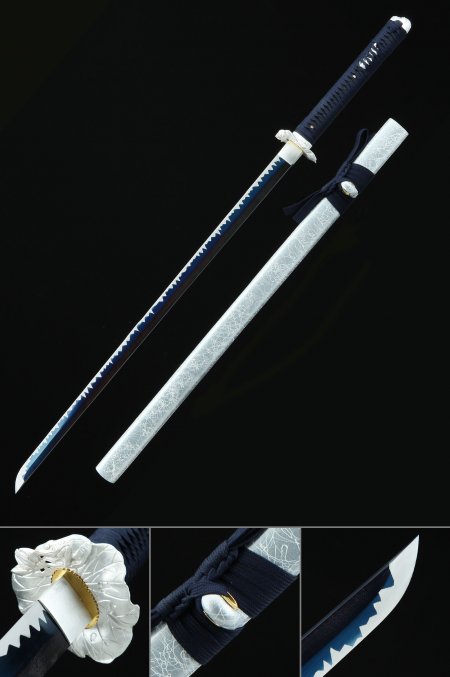
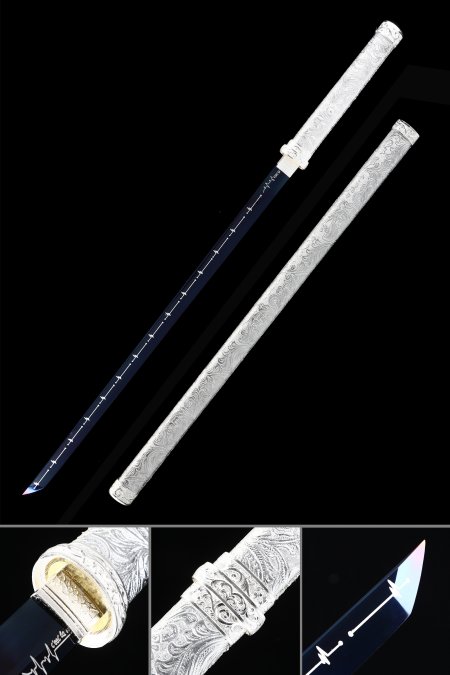
A standard iron tsuba tends to recede visually into the overall sword mounting, providing structure without drawing the eye. A white tsuba, by contrast, is intentionally designed as a focal point. In this collection, white guards are crafted in ornate alloy with relief patterns - cloud motifs, wave engravings, and silver-tone finishes - that create a strong visual contrast against dark blue lacquered saya and cord-wrapped handles. This high-contrast approach reflects a later period of Japanese sword aesthetics, where elaborate fittings signaled both status and artistic sensibility. For collectors, the white tsuba elevates the sword from a straightforward reproduction into a display piece with genuine visual identity.
How does T10 steel compare to 1095 in a ninjato blade?
Both T10 and 1095 are high-carbon steels widely used in Japanese-style sword production, but they have different characteristics worth understanding before selecting a piece. T10 contains a small amount of silicon and has a finer grain structure, which contributes to a sharper, more refined surface finish - you'll notice this in the depth of the marble dark blue polish on T10 blades. It also tends to be slightly harder, which supports better edge retention for display pieces handled frequently. 1095 is a simpler alloy that's slightly more forgiving during the forging process, offering reliable toughness and a long track record with experienced smiths. For collectors focused on surface aesthetics, T10 is often preferred; for those prioritizing overall durability in a handled display piece, 1095 is an equally respected choice.
What's the right way to store a carbon steel ninjato long-term?
Carbon steel requires more attentive storage than stainless alternatives, but the routine is straightforward once established. Apply a thin, even coat of choji oil - traditionally used in Japanese sword care - to the entire blade surface every two to three months, or more frequently in humid climates. Store the sword horizontally or at a slight angle with the edge facing upward, which reduces stress on the habaki and saya fit over time. Avoid airtight cases without a desiccant, as trapped moisture accelerates oxidation even on oiled blades. Keep the piece away from direct sunlight, which can fade lacquered saya finishes. A simple maintenance schedule like this preserves both the steel and the decorative fittings for decades of display.
Are these ninjato swords suitable as display gifts for collectors?
Yes - and the white tsuba ninjato format is particularly well-suited for gifting precisely because it reads as a complete, curated aesthetic statement rather than a generic sword reproduction. The coordinated color palette across these pieces - white ornate guards, dark blue lacquered saya, matched cord-wrapped handles - gives each sword a finished, gallery-ready appearance straight out of the box. Full-tang construction adds a sense of substance and craftsmanship that experienced collectors notice immediately. For someone building a display of Japanese sword styles, a straight-blade ninjato alongside a curved katana creates an instructive and visually compelling contrast. These pieces also arrive ready to display without additional assembly, making them practical as well as impressive gifts.
What is high manganese steel, and why is it used in ninjato construction?
High manganese steel - sometimes called spring steel in sword-making contexts - contains a significantly elevated manganese content compared to standard carbon steels, typically ranging from 0.6% to 1.2% manganese by composition. This alloying element increases the steel's toughness and resistance to deformation under stress, making it particularly well-suited for straight-blade designs like the ninjato, where the geometry offers less natural flex than a curved blade. For display collectors, this means a blade that holds its shape reliably over years of handling and repositioning in a mount. It takes a clean polish and pairs naturally with decorative blade finishes like the dark blue aesthetic seen on select pieces in this collection. It's a practical choice for smiths who want a blade that looks refined and also performs structurally.